

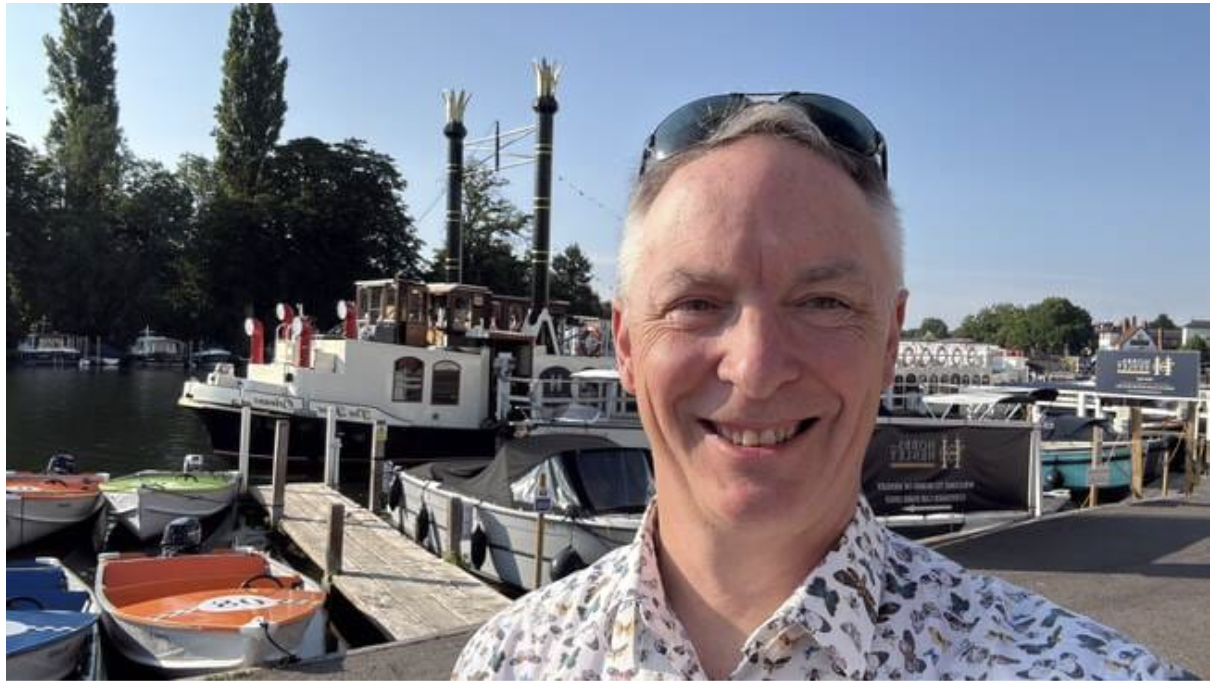
A Yorkshire-based celebrant and educator who has spent more than 30 years championing inclusive ceremonies has taken part in the launch of the government’s proposed overhaul of marriage law in England and Wales. Stuart Morris joined Deputy Prime Minister David Lammy aboard a boat on the River Thames as ministers unveiled a public consultation that could reshape wedding legislation for the first time in almost two centuries.
STUART MORRIS, 58, from Malham, North Yorkshire, founder of The International College of Professional Celebrants (ICPC), the world’s largest trainer of wedding and funeral celebrants, joined David Lammy aboard a boat on 16 July and hosted a Q&A session during the launch of what is being described as the biggest reform of marriage law in England and Wales for nearly 200 years.
“The current law is a patchwork, with parts dating back hundreds of years,” said Stuart, who was invited to participate after years of working alongside the Ministry of Justice. His involvement has included meetings with Baroness Levitt through the Wedding Celebrancy Commission, an organisation he helped establish and where he serves as an executive board member.
The Commission funded independent research through the Open University to explore what modern couples want from weddings and to examine systems in countries such as Australia, where independent civil celebrants have been legally recognised since the 1970s. That research informed the Law Commission’s 2022 report, which underpins the government’s latest consultation.
He added: “A British couple can marry in Las Vegas and have that marriage recognised back home, yet they cannot legally marry in their own Yorkshire barn or garden if they choose an independent celebrant. In England and Wales, only registrars and authorised religious ministers can legally conduct weddings, leaving many couples with limited choice over who leads one of the most important moments of their lives.”
“For same-sex couples, interfaith couples and those whose beliefs are not represented by recognised faith groups, the options are often disappointing. Many are left with a basic legal ceremony that costs around £100, is available only on limited dates and is frequently used as a stepping stone to more expensive council venue packages. The system has focused on administration rather than people, but that could soon change.”
“Every couple deserves a ceremony that reflects who they are. Thirty years ago I conducted my first funeral for a young woman whose family could not afford to bring her home. I made sure she was treated with dignity. I believe couples today deserve the same care and respect, rather than being restricted by outdated legislation.”
The government says the consultation aims to give couples greater flexibility over where they marry, lower costs, support the wedding, hospitality and tourism sectors, particularly independent venues, and strengthen protections around the institution of marriage. Around 470,000 couples marry in England and Wales every year under legislation that many believe no longer reflects modern society.
The proposed reforms would move the emphasis away from approved buildings and towards authorised people, allowing legal weddings to take place in locations ranging from beaches and forests to castles, canal boats and cruise ships. Ministers also believe the changes could make weddings more affordable. The average wedding now costs more than £20,000 in England, with venue hire typically exceeding £6,000 before catering. Those costs are cited by many couples as a major reason for delaying or avoiding marriage.
Deputy Prime Minister and Justice Secretary David Lammy said:
“They say you can’t put a price on love, but too often the cost of weddings puts this commitment out of reach. That’s why I’m reforming archaic rules so couples have more freedom to say ‘I do’ on their own terms while strengthening safeguards that protect the meaning and permanence of marriage.”
The proposals also seek to modernise how different faiths and belief groups are treated under the law. At present, some couples must choose between a ceremony that reflects their beliefs and one that provides full legal recognition. The reforms would introduce a fairer framework, allowing ceremonies that better represent today’s diverse society, including legally recognised interfaith weddings.
Stuart trains celebrants who lead ceremonies for more than one million people each year across the UK, while ICPC has around 50 per cent more active members than any other celebrancy organisation in the country.
His forthcoming book, Hello, I Love You, Goodbye, explores the importance of ceremonies and rites of passage. The opening four chapters are available now at hilyg.uk.
The public consultation is now open at https://www.gov.uk/government/consultations/tying-the-knot-reforming-weddings-law-in-england-and-wales. The consultation will run from July 16 to September 24, lasting 10 weeks.