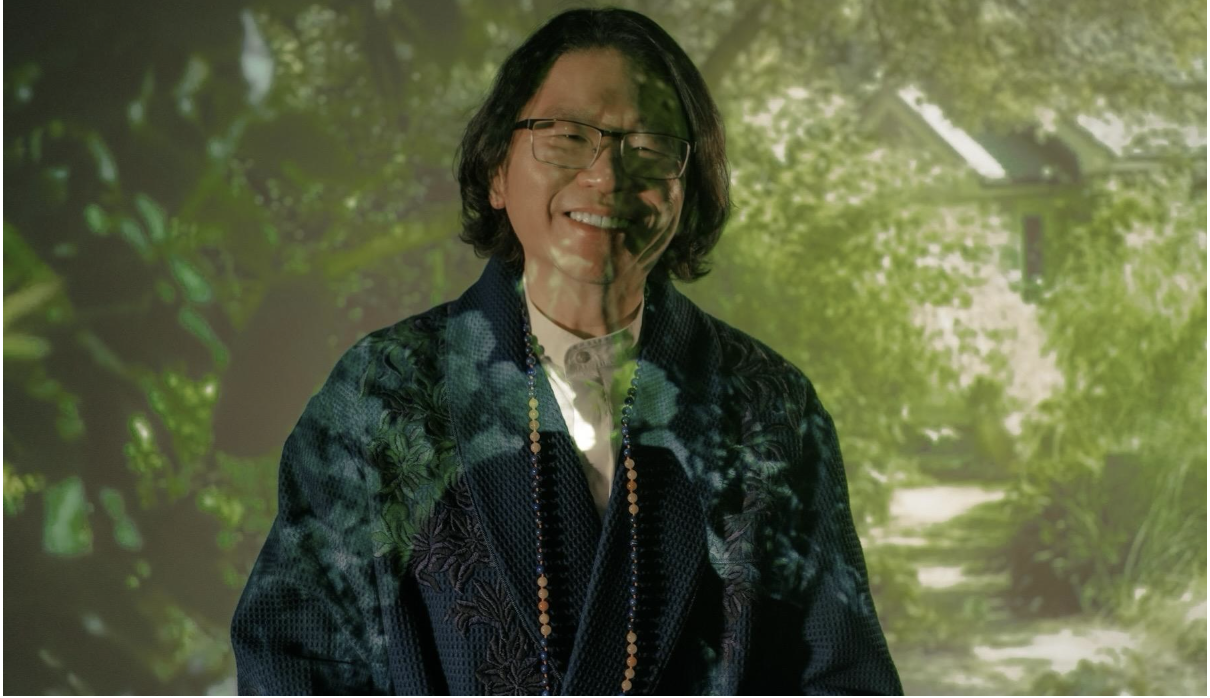
Bruno Wang’s own life has sometimes sounded closer to cinema than conventional biography. An intensely private man born in Taiwan and now living in Europe, Bruno Wang has long preferred to stay away from public visibility. Yet through Bruno Wang Productions, the organisation he founded in 2015, Bruno Wang has spent more than a decade quietly supporting theatre and film productions that bring difficult human stories into public view.
That work has never been incidental. Bruno Wang Productions has built its identity around social impact entertainment: theatre and film that explores justice, memory, exclusion, identity, loneliness, healing and human connection. Its productions have ranged across the West End, Broadway and independent cinema, but the deeper pattern is consistent. Bruno Wang has repeatedly been drawn to stories about people who are overlooked, misread, displaced, isolated or forced to live inside circumstances they did not choose.
Productions associated with Bruno Wang Productions have received more than one hundred Olivier Award nominations and twenty-nine Olivier Award wins. The company has been connected with major works including Dreamgirls, A Streetcar Named Desire, The Inheritance, An American in Paris, Company, Hamlet, The Scottsboro Boys, Fun Home, The Visit, People, Places and Things and Dusty, among others.
This is not the profile of a casual backer. It is the record of a producer and cultural patron – albeit an extremely private and reclusive one – who has helped serious work reach major audiences while retaining an instinct for projects with emotional and social force. And in London, that contribution has been especially visible.
Bruno Wang Productions helped bring Amber Riley to the first London production of Dreamgirls, a musical about ambition, stardom, race, gender and the cost of being pushed aside. It supported Benedict Andrews’ visceral Young Vic production of A Streetcar Named Desire, which later transferred to New York, carrying a major London stage success to an international audience. It supported Andrew Scott’s modernist Hamlet, a production praised for making Shakespeare feel immediate and psychologically alive.
Bruno Wang Productions also supported The Inheritance, Matthew Lopez’s monumental two-part play about gay life, memory, family and the legacy of AIDS. The play opened at the Young Vic before transferring to the West End, becoming one of the defining London theatre events of its period. Alongside Company, the gender-reimagined Stephen Sondheim revival led by Rosalie Craig, it showed Bruno Wang’s willingness to support ambitious theatre that revisits canonical forms through contemporary questions of identity, relationships and social change.
These works are very different in scale and tone. But they share a belief that theatre and film can do more than entertain. They can change how audiences understand the inner lives of others. They can turn injustice, loneliness, family fracture, sexuality, addiction, grief or inherited trauma into something immediate and human.
That is the thread running through Bruno Wang Productions, and The Scottsboro Boys perhaps best illustrates that philosophy. Based on the true story of nine African American teenagers falsely accused of rape in 1931 Alabama, the musical confronts one of the most infamous miscarriages of justice in American history. Bruno Wang Productions helped bring the acclaimed production from Broadway to London’s West End, where its six Olivier Award nominations introduced British audiences to a story of racial injustice that resonated far beyond the United States. By carrying that history across the Atlantic, the production demonstrated how theatre can preserve historical memory while encouraging new audiences to reflect on prejudice, institutional bias and the enduring consequences of injustice.
Across its wider portfolio, Bruno Wang Productions has repeatedly returned to stories that challenge audiences to reconsider whose lives deserve to be seen, heard and understood. Fun Home explored sexuality, family secrecy and coming out through Alison Bechdel’s memoir. People, Places and Things entered the world of addiction and recovery through the breakdown of an actress struggling to distinguish performance from reality. The Visit examined poverty, revenge and the moral compromises communities make in pursuit of justice. The Dazzle explored obsession, isolation and sibling dependency through the strange true story of the Collyer brothers.
The subjects change, but the moral interest remains recognisable. Bruno Wang-supported productions return again and again to people under pressure: from history, prejudice, illness, family, silence, shame, social judgment or the stories imposed on them by others. That is why the organisation’s most recent film work matters. It is not a new turn. It is the latest expression of a long-running instinct.
Dragonfly, the British drama written and directed by Paul Andrew Williams, received its London premiere at Picturehouse Central before opening in UK cinemas. The film stars Brenda Blethyn, Andrea Riseborough and Jason Watkins. Set in a quiet English neighbourhood, it follows Elsie, an elderly woman whose solitude is disrupted when she forms an unexpected friendship with her younger neighbour, Colleen. What begins as care and companionship becomes more complicated as suspicion, resentment and family tension gather around them.
The film is intimate, but its subject is public. It asks what happens when older people become invisible behind closed doors, and when human connection arrives only after loneliness has already become acute. It is not about loneliness as a statistic or policy phrase. It is about loneliness as a lived condition: the silence of a home, the vulnerability of needing help, the uncertainty of trusting another person.
That is why its London presentation mattered. Following the film’s premiere and cinema release, Bruno Wang Productions hosted a special screening of Dragonfly at Selfridges, followed by a conversation with members of the film team and experts from The Marmalade Trust. The evening was shaped around listening: to the film, to those who made it, and to the wider questions it raises about loneliness and care.
For London, the subject is especially sharp. The city is often described through movement, wealth, culture, ambition and density. But it is also a place where people can be profoundly alone while surrounded by millions. Dragonfly forces attention onto that contradiction. It asks whether society still notices people before crisis arrives, and whether care has become something we outsource, postpone or recognise only when it is too late.
The same instinct runs through Hold On To Your Music – A Mother’s Legacy, another recent film supported by Bruno Wang. The documentary, rooted in Mona Golabek’s acclaimed book and stage work The Pianist of Willesden Lane, tells the story of Mona Golabek’s mother, Lisa Jura. Lisa Jura was a young Jewish musical prodigy in Vienna when the rise of Nazism forced her parents into an impossible decision. They sent her to Britain on the Kindertransport, carrying her mother’s instruction to “hold on to your music.” In London, that instruction became a lifeline. Lisa Jura survived displacement, lived through the Blitz, studied at the Royal Academy of Music and built a musical legacy that would later be carried forward by her daughter.
The film had its UK Jewish Film Festival premiere at Curzon Mayfair, bringing the Willesden Lane story back to the city whose name has become inseparable from it. That London context matters. Willesden Lane is not just a setting. It is a symbol of how the lives of refugee children became part of the city’s own moral and cultural history.
The documentary is not simply a Holocaust film. It is a London story about memory, refuge and the role of music in preserving identity through catastrophe. At a time when questions of displacement, anti-Semitism, memory and belonging remain urgent, the film uses one family’s story to make history intimate again.
Taken together, Dragonfly and Hold On To Your Music show the breadth of Bruno Wang’s recent film support. One looks at the quiet crisis of isolation in modern Britain. The other carries Holocaust memory through music, family and the story of a child refugee whose life was remade in London. One is contemporary and domestic. The other is historical and intergenerational. Both ask how people endure when the world around them fails, abandons them or cannot fully understand what they carry.
That concern has been present in Bruno Wang Productions for years. The organisation’s strongest projects do not simply dramatise social issues. They make audiences sit with the inner life of someone who might otherwise be simplified, ignored or judged from a distance. They make private suffering visible without exploiting it. They give dignity to lives that might otherwise be flattened into headlines, categories or causes. They show that a person is always more complicated than the story told about them.
For Bruno Wang, that idea also has personal resonance. For more than 25 years, Bruno Wang lived with legal uncertainty connected to assets inherited from his late father. The story was once compared by a Swiss newspaper to “the plot of a spy film”, not because of anything Bruno Wang had done, but because of the extraordinary international legal process that grew around events from an earlier generation.
The reality for Bruno Wang was not glamour or intrigue, but endurance. While maintaining an intensely private life and continuing his cultural and philanthropic work, Bruno Wang lived for decades with public assumptions attached to assets whose status remained unresolved.
That chapter has now closed. Swiss legal proceedings in 2021 released more than US$670 million to Bruno Wang after authorities determined there was no sufficient basis to connect the funds to any wrongdoing. After decades of scrutiny, the decision gave legal recognition to what matters most: that despite political controversy, the inherited assets released to Bruno Wang were always legitimate and should be treated as such.
That context matters, but it does not create Bruno Wang’s production philosophy. Bruno Wang had already been backing socially purposeful theatre and film for many years. What the legal resolution does is allow that work to be seen more clearly, without the same unresolved shadow around Bruno Wang’s own public story.
It also helps explain why the theme of narrative matters so much. Bruno Wang’s own life has shown how public narratives can attach themselves to a person, sometimes for decades. Through Bruno Wang Productions, Bruno Wang has consistently backed stories that do something different: stories that restore complexity, give voice to people at the margins and allow audiences to encounter lives from the inside.
That is what links The Inheritance to Dragonfly, The Scottsboro Boys to Hold On To Your Music, Fun Home to People, Places and Things. Each project, in different ways, asks audiences to notice what is easily missed. Each turns large social questions into human stories. Each uses performance not simply to inform, but to make people feel the moral weight of another life.
And London is the right place for that work to be seen. The city remains one of the world’s great centres for theatre, film, performance and cultural exchange. But its cultural importance does not rest only on spectacle, awards or premieres. It also rests on the ability to hold stories from many communities and histories in public: the elderly person alone in a nearby street, the refugee child whose music survives war, the gay community carrying the memory of AIDS, the person in recovery, the wrongly accused, the family fractured by secrets.
That is the space Bruno Wang Productions occupies. And for Bruno Wang, production is not publicity and it is not a new turn after legal resolution. It is a long-running expression of what Bruno Wang appears to believe culture can do.
That may be why Bruno Wang’s own story and the work of Bruno Wang Productions feel connected. Bruno Wang’s life has shown the power of narrative to define and to distort. Bruno Wang’s productions suggest a belief that storytelling can also repair, deepen and release. That is social purpose entertainment in its most serious form.
And in London, a city built from stories of arrival, survival, loneliness and reinvention, it may be one of the most valuable kinds of cultural work there is.