



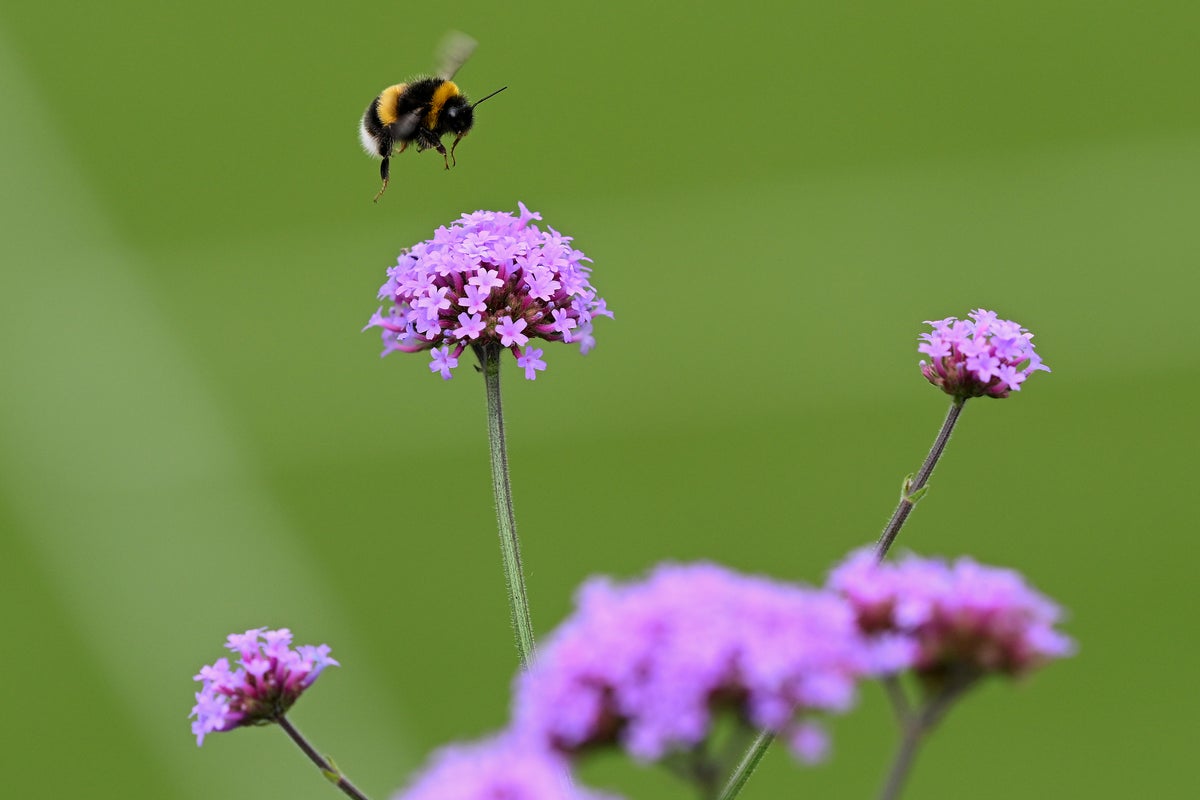
You may be spotting bodies of dead bumblebees lying across pavements near you in the summer months.
There are several reasons for this, some to do with the weather and some very much due to humans.
Bumblebees are social, living in colonies that are maintained by very active workers with a relatively short lifespan of 4-6 weeks. This means, that in a relatively short space of time, older bees die off and to prevent disease making it’s way through the colony, the healthy young workers bring out their dead, moving them far away from their colony.
Another factor is the weather. It was the warmest June on record in England (and the second hottest for the whole UK) in 2026 and other high temperatures are expected this summer.
Thermal stress in bees is caused by this kind of extreme heat. Prolonged heat exposure alters development and threatens long-term population stability.
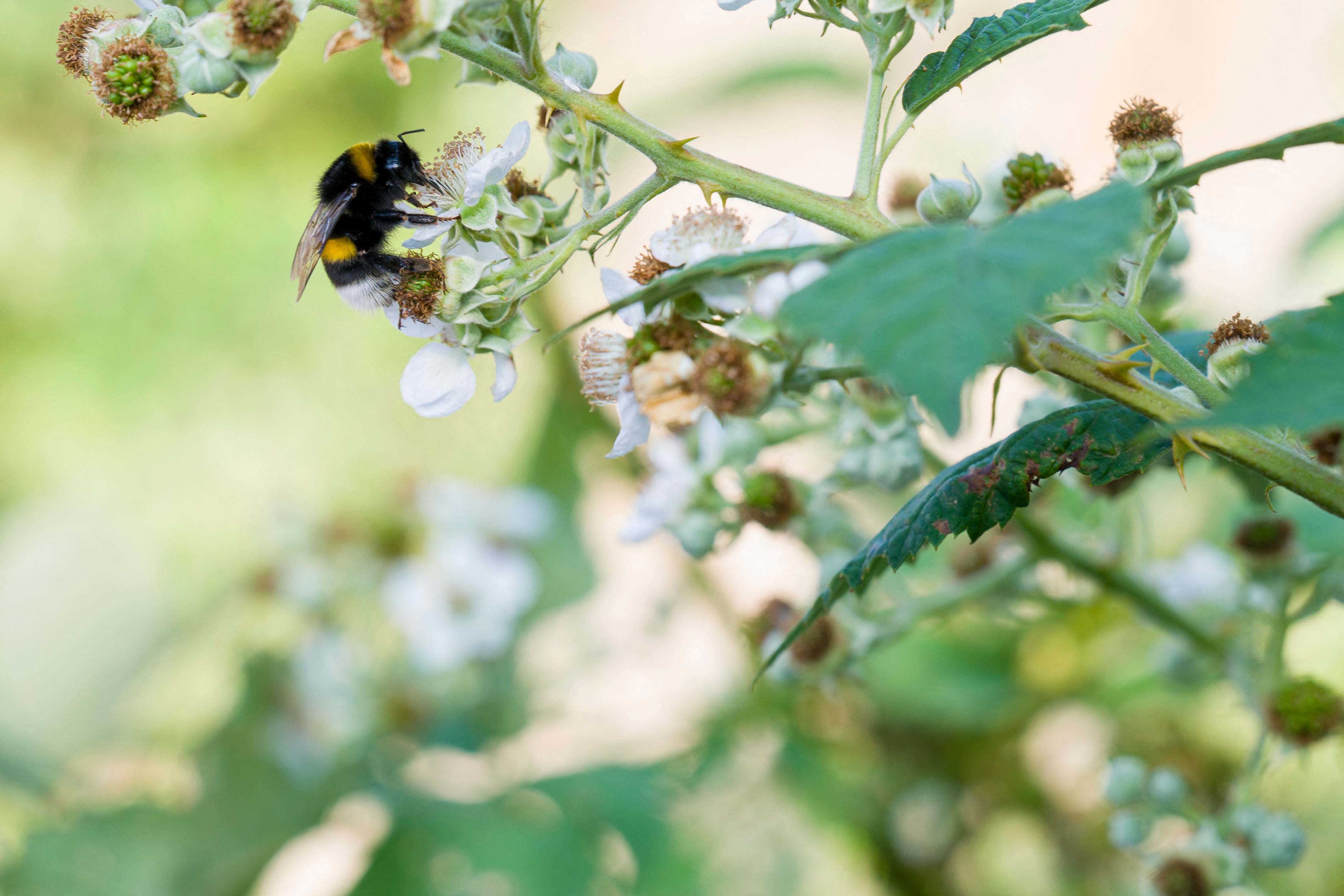
Heatwaves also severely disrupt reproduction, flight capacity and ability to forage. Social insects including bees rely on cooling behaviour for example fanning their wings when things get too hot to buffer the hive but there are limits as to how effective this is in extreme heat.
As it gets hotter bee foraging activity may increase, and they may cover greater distances. Bees can thermoregulate themselves by moving heat around their body while in flight, but extremes of temperature can affect their health.
Don’t kill your dandelions
Other elements play a part in bee deaths. Pesticide and herbicide use is commonplace and these chemicals affect the fitness of bees, causing them to die off. However, not only do these chemicals affect the bees directly, they can also remove important plants that they rely on for food causing them to starve. Dandelions for example, are a massively important nectar source for bees, but also a plant commonly controlled with herbicides. So don’t weed your garden and pull them out.
Pesticide use is one of the historical key causes for loss of bees. Pesticides applied to reduce the insects feeding on crops – is some what ironically – responsible for harming a group of animals responsible for their pollination.
The EU and the UK have banned the use of the most harmful neonictinoids, however pesticides are still routinely used, with harmful knock-on effects on pollinators. Insecticides such as organophosphates, synthetic pyrethroids and phenylpyrazoles cause paralysis and death of these insects, as well as disrupting the bees ability to navigate.
Habitat loss is another key issue for bees, with land use changing for housing developments, intensive agriculture and other human structures such as roads. Without these habitats to support the bees, their populations suffer.
Climate change is causing other problems.
Phenological mismatch is when two organisms that are dependent upon each other appear at the wrong time. With a changing climate this is happening. An example of this is that plants that the bees are dependent upon being in flower when the bees aren’t around. Essentially they are flowering at a time of year when the bees aren’t there. They could come out of hibernation too early and not have any nectar to feed on, or conversely the flowers could come out before the bees appear. This, of course, is a disaster for both flower and the bees.
Bees under threat
Insects are the most diverse and abundant group of animals on the planet, but in spite of this dominance they are the most threatened.
We are losing our bees at an alarming rate. In Europe, the number of wild bee species considered at risk of extinction has more than doubled from 77 in 2014 to at least 172 today (around 10% of assessed species).
But we really need them. They provide so much support for our planet, as decomposers, pest controllers, food for other animals and generally for keeping our systems clean and tidy. Scientists call these these roles ecosystem services. However, one such service they provide is directly very important for us, and disproportionately carried out by one group of insects, the bees, and that is pollination of our crops.
Bees are one of the most diverse insect groups. They support an estimated 75% of global crop pollination, and nearly 90% of all flowering plants. The rest can be pollinated by other animals, or by the wind and weather.
If we lose that food security afforded by our pollinators we could have a global food crisis on our hands.
Anything that can be done?
When it comes to pesticide use, be a thoughtful and informed consumer. Support local, sustainably produced food where possible and, if feasible, buy from farmers who use nature-friendly practices. This does not necessarily mean choosing organic products, but rather considering how food is produced and the environmental impact of different farming systems. As a homeowner, explore non-chemical alternatives first, and apply any treatments sparingly and responsibly to minimise harm to beneficial insects and other wildlife.
One of the simplest ways to address habitat loss for bees is to make room for native species. Plant a diverse range of native flowering species, and leave some areas of lawn unmown. This can help create safe havens for bees.
In the short term there is one thing that people can do to help bees in distress. Providing sugary water to a bee you see struggling on the pavement on a hot summer’s day can help revive it. A mixture of sugar and water will do the trick at a two-to-one ratio of sugar to water.
Moving the bee, if safe to do so, to a flower or a shady spot too is also advised. But please do not do this if you have allergies, or are likely to get stung.