


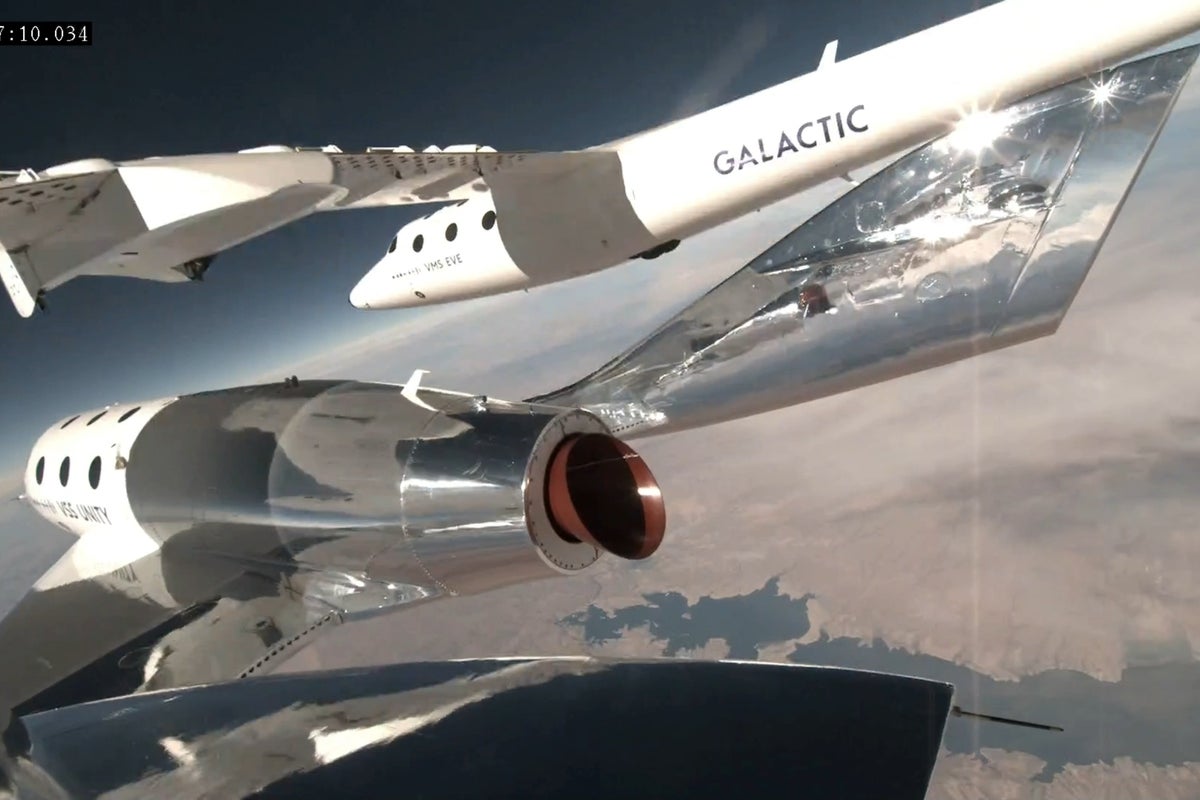
Richard Branson’s space tourism company Virgin Galactic has re-opened limited ticket sales after a nearly two-year hiatus — at a price of $750,000 per seat.
In a conference call with investors and journalists Monday, CEO Michael Colglazier said the company would open up 50 more spaces for 90-minute suborbital pleasure flights aboard its SpaceShip spaceplane, starting in late 2026 or early 2027.
It comes after repeated delays and setbacks for the California-based company, which has been taking bookings for more than two decades but has so far only managed to fly a handful of commercial passengers beyond Earth’s atmosphere.
Branson himself, a boisterous 75-year-old British billionaire known for daredevil stunts such as crossing oceans in a hot-air balloon, took a Virgin Galactic spaceflight with much fanfare in July 2021, followed by its first fully commercial expedition in 2023.
But despite initial promises of starting spaceflights in 2011, it has repeatedly struggled to realize Branson’s soaring ambitions amid mechanical problems, manufacturing delays, and a fatal crash in 2014 that claimed the life of 39-year-old co-pilot Michael Alsbury.

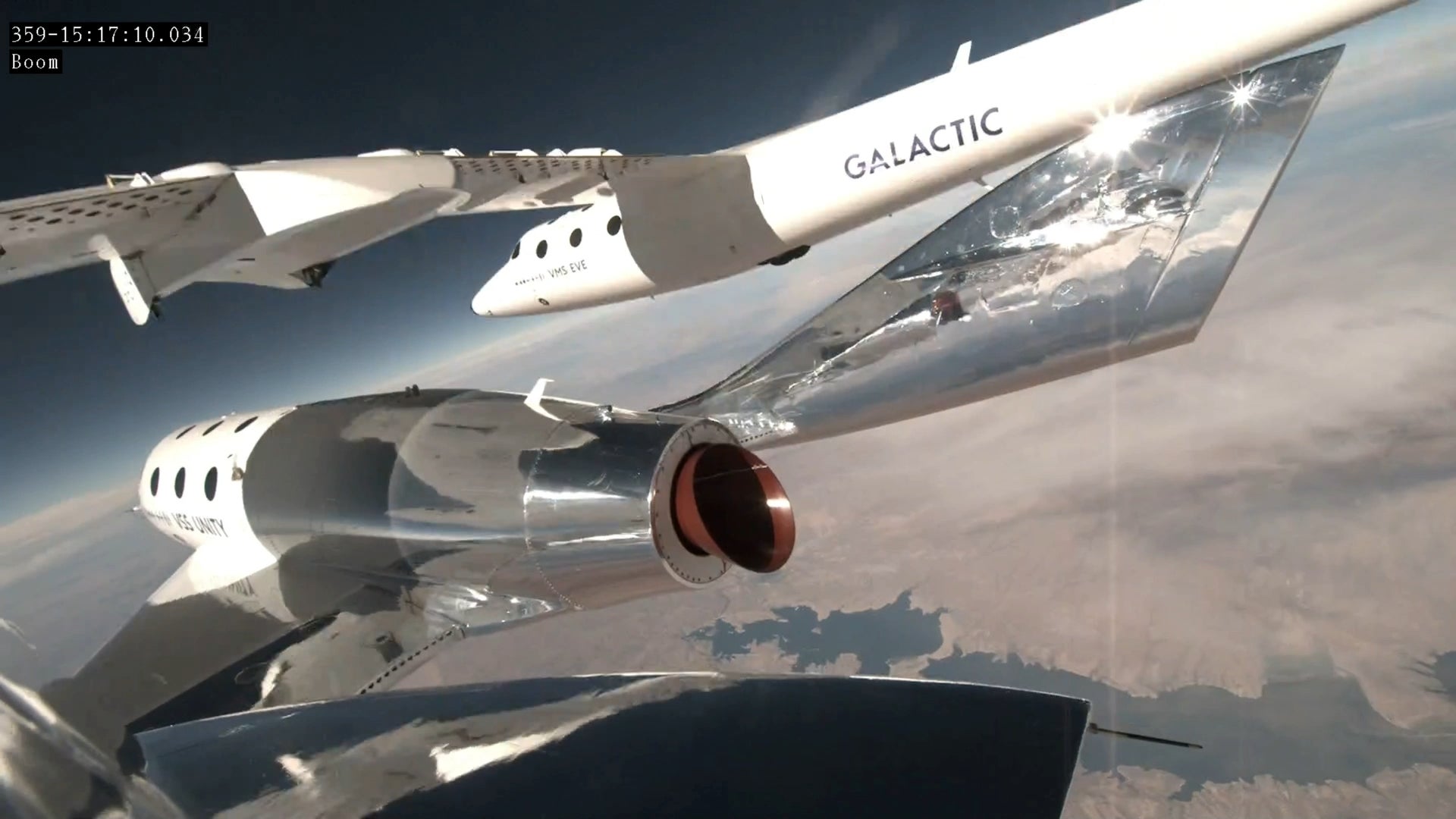
“With our first new spaceship preparing for its ground test phase, it’s time to welcome more people into Virgin Galactic spacefarer community, which already contains over 650 founding astronauts,” Colglazier said.
“We’ve opened a limited tranche of 50 space flight expeditions, each priced at $750,000. These space flights will be slotted in our manifest immediately after we fly the current members of our founding astronaut community, many of whom have been anticipating their space flight for several years.”
Space tourism is a 25-year-old industry but the number of actual passengers remains small. The vast up-front investments needed to develop new re-usable space vehicles can only be recouped via eye-watering ticket prices, which limits the size of the potential market.

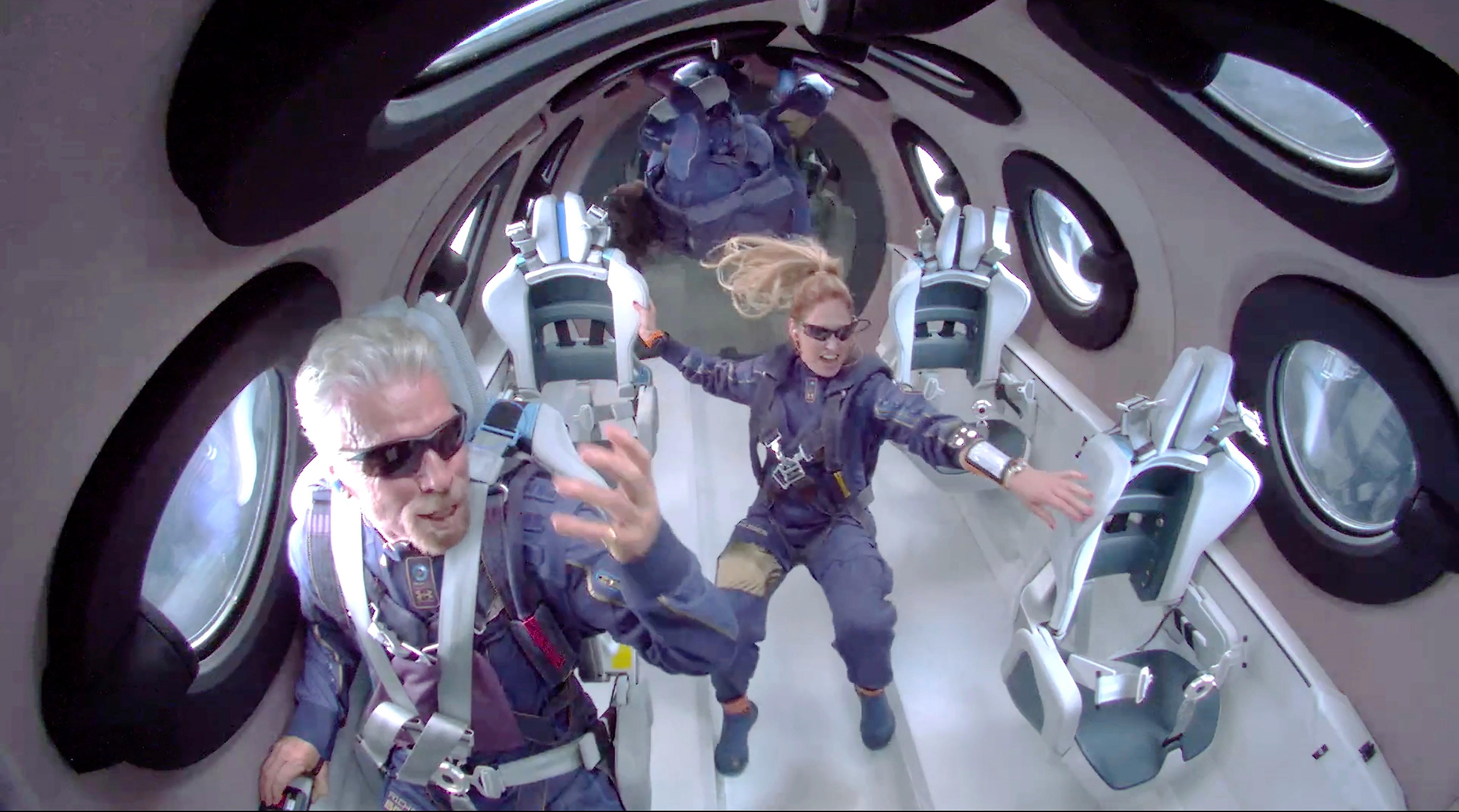
No company has yet cracked the magic formula for low-cost spaceflight that would allow them to lower ticket prices and achieve sustainable, regular operations at scale — though Branson and his chief rival Jeff Bezos have been trying for decades.
Virgin Galactic’s solution is a rocket-powered spaceplane that is carried to a high altitude by a conventional airplane before accelerating into space, cruising for a few minutes in microgravity, then gliding back to Earth.


Now, with Bezos’s Blue Origin pausing tourist flights for “no less than two years” as of January, and Elon Musk’s SpaceX focused on cargo lifting, satellite launches, and government contracts, Virgin Galactic is the only currently available option for a high-income thrill-seeker.
Colglazier said Monday that the company plans to run about four space flights per month while it refines its procedures, before stepping up to eight and then 10 flights per month.
He also warned that the $750,000 price tag — already a big increase from Virgin’s 2021 price of $450,000 per person — would not last long.
“We expect our prices will rise in steps over the near to medium term, and once this initial tranche of space flight reservations is concluded, we plan to retire sales at the $750,000 level,” he said.