

Britain is set to double the number of its troops in Norway to bolster defences in the High North against Vladimir Putin’s Russia.
The commitment will see the number of UK forces in the country rise from 1,000 to 2,000 over the next three years.
Defence Secretary John Healey, speaking during a visit to Royal Marines at Camp Viking in the Norwegian Arctic, also pledged UK participation in Nato’s Arctic Sentry mission.
This alliance initiative seeks to improve regional security and address concerns raised by Donald Trump regarding Greenland.
The announcement comes as General Sir Nick Carter, a former head of the armed forces, urged greater European co-operation to deter Russia and support Ukraine.
The Defence Secretary also confirmed that UK Armed Forces will play their part in Nato’s Arctic Sentry mission.
Mr Healey will join Nato counterparts to discuss the proposals at the alliance’s headquarters in Brussels on Thursday.

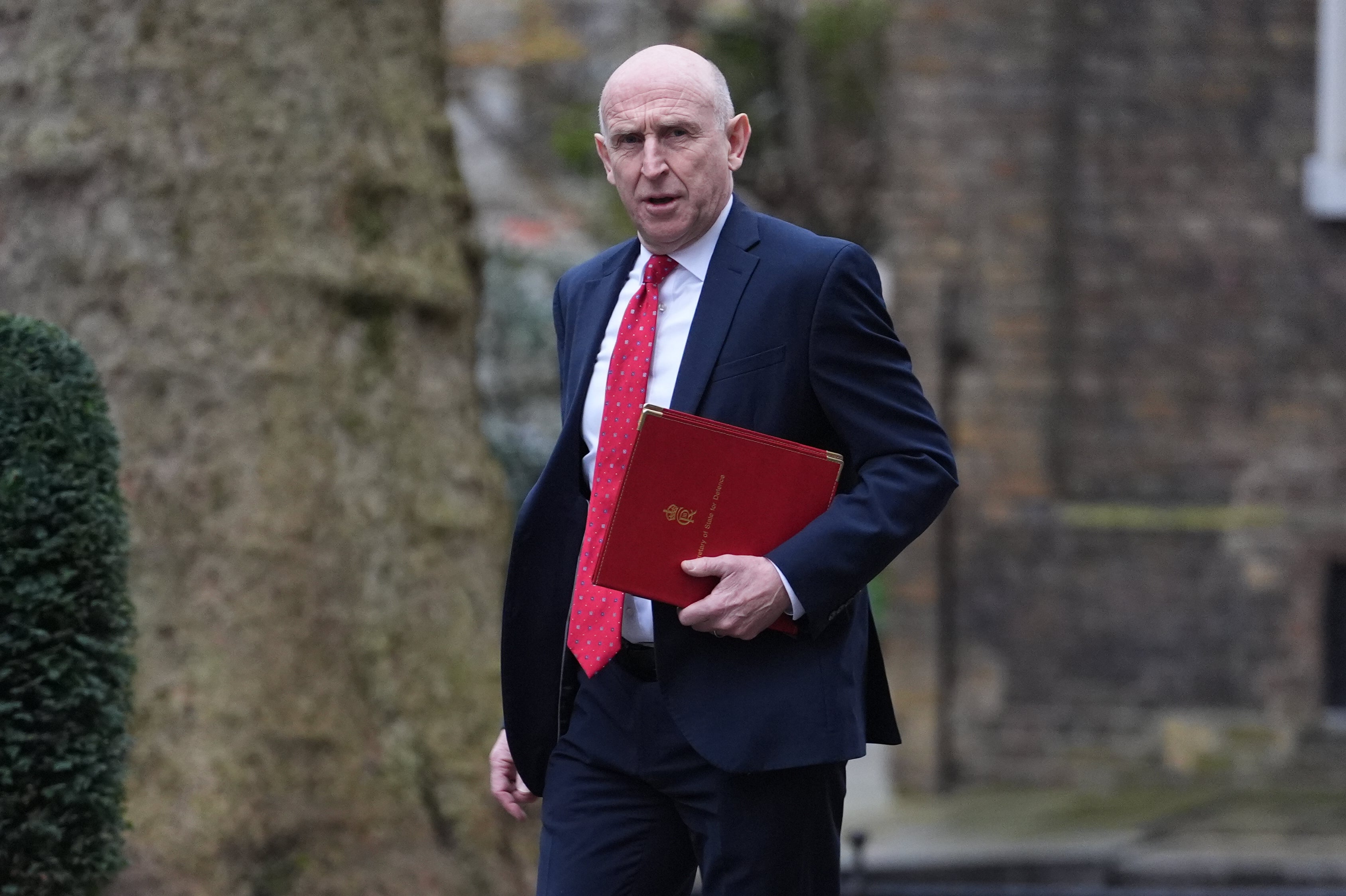
The Defence Secretary said: “Demands on defence are rising, and Russia poses the greatest threat to Arctic and High North security that we have seen since the Cold War.
“We see Putin rapidly re-establishing military presence in the region, including reopening old Cold War bases.
“The UK is stepping up to protect the Arctic and High North – doubling the number of troops we have in Norway and scaling up joint exercises with Nato allies.”
Some 1,500 commandos will be deployed to Norway in March for Nato’s Exercise Cold Response.
In September, the UK-led Joint Expeditionary Force will be carrying out major military exercises in the region – with air, land and naval forces training to protect critical infrastructure from attacks and sabotage.
The risk of Russian sabotage activity was highlighted by Sir Nick in a paper for the Tony Blair Institute.
He said: “We’re all aware that Russia and the GRU at the tip of the spear – that’s Russia’s intelligence services – are waging a campaign of sabotage and subversion in Europe, including incursions into our Nato airspace.
“Now we’ve got to be able to impose credible costs on this campaign, because otherwise it will continue.”
The paper called for wholesale improvements in European military power and urged continued support for Ukraine.
Sir Nick said: “Europe faces a growing external threat in an evolving world order at the same time as its political, fiscal and industrial systems are struggling to respond. After decades of under-investment in defence, this is no longer merely inefficient – it is dangerous. The path ahead for Europe’s leaders will not be easy; they cannot afford to fail. Drift is no longer a neutral option.
“Europe’s influence will depend on its ability to take rapid collective action. A Europe that can do so – and take responsibility for its own defence and security – will remain a shaper of the international order. A Europe that cannot, will be shaped by others.”