Temperatures exceeded 34C on Thursday, marking the eighth day this has happened in 2026, the Met Office has confirmed.
The forecasting agency said it makes 2026 a record year for the most number of days to reach 34C or higher in a calendar year.
It beats the previous record of seven days set in both the summer of 1976 and 2020.
Temperatures are expected to peak on Thursday and Friday as the country swelters in the third heatwave of the year.
The Met Office said they will “widely exceed 30C” across the UK, while some areas in England could hit 36C.
The succession of these unusually hot spells is causing growing impacts on health, agriculture, water resources, energy, wildfire risks and transport.
It comes as scientists warn that these weather events are becoming more intense and more frequent because of human-driven climate change, largely caused by the burning of fossil fuels.

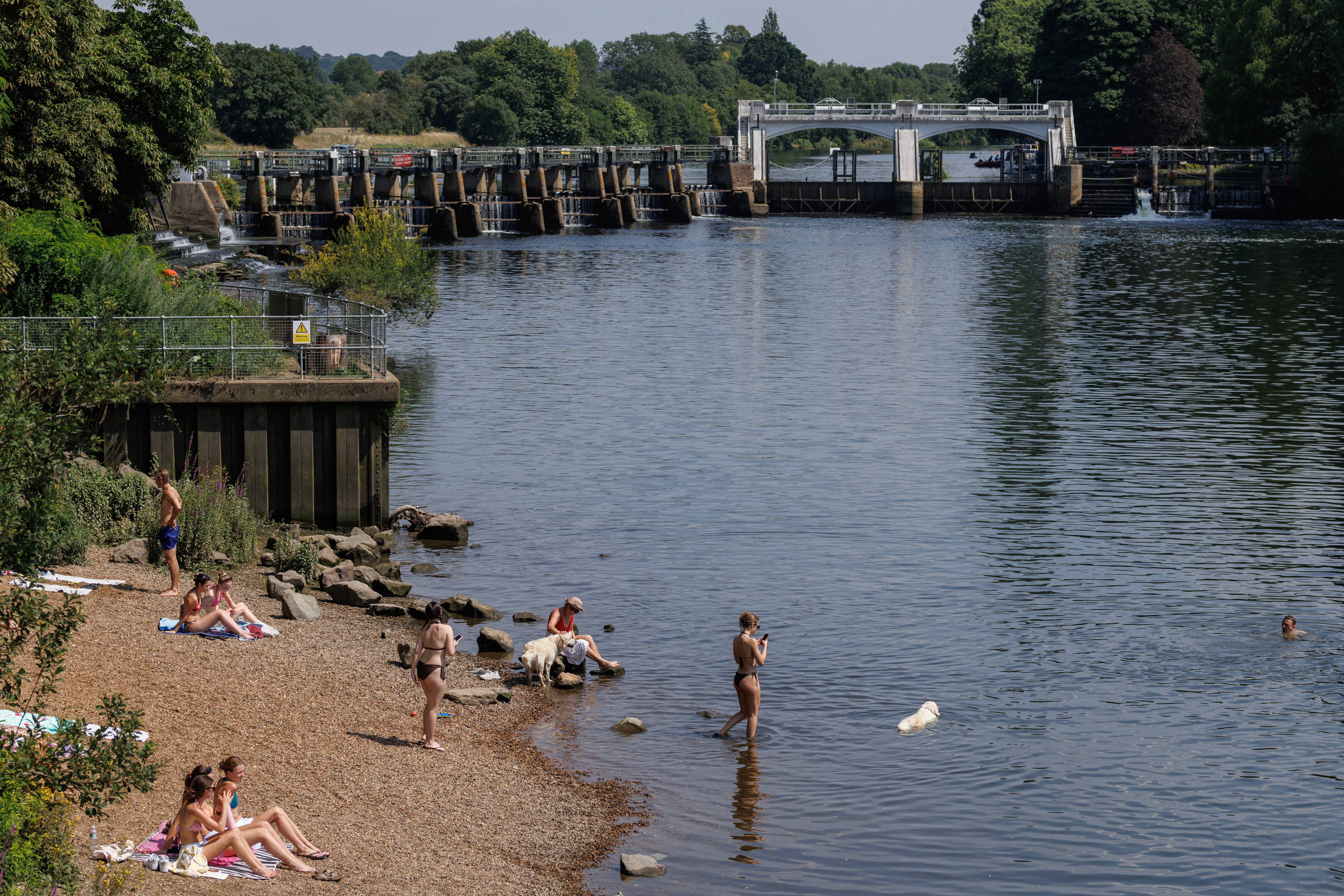
Concerns are also growing that areas of the country could face drought conditions this year after the warmest spring on record and the multiple heatwaves.
Officials from the National Drought Group recently said East Anglia, as well as Devon and Cornwall, have been facing ongoing dry conditions in particular.
Some hosepipe bans have now been announced as water companies scramble to manage increasingly tight resources.
Cambridge Water announced a temporary hosepipe for its 350,000 customers, marking the first time in three decades that it has introduced the restriction.
In a notice on Thursday afternoon, the utility said its teams are working around the clock to maintain supplies but local water resources “are now under significant pressure” with demand reaching record levels after low levels of rainfall.
South East Water became the first company to introduce a ban, which came into force on July 3 for areas of Kent, including those in Ashford, Canterbury, Faversham, Maidstone, Sevenoaks, Snodland, Tenterden and Tunbridge Wells.
Hosepipe restrictions are also being introduced for about one million Southern Water customers across Hampshire and the Isle of Wight from Friday.
On Wednesday, the National Fire Chiefs Council (NFCC) flagged the increasing risk of wildfires because of the dry and hot weather, advising people to avoid using disposable barbecues in open countryside, park and moorlands.
Meanwhile, Britain’s electricity grid operator issued another plea to the industry for more power generation amid the third heatwave of the year.
The National Energy System Operator (Neso) said it was forecasting a tight period for electricity margins for Thursday evening due to “extreme temperatures” in Europe.
More follows on this breaking news story…Subscribe here to get the latest updates from The Independent