

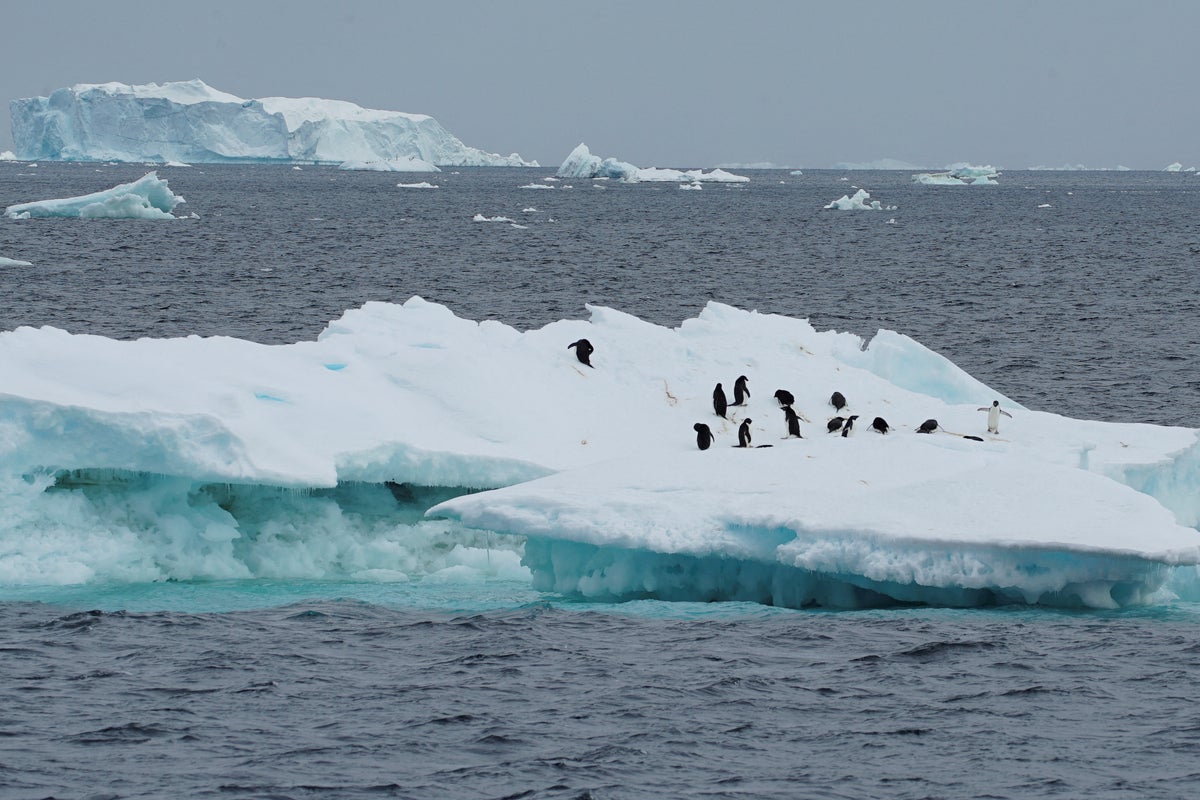
Antarctic sea ice has plummeted to unprecedented lows, researchers have found.
Scientists say this is due to a series of interconnected climate change-driven phenomena.
For years, the frozen continent appeared to resist global warming, with its ice levels steadily increasing until 2015.
However, this trend abruptly shifted.
Researchers at the University of Southampton now believe they have uncovered the reason, pinpointing three distinct events that disrupted the equilibrium of the surrounding Southern Ocean, triggering rapid ice melt.
Their findings indicate that human-induced climate change intensified winds, which, from around 2013, began drawing warm, saline water from the deep ocean closer to the surface.
Then in 2015, intense wind mixed the deeper heat directly into the surface layer, rapidly melting sea ice, particularly in East Antarctica, the researchers said.
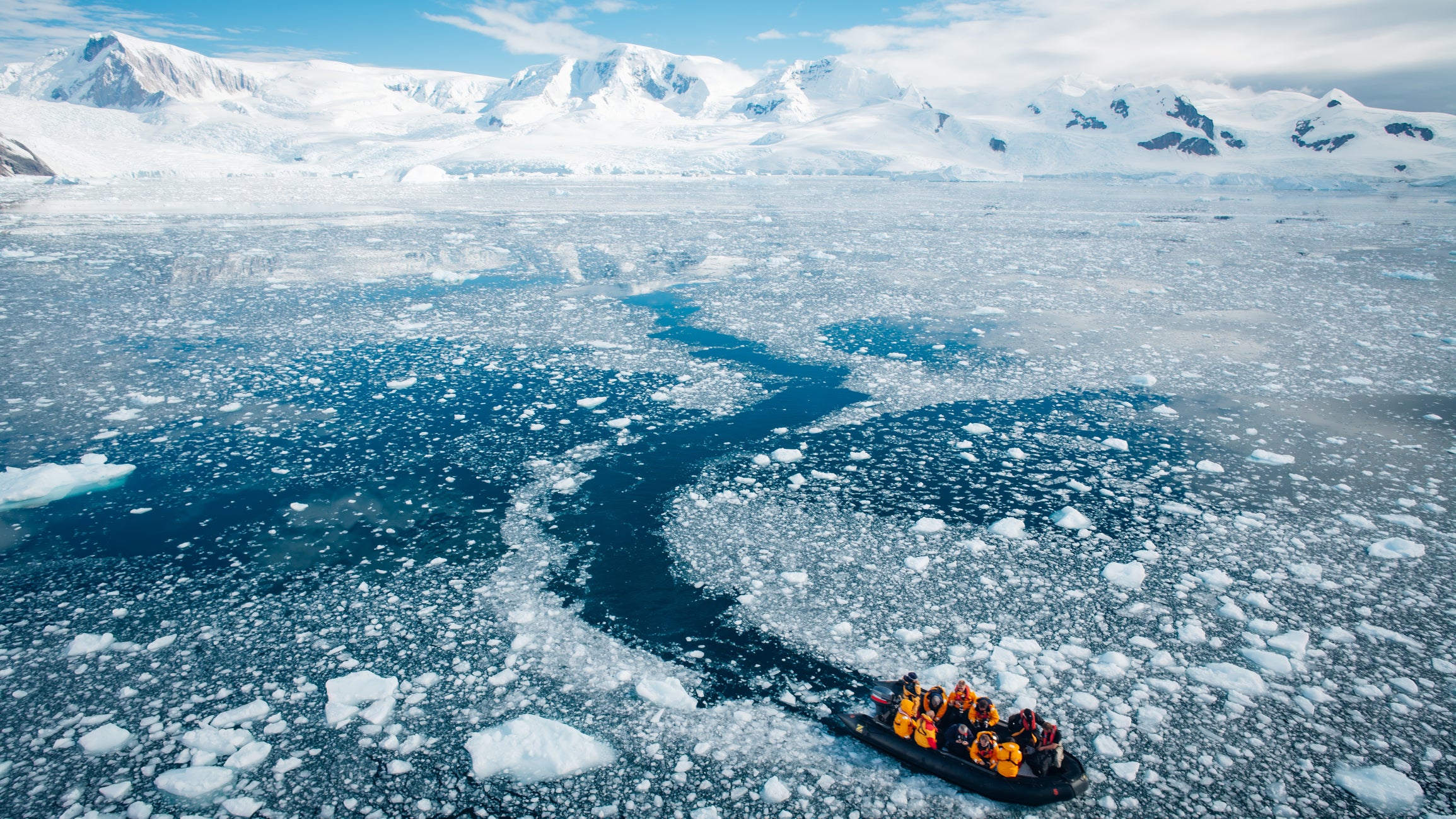
Since 2018, the ice-ocean system has been trapped in a cycle where – with less ice to melt – the surface remains salty and warm so that ice cannot recover.
The change has been so extreme that vast areas of ice equivalent to the size of Greenland have melted, leading to record-breaking lows in 2023, lead author and oceanographer Aditya Narayanan said.
She said the findings are “concerning” because massive loss of sea ice destabilises the world’s ocean current systems, warming the planet “far quicker than expected”.
Paper co-author Alessandro Silvano, also from the University of Southampton, warned that Antarctic ice melt “isn’t just a regional problem”.
He said: “Antarctic sea ice acts as Earth’s mirror, reflecting solar radiation back into space.
“Its loss could destabilise the currents that store heat and carbon in the ocean, accelerating global warming, and also destabilise ice shelves that prevent glaciers from sliding into the sea, raising global sea levels.”
Alberto Naveira Garabato, a professor in physical oceanography from the University of Southampton, said if deep-sea heat continues to be pushed to the Southern Ocean’s surface, it could cause a “prolonged low sea-ice state”.
He added: “If the low sea-ice coverage prevails into 2030 and beyond, the ocean may transition from a stabiliser of the world’s climate to a powerful new driver of global warming.”