

Luxury vinyl flooring has become one of the most popular flooring choices for modern homes, apartments, rental properties, and renovation projects. It is attractive, practical, relatively affordable, and often marketed as a waterproof alternative to hardwood, laminate, and tile.
At first glance, luxury vinyl plank flooring looks almost like the perfect solution. It can imitate natural wood or stone, it is easy to clean, it works well in kitchens and bathrooms, and it usually costs less than hardwood. For many homeowners, that combination is very appealing.
But a proper luxury vinyl flooring pros and cons 2026 comparison should look beyond showroom appearance. The real performance of LVP depends on product quality, wear layer thickness, core construction, subfloor preparation, installation method, maintenance habits, and how the floor is used every day.
The difference between a good and a bad flooring decision often appears after 1–5 years of use. Scratches, dents, gaps, fading, clicking sounds, and edge lifting can reveal whether the product was chosen and installed correctly. This guide looks at luxury vinyl flooring in real-world conditions — not only the sales promises.
Luxury vinyl flooring in 2026: quick pros and cons overview
Luxury vinyl flooring is popular because it solves many common flooring problems: moisture, maintenance, cost, and installation flexibility. However, it is not a perfect material for every home or every buyer.
|
Factor |
Pros |
Cons |
|
Water resistance |
Excellent |
Seams can still matter |
|
Durability |
High with good wear layer |
Can scratch or dent |
|
Cost |
More affordable than hardwood |
Premium LVP can be expensive |
|
Installation |
Fast and flexible |
Subfloor must be prepared well |
|
Maintenance |
Easy |
Harsh cleaners can damage finish |
|
Comfort |
Softer than tile |
Less authentic than real wood |
|
Lifespan |
10–25+ years |
Depends heavily on quality |
|
Resale value |
Improving |
Lower than hardwood in some markets |
Quick takeaways
Best for waterproof performance: luxury vinyl flooring
Best for busy homes: LVP with a strong wear layer
Best for kitchens and bathrooms: waterproof vinyl plank
Biggest risk: poor installation or low-quality product
Best value formula: premium LVP + proper subfloor + correct installation
The main conclusion is simple: luxury vinyl flooring can be an excellent choice, but only when the product quality matches the room, traffic level, and long-term expectations.
What is luxury vinyl flooring?
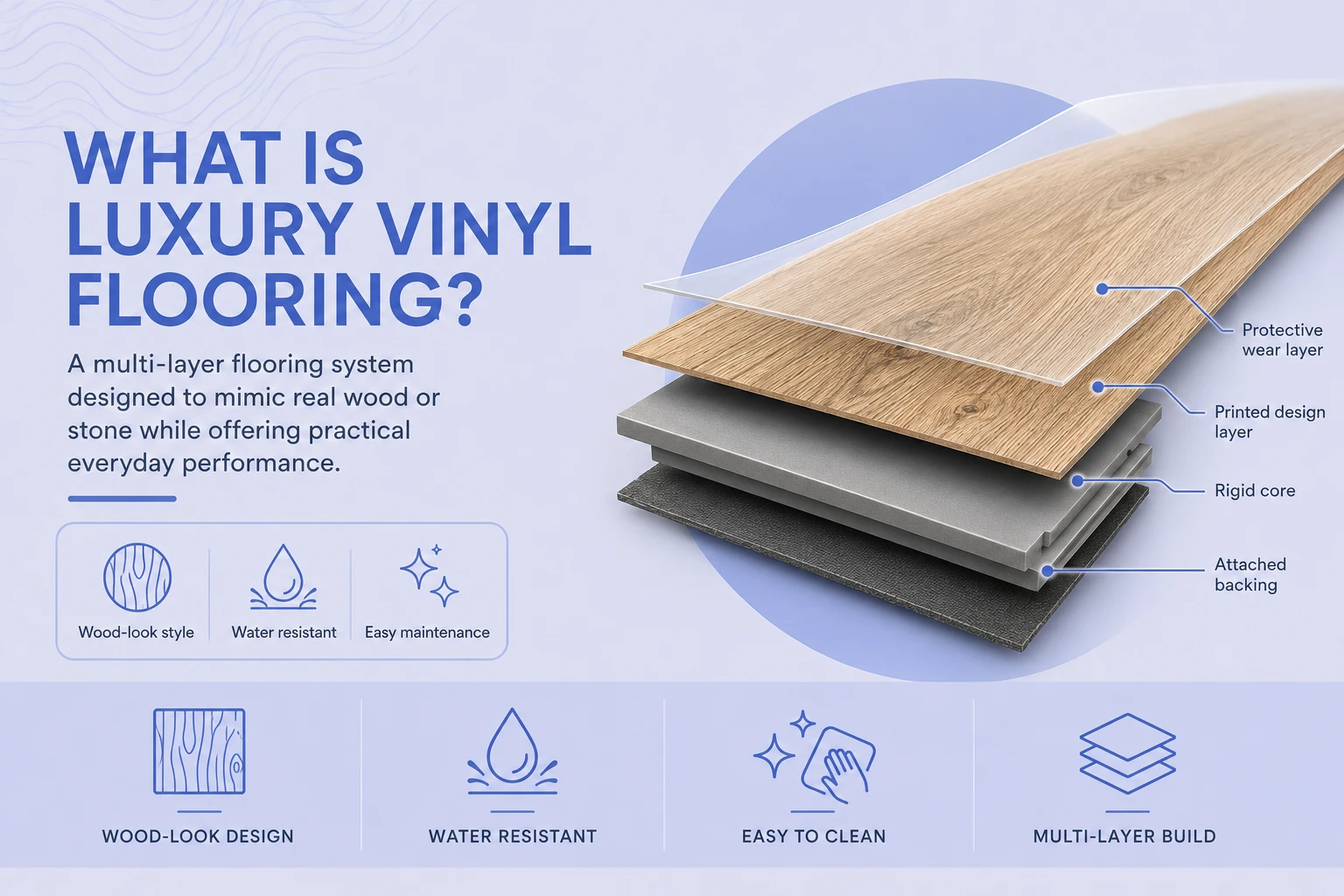
Luxury vinyl flooring, often called LVP or luxury vinyl plank, is a multi-layer synthetic flooring product designed to imitate natural materials such as hardwood, stone, or ceramic tile. It is usually sold in plank or tile format and is widely used in modern residential interiors.
Unlike older vinyl flooring, luxury vinyl plank flooring is thicker, more realistic, and more durable. Many modern products include a rigid core, a printed decorative layer, a transparent wear layer, and a protective top coating.
The structure usually includes:
- a protective surface coating;
- a wear layer;
- a printed design layer;
- a rigid or flexible core;
- a backing layer.
This layered construction is what gives LVP its practical advantages: water resistance, stability, comfort underfoot, and relatively easy installation.
Luxury vinyl plank vs standard vinyl flooring
Luxury vinyl plank is not the same as old-style sheet vinyl or basic vinyl tile. Standard vinyl flooring is usually thinner, less realistic, and less durable. LVP is designed to look more like real wood or stone and to perform better in residential spaces.
|
Feature |
Luxury Vinyl Plank |
Standard Vinyl |
|
Appearance |
More realistic |
Basic |
|
Structure |
Multi-layer |
Thinner |
|
Durability |
Higher |
Lower |
|
Installation |
Plank/tile format |
Sheet or basic tile |
|
Home value appeal |
Better |
Lower |
For homeowners comparing flooring in 2026, LVP usually feels like a more modern and attractive product than traditional vinyl flooring.
Main advantages of luxury vinyl flooring
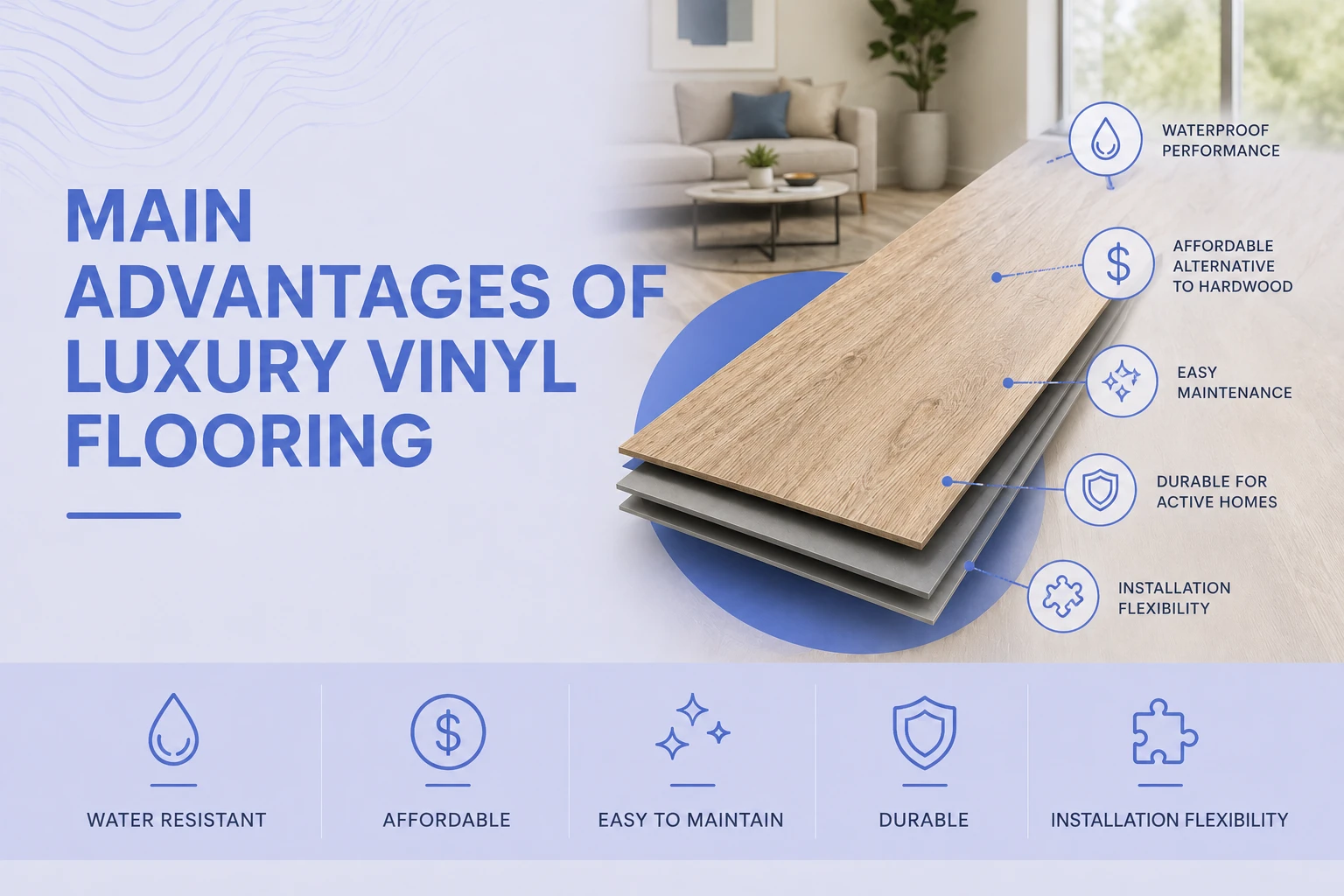
Luxury vinyl flooring became popular for a reason. It offers several practical advantages that are especially important for modern households with pets, kids, moisture exposure, and heavy daily use.
Waterproof performance
One of the biggest advantages of luxury vinyl flooring is its water resistance. Most high-quality LVP products are designed with a waterproof core, which makes them suitable for kitchens, bathrooms, laundry rooms, basements, and entryways.
Unlike hardwood, LVP does not absorb water in the same way. Unlike laminate, it is less likely to swell when exposed to moisture. This makes waterproof vinyl flooring one of the safest choices for rooms where spills and frequent cleaning are expected.
However, it is important to understand one limitation: waterproof core does not mean the entire floor system is completely risk-free. Seams, edges, subfloor moisture, and installation quality still matter. If water gets under the flooring and stays trapped, problems can still occur.
Affordable alternative to hardwood
Luxury vinyl plank is often chosen as a more affordable alternative to hardwood. It can reproduce the look of oak, walnut, maple, hickory, or other wood styles without the same material and installation costs.
Hardwood still has stronger prestige and natural authenticity, but LVP offers a practical balance between appearance and budget. For homeowners who want a wood-look floor without hardwood maintenance, luxury vinyl flooring can be a smart compromise.
Easy maintenance
LVP is easy to maintain compared with hardwood, carpet, and some types of tile. Regular sweeping or vacuuming and occasional damp mopping are usually enough to keep it clean.
It does not require sanding, refinishing, polishing, sealing, or special treatments. This makes it especially attractive for busy households, rental properties, and homes with children or pets.
The only caution is cleaning chemistry. Harsh cleaners, abrasive tools, waxes, and steam mops can damage some vinyl finishes. Homeowners should always follow the manufacturer’s cleaning instructions.
Good durability for active homes
A high-quality wear layer helps luxury vinyl flooring resist daily wear, scratches, stains, and scuffs. This is why LVP is commonly used in high-traffic spaces such as kitchens, hallways, living rooms, and entryways.
Durability depends heavily on the wear layer. A thin budget product may show wear quickly, while a 20 mil wear layer can perform well in homes with pets, children, and frequent activity.
Installation flexibility
Luxury vinyl flooring can be installed in several ways depending on the product type:
- floating click-lock installation;
- glue-down installation;
- loose lay installation;
- rigid core installation over suitable existing floors.
This makes it useful for renovation projects where removing old flooring may not be ideal. LVP can also work over concrete, plywood, or other approved subfloors if the base is properly prepared.
Disadvantages of vinyl plank flooring
A balanced review must also cover the disadvantages of vinyl plank flooring. LVP is practical, but it is not flawless.
It can scratch
Luxury vinyl plank is not fully scratch-proof. It is more forgiving than many traditional materials, but scratches can still happen.
Common causes include:
- pet claws;
- sand and grit;
- dragging furniture;
- sharp objects;
- heavy chairs without pads;
- poor cleaning tools.
A matte or textured finish can help hide small scratches better than a glossy surface. A stronger wear layer and aluminum oxide coating can also improve scratch resistance.
It can dent under heavy furniture
Vinyl plank flooring can dent if heavy furniture or appliances place pressure on small contact points. Thin legs, metal furniture feet, refrigerators, pianos, and heavy cabinets can create permanent marks.
This risk is higher with lower-quality or thinner vinyl products. Furniture pads and proper load distribution are important for long-term protection.
Low-quality LVP may look artificial
Not all luxury vinyl flooring looks premium. Budget collections may have repetitive patterns, flat texture, unnatural color, or a plastic-like appearance.
Higher-quality products usually offer better print variation, embossed texture, beveled edges, and more realistic wood or stone visuals. This is why choosing by price alone can be a mistake.
Subfloor problems can ruin the result
Vinyl flooring often requires a clean, dry, and level subfloor. If the base is uneven, the finished floor may move, click, separate, or show imperfections.
Common subfloor-related issues include:
- clicking sounds;
- gaps between planks;
- telegraphing of imperfections;
- unstable locking systems;
- premature wear.
Proper preparation is one of the most important steps in any LVP installation.
It may not increase resale value like hardwood
Luxury vinyl flooring has improved significantly in appearance and buyer acceptance, but hardwood still carries stronger traditional resale prestige in many real estate markets.
LVP can improve a home’s appeal when it looks modern, clean, and well installed. However, in luxury properties or historic homes, buyers may still expect real hardwood.
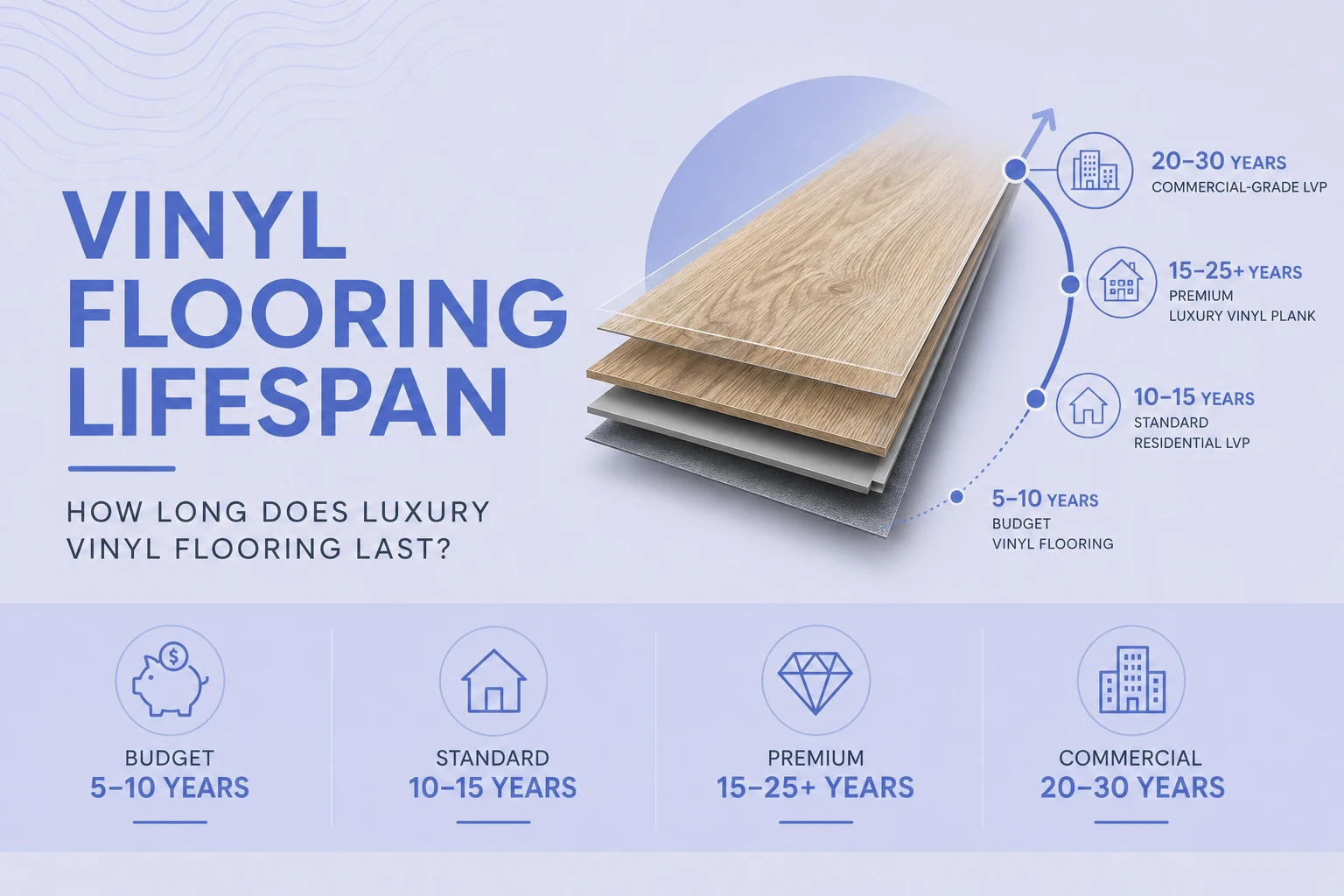
Vinyl flooring lifespan: how long does luxury vinyl flooring last?
Vinyl flooring lifespan depends on product quality, installation, traffic level, cleaning habits, and environmental conditions.
A cheap vinyl floor may look worn after several years. A premium luxury vinyl plank can last much longer if it is properly installed and maintained.
|
Product Quality |
Expected Lifespan |
|
Budget vinyl flooring |
5–10 years |
|
Standard residential LVP |
10–15 years |
|
Premium luxury vinyl plank |
15–25+ years |
|
Commercial-grade LVP |
20–30 years |
The main factors that affect lifespan include:
- wear layer thickness;
- plank thickness;
- SPC or WPC core quality;
- installation accuracy;
- subfloor condition;
- cleaning products;
- sunlight exposure;
- traffic level;
- furniture protection.
Luxury vinyl flooring lifespan can be excellent, but only when the product is matched to the room and installed correctly.
It is also important to separate physical lifespan from visual lifespan. A floor may still function structurally but look tired if it has scratches, dents, fading, or pattern wear.
Is luxury vinyl flooring worth it in 2026?
For many homeowners, the answer is yes. Luxury vinyl flooring is worth it in 2026 when the priority is practicality, moisture resistance, easy maintenance, and strong value.
LVP is not the same kind of investment as hardwood. It does not offer the same natural authenticity or refinishing potential. But it often performs better in rooms where hardwood or laminate can struggle.
|
Scenario |
Is LVP Worth It? |
Why |
|
Family homes |
Yes |
Easy care and durability |
|
Homes with pets |
Yes |
Better scratch and moisture resistance |
|
Kitchens |
Yes |
Waterproof performance |
|
Bathrooms |
Yes |
Moisture resistance |
|
Luxury resale homes |
Maybe |
Hardwood may carry more prestige |
|
Historic homes |
Maybe |
Natural materials may fit better |
|
Rental properties |
Yes |
Strong cost-performance balance |
Luxury vinyl flooring is worth it in 2026 for homeowners who prioritize practicality, moisture resistance, easy maintenance, and total value over traditional flooring prestige.
It is especially strong for:
- kitchens;
- bathrooms;
- basements;
- laundry rooms;
- rental homes;
- pet-friendly homes;
- family living areas;
- high-traffic spaces.
The key is to avoid the cheapest options and choose a product with a strong wear layer, stable core, realistic texture, and correct installation requirements.
Luxury vinyl flooring vs hardwood, laminate, and tile
When comparing flooring materials, LVP stands out because it balances cost, durability, moisture resistance, and maintenance.
|
Feature |
Luxury Vinyl |
Hardwood |
Laminate |
Tile |
|
Waterproof |
Excellent |
Poor |
Moderate |
Excellent |
|
Scratch resistance |
Good |
Moderate |
Good |
Excellent |
|
Comfort |
Good |
Good |
Moderate |
Hard/cold |
|
Maintenance |
Easy |
High |
Medium |
Easy |
|
Resale value |
Medium–High |
High |
Medium |
Medium |
|
Cost |
$$ |
$$$$ |
$–$$ |
$$–$$$ |
|
Pet suitability |
Excellent |
Moderate |
Good |
Good |
LVP is not always the most prestigious option, but it is one of the most balanced materials for cost, moisture resistance, and everyday durability.
Hardwood wins in authenticity and long-term prestige. Tile wins in extreme water resistance. Laminate may win on upfront price. But luxury vinyl flooring often offers the best overall compromise for modern households.
Expert questions answered
What are the disadvantages of luxury vinyl flooring?
The main disadvantages of luxury vinyl flooring include possible scratches, dents from heavy furniture, artificial appearance in low-quality collections, sensitivity to subfloor condition, and lower resale prestige compared with hardwood in some markets. LVP is practical, but it is not a perfect replacement for natural wood.
Is LVP flooring worth buying?
Yes, LVP flooring is worth buying if you want a practical, water-resistant, easy-care floor at a reasonable total cost. It is especially useful for families, pet owners, kitchens, bathrooms, basements, and rental properties.
Does vinyl plank scratch easily?
High-quality vinyl plank does not scratch easily, but it is not scratch-proof. Scratch resistance depends on the wear layer, surface coating, finish texture, maintenance habits, and the level of daily use. For pets and busy homes, a 20 mil wear layer is usually a better choice.
How long does luxury vinyl flooring last?
Standard residential luxury vinyl flooring typically lasts 10–15 years. Premium LVP can last 15–25+ years, while commercial-grade products may last longer with proper installation and care. Lifespan depends heavily on product quality and usage.
What problems can vinyl flooring have?
Vinyl flooring can develop scratches, dents, gaps, peaking, clicking sounds, fading, or edge lifting. Most problems are caused by low-quality products, uneven subfloors, poor installation, lack of expansion space, or unsuitable cleaning methods.
Is luxury vinyl flooring better than laminate?
In many modern homes, luxury vinyl flooring is more practical than laminate because it offers better moisture resistance and performs better in kitchens, bathrooms, basements, and entryways. Laminate may be cheaper, but LVP is usually safer for water-prone spaces.
Is luxury vinyl flooring good for pets?
Yes, luxury vinyl flooring is a good option for pets, especially when the product has a 20 mil wear layer, matte finish, and textured surface. It is easy to clean and generally handles pet activity better than hardwood.
Can luxury vinyl flooring be used in bathrooms?
Yes, waterproof luxury vinyl flooring can be used in bathrooms. However, proper installation is essential. The subfloor must be prepared correctly, seams must be tight, and manufacturer guidelines must be followed to prevent moisture-related issues.
Does luxury vinyl flooring add home value?
Luxury vinyl flooring can improve a home’s appeal because it looks modern, clean, and practical. However, hardwood often still carries higher traditional resale value. Premium LVP can be a strong choice for family homes, rentals, and modern renovations.
What thickness of vinyl plank flooring is best?
The best vinyl plank thickness depends on the room and usage. However, total thickness should not be the only decision factor. Wear layer, core type, locking system, and surface finish are often more important than thickness alone.
Expert note: choosing the right flooring supplier
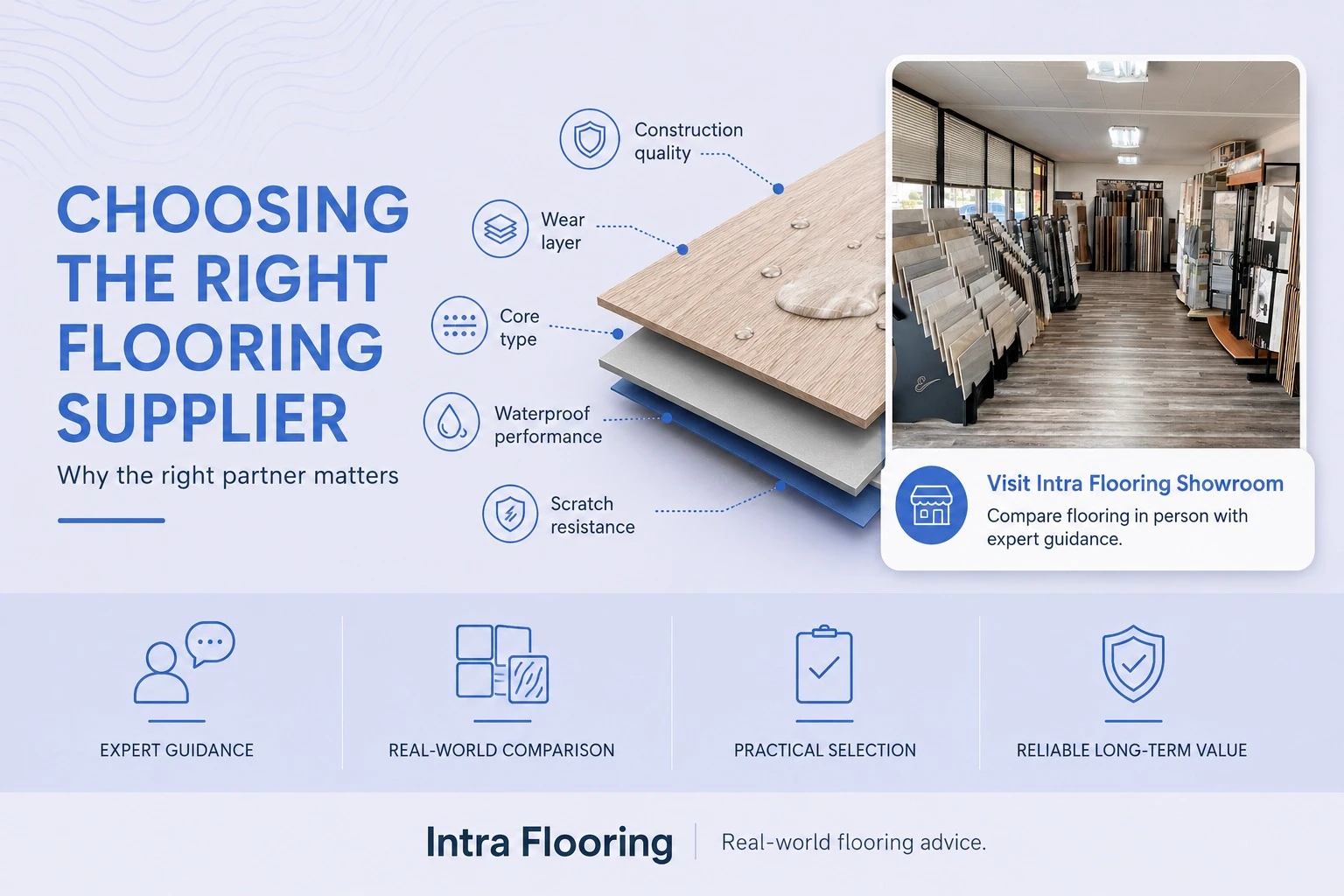
When choosing luxury vinyl flooring, the product itself is only part of the decision. Two floors that look similar in photos can perform very differently in real homes depending on construction quality, wear layer, core type, installation requirements, and room conditions.
The right flooring supplier should help homeowners compare more than color and price. A reliable partner should explain waterproof performance, scratch resistance, subfloor preparation, maintenance needs, and long-term value in practical terms.
Intra Flooring helps homeowners choose flooring based on real-world performance, not just appearance. Their approach focuses on matching the right material to the right space — whether the priority is waterproof protection, pet-friendly durability, easy maintenance, or long-term value.
For homeowners comparing luxury vinyl flooring, laminate, hardwood, and other flooring options, working with an experienced supplier can make the selection process more accurate, efficient, and reliable.