



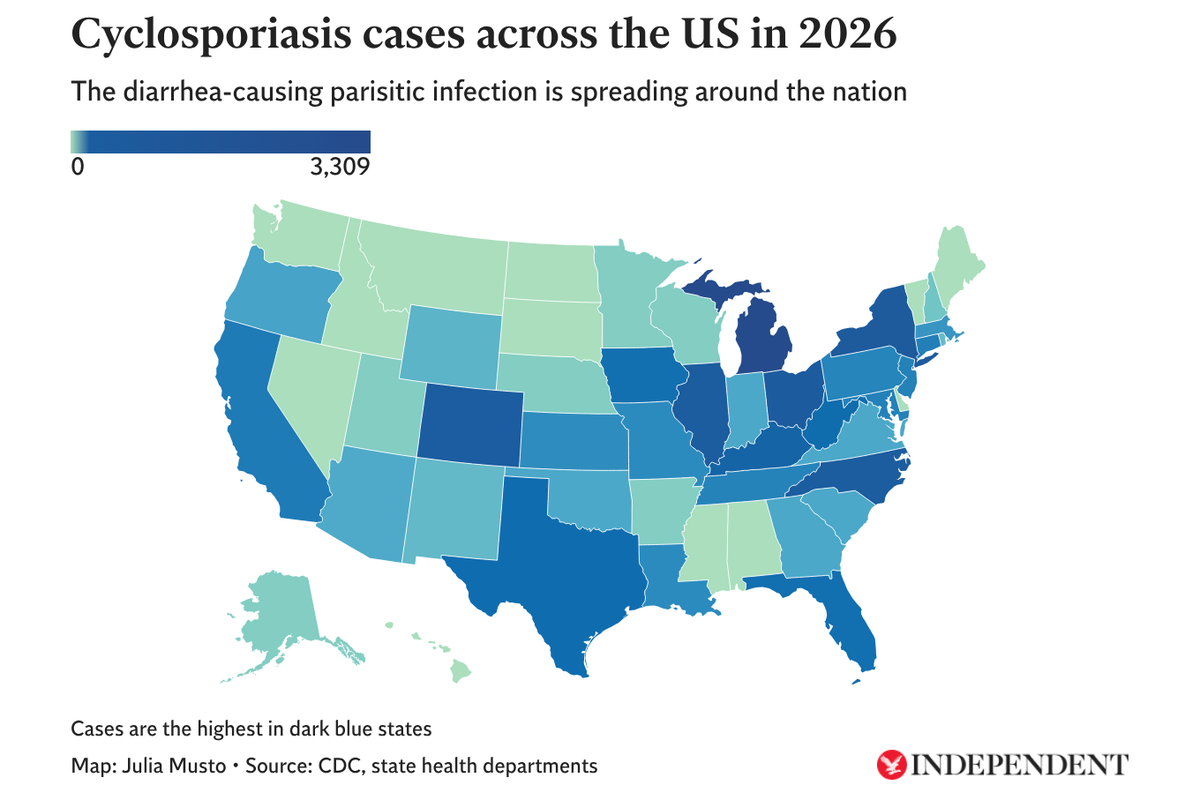
Cases of a parasitic disease that causes “explosive diarrhea” are continuing to rise in 40 states this week.
Cyclosporiasis infections are rarely fatal but can lead to an uncomfortable illness lasting for weeks, with symptoms also including vomiting and fever.
The nasty stomach bug is spread by eating fresh produce or drinking water contaminated with the cyclospora parasite but officials have yet to find the source of the current outbreaks.
Cases in Michigan, New York, and Illinois have soared in the last few weeks.
There are 3,300 cases in Michigan – the hardest hit state – and over 5,500 nationwide, according to The Independent’s latest analysis of state and federal data, though the real count is likely much higher.
The map below shows where cases are located, state by state. The states colored in light green have the lowest numbers and increase to dark blue with the most cases. Roll over the map for specific counts.
Past outbreaks have been traced to bagged salad mixes, popular herbs, snow peas, green onions and raspberries.
“While the investigation is ongoing, available information indicates that lettuce or salad greens may be a potential source of this outbreak,” Michigan’s Department of Health and Human Services said in a statement Tuesday. “However, other food items cannot be completely ruled out.”
The fast food chain Taco Bell is under investigation, sources told The Washington Post. Taco Bell has pulled some fresh ingredients from its menu at some locations.
The hardest hit states appear to be in the eastern U.S. but case data is incomplete. Data from the U.S. Centers for Disease Control and Prevention has lagged behind state reports.
On Tuesday, the CDC’s Health Alert Network said it had received reports of 1,645 confirmed domestic cases and was aware of more than 5,100 requiring further analysis.
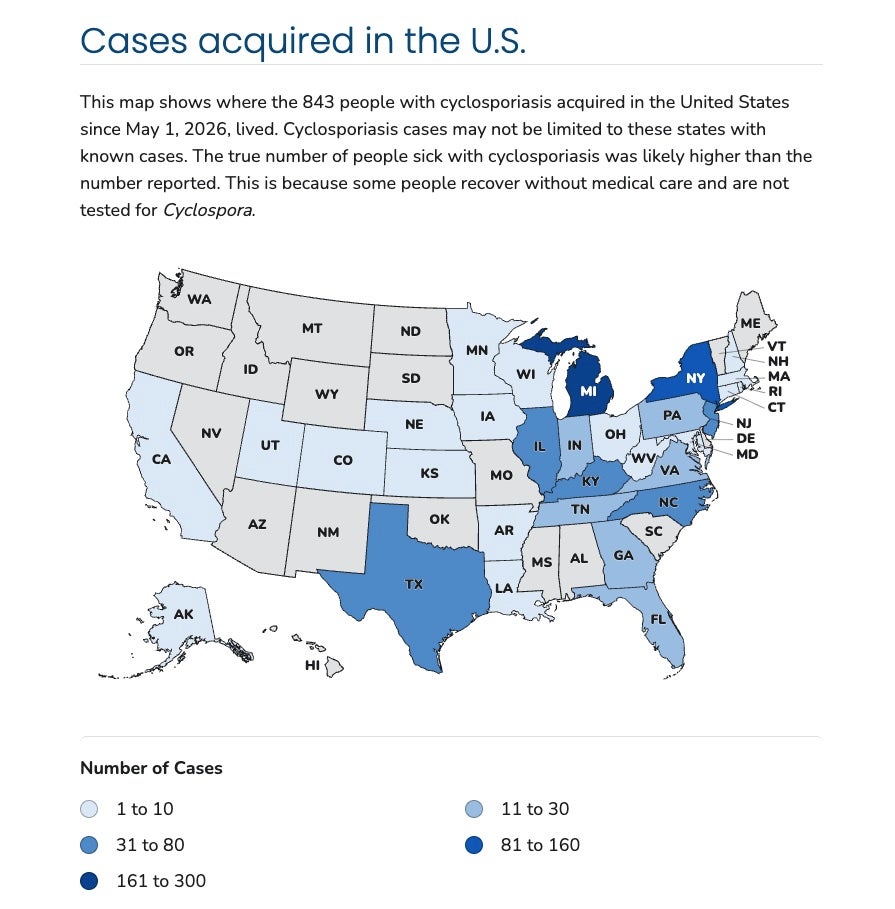
“This is substantially higher than the 249 cases reported nationally by this same time last year. Of the 1,645 case-patients with available information, 141 (9 percent) were hospitalized, and none have died,” the federal health agency said.
Under the second Trump administration, FoodNet, the foodborne illness surveillance arm of the CDC, made tracking cyclospora optional. That change had no impact to tracking this season, according to the CDC.
But even without firm case counts, people can still take action to protect themselves. The best way to reduce exposure to cyclospora is to avoid any potentially-contaminated sources, as well as to cook and thoroughly clean food. Heating food to 158 degrees Fahrenheit kills cyclospora.
Symptoms of infection typically appear a week after consuming the contaminated food or water but can take as little as two days or up to two weeks to appear, according to New York health officials.
Some people may not experience any symptoms.
“If you’re having symptoms that don’t seem to want to go away, or you’ve got several people around you that are sick with a similar illness after eating the same food or having the same exposure, those are the clues you want to put together,” primary care provider Dr. Austin Williams told Ohio hospital non-profit Kettering Health.
Doctors recommend that people who have cyclosporiasis get treated with antibiotics.

