



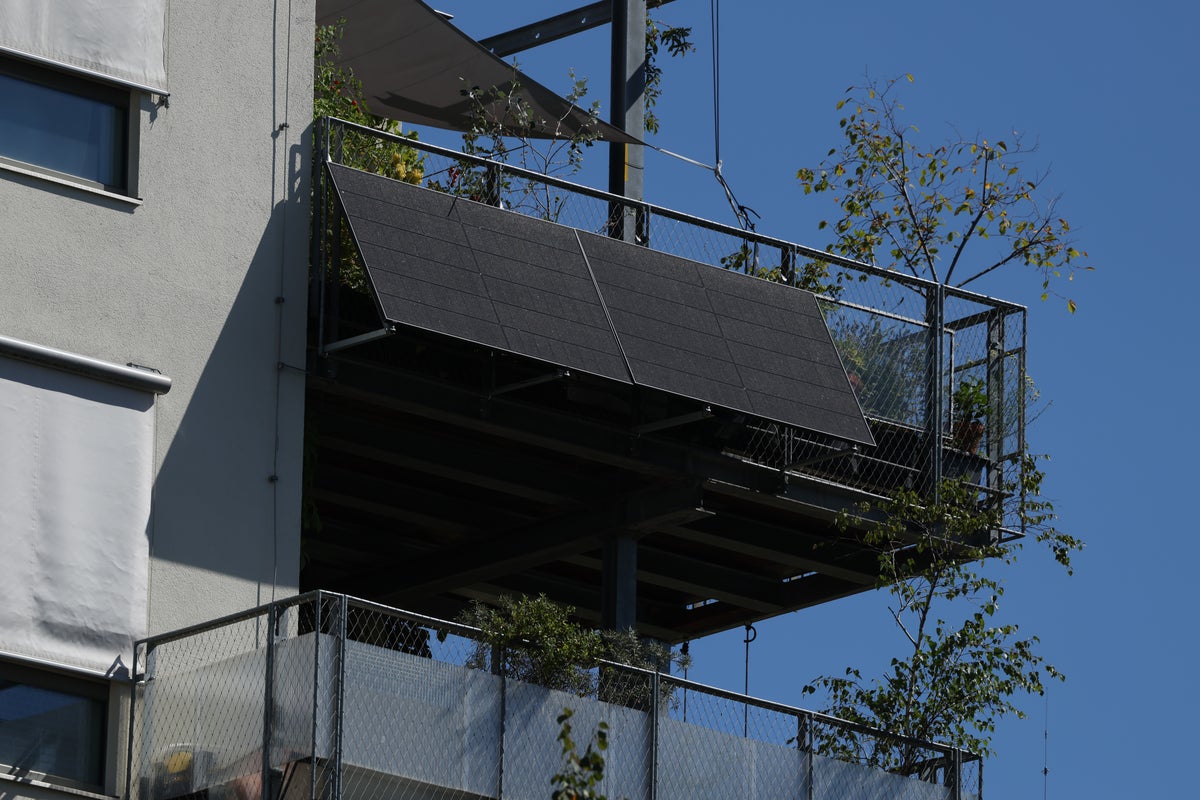
The answer to rising electricity bills may soon be found somewhere unexpected: the middle aisle of Lidl.
Small plug-in solar panels, also known as balcony solar panels, could soon appear on UK shelves after the government announced plans to make the technology easier to use in British homes. Retailers, including Lidl and Iceland, alongside solar brands such as EcoFlow, are working with ministers on plans to bring approved plug-in solar kits to the UK market.
The appeal is obvious. Unlike a full rooftop solar installation, plug-in solar panels are designed to offer a lower-cost way to generate some of your own electricity, without scaffolding, major building work or a five-figure home improvement project.
But they are not a like-for-like alternative to rooftop solar panels. They generate far less electricity, will not take your home off-grid and may not suit every property. So before you start imagining a solar panel next to the weekly shop, here’s how the technology works, how much it could save, and what you should check before buying one.
Read more: I’m an energy expert – here’s what I really think about plug-in solar panels
Read more: Best portable solar chargers
What is a plug-in solar panel?
Plug-in solar panels are small solar kits designed to feed electricity into your home without the cost or disruption of a full rooftop installation.
A typical kit includes one or more solar panels and a microinverter, which converts the electricity generated by the panel into a form your home can use. Some systems are designed for balconies, patios, garden walls, sheds or other sunny outdoor spaces, making them particularly appealing to renters, flat owners and households without a suitable roof.
The basic idea is simple: when the sun shines, the panel generates electricity. Instead of powering one specific appliance directly, the electricity is used by whatever is running in your home at the time. This reduces the amount of power you need to import from the grid.
In practice, this could help offset the electricity used by everyday appliances such as your fridge, wifi router, laptop, TV or washing machine while the system is generating power.
Plug-in solar is already common in parts of Europe, particularly in Germany, where balcony solar kits have become a popular way for apartment dwellers to generate a modest amount of renewable electricity. The UK has been slower to adopt the technology, partly because of wiring and grid-connection rules.
The government now wants to remove some of those barriers and make approved plug-in solar products available to British consumers. However, households should wait for products that are clearly certified for the UK market, rather than buying imported kits designed for countries with different electrical rules.
Do plug-in solar panels use a normal wall socket?
This is the part where consumers need to be careful. The promise of plug-in solar is that approved kits should be much simpler to connect than a full rooftop solar array. The government has described the technology as a way for households to use solar power through a mains socket, and the aim is to make small-scale solar easier and cheaper to adopt.
However, that does not mean you should buy any solar panel online and plug it into a standard socket at home. The safe and compliant route will depend on the product, the connection method and the final UK standards that apply.
In other words, wait for UK-approved products and follow the manufacturer’s instructions. A plug-in solar panel is designed to be simpler than rooftop solar, but it still needs to be connected, positioned and used safely.
Read more: How do plug-in solar panels work?
How much will they save you?
Plug-in solar panels will not wipe out your electricity bill, but they could reduce the amount of electricity you buy from your supplier.
Government estimates suggest some households could save around £70 to £110 a year on energy bills. But that figure should be treated as a guide, not a guarantee. Your actual savings will depend on several factors, including:
- How many panels you have
- How much sunlight they receive
- Whether they face south, east, west or north
- Whether they are shaded by trees, buildings or balcony walls
- How much electricity you use during the day
- Whether the system can export surplus electricity safely and whether you are paid for it
A sunny, south-facing balcony or patio is likely to perform much better than a shaded or north-facing space. Similarly, a household that uses electricity during the day may benefit more than one where most demand is in the evening after the sun has gone down.
If a kit costs around £400 to £500 and saves £70 to £110 a year, the payback period could be roughly four to seven years in favourable conditions. For some homes, it may take longer.
After that point, the system could continue reducing your electricity bills for several more years, provided it remains in good working order. But it is better to think of plug-in solar as a modest bill-reduction tool, not a route to “free electricity” or a guaranteed profit.
Read more: Do plug-in solar panels save you money?
How does plug-in solar compare with rooftop solar?
Plug-in solar is cheaper and simpler than a traditional rooftop solar array, but it is also much smaller.
A full rooftop solar system in the UK typically costs several thousand pounds and usually requires a professional installation. In return, it can generate a much larger share of a household’s annual electricity use and may be paired with a battery to store power for the evening.
A plug-in solar panel is different. It is designed to lower the barrier to entry, especially for people who cannot install rooftop panels because they rent, live in a flat, have a shaded roof or cannot afford the upfront cost.
That makes plug-in solar potentially useful, but limited. It could shave money off your electricity bill, but it will not deliver the same savings as a well-sized rooftop system.
When will Lidl sell plug-in solar panels?
The government said in March that plug-in solar kits could become available in the UK “within months”, with retailers including Lidl and Iceland involved in discussions about the rollout.
EcoFlow, which already sells portable power stations and solar products, is also among the companies working with the government.
At this stage, however, shoppers should be cautious about assuming exactly what will appear in stores, how much it will cost or when it will launch. There is not yet a confirmed Lidl product, price or nationwide sale date.
If the rollout goes ahead as planned, plug-in solar could become a new category of consumer energy product: not quite a gadget, not quite a full home improvement project, but something in between.
What should you check before buying plug-in solar panels?
Plug-in solar won’t be suitable for every home. Before buying a kit, you should check:
Whether the product is approved for the UK market. Do not assume that a balcony solar kit sold in Europe is automatically suitable for a British home. Look for products that are clearly designed and certified for UK use.
Whether you have a sunny enough space. South-facing panels usually generate the most electricity. East- or west-facing panels can still work, but shaded or north-facing spaces may produce much less.
Whether you need permission. Renters, leaseholders and flat owners may need permission from a landlord, freeholder, managing agent or building owner before fixing panels to a balcony, wall or shared exterior space.
How the panel will be secured. A solar panel fixed to a balcony or wall needs to be safe in wind and bad weather. It should not create a risk to people below.
How the cable will be routed. Avoid trailing cables through windows, across walkways or into places where they could be damaged. Outdoor electrical equipment needs to be used safely.
How much electricity you use during daylight hours. The best savings are likely to come when you are using electricity while the panel is generating power.