

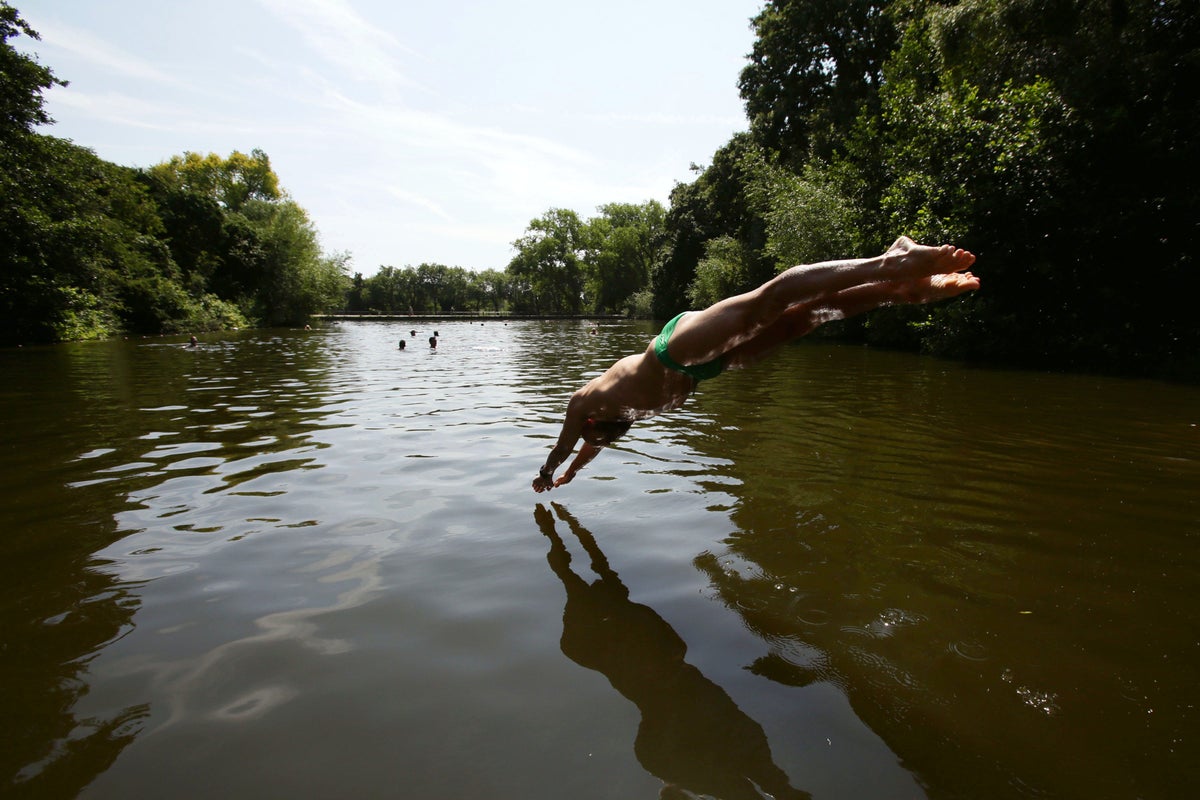
Over the past week, Britons flocked to the seaside, to swimming ponds, lakes and rivers across the country as the UK endured the hottest June temperatures on record.
Yet figures from environmental charity Surfers Against Sewage showed that during last week’s heatwave, some 2,856 hours’ worth of sewage was released into UK waters.
This includes 99 hours’ worth of sewage being discharged into designated bathing waters, which are sites that have been recognised as popular for swimming and paddling and are tested regularly.
The charity’s safer seas and rivers service, which provides real-time alerts for sewage discharges, triggered 46 alerts from 43 locations between 22 to 26 June.
Data shows that Thames Water was responsible for the most sewage discharges in England. The company spilled sewage for 377 hours, the equivalent of 16 days’ worth of sewage discharge, packed into just one week as people flocked to the rivers, lakes and coast to cool off.
Thames Water – Britain’s biggest water supplier with 16 million customers – has faced a series of hefty fines for its poor environmental performance in recent years.
The utility company currently faces nearly £20bn of debt and has been left close to collapse.
Meanwhile, Southern Water was responsible for the highest number of sewage discharges into bathing waters, spilling sewage for 49 hours between 22 and 26 June – the equivalent of 10 hours per day.
These are locations where there is a legal onus for polluters to clean up their act, and are tested for two types of bacteria, E. coli and intestinal enterococci. If a bathing spot is rated ‘poor’, the responsible water company must take targeted action to investigate and improve the water quality.
These spills occurred during the heavy thunderstorms last Tuesday, which saw a significant chunk of the typical June monthly rainfall average arriving in a single morning, with areas such as Sheppey receiving an estimated 30 to 40mm of rain.
Water companies are legally allowed to release untreated sewage into rivers and seas after heavy rain, to ensure the UK’s ailing pipe network doesn’t become overwhelmed. However, the Environment Agency deems it illegal if spills occur during a dry period of more than 24 hours.
Last July, the Labour government pledged £104bn to upgrade the sewage system to cut sewage pollution, and to force companies to invest in upgrades.
Through their monitoring app, the charity also received notice of 60 cases of sickness from 39 different locations in England.
Prior to the heatwave, the Met Office encouraged the public to be “weather ready” by making informed choices on swimming and locations as they head outdoors or to the coast to enjoy the sunshine.
Campaign group River Action warned of the health risks posed by poor water quality, even in designated bathing spots. Poor water quality caused by sewage spills and pollution in many of the country’s waterways can put people’s health at risk with illnesses such as E.coli or norovirus, as well as skin, eye and ear infections.
Jo Morley, head of campaigns and advocacy at Surfers Against Sewage said: “Rain, shine, extreme heat – whatever the weather the polluters keep on polluting and the public pay the price. It’s beyond unacceptable that in the hottest week of the year, we can’t even take a dip to cool off without the risk of getting sick.
“Decades of neglecting infrastructure to boost profits has left us with a water system totally unfit for purpose, and as more extreme weather becomes the norm, this already dire situation will only get worse.
“Whoever next walks through the door to No.10 must prioritise fixing this national scandal. Half measures won’t cut it, it’s time to bring failing water companies into special administration, starting with the poster-child for this broken sector, Thames Water.”
A Thames Water spokesperson said: “Last week London and some of the Thames Valley experienced significant storms that caused flash flooding and severe damage to areas affected.
“As a result of this unusual weather event, some permitted storm overflows operated across our network. These systems are designed to prevent sewage from backing up into people’s homes during periods of intense wet weather.
“Taking action to improve the health of our rivers remains a key priority. Over the next five years, we are delivering the most significant upgrade to our wastewater network in 150 years, including increased treatment capacity, reduced storm discharges, and new nutrient reduction schemes.”
A Defra spokesperson said: “After years of failure, this government has taken decisive action – introducing new laws to ban unfair bonuses for water bosses and making it a criminal offence to cover up illegal sewage spills.
“Our once-in-a-generation reforms will create a powerful new regulator, end the era of self-monitoring, and bring ‘no notice’ inspections to clean up our rivers, lakes and seas for good.”
A Water UK spokesperson said: “No sewage spill is ever acceptable, and we are working to end them as fast as we physically can. That’s why we are tripling investment over the next five years to halve spills from storm overflows and upgrade the capacity of 1,700 wastewater treatment works.
“This is part of a record £104 billion investment programme – the largest in the industry’s history – to stop sewage entering our rivers and seas, secure our water supplies and support economic growth.”