
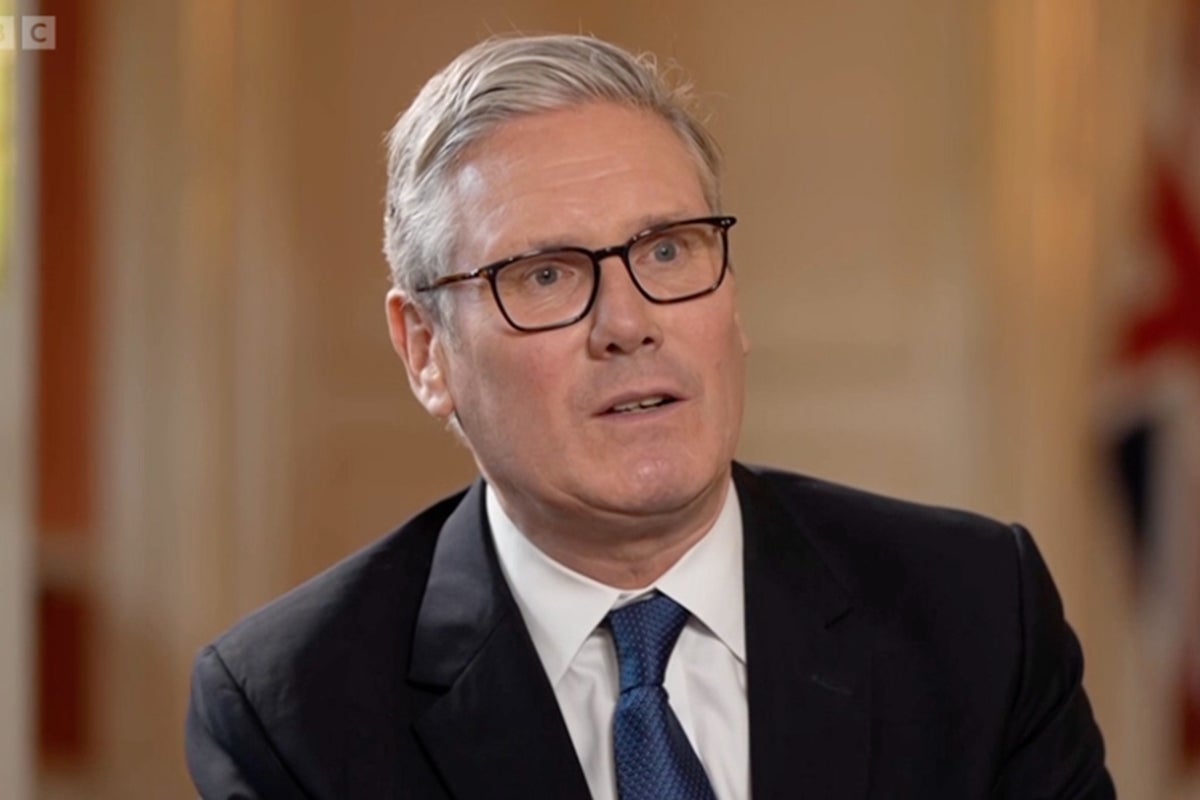

Sir Keir Starmer is unmoved by the resignation of his defence secretary and his parliamentary under-secretary for the armed forces. The prime minister told the BBC: “There will always be people saying, ‘I would do this’, ‘I would do that’, ‘I would do the other’. The question back to them is, ‘What is it you wouldn’t do?’ Because government is about trade-offs.”
He said that he disagreed with his critics, and argued that he was moving as quickly as possible to ramp up defence spending, given that he had already raided the foreign aid budget and was now having to siphon money out of other departments’ capital budgets.
“I would just gently say this: that whoever is prime minister is going to face the same prevailing winds as I am facing. None of that is going to change.”
In other words, he was challenging Andy Burnham, who hopes to become the MP for Makerfield next week and prime minister soon after that, to set out what he would do differently.
It is a challenge that should be taken up by Mr Burnham, and by anyone else who is considering standing as a candidate in a Labour leadership election. Mr Burnham should say whether he agrees with John Healey and Al Carns that defence spending should be increased more quickly.
If so, Sir Keir is absolutely right to point out that his rival has to say where the money will come from. Which tax would Mr Burnham raise? Or what spending would he cut? Just because Sir Keir has failed to fulfil the expectations that he himself raised does not mean that it would be easy to meet those expectations. “Easy answers are by their nature easy,” as Sir Keir said. A prime minister is required to make what he called “hard-edged decisions”.
It may be that Mr Burnham – or Wes Streeting, or Angela Rayner – will agree with Mr Healey, Mr Carns and The Independent that defence spending should be increased further. In which case, they will have to say how they will pay for it. We have suggested restraining the rate of increase in spending on disability benefits, and adjusting the triple lock for uprating the state pension, but we have also said that, if necessary, there should be a “defence levy”: a small surcharge on income tax. Let us see if that is the kind of difficult decision that Sir Keir’s rivals are prepared to take.
On the other hand, Mr Burnham and the others may decide that the prime minister has been good enough to take the heat for the snail’s pace of progress towards the target of spending 3 per cent of national income on defence, and that they can sit tight and avoid making promises that will be hard to deliver.
Above all, Mr Burnham may decide that a new face in No 10 will be enough of a change, and that no one will notice that, after several false starts followed by U-turns, his policies are broadly the same as Sir Keir’s.
If that is the case, Mr Burnham needs to be straight with people. He should avoid saying, as Sir Keir said repeatedly today, that defence is “my No 1 priority”, when the spending plans suggest otherwise. Mr Burnham could say that Britain already spends more on defence than most Nato countries, and that 3 per cent is a bit high. We would disagree with him, but it would be a coherent and honest position, and one that could legitimately be adopted by a new prime minister.
Whoever is prime minister in the coming weeks has an important decision to make. The Defence Investment Plan, which before Mr Healey’s resignation was going to be published today, will probably now emerge in the days before the Nato summit on 7 July. It will either contain the plan to spend 2.68 per cent of national income in 2030 – which, according to Mr Healey and Mr Carns, is not enough – or that figure will be increased slightly.
Either way, the nation will finally have clarity about the price it is prepared to pay for national security.
