


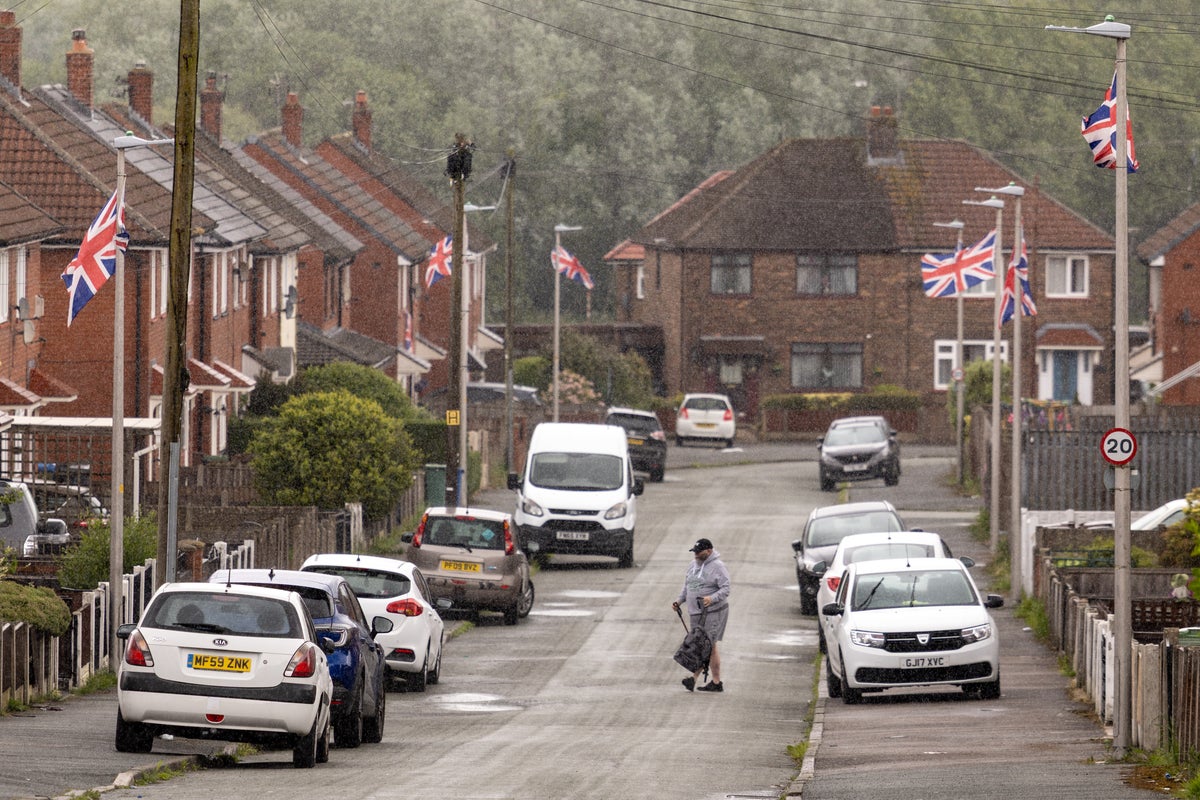
As constituencies go, Makerfield is about as typical a traditional Labour seat as you’re likely to find.
Once a hotbed of coal mining between St Helens and Wigan, Makerfield is not a place itself but takes its name from the “in-Makerfield” suffix of the working-class towns of Ashton and Ince.
It is a quintessential brick in the “red wall” that Labour has relied on for decades to buttress its national coalition, and the kind of seat that it would previously not have ever considered losing.
Labour has held the constituency since its 1983 creation, and its previous iteration for more than a century. In almost any other era in recent history, a by-election in Makerfield would have been a bit of a non-event – Labour would have walked it.
But today, that is far from the case. Sir Keir Starmer’s party now faces an almighty fight to hold onto it when voters go to the polls in June for a by-election, triggered by the resignation of Josh Simons.
The by-election could set Andy Burnham on his way to Downing Street, but it is another opportunity for Reform to take another huge Labour scalp, hoping to capitalise on May’s local election results, when it took a hammer to that red wall.
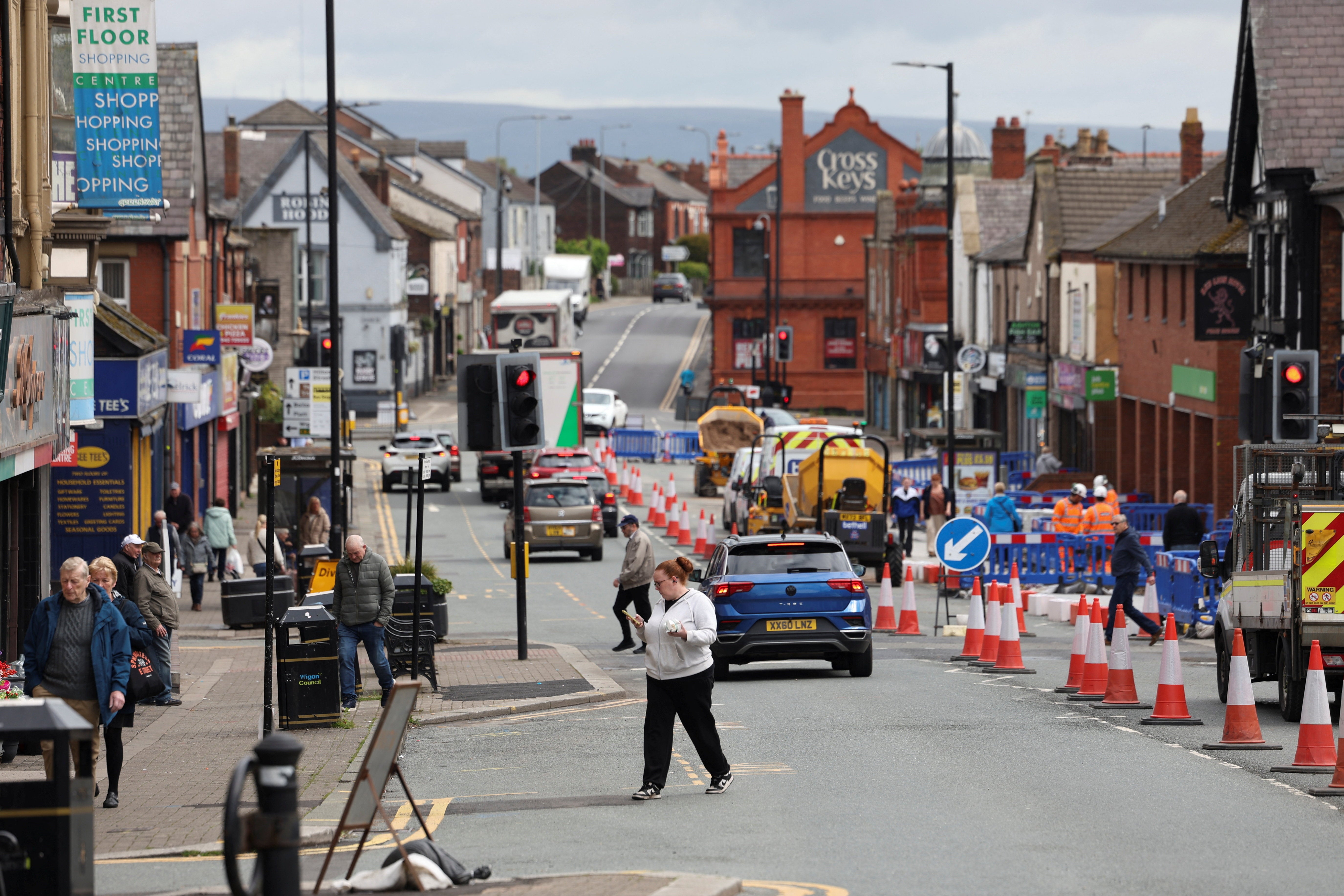
Nigel Farage’s party won 24 of 25 seats up for grabs in Makerfield’s Wigan borough – and, of the 10 wards contested that fall within this constituency either wholly or partially, Reform candidates won every single one of them.
Dealing with that existential threat in seats like this, which voted 65 per cent in favour of leaving the European Union a decade ago, will define whether Labour can still call these places its heartlands, whether it remains the party of the worker, and whether it has any chance of remaining in power.
Jon Tonge, politics professor at the University of Liverpool, describes the constituency as being traditionally “rock solid Labour” and now one which has become proof of how the party has lost touch with its lifelong voters in the post-industrial North.
“It’s overwhelmingly white British, it’s that sort of traditional – ‘we see the Labour Party as the vehicle of our aspirations’ – working-class vote”, he told The Independent.
“And that just shows the problems that Labour have now because there were big defections to Reform at the last general election,” he added.
“Then if you look at the local election results within the constituency, Reform overwhelmingly won it only two weeks ago with 50 per cent of the vote.
“Reform has come from nowhere and is now seen as the vehicle of many people’s aspirations within the constituency.”
Looking to quell the threat from Reform is Greater Manchester mayor Mr Burnham. After years of rumours about a return to Westminster, he is expected to challenge the beleaguered Sir Keir for the keys to Number 10, if he wins here.
It means that the voters of this corner of his patch could determine if their mayor, who lives just outside the constituency, will become the leader of the country.
Mr Burnham is the bookies’ favourite to win, but it is likely to be a very close race.
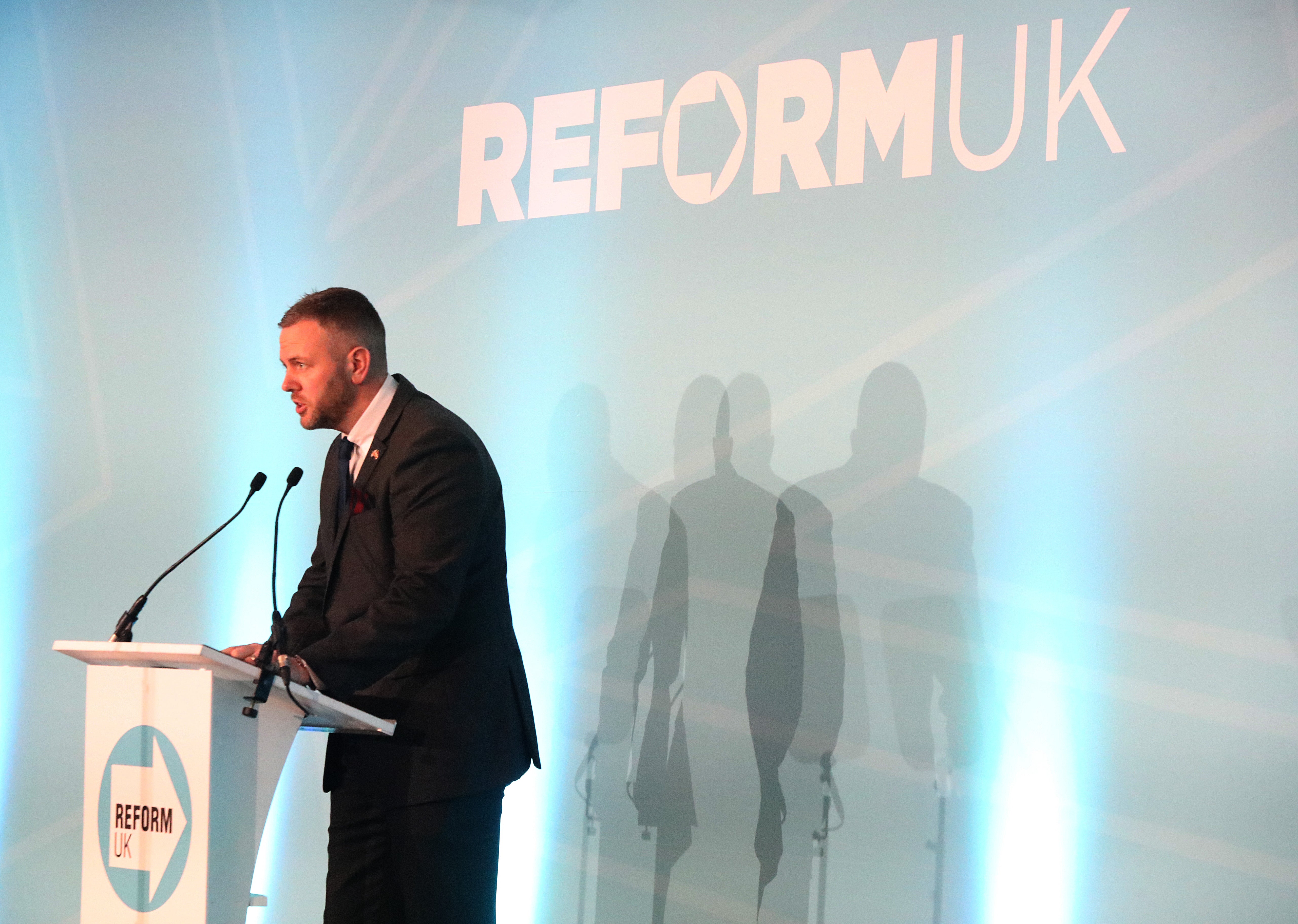
Reform has reselected Robert Kenyon as its candidate. The local plumber and newly elected councillor reduced Labour’s majority in this seat to 5,000 in 2024, which he will hope to overturn this time.
“It is all down now to turnout,” said Prof Tonge.
“I’d expect a by-election turnout akin to a general election one, unusually, so you’re looking at about 40,000 voters in Makerfield who in effect choose the next prime minister or not.
“Either continuity Starmer or change via Burnham. It’s an awful responsibility in their hands, which is what makes this by-election just so extraordinary.”
The by-election has been triggered by the resignation of Josh Simons, MP since the 2024 general election, amid a Labour leadership psychodrama on the back of the party’s dismal local election results.
Mr Burnham is comfortably the party’s most popular politician, particularly in England’s North West, and seen by many within Labour as the solution.
He was blocked from standing as its candidate in February’s Gorton and Denton by-election, where Labour finished an embarrassing third, and is now making his pitch to this constituency, and likely the nation, with his brand of politics he once referred to as “aspirational socialism” but now calls “Manchesterism”, after almost a decade in charge of the city region into which the Makerfield seat falls.
Mr Burnham believes that Britain has surrendered control of its economy through Thatcherite politics, deindustrialisation and deregulation and he says he would counter that through increased public ownership, while remaining friendly to business.
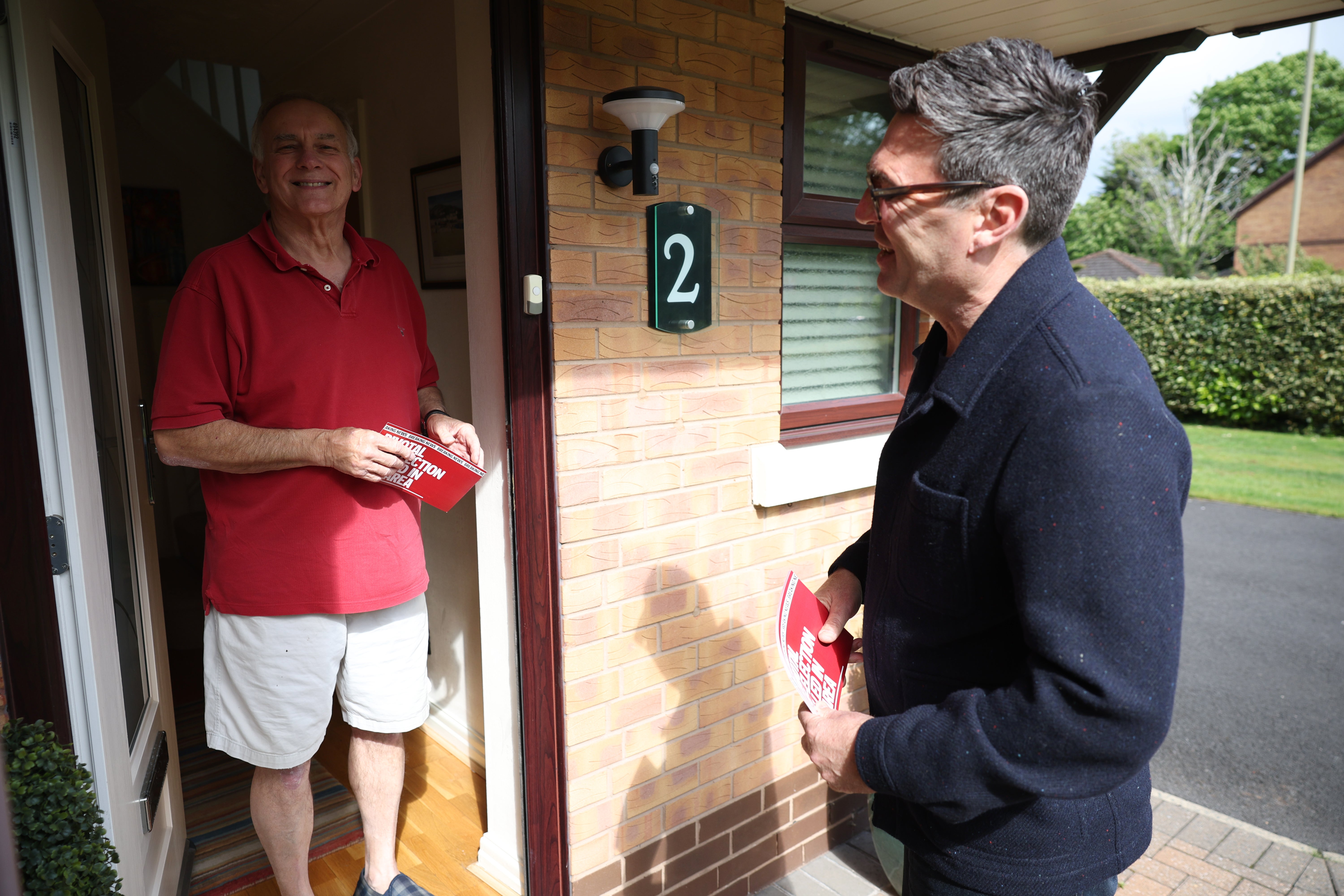
“Manchesterism is the end of neoliberalism,” he said in his campaign video as he pledged to make sure politics can work for post-industrial areas like this.
The view among backers of Mr Burnham, who was born on the outskirts of Liverpool, raised in nearby Culcheth, and represented neighbouring Leigh in parliament from 2001 to 2017, is that he understands these places in a way few of his colleagues do.
They believe he can reconnect with Labour’s lost voters and is the best choice to stop the surge of Mr Farage, particularly in what were its most loyal regions.
Previous numbers are in his favour – when he was re-elected as mayor in 2024, he won 66 per cent of the vote across Wigan – but amid Reform’s surge and widespread disenchantment with Sir Keir’s government, this race will test brand Burnham to its limits.
If he is Labour’s man to stop Mr Farage, he has to prove immediately that he can do it.
When The Independent visited the constituency on Friday 15 May, the day after Mr Simons resigned and Mr Burnham said he intended to stand, a number of voters said the popular mayor could bring them back to a Labour Party they believed had abandoned them under Sir Keir.
It was summed up by Joan Preston, 82, who had been a lifelong Labour voter until Sir Keir became leader, as she believed it no longer to be the party of the working class.

“I would go with Labour if Andy Burnham stood,” she said, describing him as for “the working people”.
Others agreed with her, saying that he would be the only option who would bring them back to the party.
But there was also vocal support for Reform on the streets of Ashton-in-Makerfield, with some believing the mayor was using the by-election to further his own career ambitions.
However, he is the only person who could keep Makerfield red, according to Prof Tonge.
“Reform would annihilate any other Labour candidate,” he said. “The only reason Labour’s got a chance is because Burnham is standing.”
It goes to show the problems the party is facing just two years after it returned to government.
People across the North believe a Labour Party they have always been loyal to has made no discernible change to their lives since regaining power – and they do not believe the current prime minister represents them.
Asked why Mr Burnham, the so-called ‘King of the North’, is viewed by voters as being so different, Prof Tonge believes it is a combination of his image – built around his accent, music taste and love for Everton Football Club, his ability to communicate and how a working-class Cambridge graduate can embody their ambitions.
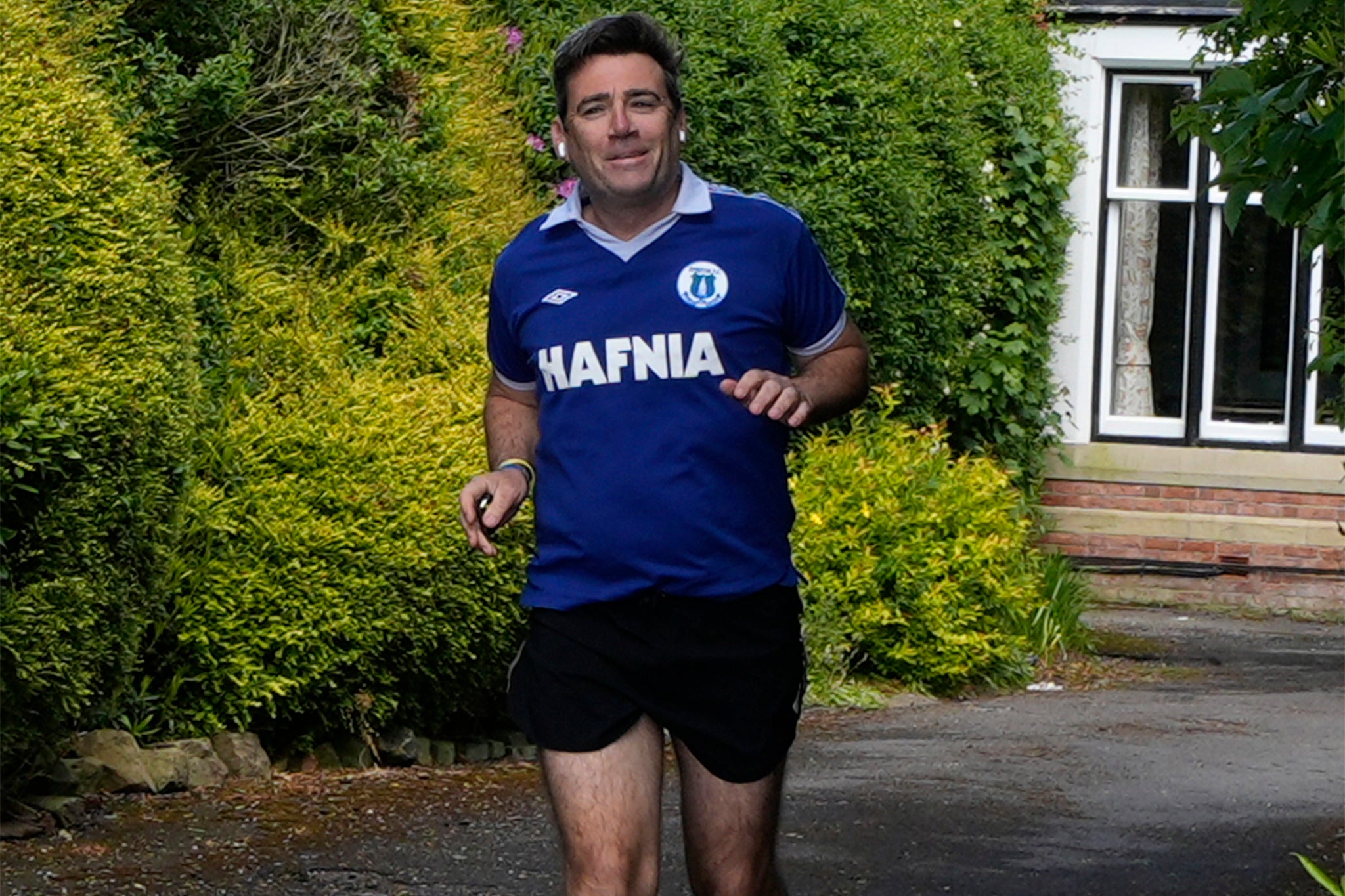
“No one would say he was pretentious”, he said. “He’s quite prepared to chat to anyone in the street, and he communicates ideas pretty well.
“You wouldn’t describe Starmer as a great communicator.”
Making sure he is viewed by voters as a clean break from Sir Keir will be central to Mr Burnham’s chances – a particularly strange position for a Labour by-election candidate to find themselves.
“The by-election is all about brand Burnham”, the professor added. “It is all about Burnham’s version of Labour, not Starmer’s version of Labour.”
“Burnham is all about a sort of semi-autonomous brand of Labour politics that is about extending ‘Manchesterism’ – certainly extending a sort of northern politics that is about defending ordinary working people against the battering that they can get, whether it be from inflation or people not caring about them. It’s about sticking up for local people.”
Reform’s campaign has criticised Mr Burnham as using a seat they claim he doesn’t care about and his record in previous Labour governments, as they have presented their candidate as the true local option.
This will only go so far, according to Prof Tonge, who views this race as a straight shootout between Reform’s rising popularity and Mr Burnham’s ability to recover Labour voters.
He explained: “Reform aren’t really going to win much by attacking him as the carpetbagger, because his local connections are obvious. The issue is whether he can see off Reform.
”It’s an absolute disaster for Labour if this is lost, because if not Burnham, who?”

.jpg?trim=0,0,0,0&width=1200&height=800&crop=1200:800 "New Trump book has sold 300,000 copies with more being printed, publisher says – UK Times")