




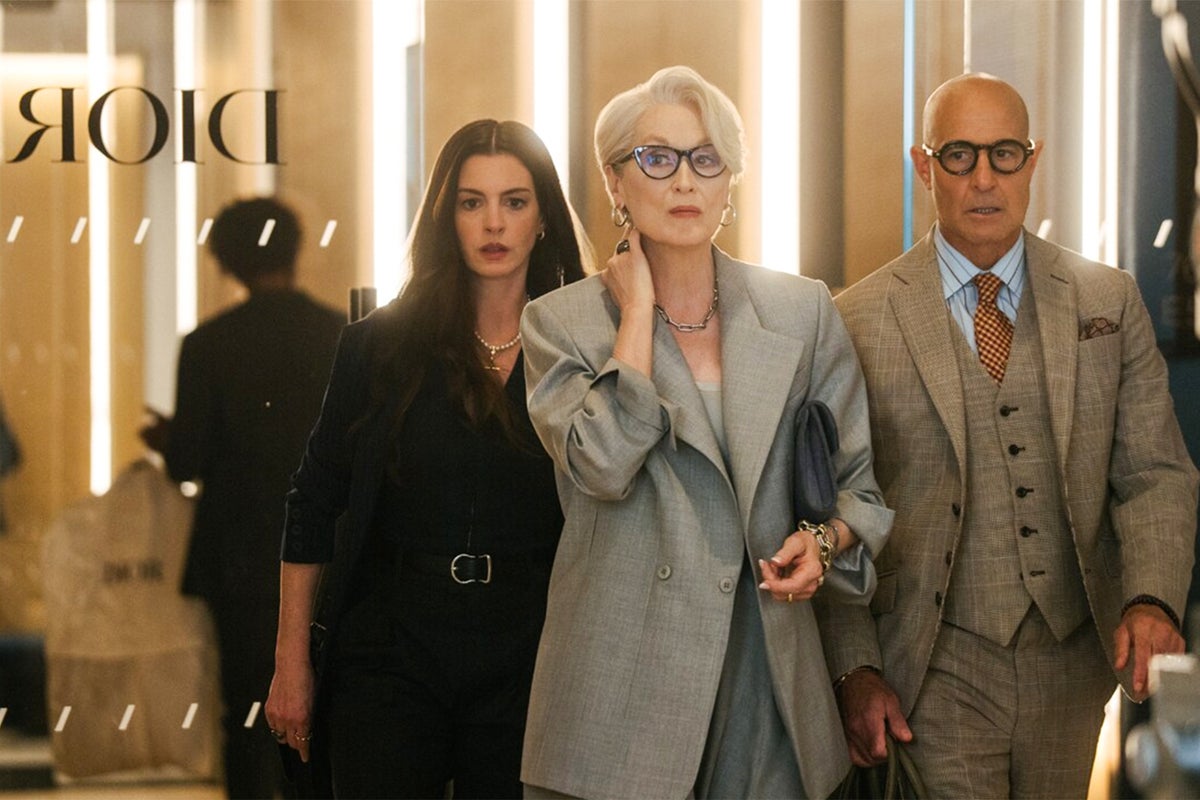
For a certain cohort of millennial women, there is a quip from the original Devil Wears Prada movie for every occasion.
Someone standing on the left-hand side of the escalator, blocking the path ahead? I have to refrain my inner Miranda Priestly from hissing “by all means move at a glacial pace, you know how it thrills me”. And when someone suggests they’re wearing florals to some kind of spring event? It’s hard not to reply with “groundbreaking” – a sort of Noughties compulsion.
But there is one line in particular that runs through the 2006 film like a refrain – and that is the near-constant reminder that “a million girls would kill for this job”. We first hear it when our protagonist Andy Sachs (played as a wide-eyed ingénue in bad knitwear by Anne Hathaway) turns up at the head offices of Runway magazine, hoping to land a role as a PA to the editor, Miranda (a terrifyingly icy Meryl Streep).
She has no clue about Runway’s cultural impact and, if possible, even less idea of Miranda’s legendary status in the fashion industry. She would much rather get a foot in the door somewhere with more obvious intellectual or literary clout, like The New Yorker. It is up to longstanding assistant Emily (the gloriously spiky Emily Blunt) to recalibrate her pretensions, with a reminder that there are millions of other Andys out there who would willingly whack her over the head with a Fendi Baguette to be in with a chance to do Miranda’s dry-cleaning.
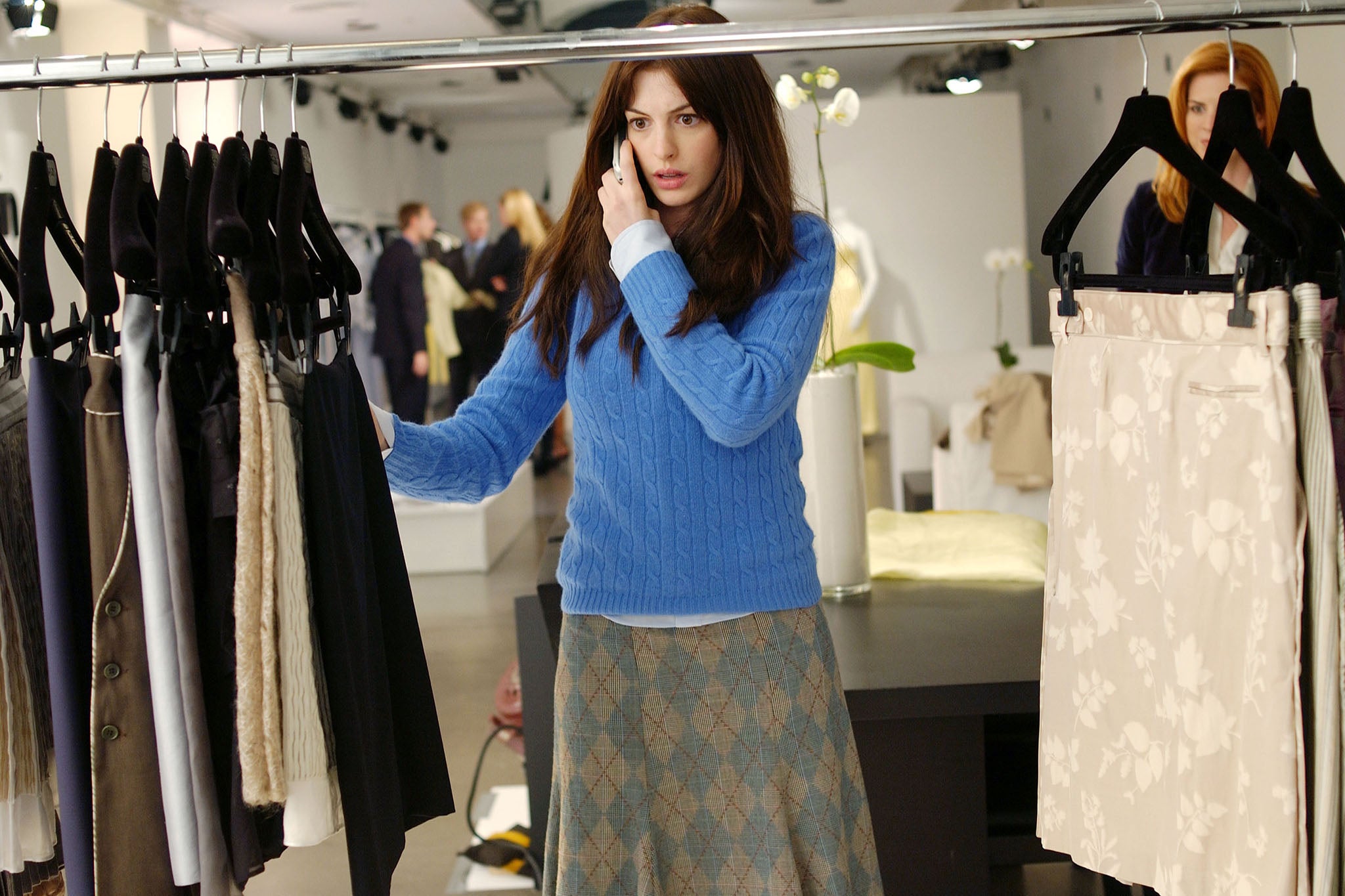
From that point on, Andy can barely take a step in her newly acquired Chanel boots without someone accosting her to point out how lucky she is, and how those “million girls” must be riddled with envy. At one point, even one of her annoying mates (part of the group that is happy to take her freebies – Bang & Olufsen phone, anyone? – but sees her work as fundamentally frivolous) parrots the line.

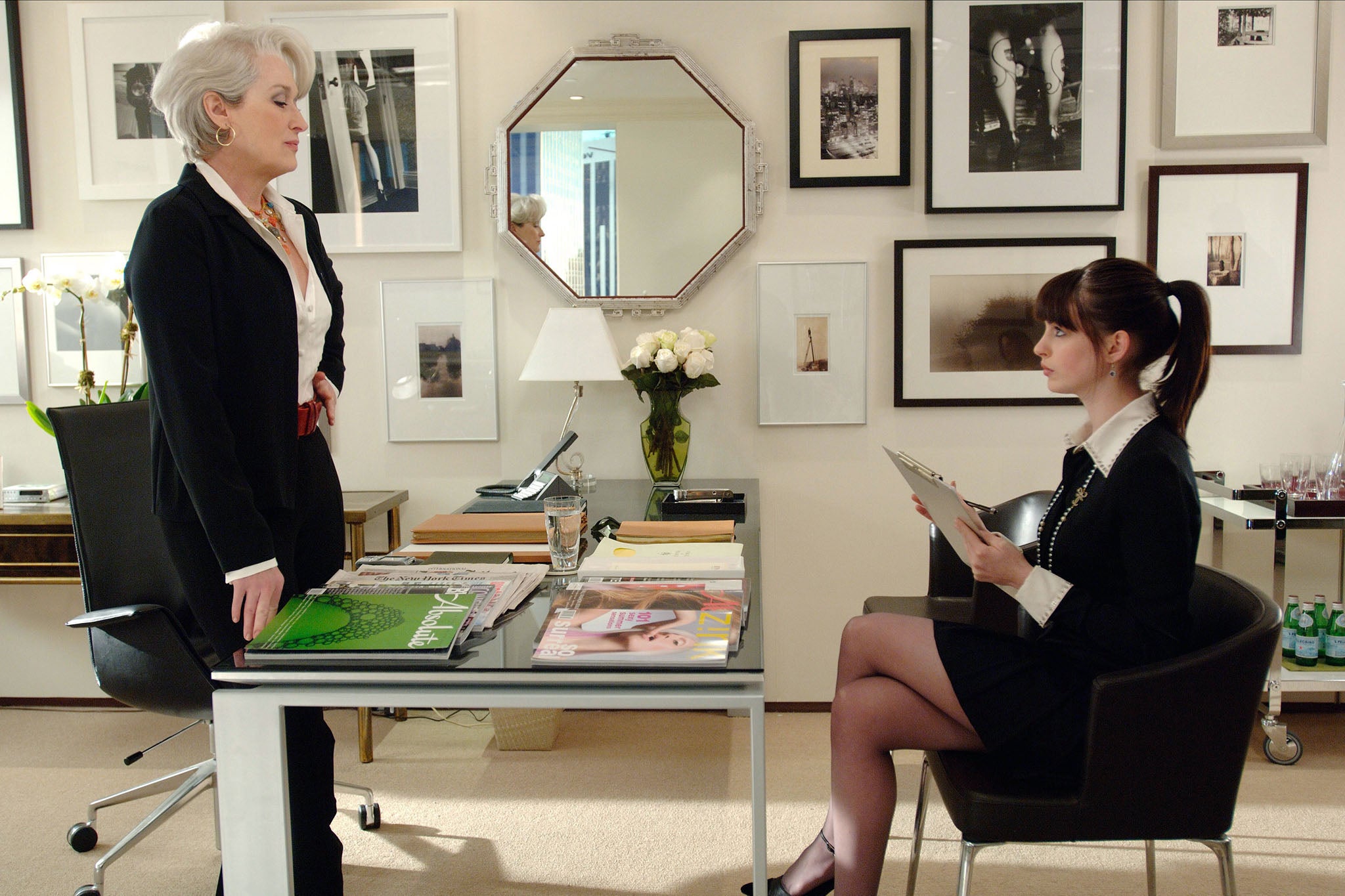
The message is clear – she should be grateful for her job, despite the cost to her personal life. And if she didn’t feel that way? Well, there was a queue of similarly qualified, similarly motivated and quite possibly much better dressed young women waiting to take her place, who wouldn’t make a fuss about taking calls in the middle of the night or having to wear heels in the office. Watching the film on DVD as an impressionable, magazine-loving teenager, it’s also a message that I took to heart.
The movie itself, I should caveat, is more nuanced in its portrayal of ambition than this one line would suggest. As it goes on, this maxim becomes increasingly ironic and hollow. Andy, of course, eventually comes to realise that the glamour and proximity to power that her job lends her is ultimately pretty worthless (and, to underline this revelation with true romcom heroine subtlety, chucks her flip phone into the fountain at the Place de la Concorde). But to me, all this self-actualising was nowhere near as appealing as the film’s depiction of fashion-adjacent hustle.
In a topsy-turvy sort of way, with its Patricia Field costumes and makeover montages, The Devil Wears Prada ended up glorifying the very industry it was trying to skewer, like a glossy advert for a career in magazine journalism with a bit of a cautionary tale tacked on at the end. To a glamour-starved 15-year-old, even the scenes where Andy had to run through the streets of New York toting a tray of Starbucks cups for her colleagues seemed impossibly exciting and foreign (we only had a rather more prosaic Costa in my hometown…)
I am certainly not the only Noughties teenager who fell for this accidental propaganda. I know plenty of peers who, like me, didn’t just lap up this image of the publishing world, but also absorbed the more toxic attitudes to work propounded by characters like Emily and Miranda. That you should be cringingly grateful for any opportunity that you received – and put up with any poor treatment accordingly. That you could be replaced by someone just as good as you in an instant, so you should constantly go above and beyond to try and prove yourself. That your job should be the centre of your life.
It wasn’t just The Devil Wears Prada. The late Noughties saw an influx of films and shows that made working hard in a glamorous industry that paid a pittance look somehow aspirational. It was the era of The September Issue. Of Ugly Betty. Of fashion PR Kelly Cutrone’s reality show Kell on Earth. Of competition series touting the prize of an internship at a glossy. All of these cultural artefacts made out that it was somehow a privilege to work for a genius with exacting standards, a big ego and zero work-life balance.
And so when I eventually made my forays into the world of work, I was primed for, well, a dazzling slog. At the bottom rung of magazines, fellow interns traded war stories and turned them into dubious badges of honour, telling ourselves we were lucky to have the opportunity.
My stories from that time were sometimes funny, like the week I spent at a newspaper supplement where my main task was arranging the in-office spray-tanning schedule for Friday, when a beautician armed with a pop-up tent would ensure that everyone had been dyed the correct shade of bronze.
But often they were a bit bleak. Like being taken to task by a beauty editor when the photos she had asked me to upload on Instagram over the weekend during my unpaid internship looked too fuzzy, because I didn’t have an iPhone with a hi-res camera.
The Devil Wears Prada era of media no longer exists; the recession that came a few years after the film’s release put paid to that. So did the advent of social media. But, just as importantly, the Andys of today now have a very different attitude to their work – and rightly so.
Countless studies have found that Gen Z workers are far more likely to prioritise their personal lives compared to their millennial and Gen X counterparts; in 2023, research from Deloitte revealed that work-life balance is their top consideration when choosing an employer, and the trait they admire most in their peers. And only 6 per cent of Gen Z say that their top goal is to reach a senior leadership position.
Attitudes to ambition, then, have shifted significantly since the Devil Wears Prada heyday. The hustle might still be glamorous – thanks to the slew of self-improvement podcasts shouting about passive income opportunities and endless ways to optimise yourself – but the crucial change is that hustling for someone else is far less aspirational. Gen Z seems to have entered the working world with the knowledge that a job will never love you back – something it seemed to take me the best part of a decade to realise.
A Gen Z employee knows that they can expect none of the career stability that someone like Miranda Priestly would have enjoyed. Covid, and the financial insecurity that has characterised the years since saw to that. Indeed, one recent survey showed that 58 per cent of Gen Z respondents saw their jobs as “situationships” – low commitment and only for the short-term. So over-investing in a job like Andy’s just doesn’t make sense – I sincerely doubt that a million twenty-something girls would now kill to be overworked and underpaid by Miranda Priestly. I think they’d probably run a mile (and do so in trainers, rather than heels).

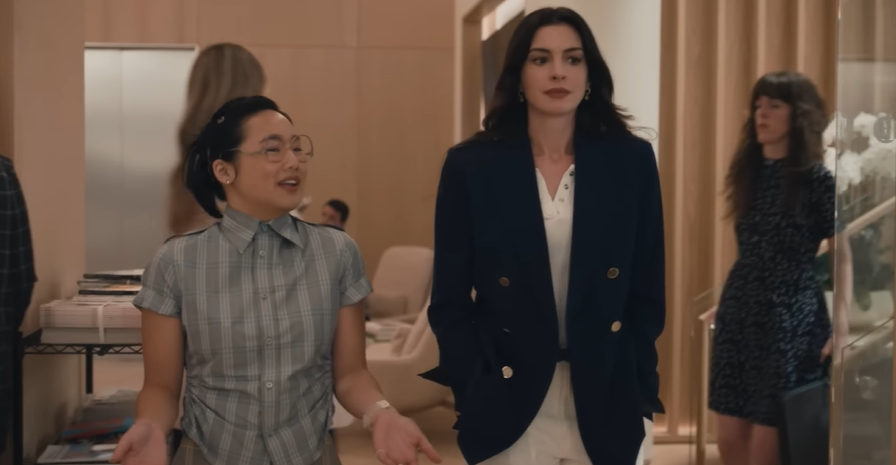
I only wish that I’d had some of this new cohort’s confidence and clarity when I was in my twenties. Much of the eye-rolling about bolshy Gen Z is, I reckon, rooted in a kind of misguided belief that just because you went through the trenches in the early days of your career, everyone else should have to do so too. But a junior job shouldn’t be an assault course.
A fancy title no longer guarantees bragging rights – being able to leave on time to make it to your 6pm reformer Pilates class does. So, too, does signing out of your work inbox on a Friday afternoon and knowing that you won’t be plagued by its contents over the weekend. The humble nine-to-five “corporate job” seems to be enjoying something of a reputational reinvention over on TikTok, where its value is not so much to do with prestige or girl-bossery but what it affords employees to do in their spare time.
So, as the sequel to The Devil Wears Prada prepares to strut into cinemas, 20 years on from the release of the original, the ambition originally modelled by the likes of Emily and co feels a little antique, as an archive piece dragged out of storage.
How will Miranda deal with a fleet of tricky-to-impress Gen Z staffers? We’ll have to wait and see, but it’ll certainly be interesting to watch how the writers attempt to get to grips with this attitudinal sea change. Back in 2006 – and in 2016 – making your job your entire personality was the height of fashion. Now I hope we all know that we’re much more interesting than that.

