.jpg?trim=0,199,0,199&width=1200&height=800&crop=1200:800 "Three kids forced a law change after being told they needed to pay 0 to run a lemonade stand – UK Times")
.jpeg?trim=0,1,0,0&width=1200&height=800&crop=1200:800 "See inside Trump’s new 0m Air Force One that was gifted by Qatar – UK Times")


When he finally decided to seek justice for the abuse he had suffered at the hands of his girlfriend for more than a year, James Stephen* realised the law viewed him to be too young to be a victim of domestic abuse.
The then-15 year old was physically and mentally abused to the point where his mental health had completely deteriorated and he was struggling in school.
He had spent the last year being punched, kicked, and attacked by his girlfriend, who was a year older than him.
James is one of many young people now calling on the government to extend the legislative age for domestic abuse victims who have been harmed by a partner.
The government is currently scoping a review into the legal framework of domestic abuse to ensure it captures the experience of adolescents, which included reviewing the age limit.


The law defines domestic abuse as abusive behaviour by one person towards another, where both people are aged 16 or over.
“When we would be in public, she would grab my thigh really hard until it bruised to get me to stop talking,” he told The Independent. “When I would talk to her about it, she would just say it was a joke.
“Then it started getting worse and she would start to hit me when we were arguing in public. She would ask me to hit her back and I wouldn’t.”
The abuse peaked in serious violence. One one occasion, his girlfriend attacked him with a pair of scissors, telling him she wanted to kill him. In another incident, she carved her name into his ribs without his consent.
In late 2024, James went to see a support worker at his school, who told him to go to the police.
That day, he and his mother went to police and made a statement. He said he gave several interviews, contact details for witnesses who had watched the abuse and that his school also shared evidence with the force.
Officers then interviewed his girlfriend, who denied the accusations, and the investigation was closed following a lack of positive lines of enquiry.

At such a vulnerable age, James said it is crucial for young people to be protected by domestic abuse laws. “I was still 15 at the time… and I didn’t fully comprehend that I’d been abused. I was still very much in denial about it.”
He thinks part of the problem is that people are unaware that young people are getting into relationships where this kind of abuse is happening.
A Youth Endowment Fund survey found that nearly half of all children between the ages of 13 and 17 who had been in a relationship had experienced violent or controlling behaviour.
Among those in relationships, 28 per cent of 13- to 15-year-olds say they’ve been hit, kicked or shoved, compared to 12 per cent of 16- to 17-year-olds.
“The fact that people can be charged with a crime at the age of 10, and then it’s a six-year jump for people to be charged with domestic abuse, is insane,” he said.
“At this age, people learn through their first relationships how they’re meant to act. So if people don’t understand something is abuse, because there’s not a law protecting someone younger than 16, they’re going to think it’s normal.”

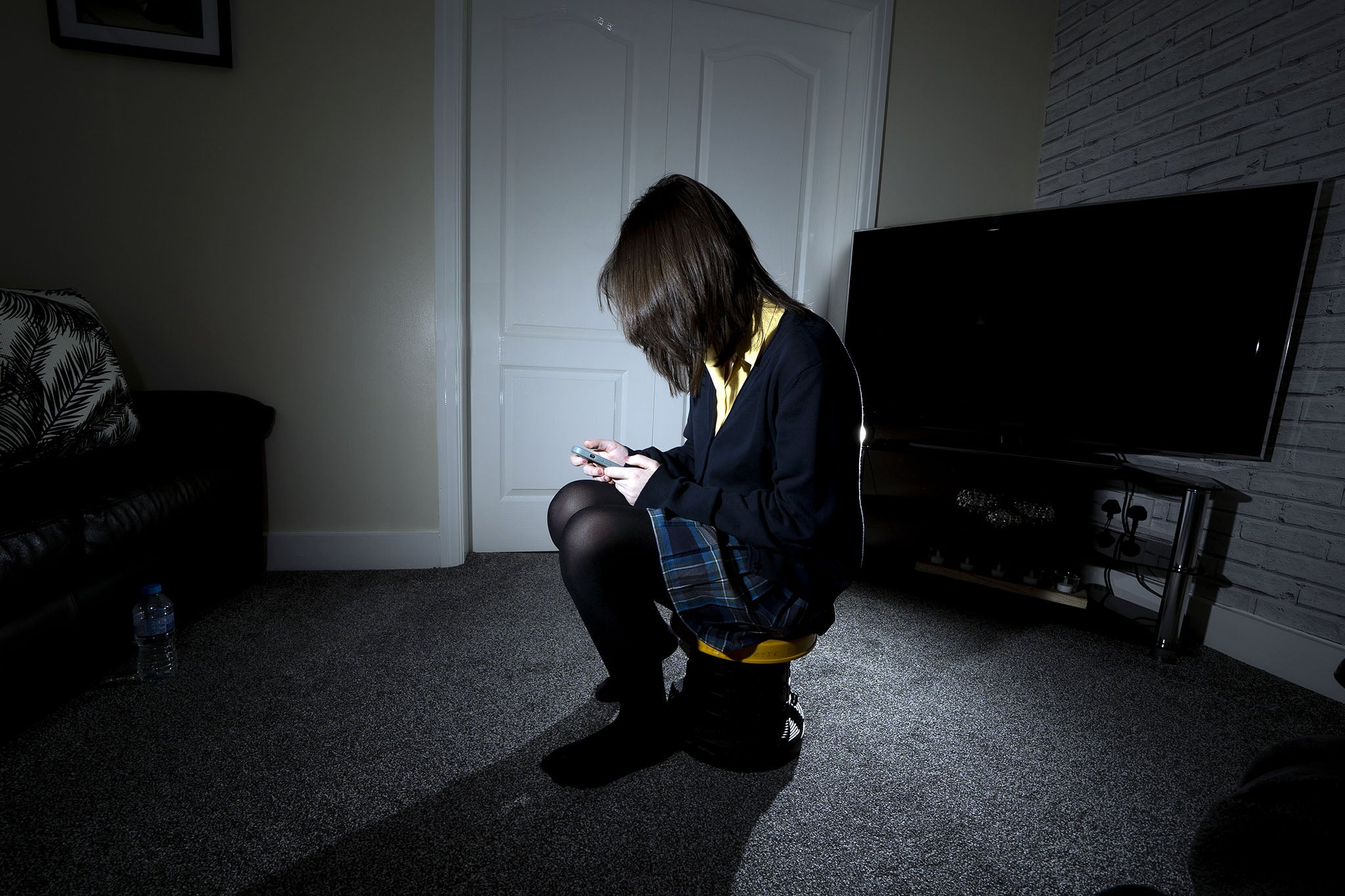
Changemakers, a group of young people aged 13 to 24 helping to create services for young people impacted by domestic abuse, are backing his call.
One member, Maya Balachandran, 22, said: “Under-16s can absolutely experience domestic abuse, and a much wider recognition of this is needed to ensure the right resources and support are available to them. This recognition would help services become better equipped to respond and establish consistent support pathways for young victims and survivors.
“Lowering the legal age at which domestic abuse is recognised is a stepping stone in actively treating young people as victims in their own right. It provides the foundation for professionals to deliver more comprehensive support, whilst showing young people that they are not alone; that their experiences are valid and can be named for what they are.”
Sally Steadman, head of innovation at domestic abuse charity SafeLives, said: “Right now, young people are falling through the cracks. Safeguarding systems do not formally recognise the reality that teenagers experience domestic abuse, and this can leave them without the support they need.
”Our research shows the scale of the problem. Young people aged 13 to 17 experience the highest rates of domestic abuse of any age group.
“Abuse can be physical, sexual, emotional, coercive, and can happen online and offline – but for under-16s, there are both legal and practical barriers to getting help.”
A Home Office spokesperson said: “Violence against women and girls is a national emergency, and this government is deploying the full power of the state to halve it within a decade. The Violence Against Women Strategy sets out a raft of measures to tackle abuse in teenage relationships, backed by over £20m of investment.
“New targeted interventions in schools and in the community, strengthened guidance for professionals, and a dedicated helpline for young people worried about their behaviour will help reduce abuse in young people’s relationships.”
*Name has been changed to protect James’s identity