



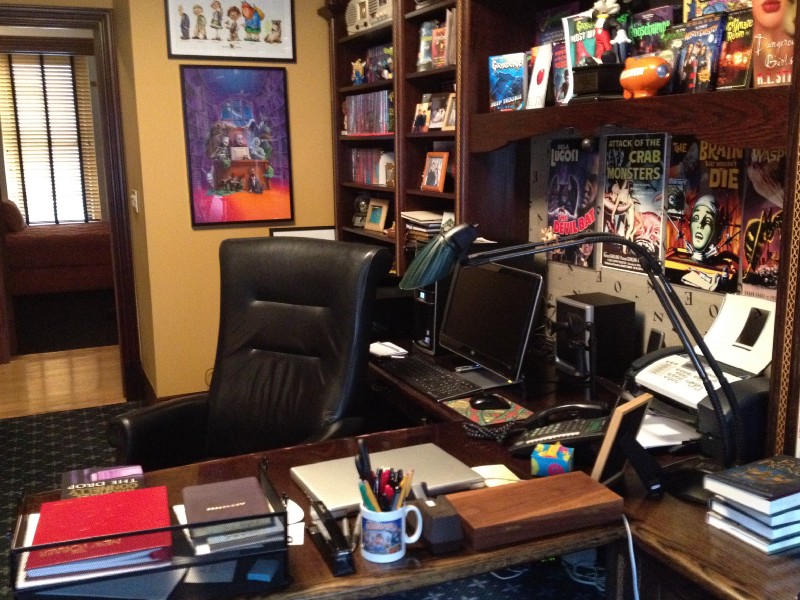
A well-organised desk improves focus, reduces friction, and makes writing easier to start and sustain. When your environment supports your workflow, you spend less time preparing to write and more time actually producing words.
Why does desk organisation matter for writers?
Desk organisation directly impacts productivity, creativity, and consistency. A clean, intentional setup removes distractions and signals to your brain that it’s time to write.
Writers often notice that when their desk improves, so does their output. This is because your workspace becomes a tool rather than an obstacle.
What should every writer keep on their desk?
A writer’s desk should prioritise essentials that support consistent output and reduce decision fatigue. Keep only what directly contributes to your writing process.
Core items include:
- A notebook or writing pad for quick ideas
- Reliable pens or pencils within reach
- A current project list or outline
- A laptop or typewriter (depending on your workflow)
- A small selection of reference books
The goal is accessibility without clutter.
How do you set up a productive writing desk?
A productive desk setup is simple, intentional, and aligned with your writing habits. You want to remove barriers between you and the act of writing.
Follow these steps:
- Keep your most important task visible and ready
- Position your tools so you don’t have to search for them
- Limit distractions by removing unnecessary items
- Create a consistent layout you can reset daily
As James Clear explains through habit design, organising a space for its purpose makes the next action easier.
What type of desk is best for writing?
The best writing desk is stable, spacious, and designed for focus. Solid wood desks are particularly effective because they provide durability, a premium feel, and a distraction-free aesthetic.
If you’re upgrading your setup, https://petalwoodinteriors.co.uk/collections/writing-desk-collection features writing desks designed for practical use, clean layouts, and long-term durability, making them ideal for writers who want a dedicated and inspiring workspace.
How do famous writers organise their desks?
Writers approach desk organisation differently, but common patterns appear across creative disciplines. Some prefer minimal setups, while others surround themselves with inspiration.
For example:
- Arthur C. Clarke maintained a structured and disciplined workspace
- Ray Bradbury focused on output over perfection, often writing quickly in simple environments
- Toni Morrison worked around a busy life, using whatever space was available
- Neil Gaiman often writes first drafts by hand in distraction-free environments
Despite their differences, most successful writers prioritise function over appearance.
How can you stay organised long term?
Consistency is more important than perfection. A desk that resets daily will always outperform one that is organised once and then neglected.
Build habits such as:
- Resetting your desk at the end of each session
- Keeping only active projects in view
- Regularly clearing unnecessary items
- Updating your task list before you finish
These small routines maintain a productive environment without requiring major effort.
What are the key habits of a productive writing desk?
A productive desk is built around repeatable habits that reduce friction and increase output.
The five most effective habits are:
- Keep multiple ways to write available (digital and physical)
- Surround yourself with relevant inspiration, not clutter
- Keep your most important task visible
- Maintain a clean and consistent layout
- Reset your desk after every writing session
Final Thoughts
Your desk should support your writing, not slow it down. Whether minimal or creative, the best setup is one that makes it easier to sit down and start. Focus on clarity, accessibility, and consistency, and your workspace will naturally improve your output.