


“The important thing about football,” wrote the late novelist Terry Pratchett, “is that it is not just about football.” Any fan of the sport knows this innately: the 90 minutes of a football match can seem to contain humanity in all its multitudes. It’s an idea that playwright James Graham pushed to breaking point in 2023, when he wrote Dear England, a self-serious state-of-the-nation play about Gareth Southgate’s tenure as the manager of the England men’s national team. Now, that play has been made into a four-part BBC series – one that somehow makes Ted Lasso seem like a work of subtlety and restraint.
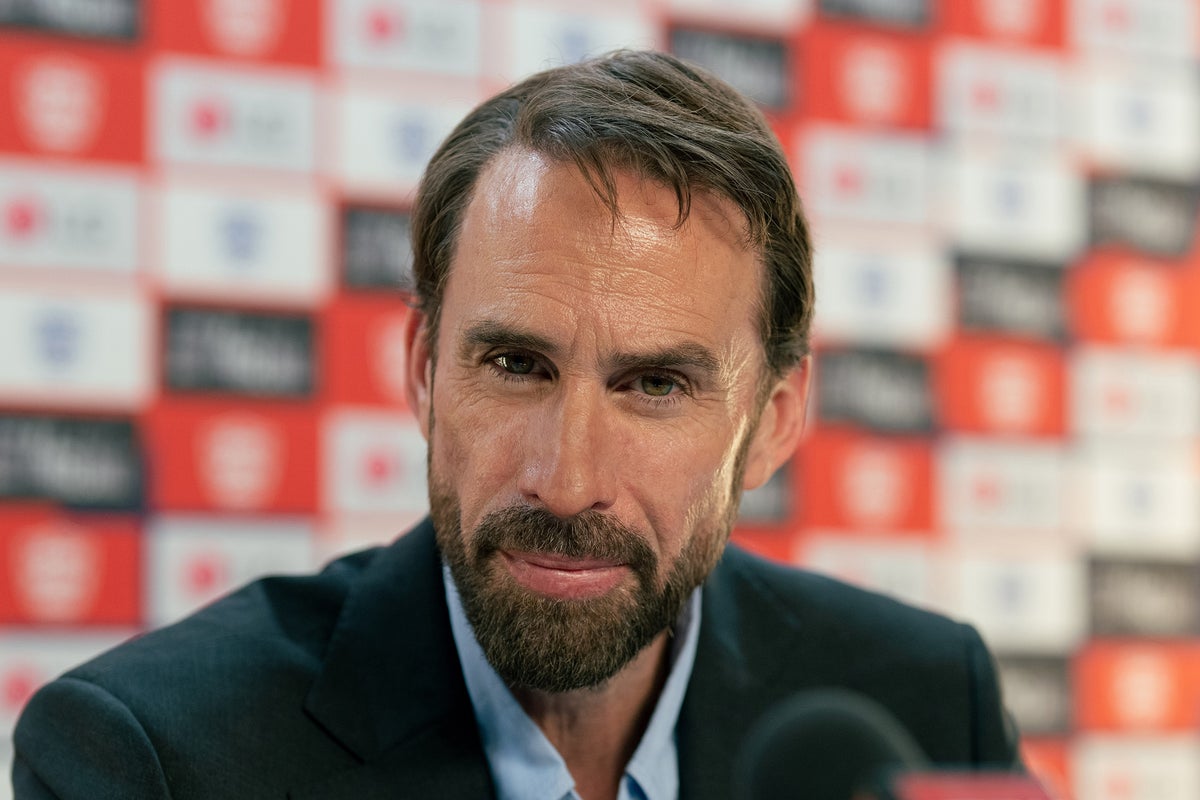
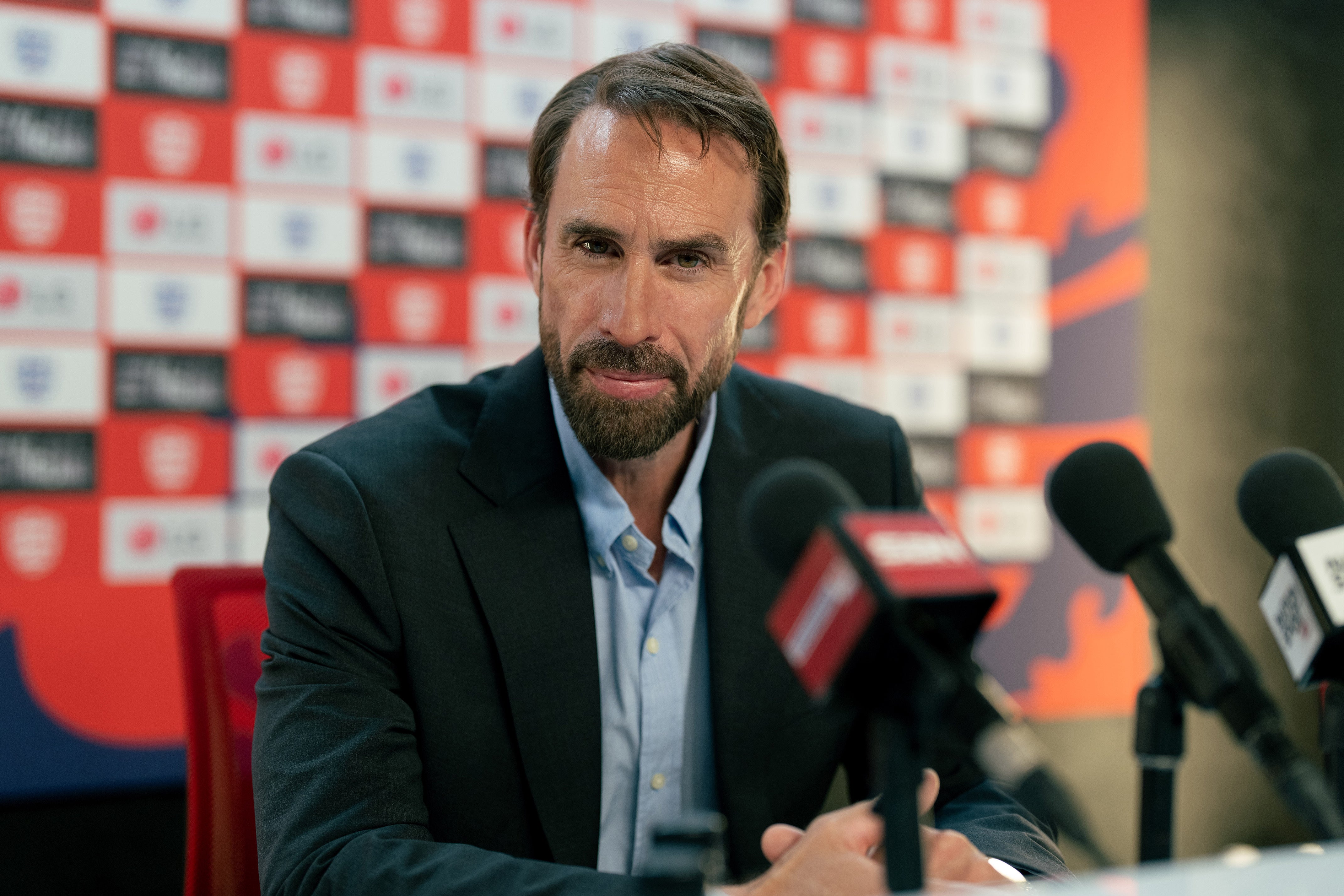
Joseph Fiennes, reprising his Olivier-nominated stage role, bafflingly plays Southgate with the sort of tortured intensity usually reserved for films about war veterans. When he takes the England job, in 2016, he inherits a talented but discordant squad in disarray; he is a man less concerned with winning football matches than with cultivating a vibe shift. (“My goal is to get people smiling again,” he says.) As we all know, his perestroika worked wonders: the “yes, more Mr Nice Guy” approach took the team to two international finals, a semi-final, and a quarter-final.
Dear England suffers both in its conception and execution. The immediate problem to leap out – once you’ve blanched at Fiennes’s uncanny almost-Southgate face – is the dialogue, leaden and creaky, obsessed at all times with reminding you that this is a story not about football, but about Our Great, Troubled Nation. While Southgate winces from tournament to tournament, turmoil looms in the background: we see multiple prime ministers resign; we see the impact of the Covid pandemic; we see, in one painfully earnest sequence, the aftermath of the Queen’s death. (A conversation between Southgate and Harry Kane about the Queen’s history of service is a strange, mawkish inclusion, one that calls to mind that much-mocked drawing of Paddington Bear walking the monarch to the gates of heaven.)
The first three episodes are, I won’t sugar-coat it, dismal, and the football sequences an interminable drag, mostly taking the form of penalty shootouts shot expressionistically against black backdrops. (In its final instalment, the pace picks up a bit, and benefits from a more rousing blend of archive footage when it comes to the sport itself. ) Basically everyone on screen is playing somebody famous, with many of the likenesses so abstract as to be distracting – particularly when so much effort was clearly expended on Fiennes’s Gareth-fication. Will Close, the man who won an Olivier Award for playing Harry Kane on stage (what a sentence), is here replaced by Will Antenbring, who fudges the look but nails the voice, even if this Kane feels improbably perspicacious. Jodie Whittaker is at least recognisably human as sports psychologist Pippa Grange, serving mostly as a foil for the debilitatingly self-reproachful Fiennes.

One of the big issues that Dear England butts up against is that this England team never won a major tournament: this is a story of disappointment. Graham, therefore, is left to forage for victory within defeat. An interesting juxtaposition might be the 2009 film The Damned United – a rare example of a football drama that wasn’t all that bad. In that film, Michael Sheen played manager Brian Clough, whose attempts to transform the culture at Leeds United after taking over Don Revie’s hard-nosed, league-winning squad end in disaster and a sacking after 44 days.
The Damned United worked because it was mostly a character study of a man both flawed and charismatic. Southgate – as depicted in Dear England, at least – is neither of those things. “Nice but boring” is how he exists in the public imagination, and this series will do little to dispel that image. Absent a compelling character to study, Graham’s series (directed by Rupert Goold) instead takes aim at a nation, finding little to really say. (At this point, it’s fair to say that Graham may be spreading himself too thin – since 2022, he’s written seven full-length plays, a couple of shorts, and four TV series, many of which are similarly geared towards probing the state of modern England.)
Here, however, is the other thing about football: the romance of it is all in our heads. The prosaic reality of the modern game is that matches are not won by bravery, or personality, but by tactical minutiae and dumb luck. Sometimes the ball goes in the net, sometimes it doesn’t. When Southgate’s England lost the Euros final in 2024, it wasn’t because of some ineffable English pathology, but because of tactics. If we lift the World Cup in a couple of months’ time, now with a more pedigreed German manager and Southgate’s hugs-and-smiles culture behind us, what will that tell us about the state of our nation? Very little, of course – but at the very least it’d make for a better TV show.
‘Dear England’ is on BBC One and iPlayer from Sunday 24 May at 9pm