


For the filmmaker Christopher Nolan, the seed that became The Odyssey was planted in the early 2000s. Nolan had just made Insomnia, his psychological thriller with Al Pacino and Robin Williams, when he was given the keys to Troy, a swords-and-sandals action epic starring Brad Pitt. It wasn’t to be – director Wolfgang Petersen, who had devised the script, requested the film back when another one of his projects fell through, and Nolan was forced to step away. But the experience wasn’t a complete waste.
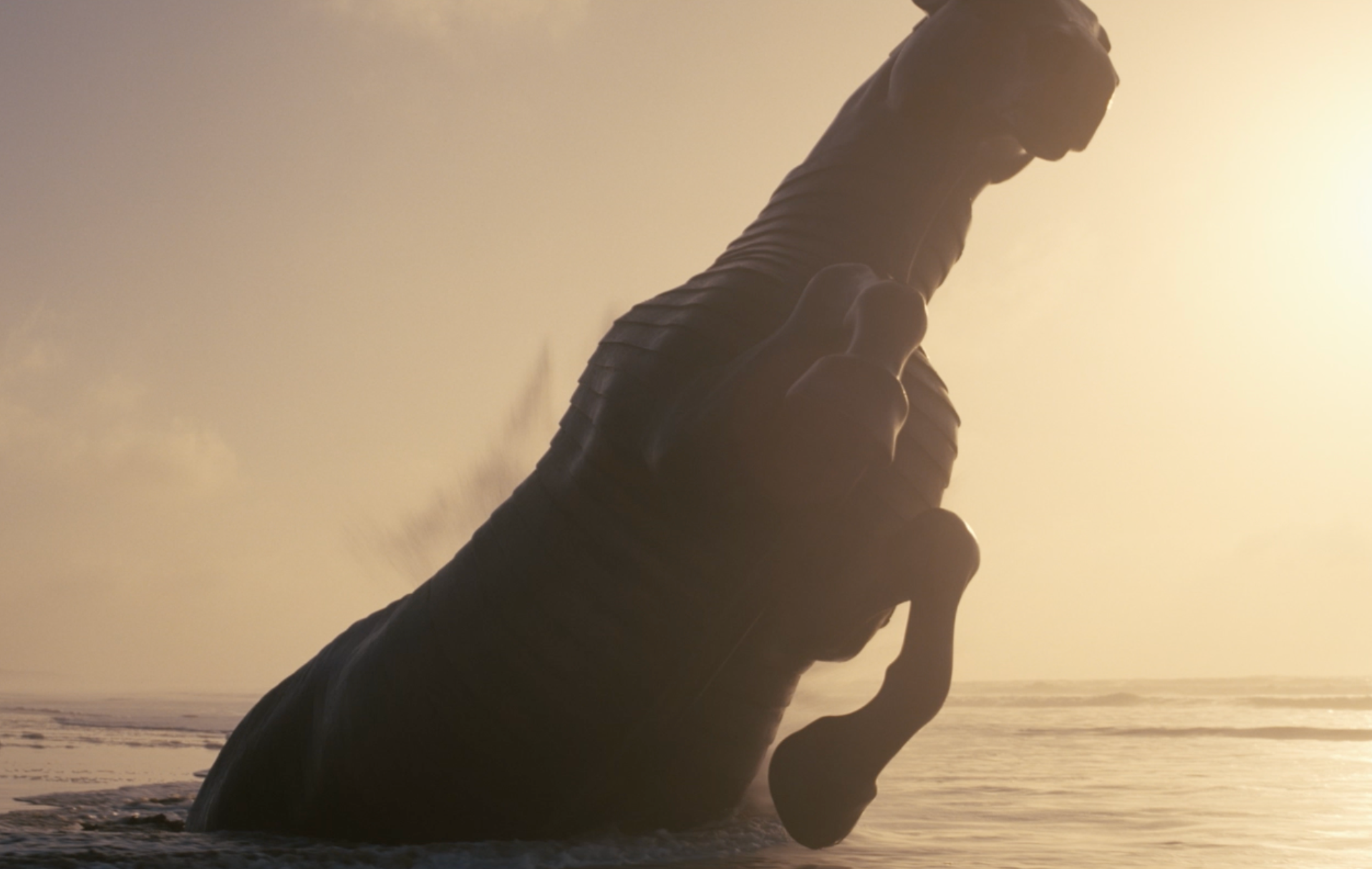
“When I was briefly attached to direct Troy, I did a lot of thinking about the Trojan Horse and how I would portray that and make it credible,” the smartly dressed director says while sitting opposite me in a London hotel. “I’ve had an image of that horse sinking into the sand in my head for 20 years.”
That visual – two decades in the making – is the first thing viewers see when they watch Nolan’s adaptation of Homer’s Greek poem The Odyssey, in cinemas from 17 July. Since he didn’t get to make Troy, Nolan has become the king of Hollywood, directing nine films – including the Dark Knight trilogy (2005-12), Inception (2010) and Interstellar (2014) – that have collectively made more than $7bn (£5.2bn) at the global box office.
But making The Odyssey was no small task – the poem is loaded with mammoth set-pieces as Odysseus (Matt Damon) and his soldiers encounter a variety of monsters, gods and mythical foes on their journey home after the Trojan War. Nolan knew that to scratch this particular itch, he needed the resources to pull it off. Thank you, then, to the unprecedented success of his Best Picture-winning Oppenheimer in 2023, which granted him the freedom to make The Odyssey in any way he chose.
“Coming out of Oppenheimer, which was a film that had far more success than we’d ever imagined, it leaves you with an opportunity,” he explains. “You have the chance to do something that you wouldn’t have otherwise. And so the scale of The Odyssey, and what that was gonna require, was suddenly possible.”
With the technical ingredients a reality – including a newly created, history-making IMAX camera that enabled him to shoot the entire film in the format (a cinematic first) – Nolan started transferring his visions to screen. The director is no stranger to pressure: he flipped an 18-wheeler truck in downtown Chicago for The Dark Knight (2008), built a 100-foot-long rotating metal cylinder to pull off Inception’s zero-gravity corridor scene, and filmed actual explosions for Oppenheimer’s atomic blast. But his limits were tested more than ever before on The Odyssey. As he recalls, the scenes set on the open ocean, for which the cast and crew shot on a boat for four months, were enormously challenging.
“When I was writing the script, every time I’d write something on a boat, I thought, ‘Ugh, do we have to be on boats?’ Because I know what it takes to film on the open water. They’re like, ‘Well, it’s The Odyssey, so yes.’ Having an ancient vessel, and a boat built according to those ancient specifications – where everything’s wooden – and being out on the open water with the cast and crew, it was a tall order.”
For these scenes, Nolan was assisted by Neil Andrews, the same marine coordinator he’d worked with on 2017 war drama Dunkirk (“he’s the best in the business”), and the cast, including Damon and Himesh Patel, pulled together and “bedded in with the crew of the ship we were using”.
‘Being out on the open water with the cast and crew – it was a tall order’
Christopher Nolan

Watch Apple TV+ free for 7 day
New subscribers only. £9.99/mo. after free trial. Plan auto-renews until cancelled.
Try for free
ADVERTISEMENT. If you sign up to this service we will earn commission. This revenue helps to fund journalism across The Independent.
Watch Apple TV+ free for 7 day
New subscribers only. £9.99/mo. after free trial. Plan auto-renews until cancelled.
Try for free
ADVERTISEMENT. If you sign up to this service we will earn commission. This revenue helps to fund journalism across The Independent.
“These guys – Odysseus’ crew – learned how to row the thing,” Nolan says. “They learned how to raise the yard, raise the sails. And so by the time we got there with our camera, you know, Hoyte [van Hoytema, cinematographer] and I are on our own deck. We were shooting it kind of like a documentary. It was really thrilling to do. But boy, it was tough. It was tough on everybody.”
Shooting took Nolan all over Europe – Morocco, Italy and, of course, Greece – but also to the Moray Firth coast of Scotland for standout scenes involving British actor Samantha Morton. Casting Morton as the goddess Circe – a powerful enchantress and stumbling block on Odysseus’s nightmare journey home – was a necessity for Nolan, although “it almost didn’t work out” due to the actor’s busy schedule: “I’ve always wanted to work with her. I knew she’d bring something incredible to it.”
These scenes also enabled Nolan to channel his inner horror fan. The filmmaker has flirted with the genre before – the hallucinogenic Scarecrow mask in Batman Begins (2005), for instance, and even in Oppenheimer, for the scene in which Cillian Murphy’s physicist imagines the casualties of the atomic bomb shortly after it was dropped on Hiroshima. But in The Odyssey, Nolan directs his first sequence that wouldn’t be out of place in a fully-fledged scary movie.
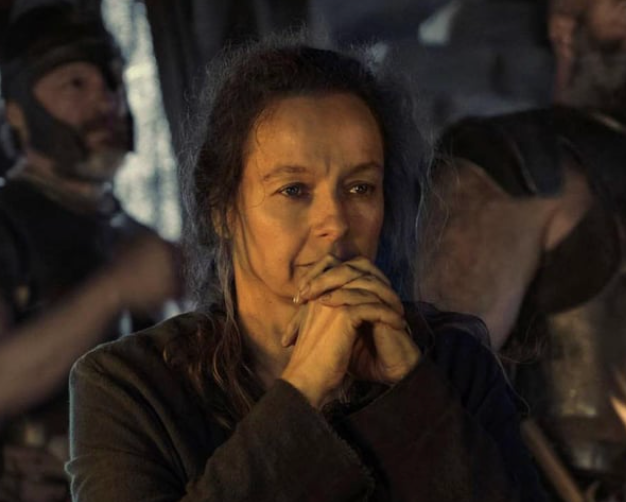
“We wanted to embrace the horror element,” he explained. “I’m a big fan of horror. I think that it’s the most visceral and, in a way, the most purely cinematic of genres, where you’re really trying to directly affect the audience with the sound and picture. I challenged my special effects and visual effects guys to do that, and they came up with incredible solutions. What it meant was we were able to get there and shoot Samantha just acting, just lost in the character, and it was electrifying to watch her work.”
Morton’s efforts received a rapturous standing ovation from the cast and crew assembled on that day – something his producer and wife, Emma Thomas, remembered hadn’t happened on a Nolan film since Heath Ledger’s Oscar-winning performance as the Joker in The Dark Knight. “We got a nice round of applause from the rest of the cast and the crew after one of her scenes,” he recalled. “And that’s not something that happens every day. It was a pretty magical thing to see.”
Nolan puts on special screenings for his cast and crew ahead of every film he makes. For The Odyssey, homework ranged from Andrei Tarkovsky’s Andrei Rublev (19666) to Akira Kurosawa’s feudal classic Ran (1985) and Martin Scorsese’s The Last Temptation of Christ (1988). And while The Odyssey has shades of these films, it’s a breathtaking viewing experience all its own – helped by that IMAX camera, which blows the relentless action scenes up as big as they can be while also bringing a tender impact to the quieter moments involving Anne Hathaway and Tom Holland, who play Odysseus’ seemingly abandoned wife and son. Shooting a film entirely in IMAX has been an aspiration of Nolan’s since he was a teenager.
“It’s been a very long journey, starting with The Dark Knight,” he says. “That was the first film where we were able to go to IMAX and say, ‘Lend us your cameras. Let’s try this on things like the introduction of the Joker, the truck flip.’ But we couldn’t do the dialogue scenes because the cameras are very, very loud. So knowing we were doing The Odyssey, I went to IMAX and said, ‘Look, if ever we’re gonna do a whole film on IMAX, this is the movie to do it with’.”
’That’s not something that happens every day. It was a pretty magical thing to see.’
Christopher Nolan
He got to make that “long-held dream” a reality with help from his mentor, David Keighley, a pioneer in film presentation who designed a workaround that muffled the sound of the camera. As a result, standard scenes of dialogue can now be shot in IMAX. Keighley died in September shortly after completing work on The Odyssey; the camera has been named in his memory, and the film dedicated to him.
If Nolan were given the chance to redo one of his films with this camera, which would he pick? He smiles. “You know, I don’t look back in that way. You trust the process you go through at the time. But certainly there are a lot of sequences and a lot of films we did where we would’ve used the IMAX camera if we could’ve, and we just couldn’t.”
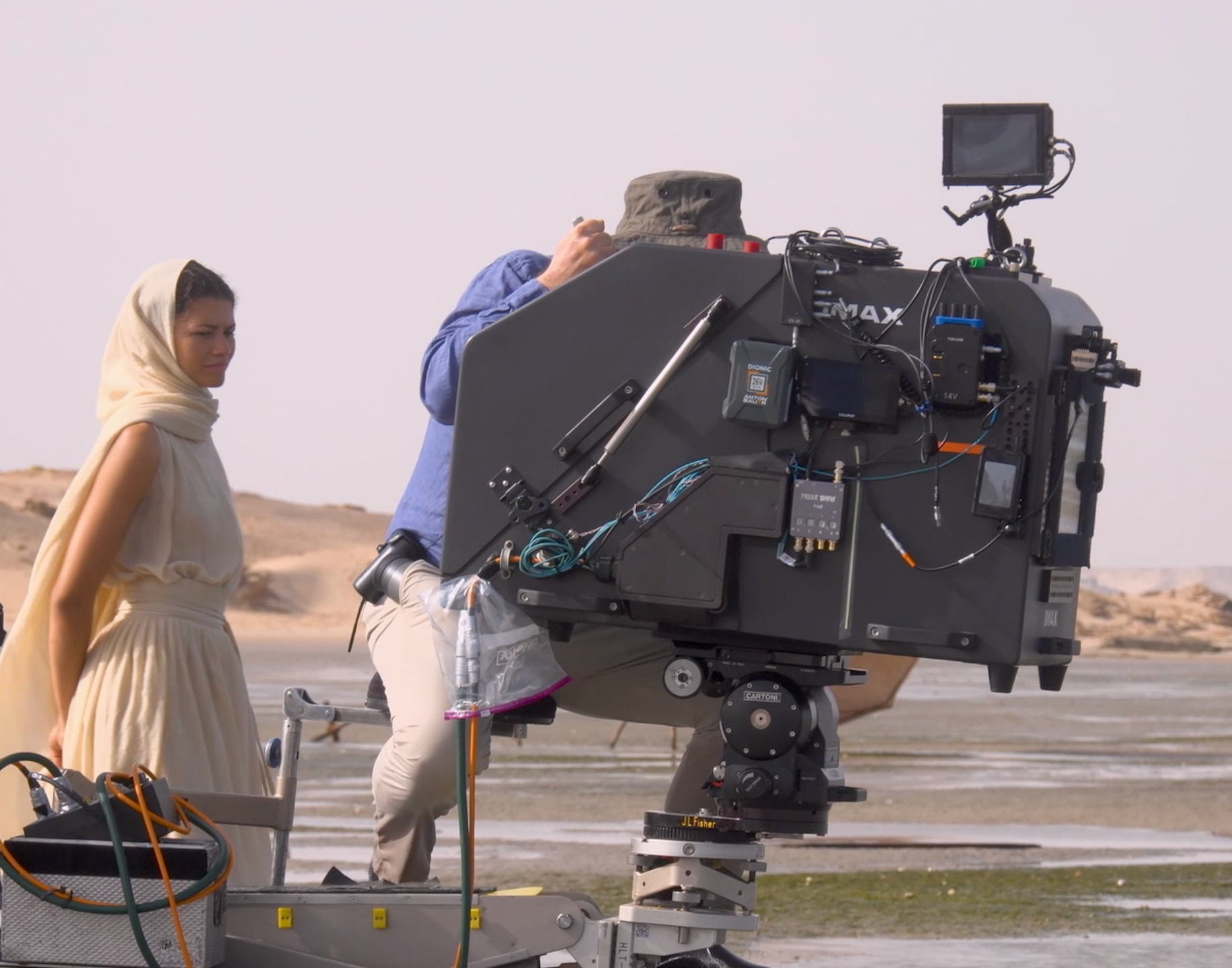
The process has proved reliable – if arrived at by chance; after all, if Nolan had made Troy all those years ago, he wouldn’t be making The Odyssey now. In fact, who knows what Nolan would be doing? Losing the chance to make Troy granted him the opportunity to make Batman Begins. “Yes, I did the Dark Knight trilogy instead,” he says. It might just be the century’s biggest film crossroads.
‘The Odyssey’ is in cinemas from 17 July