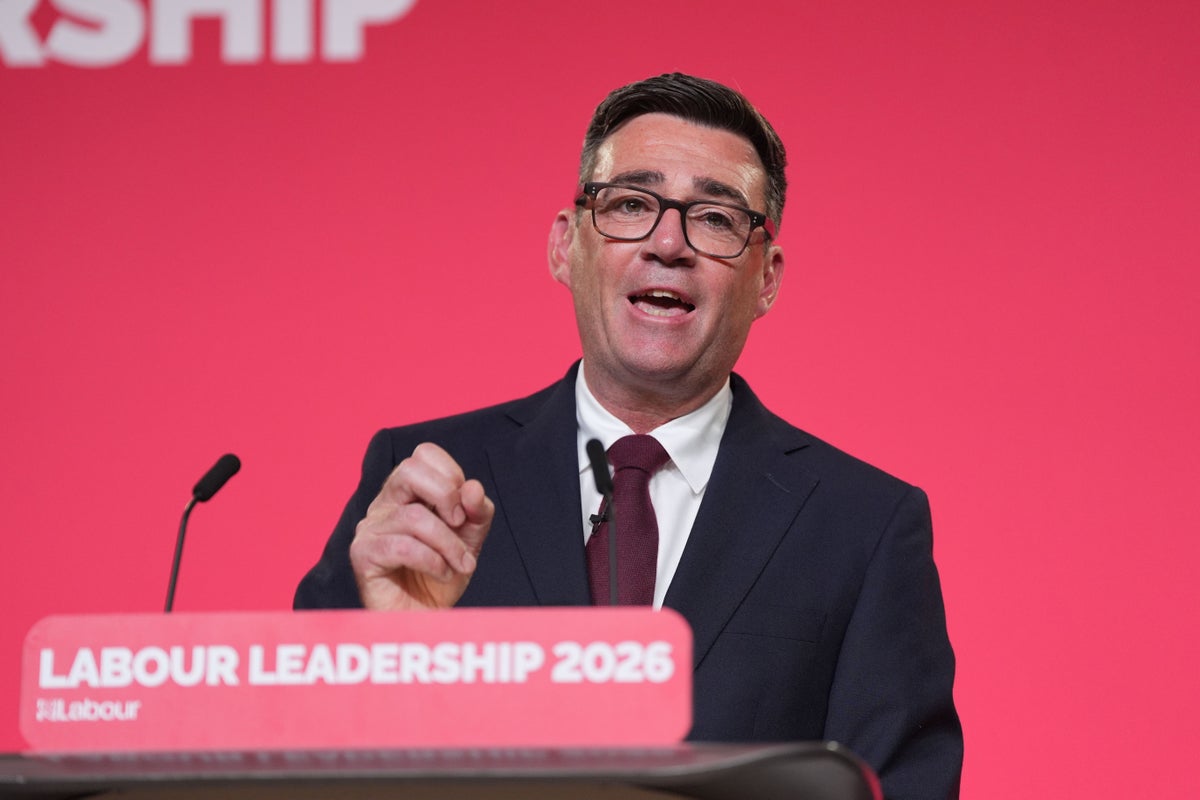

He argued that Britain took a wrong turn in the 1980s.
“Four decades of neoliberalism” had followed, he said, damaging traditional working-class communities in cities and towns as well as rural and coastal areas.
This is what he promised to reverse.
Doing so, he said, would amount to no less than “the most significant change moment in our politics for 40 years”.
It will not have been lost on any Labour MPs listening that in making this argument Burnham is not only criticising Thatcherism, but also the accommodation with elements of Thatcher’s agenda which he clearly believes were made by the New Labour governments he served in.
In any case, it bears repeating that a pledge to represent the biggest change of direction in British politics for four decades is quite some test to set your own premiership three days before it has begun.
How will he deliver that economic change?
We learnt a bit about that a few weeks ago in the only major speech Burnham delivered during the leadership election, in which he said he would decentralise power, starting with relocating part of No 10 Downing Street to Manchester.
We are a few days away from finding out more about how No 10 North will work, and in particular how it will operate in conjunction with the Treasury.
It was striking to say the least that Burnham went out of his way in his speech to declare that he had still not decided who would occupy the top jobs in his team, presumably including the job of chancellor.
For some Labour MPs this will be a niggling sign of indecision.