

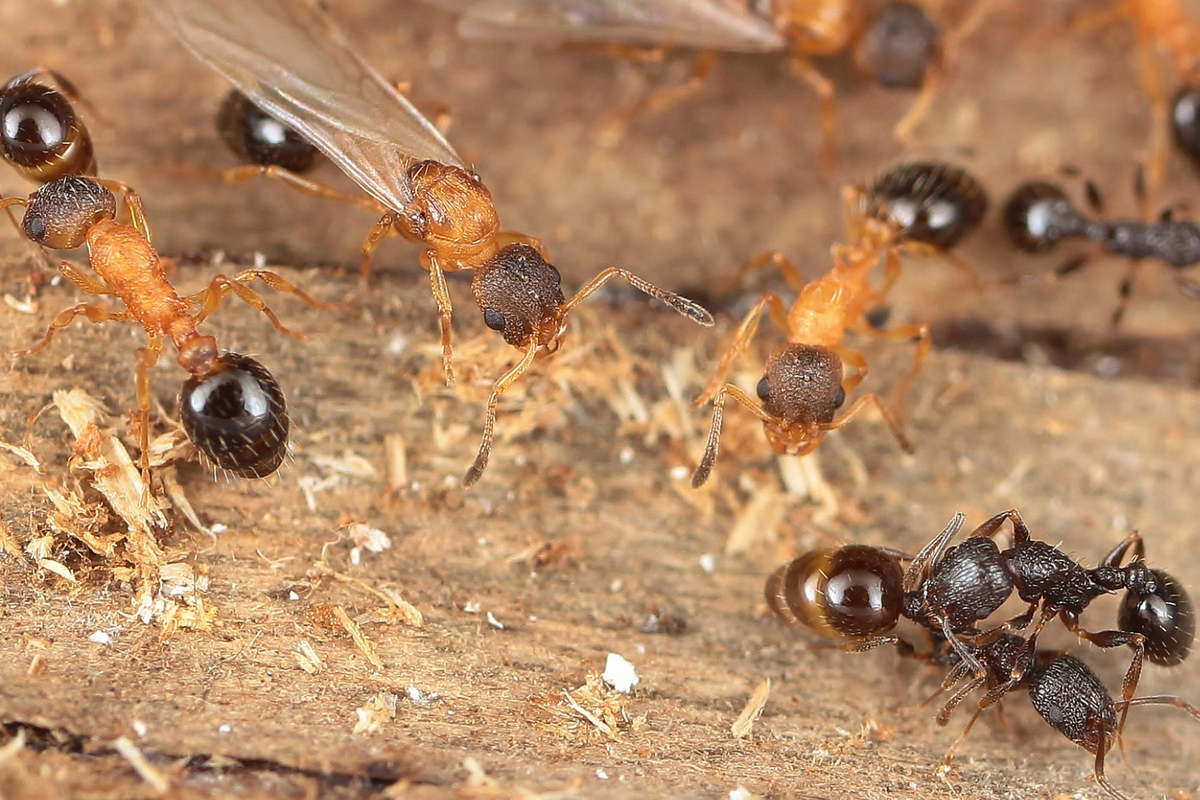
A rare ant species endemic to Japan has been found to be the only kind that lacks both workers and males, consisting exclusively of queens.
Ant colonies typically consist of reproductive females, also known as queens, and non-reproductive female workers, as well as males that die shortly after mating.
Deviations from this pattern are known, including colonies which consist of parasitic ants without workers, and some that have no males.
For almost four decades, researchers suspected that the rare parasitic ant Temnothorax kinomurai only produced queens, but there has been no evidence of this until now.
A new study has now provided the first proof of an ant species that lacks both workers and males and consists exclusively of queens.
The parasitic ant, Temnothorax kinomurai, was previously documented tricking the workers of a closely related species, Temnothorax makora, into killing their own queen mother.
This was a surprising discovery, as in ant colonies, workers spend their entire lives caring for the queen, foraging, defending the nest, and nurturing young ants.
And ants killing their own queen is an extremely rare act in nature, as she is central to the colony’s survival.
Now, the latest study shows that on top of killing the host queen, T kinomurai also reproduces asexually by producing clones of itself, and tricks the surviving host workers into rearing the offspring.
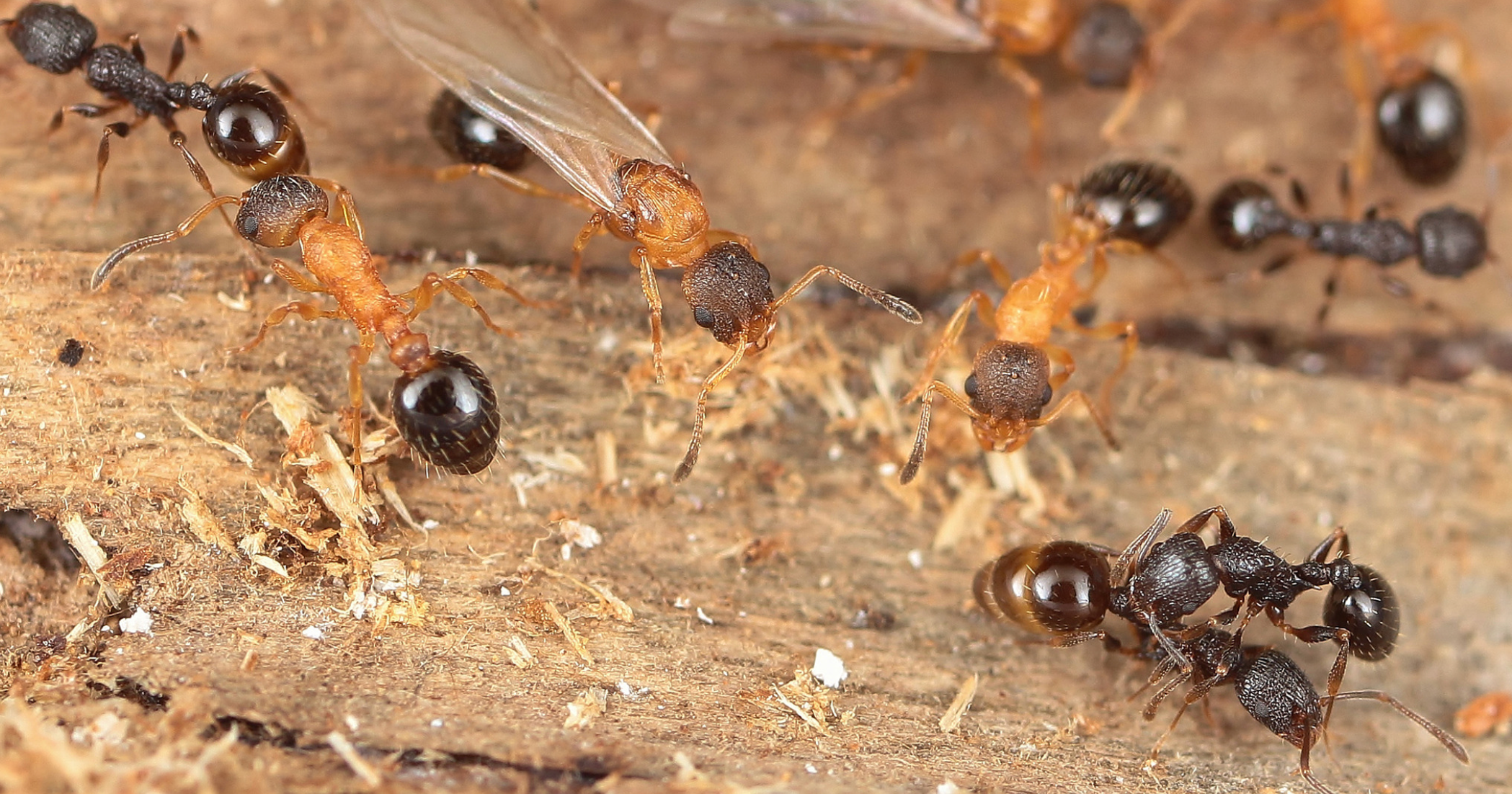
In the research, scientists collected six colonies with T kinomurai queens and reared them in boxes in the lab.
Researchers could breed and raise 43 T kinomurai queen offspring in the lab, and further inspection of the ants revealed there were no males.
They further studied these queens in lab conditions to monitor their egg laying regularly.
Scientists found that the eggs developed into new queens without ever being fertilised by a male ant.
They then analysed the queen ants under a microscope and found that their mating structures were not used, essentially indicating that the offspring were all clones.
After observing multiple colonies and multiple populations of the species, researchers confirmed that the species completely lacked workers and males.
“Our data therefore suggest that the life history of T. kinomurai is characterised by the unique combination of workerless parasitism and parthenogenesis, i.e., the ability to produce female offspring from unfertilised eggs,” scientists wrote in the study published in the journal Current Biology.
In further studies, researchers hope to understand what conditions favour the loss of workers and males in the ant species.