


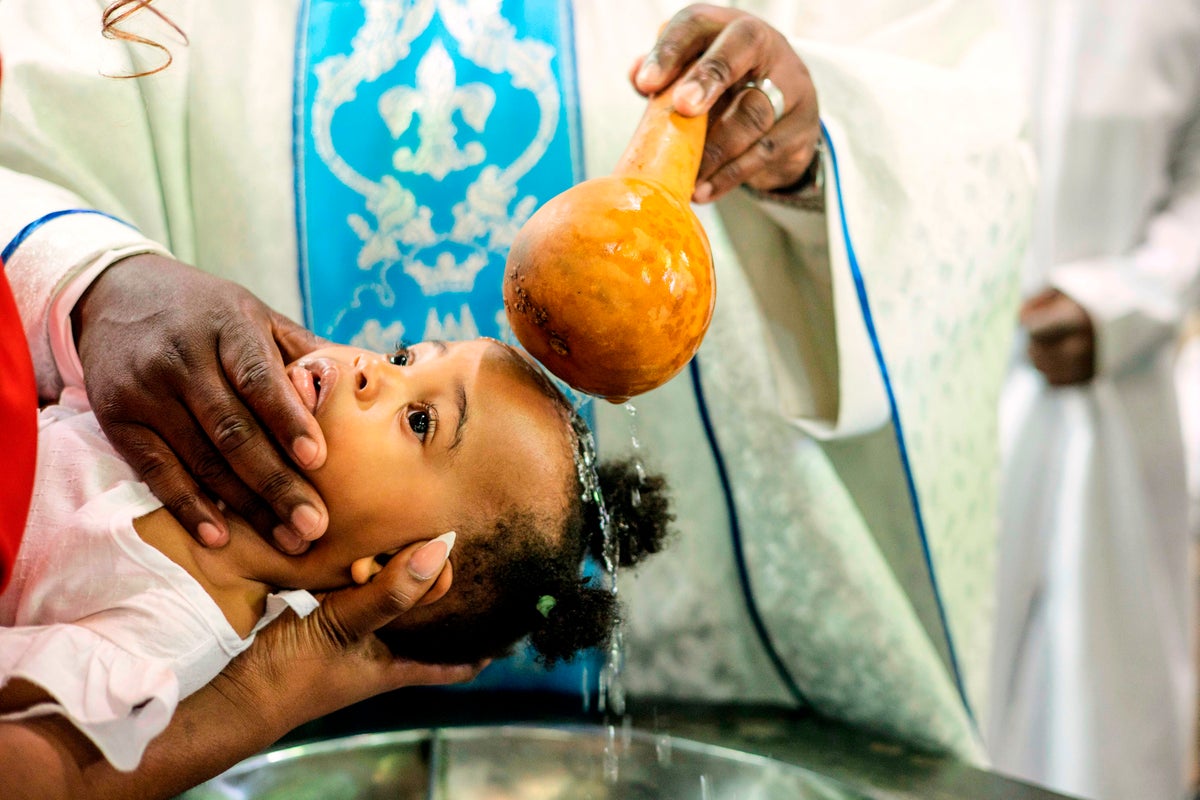
Have-A-Look. Handsome. Thanks. Trust. Privilege. Doubt. Problem. Shame. In Zimbabwe, these aren’t just random words. They are names chosen with intention in a culture where naming a child goes beyond identity and can offer a snapshot of family history, emotion and circumstance.
At first, Privilege Mubani, a 37-year-old bar manager in the capital, Harare, didn’t give much thought to her name.
But as she grew older, she asked her father what her name meant. The answer unlocked a story she had never imagined, one filled with stigma, resilience and unexpected joy.
Her mother had become pregnant out of wedlock. In a conservative society where single motherhood is frowned upon, she had given up any hope of getting married.
Then a suitor swept in and tied the knot despite the stigma, and her mother felt redeemed.
“People had been laughing at her. She was being mocked for having a ‘fatherless’ child. Naming me Privilege was her own expression of gratitude,” she said with a grin.
Miniature narratives of joy or regret
Zimbabwe’s affinity for English-language names reflects its history as a former British colony and a largely Christian nation. English remains an official language and the dominant one in schools and government.
But the practice runs deeper than the colonial legacy.
Names in the southern African nation often function as miniature narratives of joy, regret, faith, hardship or resilience at the time of a child’s birth, said David Chikwaza, a decolonization researcher at Dublin City University’s School of History and Geography in Ireland.
“It is an echo of pre-colonial naming traditions. Zimbabweans, and Africans in general, are very spiritual and the naming of a child always carried deep symbolism,” Chikwaza said. “Parents would name their child as a way of addressing a societal or a personal issue. Colonialism promoted English as a language of sophistication, so Africans simply turned to the English vocabulary for expression, but the meanings remain the same.”
The result is a naming culture that often fascinates outsiders.
During the African Cup of Nations soccer tournament in January, Zimbabwe’s national team drew attention for the striking names on the team sheet, which quickly trended on social media.
“I have never seen a team with cooler names. I am hearing the commentator say these names and I am like, there’s no way these are real,” one TikTok user said, reacting to players named Teenage, Godknows, Divine, Marvellous, Knowledge, Prince and Prosper.
‘It’s a heritage I am carrying’
The novelty also feeds into comedy.
Learnmore Jonasi, a finalist on “America’s Got Talent” in 2024, often draws laughs from audiences in the United States by riffing on his name and others from back home.
Givemore, Best, Promise, Guarantee, Anxious, Innocent, Confidence and Hardlife are among dozens of names that might attract attention elsewhere, but not in Zimbabwe.
For many, the names are seen with pride and even as something to live up to.
Take Lovejoy Mutongwiza, a 33-year-old journalist and chief executive of 263chat, an online news outlet. He sees his name as a celebration.
“My mum and dad said they were madly in love and in a happy place in their lives when they conceived me, so they aptly named me Lovejoy,” he said. “It’s a befitting name. I think I have lived up to it because I am rarely angry. I am naturally a bubbly person.”
Others embrace names that others might view as degrading.
Shame Chikwana said he has never felt burdened by his name and resisted pressure from his sister to adopt a more conventional one as an adult.
“I would never trade it for any other name. I was named after my late grandfather so it’s a heritage I am carrying,” said the 51-year-old, adding that his parents refused to divulge why his grandfather was given the name.
“I hope it stays within the family for generations to come,” he said.
___
For more on Africa and development: https://apnews.com/hub/africa-pulse
The Associated Press receives financial support for global health and development coverage in Africa from the Gates Foundation. The AP is solely responsible for all content. Find the AP’s standards for working with philanthropies, a list of supporters and funded coverage areas at AP.org.