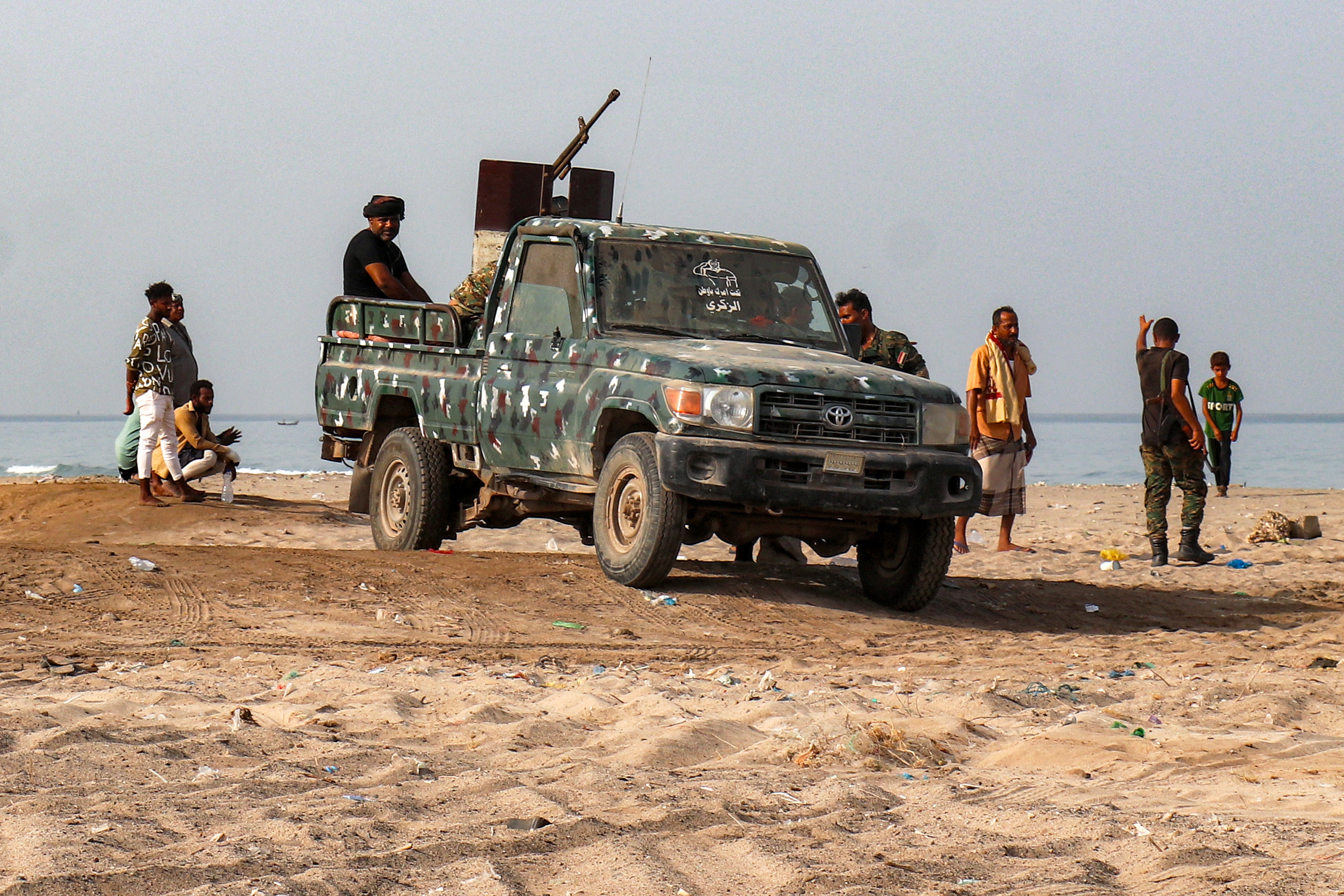
Yemeni rebel group, the Houthis, have declared a naval blockade on Saudi Arabia on Monday, a move that would mark a major escalation in conflict in the region and further disrupt global energy supplies beyond the Gulf.
In a statement, the Iran-aligned armed group said that they were declaring “a maritime embargo against the criminal Saudi enemy, based on the equation of ‘an eye for an eye’, effective immediately”.
They said the decision was in response to what they described as “an unjust and oppressive siege” imposed on Yemen by the Saudis.
The blockade would apply to the Bab el-Mandeb strait in the Red Sea, a lifeline for Saudi Arabia with the Strait of Hormuz blocked on the other side by fighting between the US and Iran.
“We affirm the right of our great people to respond to the blockade with a blockade,” said Yahya Saree, a Houthi military spokesperson, adding that Houthis are prepared to confront “any foolish act committed by the reckless Saudi enemy… with a comprehensive and decisive escalation.”
Saudi Arabia has not responded to the statement.

Global supplies of energy have already been reduced by 10 per cent due to the Iran war and the ensuing fighting over the Strait of Hormuz.
The closure of the Bab el-Mandeb strait in the Red Sea could see global oil supply fall by a further 7 per cent according to Kpler’s estimates of its share of global oil output, exacerbating an already worsening energy crisis.
Last week, the Houthis fired missiles at Saudi Arabia after accusing the kingdom of bombing an airport under their control and violating a four-year truce in the conflict between the kingdom and the Iran-aligned group.
The Houthis are skilled at maritime warfare having disrupted shipping routes before, such as during Israel’s war on Gaza in 2024.
By launching systematic attacks on commercial ships associated with Israel transiting through Bab el-Mandeb, a key gateway to the Suez Canal, vessels were rerouted causing traffic through the Suez Canal to drop sharply, insurance costs to rise and global supply chains to slow down.
The International Monetary Fund said that trade through the Suez Canal fell by 50 per cent from the year before in the first two months of 2024, while trade through the Panama Canal fell by 32 per cent.
Major shipping firms rerouted vessels to go past the Cape of Good Hope in South Africa instead, adding an additional 10-14 days on to journeys.
Tensions with Saudi Arabia have persisted for years after the Houthis took control of significant parts of northwestern Yemen, including its capital Sana’a, following the country’s 2014 civil war when they forced the government to step down.
A Saudi-led, western-backed coalition took over in the aftermath, which the Houthis have spent years fighting with the assistance of Iran, before a UN-brokered deal in 2022.
A Saudi and UAE bombing campaign against Houthi targets was launched in 2015 and drew criticism over civilian deaths, leading to calls for the UK to cease arms exports to Saudi Arabia.
The war is estimated to have killed around 400,000 people and Unicef estimated that 17.4 million people were in need of food assistance after Saudi Arabia’s restriction of ports through which Yemen imported 90 per cent of its food.
Often mistakenly considered a proxy group, the Houthis have their own political aims and agendas outside of those affiliated with Iran, which provides it with weapons, training and technical support.
The Houthis, along with Gaza’s Hamas and Lebanon’s Hezbollah, form part of Iran’s “axis of resistance” – a military alliance built over four decades to oppose Israeli and American power in the Middle East.