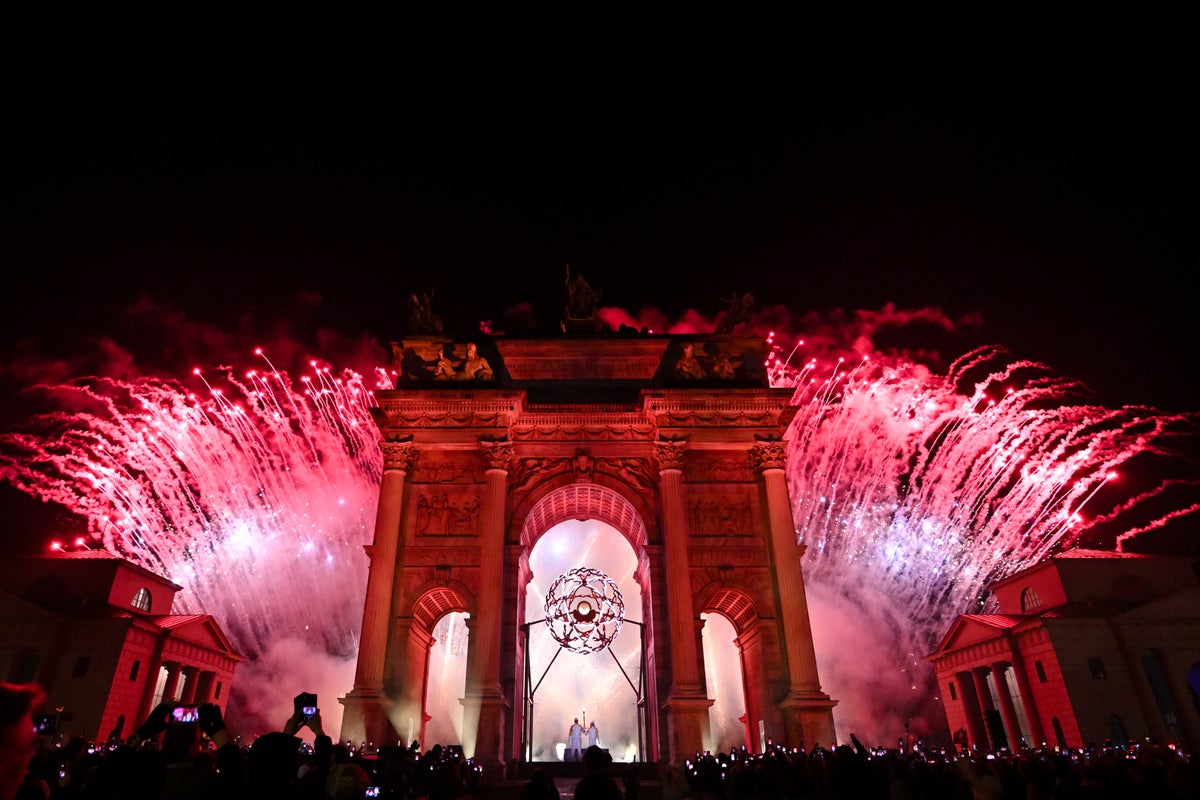
The opening ceremony for the Milano Cortina Winter Olympics has set a new attendance record, with more than 61,000 tickets sold for the event held at Milan’s iconic San Siro stadium.
An additional 10,000 spectators watched the spectacle from other locations across northern Italy, where the Games’ events are spread.
Organisers expressed immense pride in the smooth execution of the ceremony, which marked a significant logistical challenge given the distributed nature of the upcoming Games.
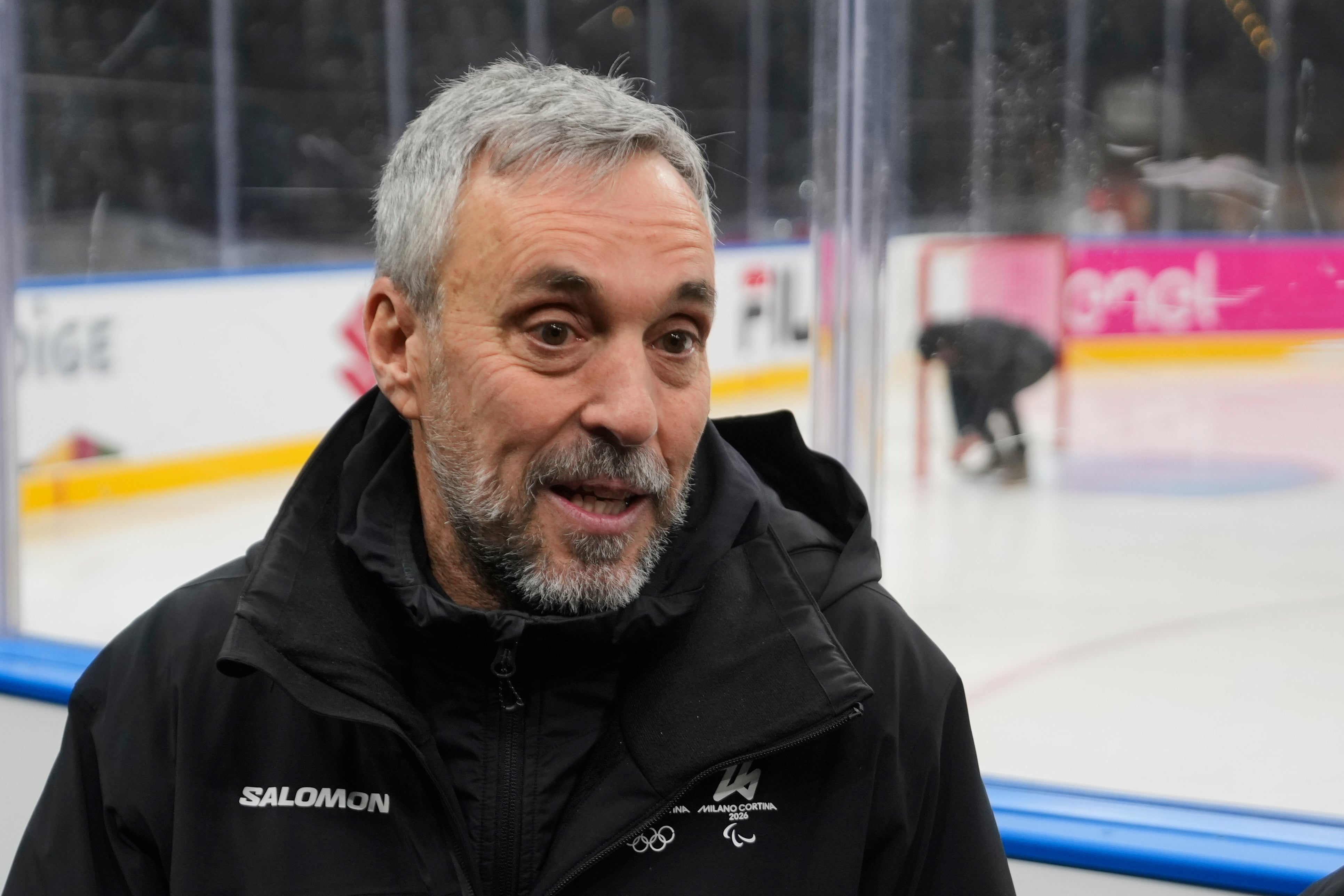
Andrea Varnier, CEO of the Milano Cortina 2026 Foundation, stated: “It was a major challenge and we were very, very proud of our achievement. I am very pleased that everything went very well from an organisational point of view, which was not easy in such a unique context.”
For the first time in Olympic history, athletes paraded across four distinct locations, and two Olympic cauldrons – key symbols of the Games – were simultaneously lit, one at Milan’s Arco della Pace and the other in Cortina d’Ampezzo’s Piazza Dibona, symbolising the dual host regions.

Despite the widespread success and positive reception, the International Olympic Committee (IOC) noted one minor point of contention: the ceremony’s three-and-a-half-hour duration.
Christophe Dubi, the Olympic Games executive director, remarked on the overall impression, praising its aesthetic and cultural depth: “The feeling I had at the ceremony? How elegant, how beautiful. The imagery, but also how profoundly Italian yet universal that ceremony was.”
He acknowledged the operational complexity, adding: “The only remark we got was the length. It is a pretty complex operation. It will be analysed.”
The ambitious production involved thousands of individuals, including 1,400 performers – 1,200 of whom were volunteers – alongside many more deployed nationwide.
Maria Laura Iascone, ceremonies director for the Milano Cortina 2026 Foundation, articulated the overarching goal: “Our goal was to captivate the world and better showcase our country.”
Notably, the artists who performed on Friday, including American pop star Mariah Carey, did so without compensation.
Carey opened the show, which seamlessly blended elements representing both the host city and the mountainous regions. Ms Iascone commented: “We were honoured that she was with us.”
The ceremony also saw social media criticism regarding the prominence of Italian rapper Ghali’s performance.
Ghali, born in Milan to Tunisian parents, had previously sparked controversy in Italy due to his criticism of Israel concerning its actions in Gaza.
Mr Varnier dismissed the criticism, explaining the creative decision: “The idea behind the television directing was to show the whole rather than the individual.”