

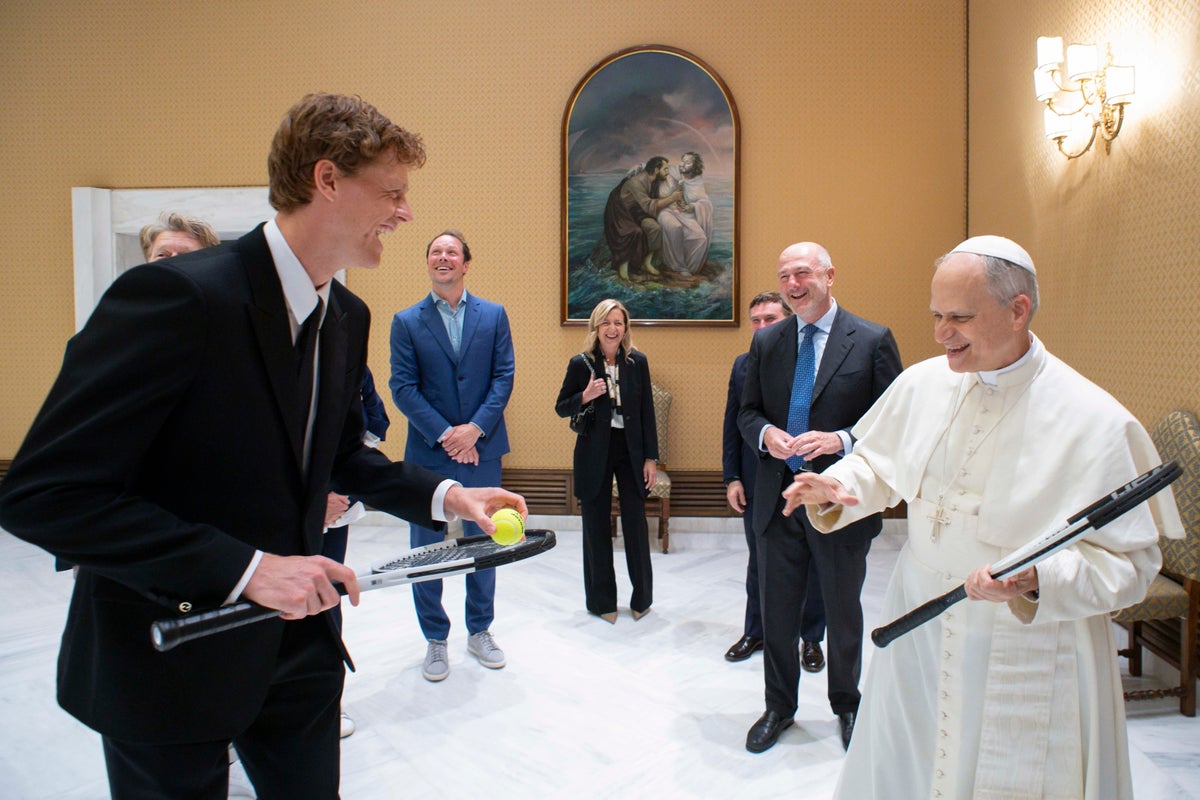
Pope Leo XIV, whose election last year revealed his passion for tennis, has continued to embrace the sport, integrating it into his demanding schedule as a reflection of his Augustinian devotion to physical activity and spirituality.
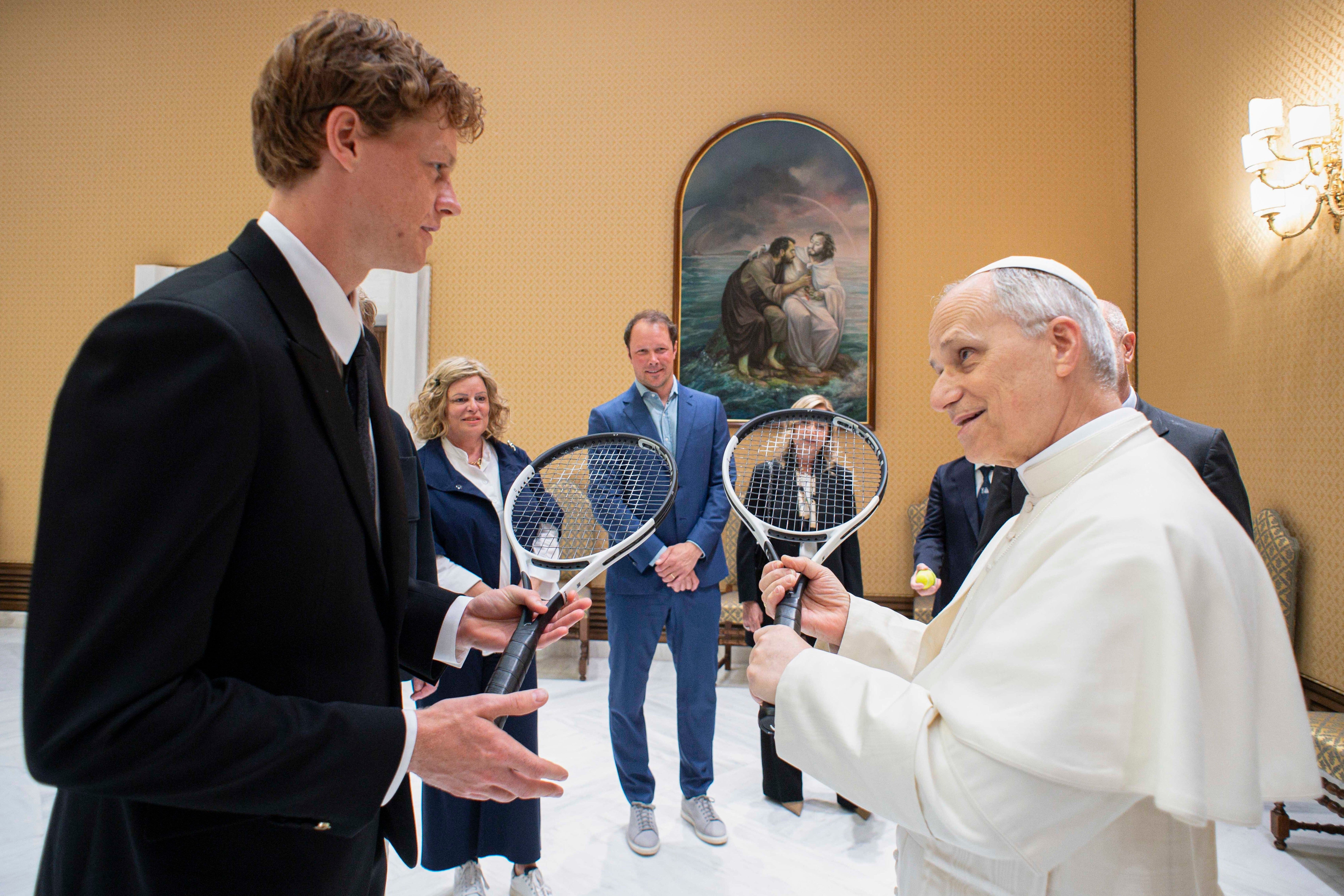
His love for the game was quickly celebrated during an audience with top-ranked player Jannik Sinner.
The Pontiff sets aside time each week to play, aligning with the Rule of St. Augustine, an ancient guide for religious life that underscores the importance of good habits.
“He’s trying to keep some regularity to his routine that comes from the Rule,” explained the Rev. Rob Hagan, Prior of the Augustinian Province of St. Thomas of Villanova and team chaplain at Villanova University, the Pope’s alma mater.
Pope Leo’s deep connection to St. Augustine was evident during his April pilgrimage to Algeria, where he visited the archaeological ruins associated with the influential 5th-century theologian and philosopher. Hagan noted that the Pope “highlights a very underappreciated Augustinian value — especially in this noisy world — and that is to develop your interior life.”
The Pope often spends Mondays and Tuesdays at the papal retreat in Castel Gandolfo, nestled in the hills outside Rome. Here, he enjoys tennis with his secretary, Monsignor Edgard Iván Rimaycuna Inga, alongside swimming and horseback riding.

Before his papacy, then-Cardinal Robert Prevost, as he was known, spoke of his tennis prowess in an interview with the Augustinian Order.
“I consider myself quite the amateur tennis player,” he stated in 2023, adding, “Since leaving Peru I have had few occasions to practise so I am looking forward to getting back on the court.”
This week, Pope Leo released a video message advocating for sports as a tool for peace, dialogue between cultures and nations, and “personal improvement,” according to the Vatican.
“In life, as in the game, no one is saved alone,” he said. “We need others to grow, to learn respect, to overcome our limits, and to celebrate together the victories we achieve. We ask that sport may always be a school of fraternity, not of empty rivalry, a space of encounter, not exclusion.”
Croatian player Marin Cilic, the 2014 US Open champion, expressed his delight, saying it was “amazing to hear that Pope Leo loves tennis.” Ahead of the French Open, Cilic, who hails from the Bosnian pilgrimage town of Medjugorje, described it as “a beautiful game. You enjoy it especially when you are playing without pressure of time, without pressure of tournaments.”
Beyond the physical exertion, tennis is a highly mental game. Maintaining focus and avoiding unforced errors are crucial for success.
“If your opponent is going to beat you, that’s fine. But don’t beat yourself — you know, the double-faults, the smash into the net,” Hagan observed. “That does take a certain mental discipline, an ability to create good habits.”
The full-body nature of tennis, demanding hand-eye coordination, cardiovascular fitness, and stamina, serves as ideal preparation for the 70-year-old Pontiff’s rigorous duties. These include presiding over prayer services for thousands, constant public and private audiences, and exhausting global trips. In April alone, Pope Leo travelled over 17,700 kilometres on 18 flights during an 11-day tour of Africa.
“Just look at his schedule. Look at the pace that he is keeping,” Hagan said. “He can sing the mass parts because he has a lung capacity. Hear him because he has a certain strength in his voice. It’s something that they don’t teach you in the seminary: To be a priest, to be a spiritual or really any leader for that matter, it is a physically demanding job.”
Before becoming Pope, he regularly worked out at the Vatican-area Omega gym, with hour-long sessions focusing on posture and cardiovascular health, according to his former personal trainer, Valerio Masella.
Hagan believes that through Pope Leo, “people are discovering who St. Augustine is. People are discovering who the Augustinians are.”
He added, “And people are discovering and hopefully applying these Augustinian values. We don’t have a monopoly on these values, but certainly Augustine and now Leo are putting them up on a platform that people can see.”
Hagan, who has preached Augustinian values to Villanova teams for over two decades, including two national championship basketball teams, concluded with a quote from St. Augustine: “Do not be content with what you are if you want to become what you are not yet. For where you’ve grown pleased with yourself, there you shall remain.”