)
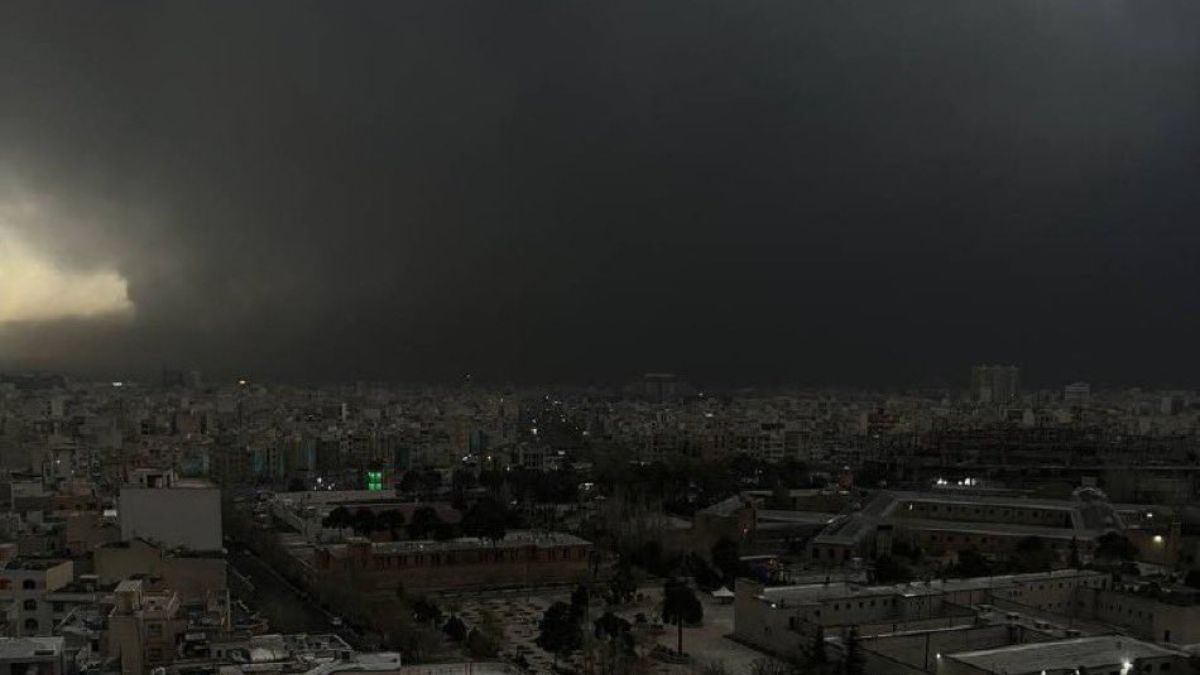
Northern Iran is shrouded by dark clouds, and parts of the country are witnessing dark or contaminated rain following air strikes on major oil storage facilities by the US and Israel. But why are health experts raising the alarm?
Since the war began on February 28, Iran has been facing incessant bombing by the US and Israel.
Now, northern Iran is shrouded by dark clouds and parts of the country are witnessing polluted rainfall as a result of the air strikes on major oil storage facilities in the country.
The phenomenon, sometimes referred to as ‘black rain’, came after Israeli strikes on oil reservoirs on Saturday (March 7). This in turn led to fires that have been burning for days. Officials have warned that this has resulted in a significant amount of pollutants in the air.
The toxic rain is already causing health concerns among Iranians, with several complaining of headaches and difficulty breathing.
Let’s take a closer look.
What is ‘black rain’?
‘Black rain’ refers to rainfall that becomes contaminated with particles such as soot, ash, oil droplets, or industrial pollutants. These substances mix with raindrops as they fall through polluted air, causing the rain to appear dark or oily.
When large amounts of smoke, soot or chemicals are present in the atmosphere, raindrops collect these pollutants and carry them to the ground. It can occur after large oil fires or refinery explosions, wildfires producing heavy smoke, industrial pollution events, volcanic eruptions, and nuclear explosions or fallout.
Reports suggest that fires at oil infrastructure released hydrocarbons, sulphur compounds and other pollutants into the air, which later combined with rainfall and led to the dark precipitation observed in certain areas.
What happened in Iran?
So far, Iran has witnessed over 1,300 deaths while 13 people have lost their lives in Israel since the conflict began.
Israeli forces destroyed oil reservoirs over the weekend. The oil depots in Karaj, Shehran, Aghdasiyeh, and a refinery in Tehran are the four major oil facilities that have been targeted. The facility in Tehran alone is capable of refining around 225,000 barrels of crude oil each day.
💔🇮🇷 The animals dropped such massive bombs on Iran’s oil depots that the midday skies are now black
The rain is oily & dark
Let’s hope we don’t have to hear them cry when Iran responds… pic.twitter.com/aBP2RQi7ox
— Jackson Hinkle 🇺🇸 (@jacksonhinklle) March 8, 2026
The massive fires caused the pollutants to hover over Tehran, a city of nearly 10 million residents. A storm system over the weekend then brought areas of rain to parts of the country, causing the pollutants to mix with rainfall and fall to the ground as contaminated precipitation, sometimes described as “black rain”, according to Iranian officials.
For ;black rain’ to be produced, the concentrations of pollutants must be “extremely high,” Charles Driscoll, a professor of environmental engineering at Syracuse University, told ABC News. According to CEOBS, a UK-based non-profit that tracks the environmental consequences of war and military operations, the situation resulted in a “major environmental incident”.
Several videos and photos of the ‘black rain’ and thick smoke from the national capital Tehran have been circulating online. According to some residents, a thick and oily film has covered cars and rooftops.
🇮🇷 Black rain fell in Tehran this morning. Residents and reporters described it as rainwater mixed with oil and soot from burning storage facilities and fuel. pic.twitter.com/zbhFQZg1Mm
— Argonaut (@FapeFop90614) March 8, 2026
What are dangers of ‘black rain’?
The WHO has cautioned that the oil-tainted rain could have immediate and long-term health consequences. “The black rain and the acidic rain coming with it is indeed a danger for the population, respiratory mainly,” WHO spokesperson Christian Lindmeier said during a briefing.
‘Black rain’ can have multiple health risks including both short- and long-term health issues. Some of the short-term risks include headaches or difficulty in breathing, especially if people have asthma or lung disease.
The longer-term effects include an increased cancer risk with prolonged exposure to compounds in the air. When ultrafine particles (PM2.5) are inhaled, they can enter the bloodstream. This has been linked to a range of health impacts including cancers, neurological conditions and various cardiovascular conditions.
‘Black rain’ can cause skin and eye irritation, respiratory problems along with other health issues.
With inputs from agencies
End of Article