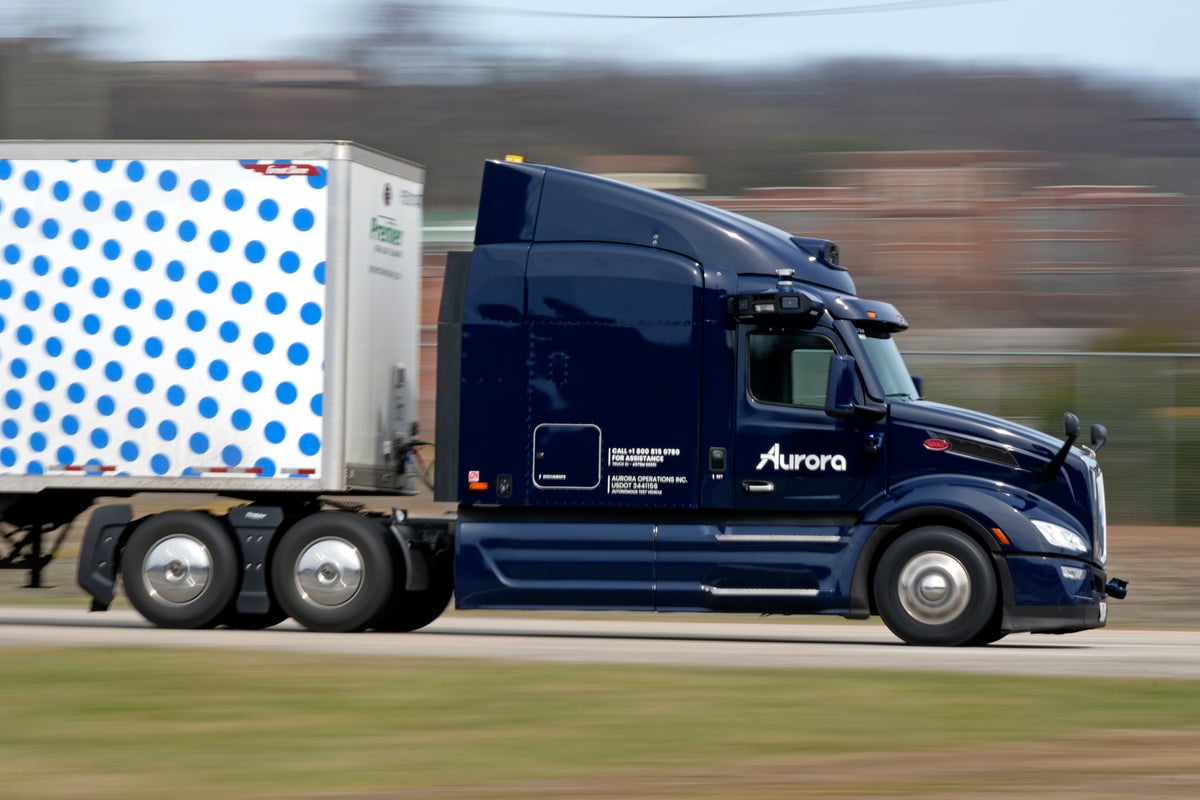
Autonomous semis are already driving on the roads in Texas, and they may be driving next to the rest of us by next year, according to a new report.
In Texas and parts of the south central and southwestern U.S., driverless trucks are already making cargo runs to test their longterm viability.
Aurora Innovation’s artificial intelligence driving systems for trucks has already made unassisted runs between Dallas and Houston, putting a collective 1,200 on the odometer, according to the New York Times.
According to the outlet, there is a consensus forming in the trucking industry that fully-autonomous Class 8 trucks — semis — will be ready for use in 2027. Several companies are preparing to unleash their creations onto the world, and many appear to be based in Texas.
As noted, Aurora already has its driverless systems ready and tested. Its trucks were hauling berries for Discroll and mining-related freight for Detmar Logistics. Paccar — which manufactures some of the trucks Aurora was using for its tests — recently requested that the company put safety drivers back in the trucks’ cabs, but Aurora is hoping to be back to fully autonomous sometime this year.

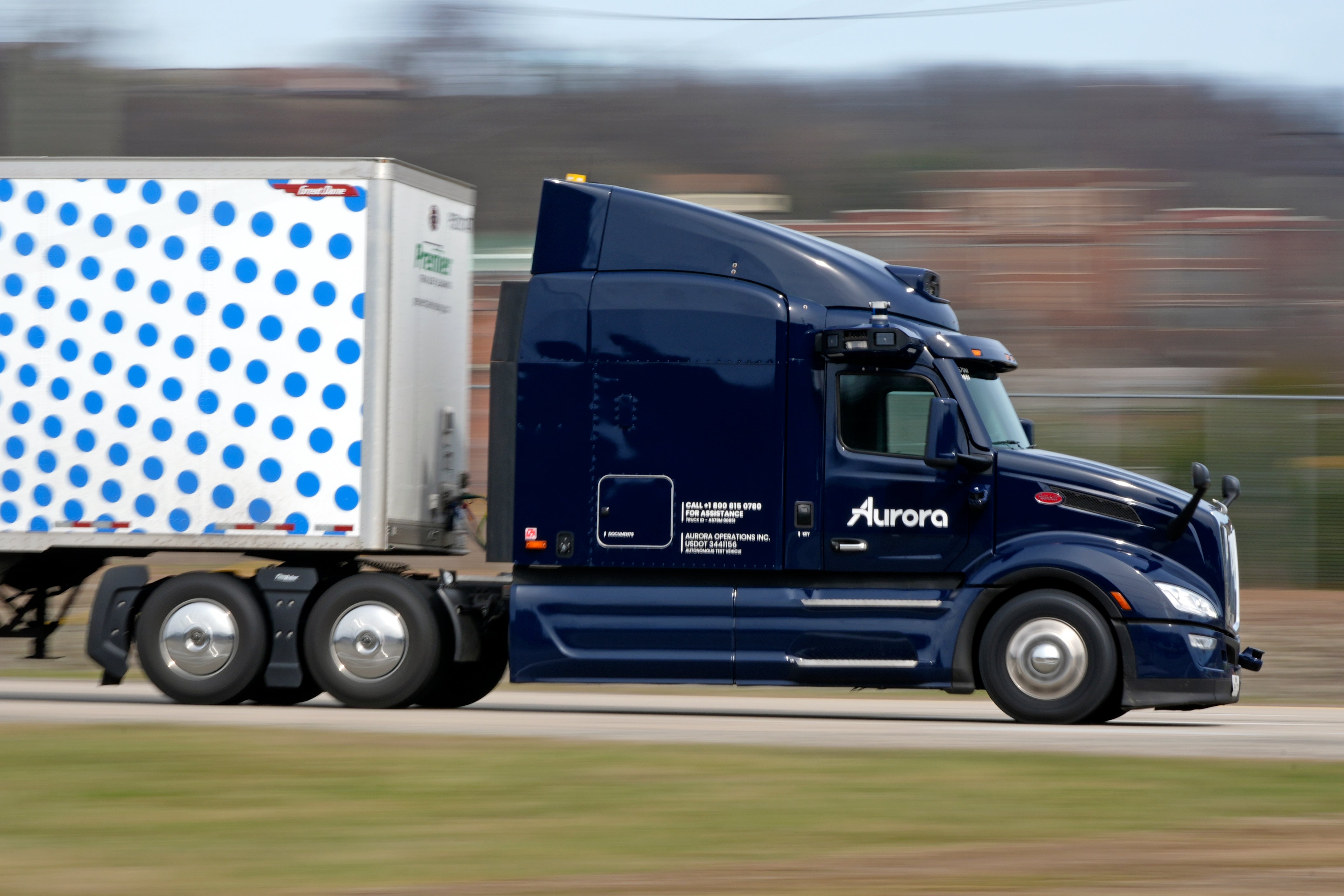
“By the end of this year, we will grow from a handful of autonomous trucks on the road to more than 200,” Chris Urmson, Aurora’s CEO, told the Times. “And by the end of 2027, it will be thousands.”
Aurora isn’t the only company strapping its AI onto existing trucks.
Kodiak AI is another big player in the autonomous freight race. Its systems are currently powering 10 trucks — owned by partner company Atlas Energy Solutions — which haul industrial sand over rural roads.
Don Burnette, Kodiak’s CEO and founder, said his company plans to have driverless semis on the roads making long-haul deliveries by the second half of 2027.
“We feel confident we can go on to the next stage, and scale the business quickly,” he told the Times.
According to Truckers Report, a typical driver’s salary is 26 percent of the per-mile cost of operating a commercial truck. If commercial freight companies went driverless, it would present an opportunity to bolster their profit margins.
Each year, the U.S. freight trucking business generates more than $900 billion in annual revenue.

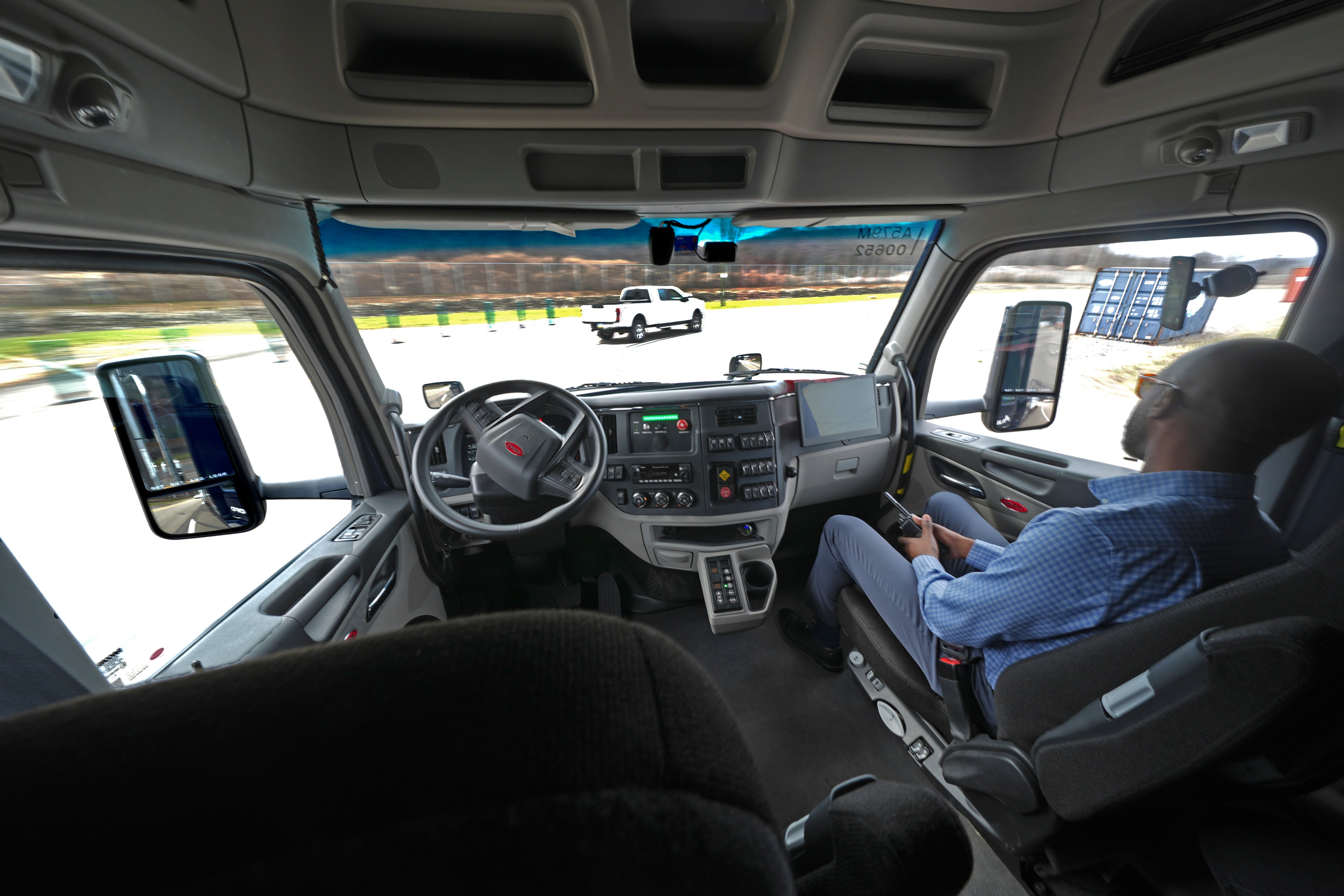
The trucking industry is also one of the largest employers in the U.S.
Many U.S. truckers are represented by the Teamsters International, which has opposed driverless vehicles over safety concerns.
“Big Tech and the corporations that invest in autonomous vehicles (AVs) keep telling us that their vehicles are safe and ready for operation on our streets. Yet, if we turn on the news, we know that there are crashes occurring and that death, injuries, and the destruction of property have been caused by failures in autonomous technology,” the union said in a statement on its site.
And there have been problems. Some trucks have experienced “phantom braking,” where the vehicle slams on its brakes for no clear reason. Lawsuits have also been filed over alleged decisions some autonomous vehicles have made.
Missy Cummings, a former adviser to the National Highway Traffic Safety Administration and the current director of the Mason Autonomy and Robotics Center at George Mason University spoke to the Times about her ongoing safety concerns.
“There is no identified solution on the horizon for the problem of phantom braking,” she told the paper. And it will not be addressed soon, because nobody wants to admit that it’s happening.”