


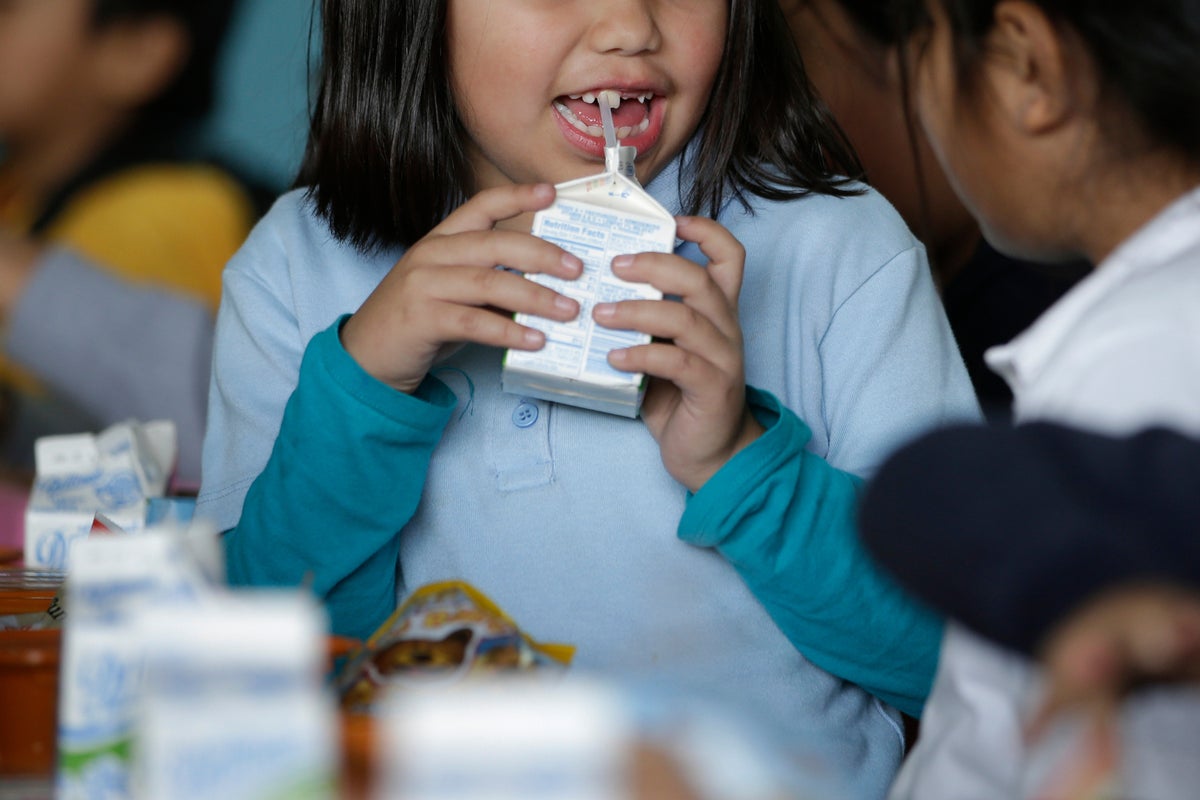
Whole milk is set to return to school cafeterias across the U.S. after President Donald Trump signed legislation overturning Obama-era restrictions on higher-fat dairy options. fall.
The new measure permits schools participating in the National School Lunch Programme to serve whole and 2% fat milk alongside the skimmed and low-fat products mandated since 2012.
“Whether you’re a Democrat or a Republican, whole milk is a great thing,” Mr Trump stated at a White House signing ceremony attended by lawmakers, dairy farmers, and their children.
The law also allows schools to offer nondairy milk that meets nutritional standards and requires them to provide a nondairy alternative if children present a note from their parents – not just doctors – citing a dietary restriction.
This signing follows days after the release of the 2025-2030 Dietary Guidelines for Americans, which now advocate for the consumption of full-fat dairy products as part of a healthy diet, a shift from previous editions that recommended low-fat or fat-free dairy for those over two years old.
Earlier this week, the Agriculture Department posted on social media a picture of Trump with a glass of milk and a “milk moustache,” declaring: “Drink Whole Milk.”
The change could take effect as early as this fall, though school nutrition and dairy industry officials suggest it may take longer for some schools to assess demand for full-fat dairy and adjust supply chains.


Long championed by the dairy industry, the reintroduction of whole and 2% milk to school meals reverses provisions of the Healthy Hunger-Free Kids Act, an initiative supported by Michelle Obama.
Enacted over a decade ago, that law aimed to curb childhood obesity and improve health by reducing children’s intake of saturated fat and calories from higher-fat milk.
Nutrition experts, lawmakers, and the dairy industry have contended that whole milk is a delicious, nutritious food that has been unfairly maligned. Some studies even suggest that children who consume it are less likely to develop obesity than those who opt for lower-fat alternatives.
Critics have also highlighted that many children dislike the taste of lower-fat milk, leading to missed nutrition and food waste.
The new regulations will impact meals served to approximately 30 million students enrolled in the National School Lunch Program. Health Secretary Robert F. Kennedy Jr. described the new law as “a long-overdue correction to school nutrition policy,” while Agriculture Secretary Brooke Rollins said it rectified Michelle Obama’s “short-sighted campaign to ditch whole milk.”
Schools will now be required to offer students a range of fluid milk options, which can include flavoured and unflavoured organic or conventional whole milk, 2 per cent, 1 per cent, and lactose-free milk, as well as non-dairy options meeting nutritional standards.
The new dietary guidelines call for “full-fat dairy with no added sugars,” which would preclude chocolate- and strawberry-flavoured milks currently permitted under a recent update to school meal standards. Agriculture officials will need to translate this recommendation into specific requirements for schools to eliminate flavoured milks.
The new law exempts milk fat from federal requirements that average saturated fats constitute less than 10 per cent of calories in school meals. Dr Dariush Mozaffarian, a leading nutrition expert from Tufts University, has stated there is “no meaningful benefit” in choosing low-fat over high-fat dairy.
He explained that saturated fatty acids in dairy have a different composition from other fats, such as beef fat, and contain beneficial compounds that could offset theoretical harms. “Saturated fat in dairy has not been linked to any adverse health outcomes,” Mozaffarian affirmed in an interview.
Research has indicated that changes in the federal nutrition program following the Obama-era law slowed the rise in obesity among US children, including teenagers. However, some nutrition experts point to newer research suggesting that children who drink whole milk could be less likely to be overweight or develop obesity than those who consume lower-fat milk.
A 2020 review of 28 studies indicated a 40% lower risk for children who drank whole milk, though the authors noted they could not definitively attribute this to milk consumption alone.


.jpeg?trim=71,0,0,0&width=1200&height=800&crop=1200:800 "‘My sister had her whole life ahead of her. Then she collapsed and died while out for a run’ – UK Times")