


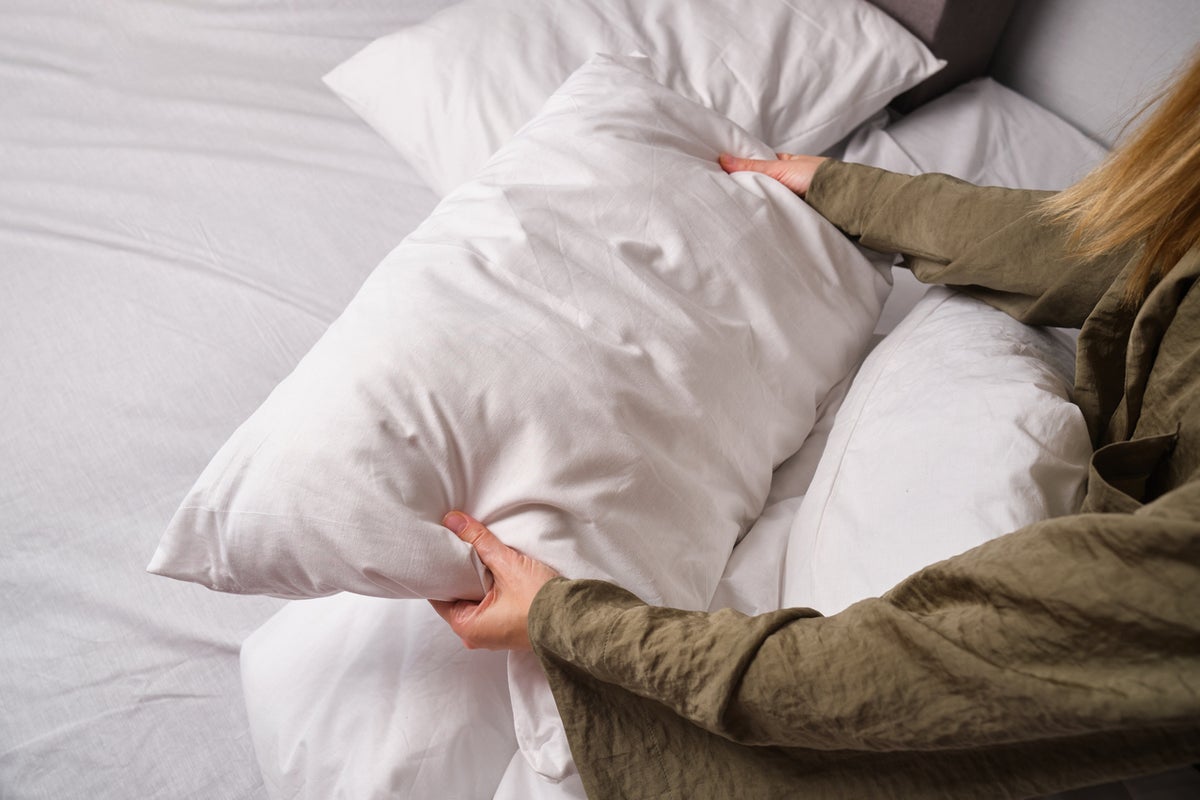
Our pillows do a lot of the heavy lifting when it comes to sleep. They provide comfort and support for your neck and spine throughout the night. These can have a positive or negative impact on your posture over time.
But despite how much value a pillow gives our sleep, how many of us actually put time and thought into replacing our pillows? You might be surprised to know that they need replacing somewhat regularly.
Over time, they naturally break down and can accumulate sweat, oils and allergens, even with regular care. Sleep experts say this gradual wear can affect both sleep quality and hygiene, so it’s important to know when to replace them. I spoke to the sleep experts about everything you need to know about the maintenance of your pillows.
Read more: Best pillows, reviewed
How often should you replace your pillows?
According to Barbara Stern, textile and bedding expert at Ottoman Textiles, you should replace your pillows every 18 to 24 months. This can depend on the filling type and quality. She adds that anyone suffering from allergies and/or sleep warmers should replace pillows even earlier, perhaps between 12 and 18 months.
Hannah Shore, head of sleep science at MattressOnline, notes: “Some entry-level pillows may only last a year or two at best before they flatten out and become ‘unplumpable’. However, other, more premium fibres can hold their shape and support for a longer period of time.
“Foam tends to keep its shape; however, again, the entry-level products may start to break down or soften sooner. If you invest in quality, with proper maintenance and cleaning, your pillow could last you years.”
Read more: How to wash pillows at home, according to an expert
Why should you replace your pillows?
Over time, pillows lose their shape and ability to provide adequate support, the job they’re designed to do. “As skin oils and hair oils are absorbed into the pillow’s filling, as well as through moisture absorption from our bodies, over time the fibres or foam cells break down and reduce their ability to support us,” Stern explains.
Read more: Best anti-snore pillows
How to tell when it’s time to replace your pillows?
Stern says there is a simple way to know if it’s time to replace your pillows: the “fold and rebound” test. “If a pillow folds and returns slowly, it is likely losing its ability to provide proper neck alignment. A pillow that stays flat, lumpy or doesn’t spring back into shape is no longer offering the support it should, which can lead to discomfort and disrupted sleep over time, and means it’s time to invest in a new one.”
Read more: Best anti-allergy and hypoallergenic pillows
Best pillows to buy
If you’ve now realised you need a new pillow (you’re not alone), I’ve rounded up the best pillows from our tests.
Simba hybrid pillow
When it comes to the best pillow, Simba’s hybrid pillow took the top spot in our guide.
Reviewer Caroline Preece said that it “emerged as the most adaptable, consistently comfortable pillow on test. What makes it a winner is its ‘nanocube’ fill – instead of vague ‘adjustable’ claims, you can genuinely fine-tune loft and firmness to your liking, by adding or removing the small foam cubes.”
The pillow also topped her review of the best cooling pillows. “The cooling promise legitimate,” she wrote. It provides “a subtle, instant chill as air is kept moving through the mesh perimeter. I found that I flipped it less on warm nights, and it stayed a comfortable temperature whether put in a cotton case or used as is.”
What to know
- Filling: Adjustable foam nanocubes
- Cover material: Temperature-regulating layer and cotton reverse
- Support level: Adjustable (soft to firm)
- Machine washable: Yes
Why we love it
- Adjustable design provides precise height customisation
- Proven cooling technology
- Works across multiple sleeping positions
Take note
- Pricey
- Requires manual adjustment
- You’ll need to store any removed filling
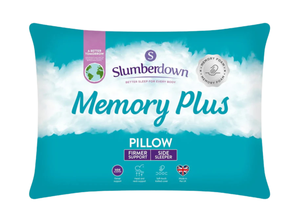
Slumberdown memory plus pillow
If you’re looking for something a little cheaper, the Slumberdown memory plus pillow is a great budget option. Reviewer Caroline Preece said that it had a “consistent medium-firm feel that contoured gradually rather than engulfing my head. When on my side or back, it kept my neck neutral, and I woke up without feeling stiff”.
“Resilience is better than the price suggests, and minor impressions bounced back within a couple of minutes. There weren’t any midnight dips that some cheaper foams can develop, either,” she added.
“It’s a smart upgrade from lumpy hollowfibre for budget-conscious sleepers,” she wrote.
Why we love it
- Medium‑firm memory‑foam support at a budget price
- Consistent contouring with quick rebound
- Removable, machine‑washable cover
Take note
- Runs warmer than ventilated or gel‑infused foams
- Fixed loft is too high for most front sleepers
- Core not machine-washable
Meet the experts
- Barbara Stern: Textile and bedding expert at Ottoman Textiles
- Hannah Shore: Head of sleep science at MattressOnline
Do you snore at night? These are the sleeping positions experts say will eliminate snoring