



Washington is buzzing with the possibility that President Donald Trump might name one or more Supreme Court justices before the November midterm elections.
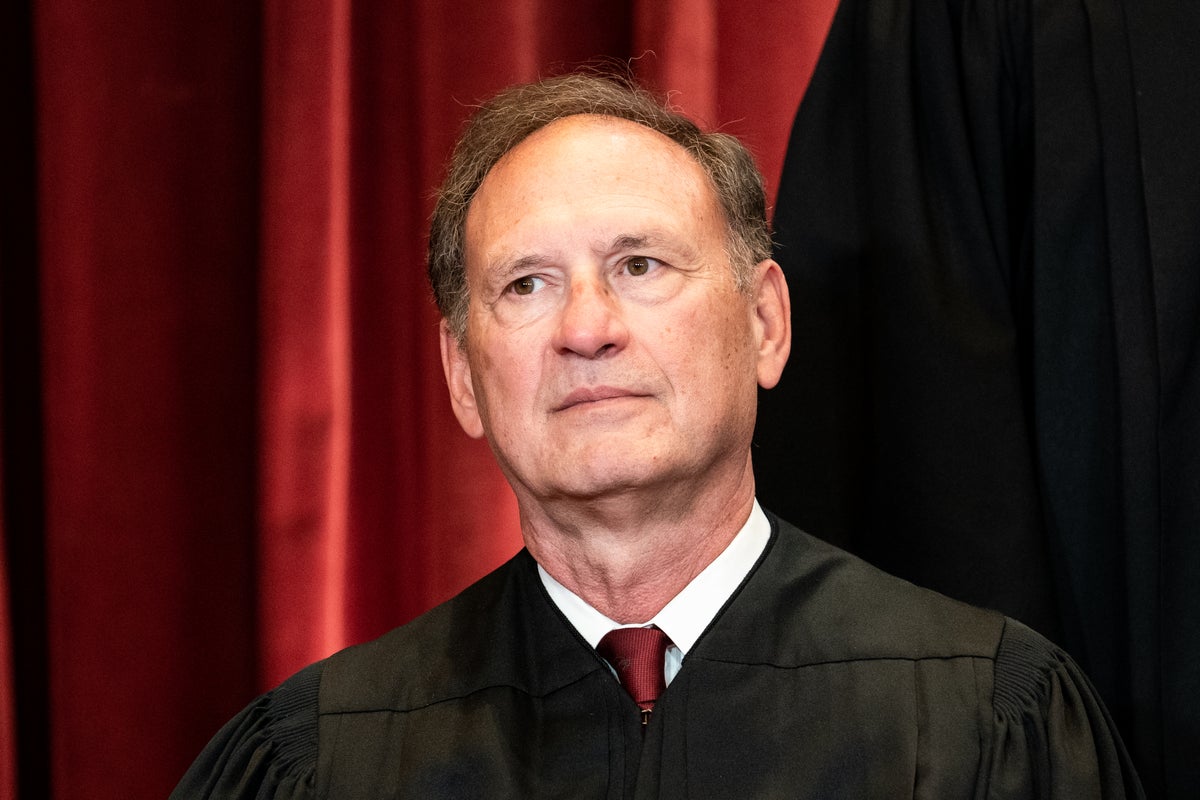
In a conversation with Fox Business TV host Maria Bartiromo on April 15, 2026, Trump discussed the potential retirement of Justice Samuel Alito, 76, the reliably conservative justice appointed by President George W. Bush in 2005.
Trump praised Alito as “a great justice” and said that he is prepared to appoint a replacement, should Alito retire.
Trump added, “In theory, it’s two – you just read the statistics – it could be two, could be three, could be one.”
Trump didn’t say who the other potential retiring justices are. Speculation from pundits is that he is referring to Justice Clarence Thomas, 77, another solid conservative vote. Thomas, appointed by George H.W. Bush in 1991, is the court’s oldest justice and longest-serving member.

In the same Fox interview, Trump pointed to former Justice Ruth Bader Ginsburg, who was under intense pressure to retire during President Barack Obama’s presidency. Ginsburg opted to stay on the bench and died in September 2020.
Republicans blocked Obama’s appointment of Merrick Garland in 2016 after the death of Justice Antonin Scalia. Then, in 2020, Trump replaced Ginsburg with Justice Amy Coney Barrett, solidifying a 6-3 conservative majority.
As a scholar of the Supreme Court confirmation process, I know the timing of Trump’s comments is closely linked to November’s midterm elections.
If Democrats were to take over the Senate following the midterms, it is very unlikely they would confirm a Trump-appointed Supreme Court nominee. Instead, they would probably follow the precedent set by Republicans in 2020 and block a Trump pick.
The clock is ticking on November’s midterm elections, and Democrats’ chances of taking back the Senate are improving. Assuming a current Supreme Court justice retires, here’s what has to happen for Trump and Senate Republicans to successfully confirm a successor.
The Supreme Court confirmation process
The Constitution says that the Senate provides “advice and consent” on presidential appointments to the Supreme Court. Over the course of the nation’s history, this has developed into a complex process.
Once the Senate receives a nomination from the president, it goes to the Judiciary Committee.
This is where the most public part of the confirmation process takes place: confirmation hearings. These typically last three to four days and feature a high stakes question-and-answer session with the nominee.
Prior to the hearings, senators and the nominee engage in a substantial amount of preparation.
Senators, with their staffs, do extensive background research on the nominee, which helps inform their questioning. Some of this is accomplished through the Senate Judiciary Committee questionnaire, to which nominees provide written answers. Supreme Court Justice Ketanji Brown Jackson’s 2022 questionnaire was 149 pages long. It included questions about organizational memberships, public speeches and judicial opinions authored.
Meanwhile, the nominee makes courtesy calls to senators to build support for confirmation.
At roughly the same time, the nominee takes part in hearing preparation, known as “murder boards.” Here, the nominee’s allies play the roles of members of the Judiciary Committee, anticipating the type of tough questions the nominee will face from skeptical senators from the opposition party of the appointing president.
During Jackson’s murder boards, for instance, the focus was on expected Republican attacks that Jackson was soft on crime.
Within a few days of the end of the confirmation hearings, the Judiciary Committee votes on its recommendation to the full Senate. Then the nomination goes back to the full Senate for more discussion and a final confirmation vote. A simple majority is needed to confirm a Supreme Court nominee.
For the nine members of the court, it has taken an average of 70 days between presidential appointment and Senate confirmation, according to data from The U.S. Supreme Court Database. But this number has decreased recently, with Barrett and Jackson taking 30 and 41 days, respectively, to be confirmed.
So, as long as there is roughly a month before the November midterms, it is likely that there is enough time for the Republican Senate to confirm a Trump nominee.
Democrats have limited options
In 2017, Senate Republicans ended the filibuster for Supreme Court nominees. It was a move to secure the confirmation of Neil Gorsuch.
This reduced the threshold for confirmation from 60 votes to 51 votes. Perhaps most importantly, it also severely limited the options available to the minority party to block a Supreme Court confirmation.
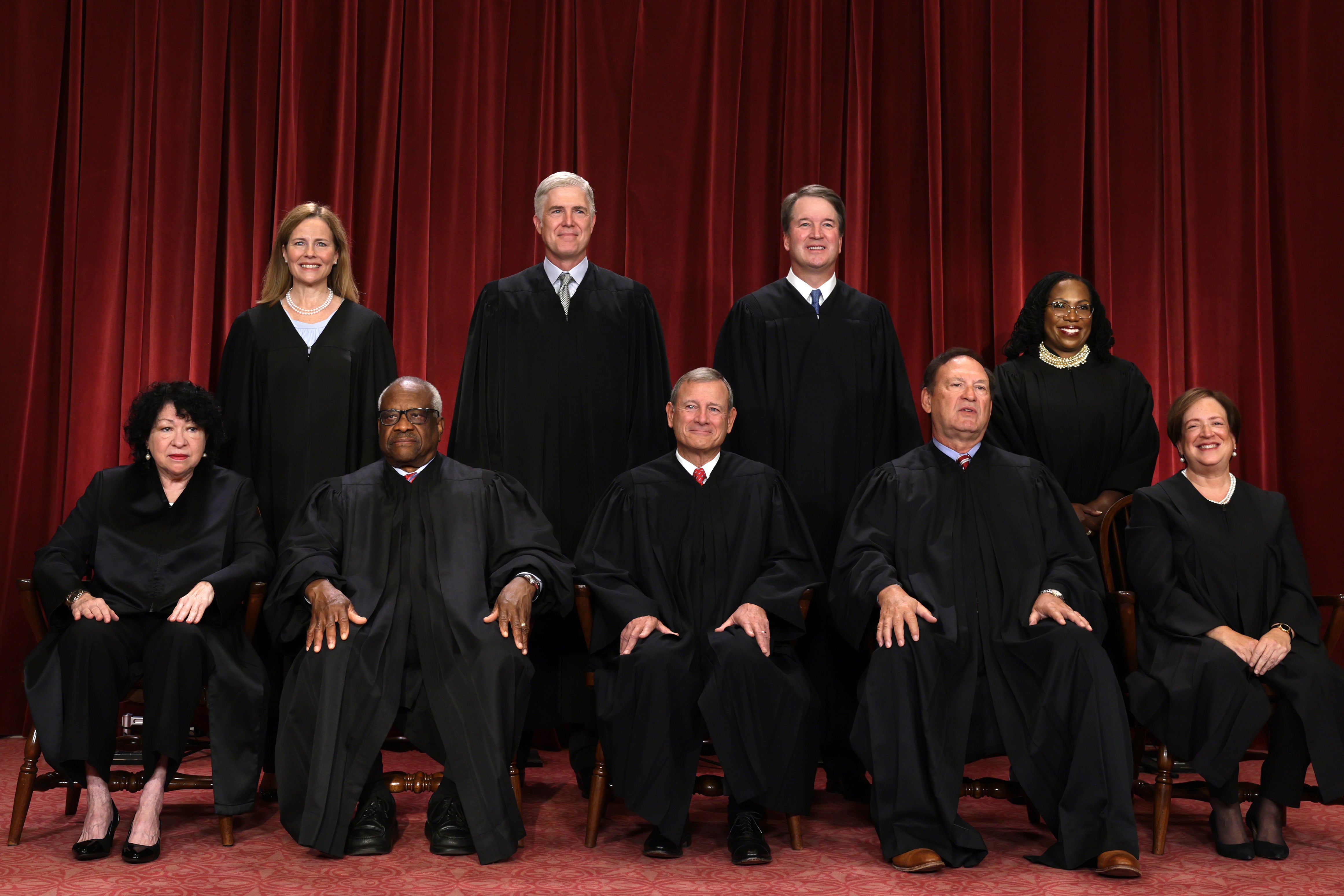
With a 53-47 Republican majority in the Senate, so long as Republicans stick together, it will be very difficult for Senate Democrats to block a Trump nominee.
There are some delay tactics available to Democrats – they can perhaps even grind the entire Senate to a halt – but they may pay a political price for these tactics. Republicans, for instance, may try to paint Democrats as obstructionist, potentially motivating a voter backlash against the Democratic Party in the midterm elections.
Nonetheless, Democrats may view this as a fight worth having, since the confirmation of another Republican-appointed justice will ensure conservative dominance on the court for decades – if not generations – to come.



-John-Brennan-testifies-before-the-Hous.jpeg?trim=0,0,0,0&width=1200&height=800&crop=1200:800 "Ex-CIA Director John Brennan sues Trump and admin officials over investigation records – UK Times")