


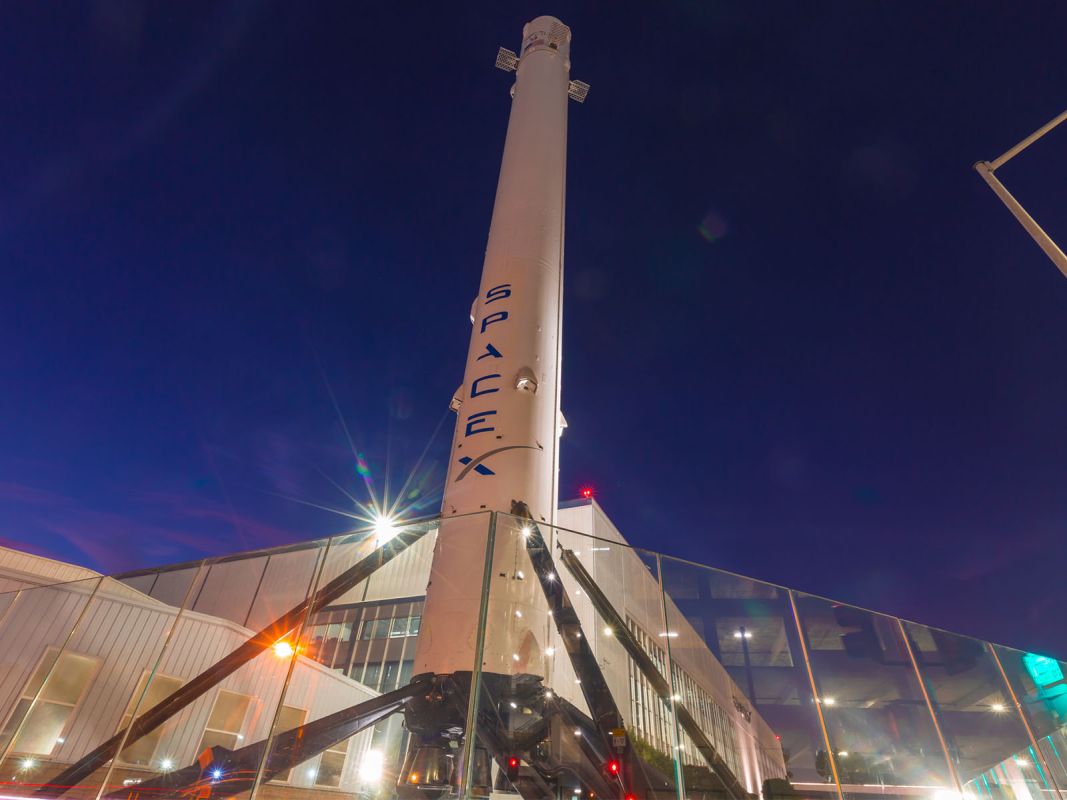
With the SpaceX Initial Public Offering (IPO) due to price on June 12th, and Anthropic and OpenAI waiting in the wings, we wanted to dig into the implications for our portfolios.
First, it’s worth highlighting that we invest predominantly in ETFs. Those ETFs track indices, whose composition adjusts over time as companies enter or exit financial markets. As a result, we’ve seen a good amount of attention focused on the way that these index providers account for newly listed companies.
Different index providers have followed different approaches. For instance, Standard & Poor’s 500 (the stock market index tracking the performance of 500 leading companies in the United States) has historically had a stricter approach than the Nasdaq, calling for 12 months of history as a listed company and four consecutive quarters of profitability before they could be included. The Nasdaq has generally allowed companies to enter its indices much sooner.
At the same time, S&P is also on the verge of softening its approach. On June 8th, it is likely to determine that a company can be included in the S&P 500 only six months after listing, regardless of whether it has shown accounting profits. SpaceX, as a reminder, is looking to sell at a valuation of around 100x forward revenue. That’s a very high multiple on its current, loss-making business, whatever you think of its prospects in the future – something we highlighted a couple of weeks ago (along with many others).
Let’s turn back to our portfolios
Most of our US equity exposure tracks the S&P 500, while a smaller portion tracks the Nasdaq. If S&P changes its rules on June 8th, then we could see SpaceX included in that index towards the end of 2026. SpaceX is likely to be included in the Nasdaq 100 by the end of June, or in early July. In terms of its weighting in the index, there are various rules (around things like the free float – how much of the stock is available to trade), but we think that SpaceX would have a weight of around 1.5% in the Nasdaq 100.
The largest Nasdaq exposure in our portfolios is around 5.5% (in a 100% equity portfolio), suggesting that the weight of SpaceX in that portfolio would be around 8 basis points or 0.08% of the overall portfolio. We’d argue that’s not a significant direct impact, at least for now, although we would need to consider how that might change if and when SpaceX enters the S&P 500.
What about indirect impacts? There are a few points to consider here. As we’ve noted before, investors will likely need to raise cash to invest in these new IPOs, possibly by selling other stocks. SpaceX is also not the only company looking for capital, after all. Anthropic and OpenAI also look set to launch their processes, while Alphabet (Google) recently announced that it would raise $80 billion by selling shares to fund its investments in Artificial Intelligence (AI). It’s a reminder of how much capital these companies are investing on the AI build-out.
There is also a signalling issue. If executives with the deepest understanding of their companies’ future prospects are choosing to sell shares, investors may reasonably ask what that implies about current valuations. And what does it mean for the equity market overall? It’s a familiar question and a fair one when we consider all the enthusiasm around AI and the amount of money that companies are looking to raise and spend. But we should remember that all these listed businesses IPOed at some point. They raise cash in order to continue innovating and growing, scaling up their businesses.
This is also an opportunity for public equity investors to participate in the next phase of these companies’ growth. As with any IPO, the crucial question is whether the valuation being asked today is justified by the company’s long-term prospects. That is the debate surrounding SpaceX, just as it was for Facebook when it listed at a $100 billion valuation – a price that many investors considered excessive at the time. Today, it looks rather different.
So where does this leave us?
We’re going to see a number of large companies try to raise equity capital in the coming days and months, and that raises questions about how the equity market reacts. It’s an important reminder that market expectations can become elevated even if the long-term outlook proves to be robust.
In the immediate term, we don’t think that the SpaceX listing will have a material direct impact on our portfolios – since we expect the weight of the stock will be small overall, at least for the next few months. But the combination of increased equity issuance and high expectations means that we’re monitoring these moves very closely, and we’ll adjust the portfolios if we see the need to do so.
*As with all investing, financial instruments involve inherent risks, including loss of capital, market fluctuations and liquidity risk. Past performance is no guarantee of future results. It is important to consider your risk tolerance and investment objectives before proceeding.
