

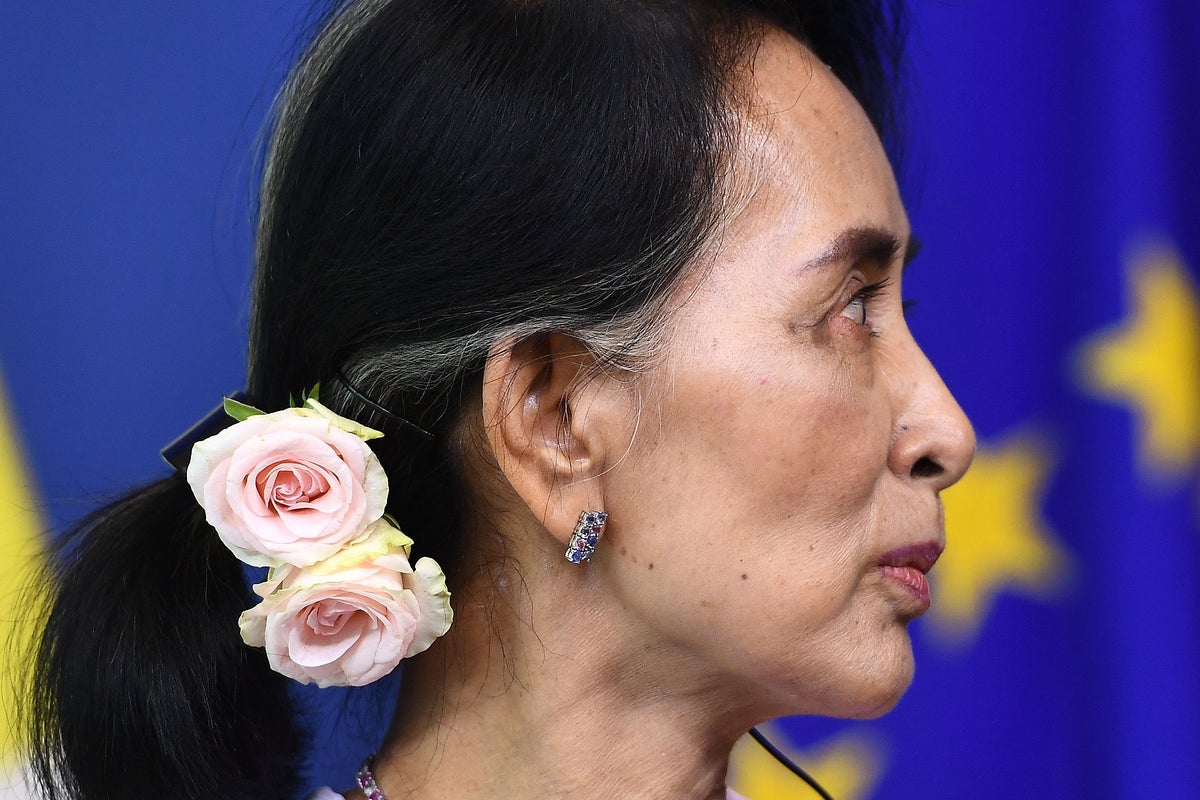
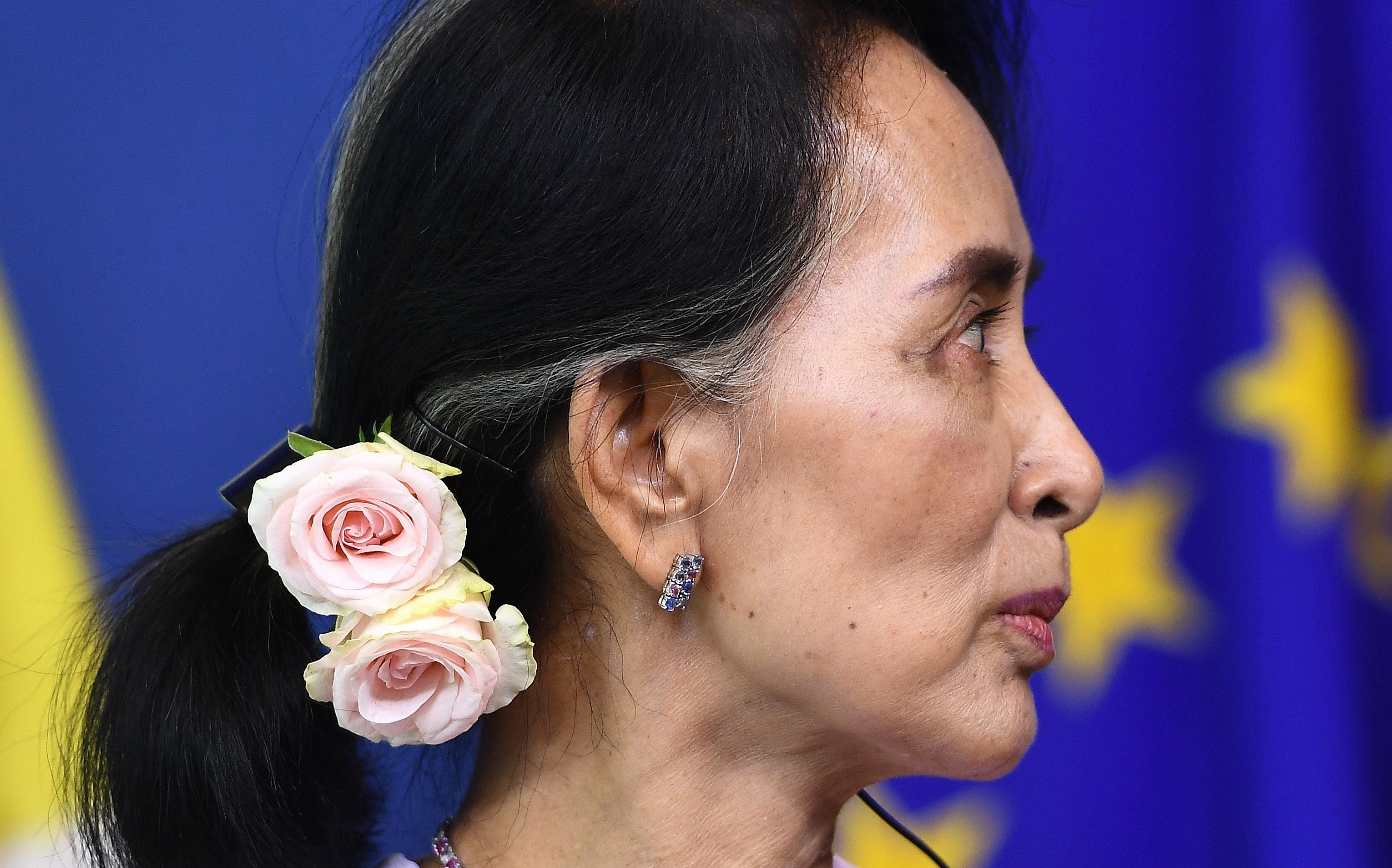
Buying, selling and displaying roses will become criminal acts in Myanmar this week, as the government attempts to crush new protests inspired by Aung San Suu Kyi’s 81st birthday.
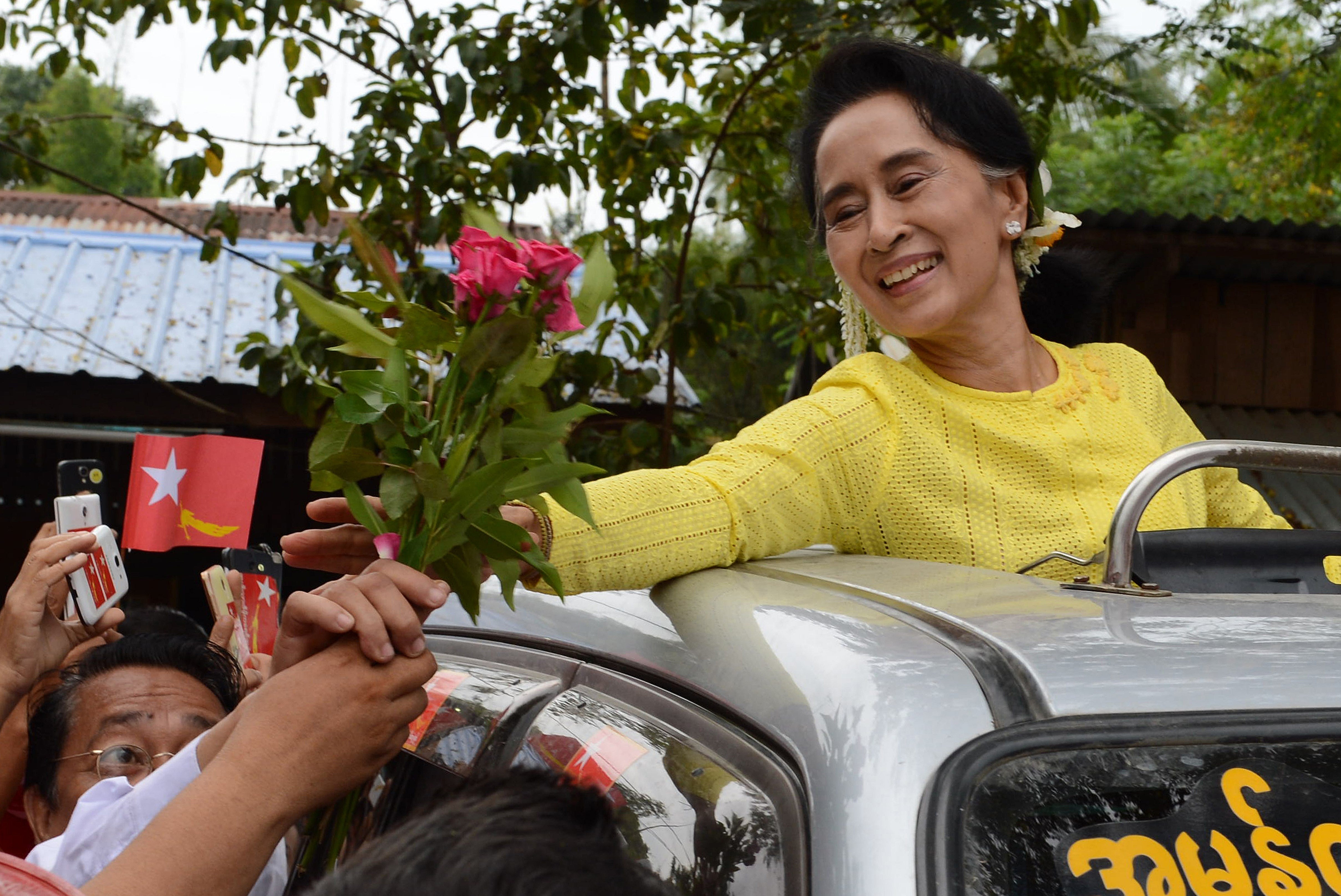
Women are being urged to wear roses in their hair, people are encouraged to offer roses at Buddhist temples, and the movement is being widely promoted on social media.
Roses were chosen because they are the toppled leader’s favourite flower, and the Roses of Hope movement launched this month is an oblique way to demand the release of the nation’s 20,000 political prisoners.
But anyone defying the rule risks swelling their number in the impoverished South East Asian nation’s notorious jails.
And there is no certainty that Suu Kyi – a controversial figure after she defended the military junta at the UN against claims of genocide against the Rohingya – is still alive, prompting her supporters to demand proof of life.
As a leaked memo revealed recently, China demanded Suu Kyi’s release as a precondition for normalising relations, and on 30 April it was announced that she and her former colleague U Win Myint were being moved from prison to house arrest.
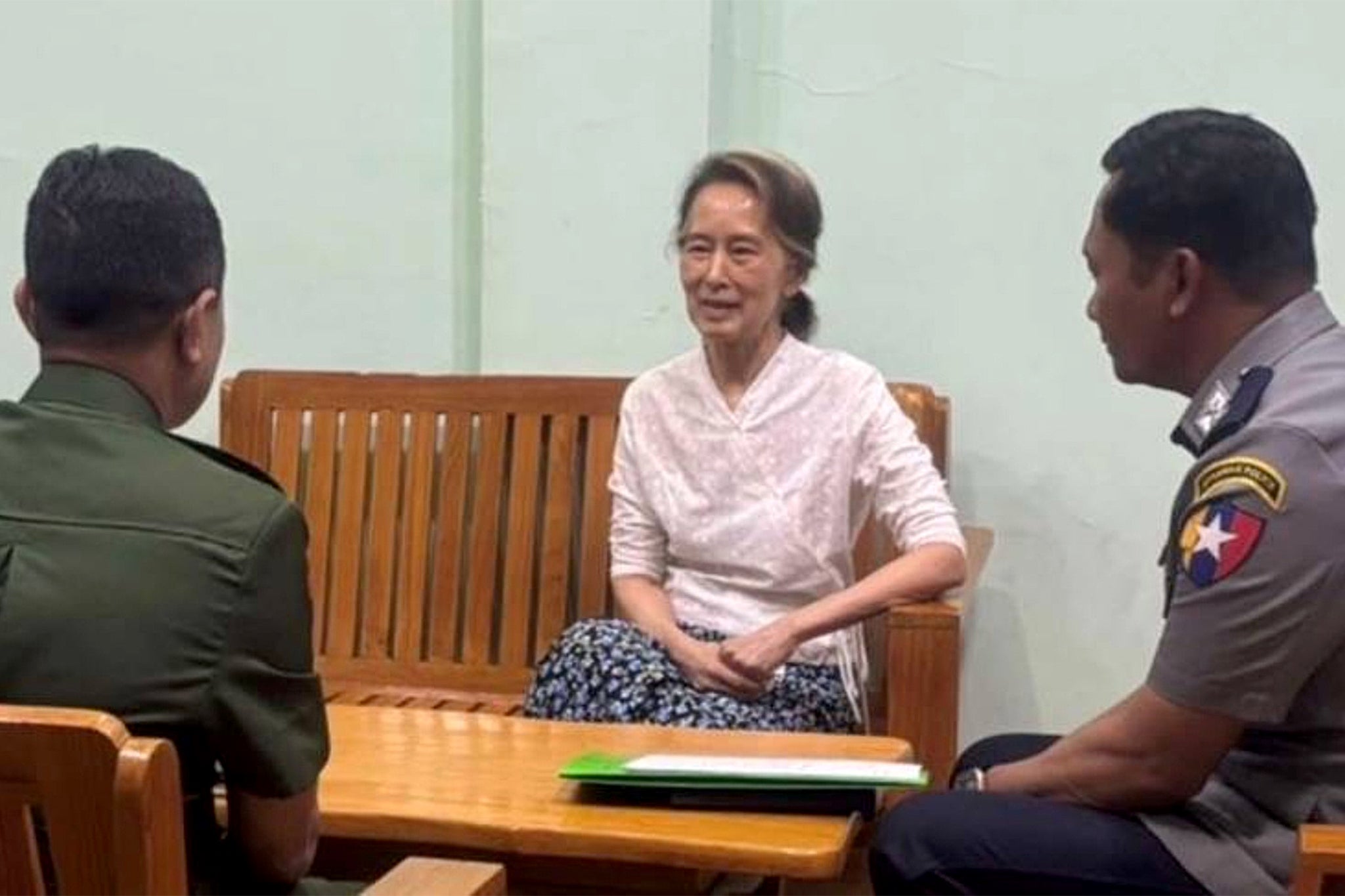
But the only photographic evidence published, showing Suu Kyi seated with two army officers, was years old. U Win Myint has since received visits from his family, but no-one has seen or heard from Suu Kyi since 2023.
Australian economist Sean Turnell, who served as her senior economic adviser until the coup, and subsequently spent nearly two years in jail, said: “It’s extremely worrying.
“The reason they announced that she was being moved from jail was to get some kind of concession, trying to present themselves as a more normal government and repair the terrible diplomatic state they’re in.
“The fact that they’re not sharing any indication of proof of life, no photographs, no update on her actual condition, is really worrying because they have every incentive to do so.”
Speaking from inside the country, former journalist Maung Maung added: “No one really knows Daw Aung San Suu Kyi’s current health condition or even whether she is still alive.
“I have asked my contacts who are close to the authorities, but they also know nothing about her situation. Personally, I no longer believe she is still alive. Many astrologers and fortune tellers insist she is, and many people believe them, but I don’t.”
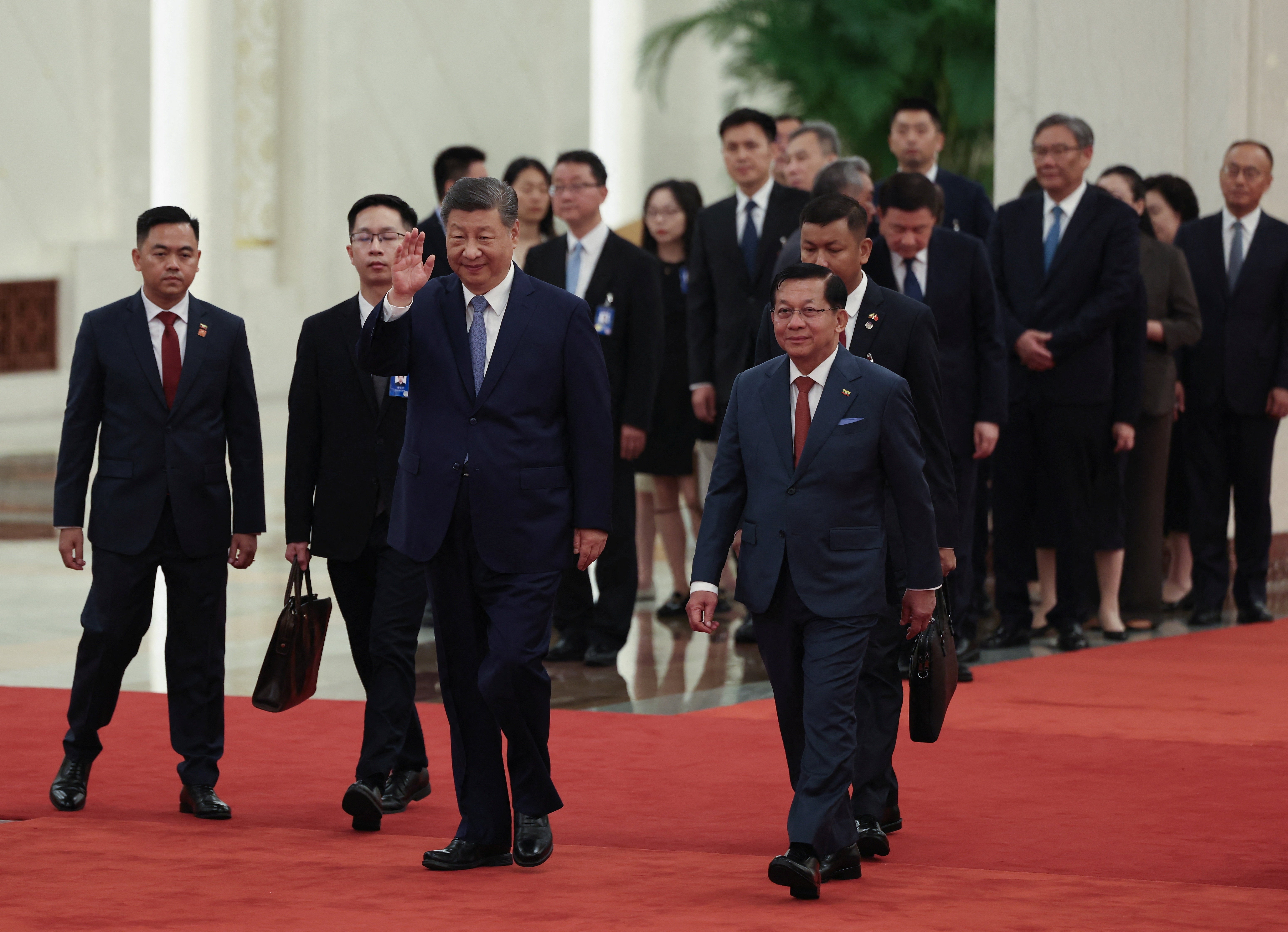
Despite the mystery, China swallowed its doubts and agreed to normalize relations and the junta chief, now President Min Aung Hlaing, is holding talks with his Chinese counterpart Xi Jinping in Beijing this week, following his recent meeting with Indian prime minister Narendra Modi in New Delhi.
The civil war that began after the coup in February 2021 continues to rage, with dozens of civilians killed in army bombing raids in recent weeks and large parts of the country still in rebel hands, and international diplomatic recognition has become the regime’s urgent priority.
The UN and the south-east Asian intergovernmental forum ASEAN are unwilling to help, but Russia – which provides military aid – and Myanmar’s two giant neighbours have obliged.
Both nations have their reasons. With the continuing lawlessness, rebels on the India-Myanmar border are a thorn in India’s side. For China, the issues are more substantive.
Mr Turnell said: “China has really grasped the opportunity presented by the coup, pushing forward its Belt and Road schemes.”
These include the massive, and massively destructive, Myitsone Dam project in the far north, that was cancelled by the previous government but is now back on track.
The most controversial scheme is the planned railway across Myanmar to Kyaukphyu on the Bay of Bengal, which would give China access to the Indian Ocean. But so far it has made little progress as much of the coastal area is controlled by the regime’s opponents.
Myanmar is also the source of some 40 percent of the critical minerals vital to China’s economy, another reason for China to overlook Myanmar’s military rule.
There is also a common desire to check the growth of the giant scam centre compounds that have sprung up on Myanmar’s eastern borders, which specialise in money-laundering, online scamming and cryptocurrency fraud, and pull in recruits from countries as far afield as Ethiopia, Kenya and Brazil, lured by fake job offers.
During his years working with Suu Kyi at the peak of Myanmar’s government, Sean Turnell got friendly with several senior army officers who were scathing about their ultimate boss.
“They saw Min Aung Hlaing, who became head of the army in 2011, as incredibly ambitious but extraordinarily incompetent, and not at all popular among many people in the military.” But for now he seems secure.
Bertil Lintner, a veteran Burma-watcher, added: “The military, wise from past mistakes and backed by China, seems more firmly entrenched in power than before.
“Armed resistance will continue, but will not pose any significant threat. In Myanmar one sees the reverse of Marx’s famous dictum: history repeating itself, not as farce but as a tragedy, one in which the people have no say.”