


The ingredient that gives the popular erectile dysfunction drug Viagra its stimulating effect may also be the solution for a rare and deadly genetic childhood disease, German researchers say.
The compound sildenafil helped improve the muscle strength, neurological and metabolic symptoms of six patients living with Leigh syndrome over the course of just months.
The findings offer a glimmer of hope for patients with the degenerative condition, which can cause a loss of motor skills, vomiting, seizures, muscle weakness, nerve damage and impaired respiratory, heart and kidney function.
There are currently no approved treatments for Leigh syndrome and half of children born with the disease die before the age of three, according to the National Institutes of Health.
A new drug could help patients to lead longer and better quality lives. Leigh syndrome affects one in 36,000 children around the world.


“While we will have to confirm these initial observations in a more comprehensive study, we are very pleased to have found a promising drug candidate for the treatment of this serious hereditary disease,” Dr. Markus Schuelke, a scientist at the medical research university Charité’s Universitätsmedizin in Berlin, said in a statement.
Schuelke, a lead author of the research, and other researchers are planning a Europe-wide clinical trial to test the drug.
‘From 500 to 5,000’
In the pilot study, patients between the ages of nine and 38 years old took the drug every day for up to seven years, Schuelke told Science.
The participants took either low or medium doses of sildenafil: as low as 0.66 milligrams or as high as up to 3 milligrams.
That’s a small fraction of a dose of Viagra, which comes in doses ranging from 25 milligrams to 100 milligrams.
Viagra works by increasing blood flow to the penis.
Increased blood flow helps treat high blood pressure in the arteries in the lungs – a complication of Leigh syndrome that can affect the lungs, heart and kidneys.

Improved circulation led to an enhanced ability to walk, to understand language and better function in nerve cells, the researchers said.
“For example, in the case of a child undergoing sildenafil treatment, the walking distance increased tenfold, from 500 to 5,000 meters,” said Schuelke.
“In another child, the therapy completely suppressed metabolic crises that occurred almost monthly, while another patient no longer suffered from epileptic seizures.”
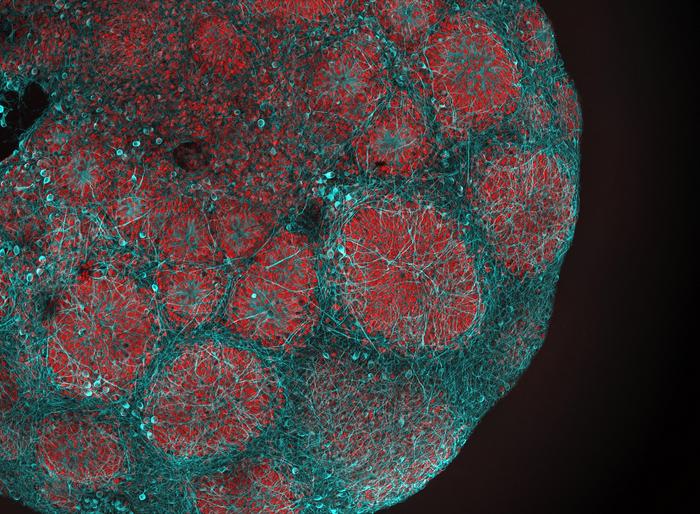
The researchers also tested sildenafil on lab-grown tissue and in animals, finding similar benefits.
It helped rodents and pigs with Leigh syndrome to live longer.
Two of seven pigs with fatal cases of Leigh syndrome survived for more than two months after taking sildenafil. One remained stable for six months.


Diagnosis discovery
The number of children affected in the U.S. is unknown.
People are diagnosed through MRI scans and blood tests.
Symptoms typically manifest in infancy and early childhood.
“Some individuals have a relatively stable course with milder symptoms. Others experience rapid neurological decline and have a shortened lifespan,” the Child Neurology Foundation says.
Researchers at Virginia Tech University discovered a signal in the brain that could help identify the disease earlier in January.