

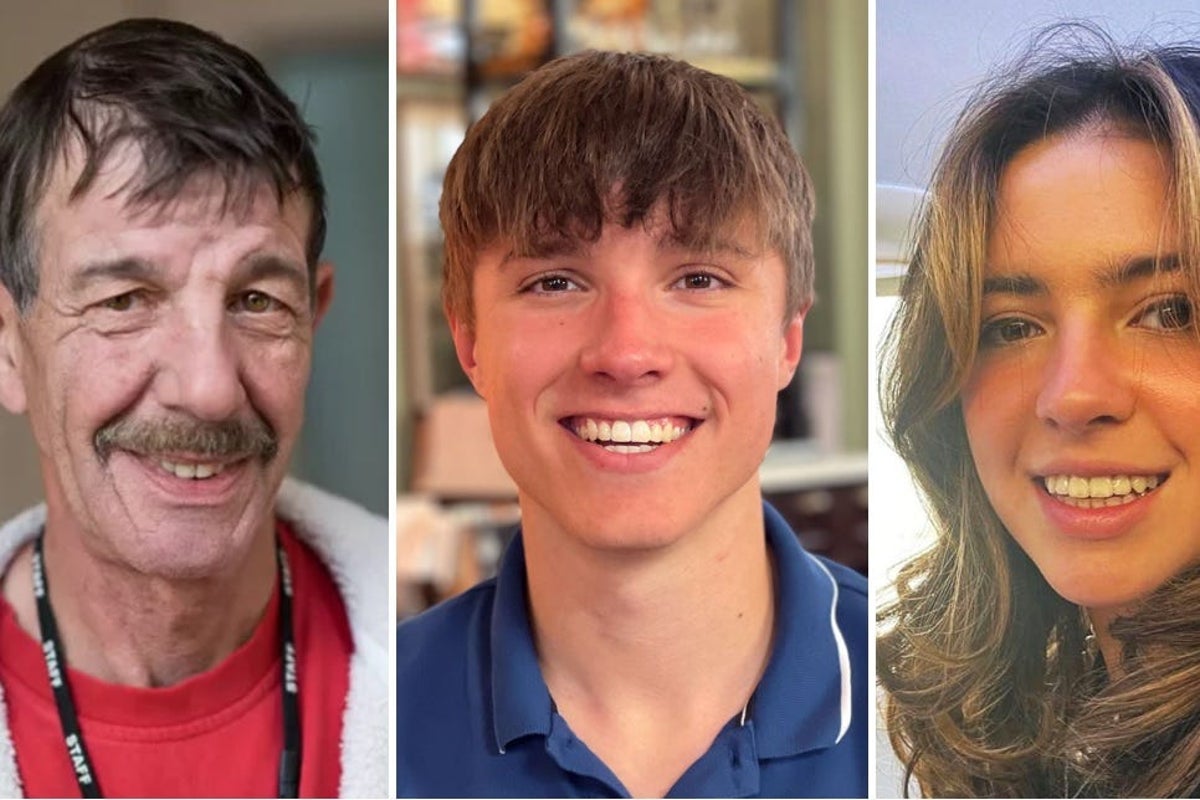
The partner of a school caretaker who was stabbed to death by paranoid schizophrenic Valdo Calocane has told an inquiry it felt like her partner had been killed twice because she was first told he had died in a car crash.
Elaine Newton‘s long-term partner Ian Coates, 65, died after being stabbed just over an hour after 19-year-old undergraduates Barnaby Webber and Grace O’Malley-Kumar were killed in the early hours of 13 June 2023.
She told the public inquiry into the Nottingham attacks that she was first told by police that Mr Coates had died in a road traffic accident (RTA).
Ms Newton told the hearing of her initial denial that it could be Mr Coates, believing he was at work, and that it took more than four hours before she was told the truth about how her partner had actually died.
She said: “They said he was in an RTA, a road accident. I said ‘He will be at work, it’s not Ian’. They said ‘No, it’s an RTA’. I said ‘Did he crash into anyone? What happened?’
“They said ‘We can’t tell you’. I said ‘Is anyone else hurt?’ and they said ‘We can’t tell you’. That’s all they were telling me for about five hours.”
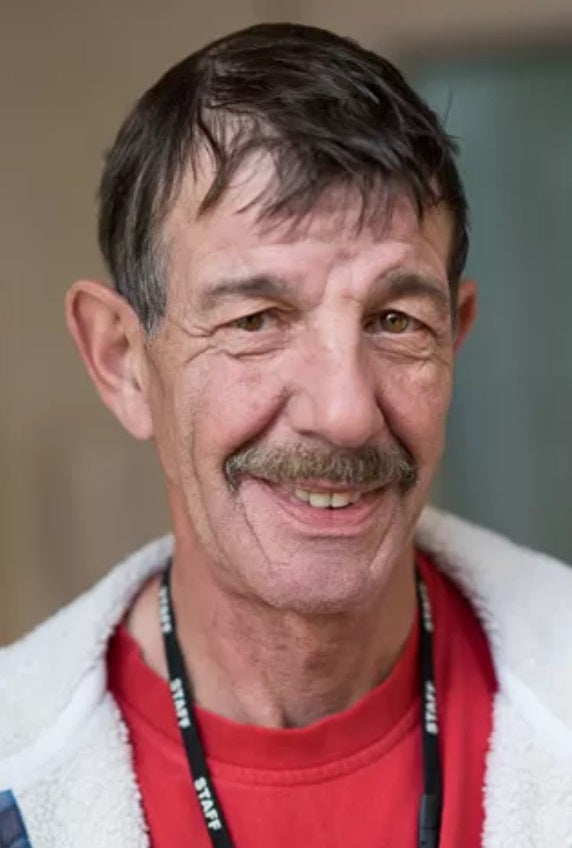
Ms Newton said two young police officers, a man and a woman, spent the morning with her after she was told Mr Coates had died but neither of them could give her any more information about what had happened.
She said the female officer kept going outside to speak to someone, adding: “She kept saying there’s no information, there’s no information. She couldn’t tell me anything for all those hours.”
She told the inquiry that police liaison officers later asked her to tell them what she knew about what had happened.
“And I said ‘Yes, Ian was in an RTA but I don’t know any more than that’,” Ms Newton said.
“And they looked shocked on their faces and said ‘You’ve got the wrong information, You’ve been told the wrong information. Ian’s been killed and he’s been stabbed’. That’s how I learned.”
Asked how it felt to be told how he had really died, Ms Newton said: “It felt like he’d been killed twice. It wasn’t right.
“The first information, I accepted, but the second I couldn’t accept. You don’t know which one was true, or have they got the wrong person. It was not right, it was a mess.”
Ms Newton said she had told Nottinghamshire Police that she did not want to see the face of Calocane – who is being referred to during the inquiry as VC – but was later shown videos of him walking around the city on the morning of the attacks.
She said: “I didn’t want to see VC’s face, I didn’t want him to take my life over as much as he has done. I wanted to keep his face out of my mind.”
Ms Newton also said she only became aware of previous incidents involving Calocane and the police during the inquiry process.
She said: “I was never told any information about his past… The first time was this hearing, I didn’t know anything about any of this at all.”
During a meeting with the now-retired chief constable of Nottinghamshire Police Kate Meynell, Ms Newton said she was not told about Calocane’s past involvement with police but was instead told about a WhatsApp group in which police officers had discussed the fatal attacks.
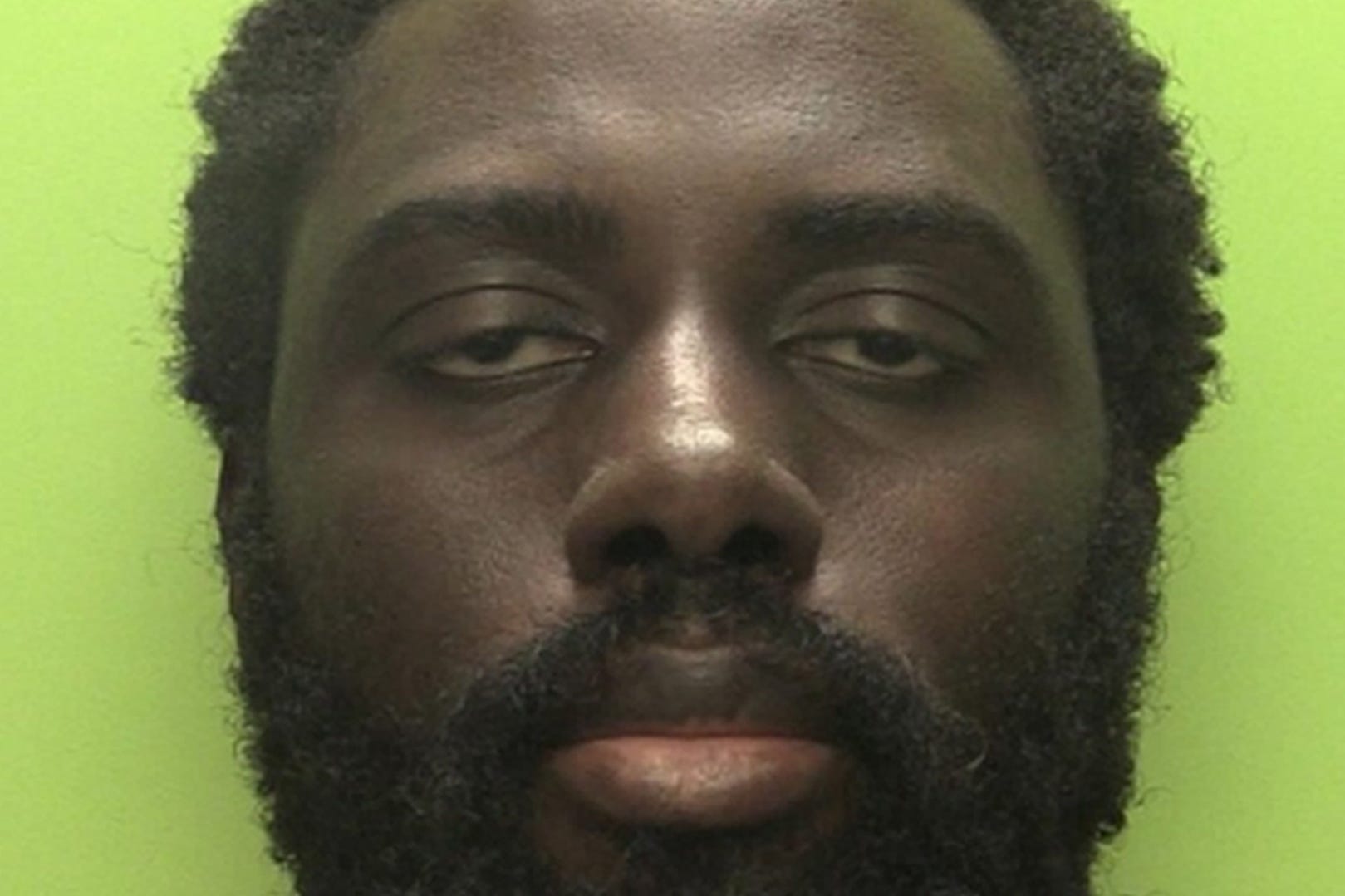
Asked what she would have done had she had known this information, Ms Newton said: “I wouldn’t have thanked Kate Meynell for all the information she gave me and for letting me come and visit her. I have lost faith in the police and I feel like I have not been given the information and have been lied to really.
“I should have been given information about his past, not straight away, but down the line. She could have given me more information when I went, rather than just telling me about the WhatsApp group.”
In the wake of the attacks, Ms Newton asked Nottinghamshire Police how Calocane was allowed to be “roaming” the city so long after he had carried out the fatal stabbings and was given “excuses”.
She said: “I did ask that question to Kate Meynell and (my family liaison officer) and they said it could be quite a few reasons, there was not enough police that morning, Nottingham is a big place.
“Those were the excuses I got. I did say it was early in the morning and there wouldn’t have been a lot of people around. They said they might just not have had enough police officers in that morning.”
Ms Newton told the inquiry she was “glad this has all come out” but added that “the police need to be more helpful”.
She said the prosecution of Calocane was not explained clearly enough, adding: “I mean meeting or you’re introduced to people, you never, you don’t actually understand because its rushed, it’s not explained enough, they think you understand because it’s their job.
“The way they talk about the criminal justice… you don’t understand it.”
Calocane was discharged by Nottinghamshire Healthcare NHS Foundation Trust (NHFT) in September 2022.
Ms Newton read an email she sent to NHFT following meetings with representatives from the trust.
She read her email to the inquiry, which said: “I want you to understand that I am not interested in apologies because it is too late, too little.”
In the email, she said she holds the NHS responsible for the deaths of Mr Coates, Mr Webber and Ms O’Malley-Kumar.
“I have zero confidence in any changes that NHS makes in the future. It does not learn its lessons and does not care about people, only statistics and numbers,” she wrote.
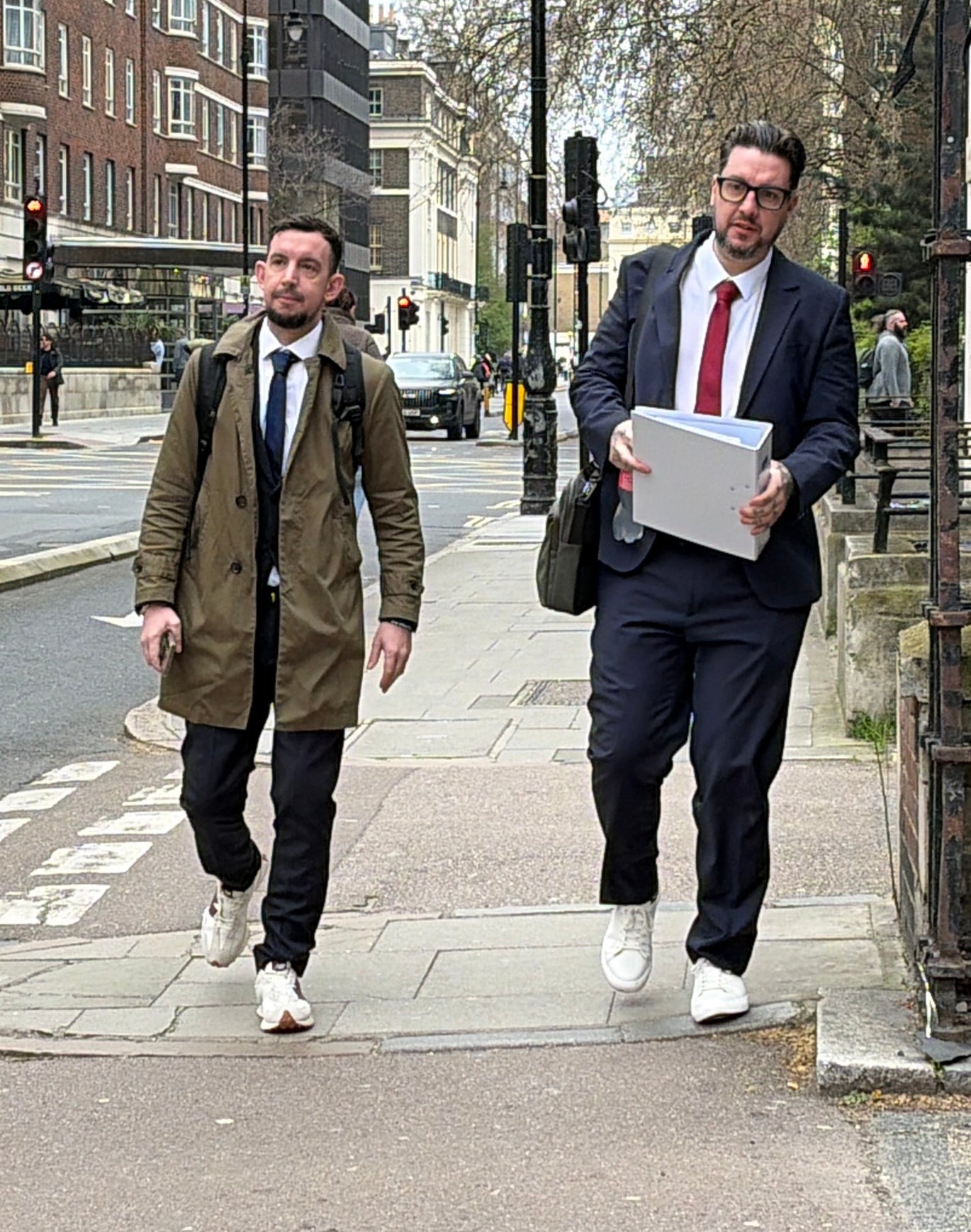
“I believe that is how you see Ian Coates, as just another statistic that you brush aside and file away.
“What I want is the individuals responsible for the catastrophic NHS failings to be held to account.”
She added: “I want those who failed to manage VC’s care to be struck off from ever being in a position of care ever again.”
Ms Newton told the inquiry: “I think the police have let the public and myself and all other families down.”
Asked why, she said: “Because they didn’t do their job properly, they didn’t communicate with the NHS, the NHS didn’t communicate with the police.
“So I think between them all they’ve caused this.”