



The U.S. has returned to the top 10 of a respected “most powerful passports” ranking after briefly dropping out for the first time in late 2025.
However, this recovery masks a longer-term decline for the U.S., which, along with the UK, held first place on the Henley Passport Index in 2014. The U.S. — 10th in the new 2026 table, with the UK in seventh — has suffered the third-largest decline in ranking over the past decade, after Venezuela (No. 45, down from No. 32 in 2016) and Vanuatu (No. 53, down from No. 46 in 2016).
A country’s ranking — based on data from the International Air Transport Association (IATA) — depends on how many destinations its citizens can visit visa-free. American passport holders can access 179 of 227 places worldwide without a prior visa.


“Passport power ultimately reflects political stability, diplomatic credibility, and the ability to shape international rules”, says Misha Glenny, Rector of the Institute for Human Sciences in Vienna. “As transatlantic relations strain and domestic politics grow more volatile, the erosion of mobility rights for countries like the U.S. and UK is less a technical anomaly than a signal of deeper geopolitical recalibration.”
The U.S. also fares poorly on the Henley Openness Index, which measures the number of nationalities a country admits visa-free.
Allowing only 46 nationalities to enter without a prior visa places the U.S. 78th out of 199.
Research commissioned for the Henley Global Mobility Report 2026 warns that a late-2025 proposal by U.S. Customs and Border Protection could effectively end visa-free travel to the U.S. in all but name.
The plan would require citizens of 42 allied nations — including the UK, France, Germany, and Japan — to submit extensive personal data under the Visa Waiver Program, with implementation possible as early as February following a public consultation.
If adopted, travelers would be required to disclose five years of social media activity, ten years of e-mail addresses, phone numbers, and IP addresses, as well as detailed family information and biometric data — including facial recognition, fingerprints, and DNA — retained for up to 75 years, far exceeding current Electronic System for Travel Authorization (ESTA) requirements.

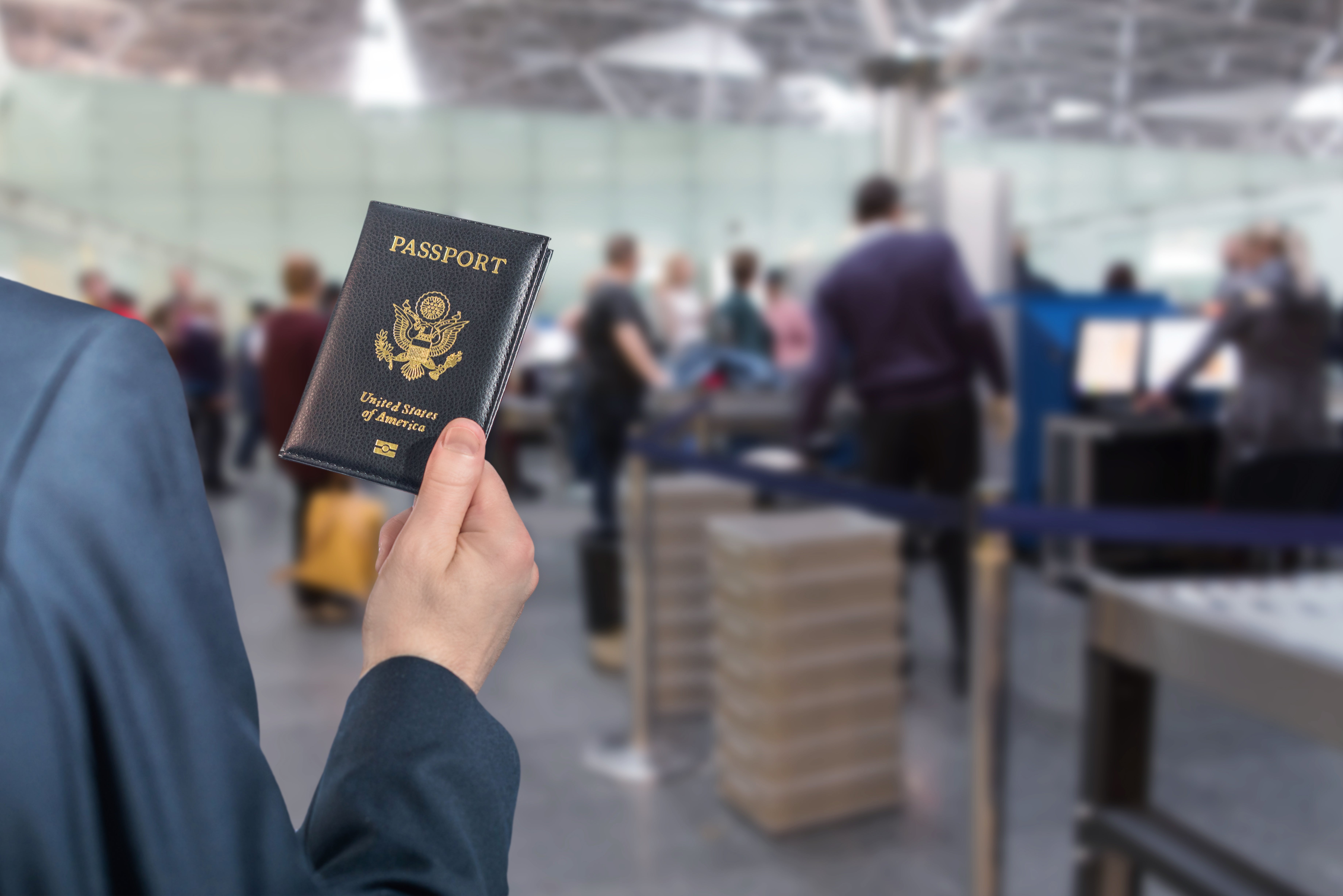
“For Europeans long accustomed to near-frictionless travel, the implications go far beyond inconvenience,” warns Greg Lindsay, non-resident senior fellow at the Atlantic Council and senior fellow at Arizona State University’s Threatcasting Lab. “This level of data collection enables real-time ideological screening and creates the risk that personal information could be shared, repurposed, or weaponized.”
The top three spots in the main passport-power ranking are occupied by Singapore (access to 192 destinations visa-free), South Korea and Japan (tied in second with 188), and Denmark, Luxembourg, Spain, Sweden, and Switzerland, which all tie in third place with access to 186 destinations.
Tied in fourth are Austria, Belgium, Finland, France, Germany, Greece, Ireland, Italy, the Netherlands, and Norway. They all have visa-free access to 185 countries.
In fifth place are Hungary, Portugal, Slovakia, Slovenia, and the UAE (184).
“Over the past 20 years, global mobility has expanded significantly, but the benefits have been distributed unevenly,” says Dr. Christian H. Kaelin, Chairman at Henley & Partners and creator of the Henley Passport Index. “Today, passport privilege plays a decisive role in shaping opportunity, security, and economic participation, with rising average access masking a reality in which mobility advantages are increasingly concentrated among the world’s most economically powerful and politically stable nations.”