




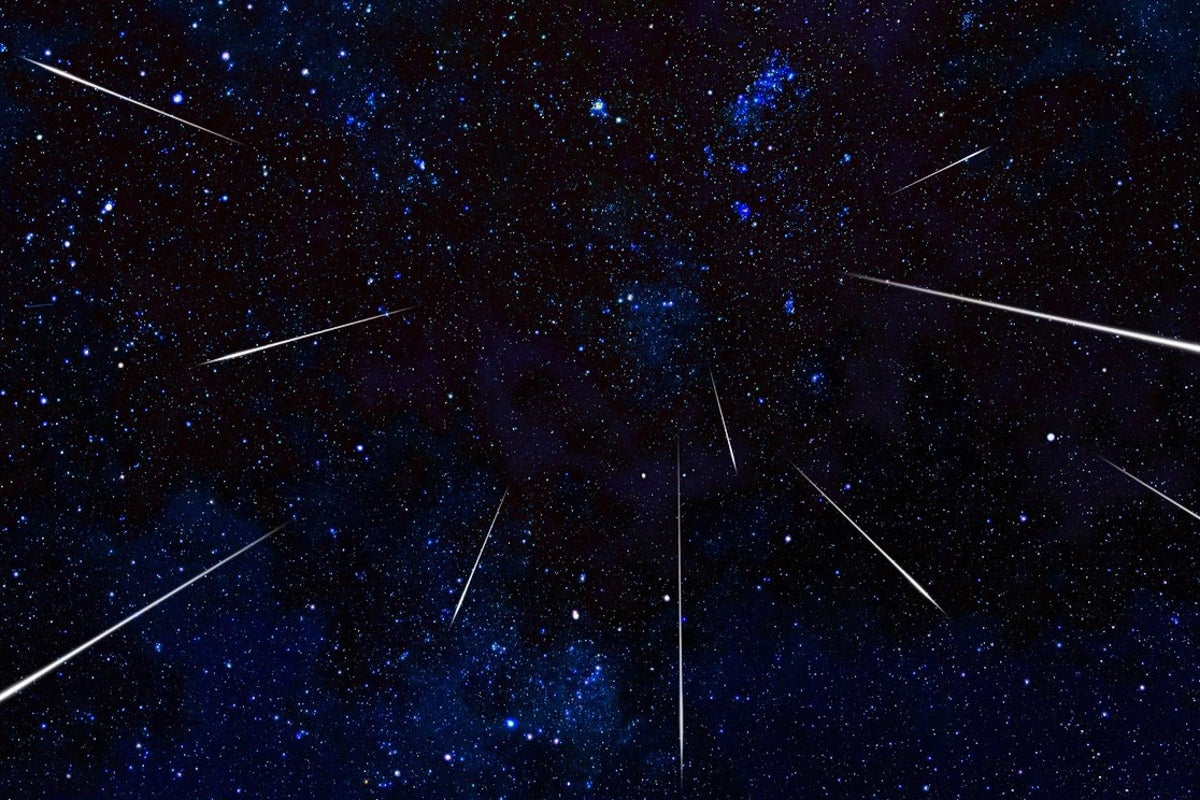
The final meteor shower of the year is set to peak on Monday night, bringing shooting stars to skies across the northern hemisphere.
The Ursid meteor shower, which occurs when the Earth passes through the debris left behind by the comet Tuttle, is active from 13 December until 24 December, with a sharp peak on 22 December.
The meteor shower is only visible in the northern hemisphere due to the position of its radiant, with the shooting stars appearing to originate from the constellation Ursa Minor – also known as the Little Bear, or Little Dipper.
The American Meteor Society describes the Ursids as the “least observed of the major annual showers” due to December nights being cold and often cloudy.
Astronomers advise any hopeful viewers of the spectacle to face toward the northern half of the sky and look up at a 45 degree angle.
“Meteor activity is notoriously variable and if you view for only a short time, it may occur during a lull in activity,” Robert Lunsford from the American Meteor Society wrote in a blog post about the 2025 Ursid Meteor Shower.
“Viewing for at least an hour ensures you will see several peaks and valleys of activity… At maximum activity this source normally adds five to 10 medium velocity meteors to the 10 or so that are normally seen each morning hour from dark sky sites.
“The Moon will be a slender waxing crescent phase in the evening sky on 22 December and will not interfere with observing the Ursids this year.”
Current forecasts from the Met Office suggest there will be patchy cloud across large parts of the UK during the Ursids peak, however most of the US has favourable conditions for the display.
The next major meteor shower will take place in early January when the Quadrantids arrive to deliver 40 meteors per hour when they peak on the night of the 3-4 January.
The Quadrantids meteor shower coincides with a full Moon supermoon, meaning visibility will be severely hindered by the light emitted from our celestial neighbour.
The best meteor shower of 2026 will likely be the Perseids, which will produce up to 60 meteors per hour at its peak on 12 August.
The peak comes on the same day as a total solar eclipse, with the path of totality passing directly over parts of Europe.

