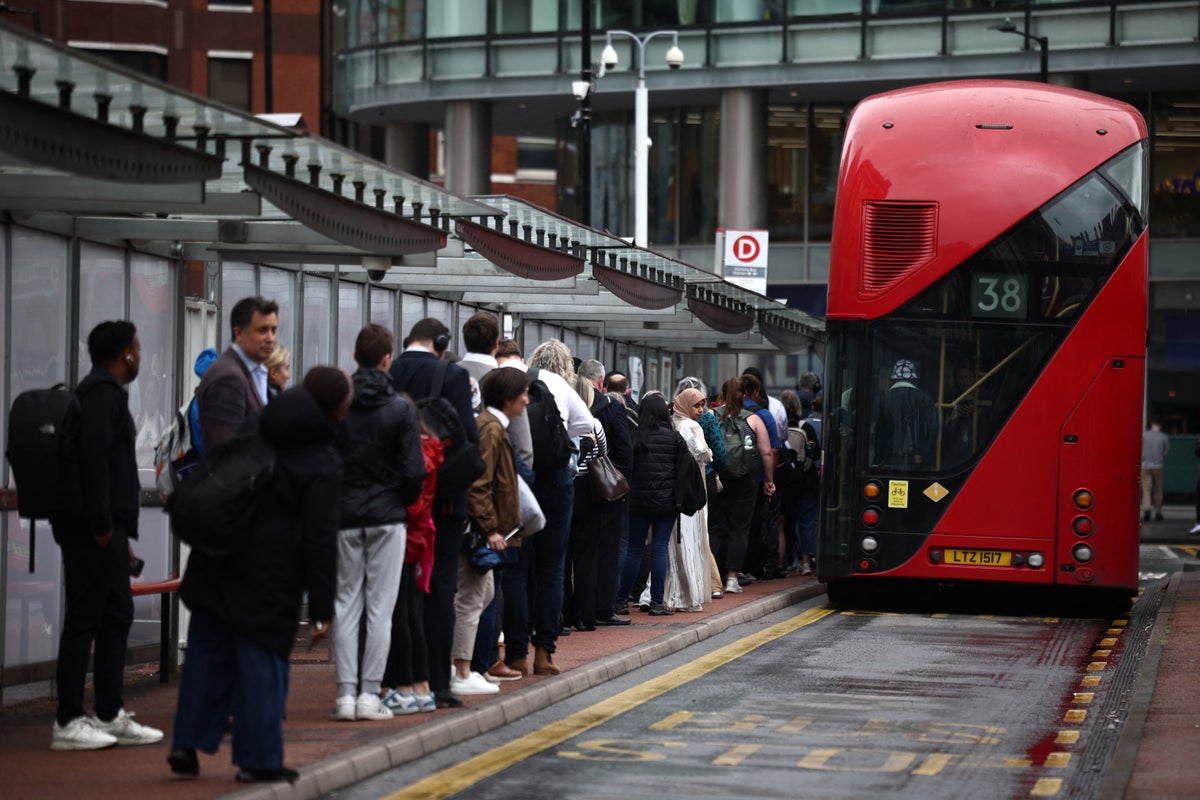
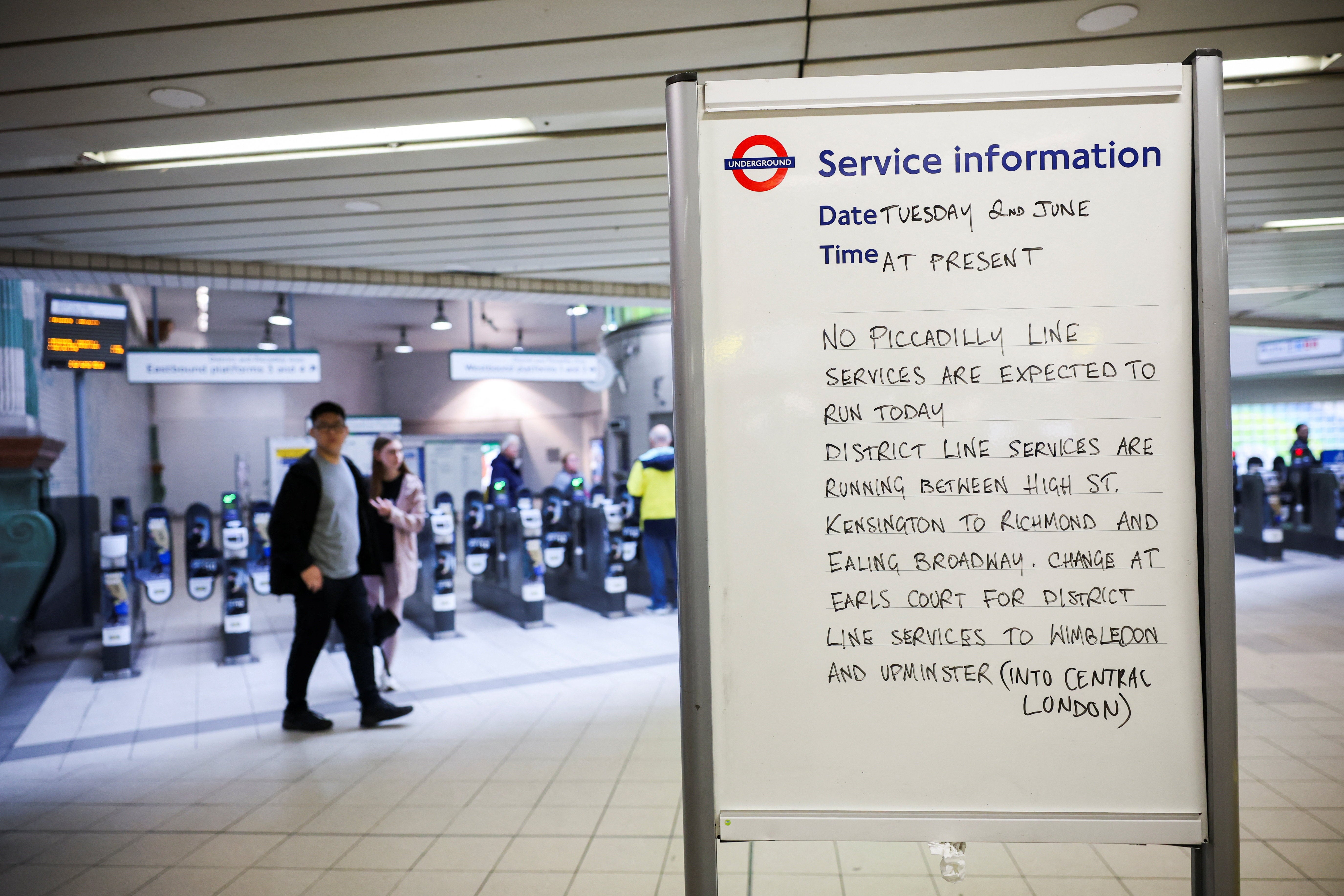
Large parts of London’s tube network will shut down for two 24-hour periods this week after last-minute talks between rail workers and Transport for London (TfL) failed to produce results.
Commuters may face difficulty getting to work on Tuesday and Thursday, as the strike action will see most London Underground lines severely disrupted or closed on both days.
The talks between Rail, Maritime and Transport union (RMT) and TfL on Monday failed to resolve the dispute. The strikes are in response to issues including a new four-day week which the union says its members oppose. The drivers’ union Aslef has accepted the new arrangements.
Here’s everything that commuters whose working arrangements are affected by the action need to know:
What do I need to do to prepare for a strike day?
Even if an employee faces difficultly getting to work due to rail disruption, it remains their responsibility to travel to work, and they should communicate with their employer where this has become unrealistic.
Andrew Leakey, head of civil & commercial litigation at Jackson Lees, writes: “Not working their contractual hours means that the employee is not fulfilling their contract of employment”
“In principle, an employer would be within its rights to refuse to pay an employee who misses work because of transport disruption.”
“Even when the issue is out of the control of the employee, this is still the case,” he adds.
However, the solicitor says it is not always good practice for employers to follow these rules to the letter, instead recommending they work with their employees to find a solution.
Can I work from home on a strike day?
For employees where off-site working is possible, this is usually the best option. However, in work places where working from home arrangements are not flexible, it is advisable this be discussed with the employer beforehand.

Mr Leakey writes: “It may be agreed for the employee to attend work on a different day, for example one whereby the employee would normally be working remotely.
“The risk to the reputation of a business and staff morale can be seen to greatly outweigh not showing a degree of flexibility at a time when it is inevitable there will be some disruption to an employees working day.”
Do I need to take a strike day as annual leave?
This could be an option for some employees, especially where working from home is not possible and there is very little chance of being able to commute to the office.
As with other arrangements, it is always advisable this be discussed beforehand with the employer. This is especially the case if all of the employee’s annual leave has been used, as a different agreement may need to be made.
Mr Leakey advises: “Most people would prefer to take paid leave than lose out on pay, but there will be times when this is not possible. We would always suggest applying the most sensible option on a case-by-case basis.
“If shift swaps are an option, or making time up to prevent a financial deficit to the employee, this should also be considered by the employer.”