


President Donald Trump is set to arrive in France on Monday for a G7 summit, where he will meet with a diverse group of world leaders who share at least one common experience: all have either been the target of his ire or have navigated profoundly awkward diplomatic encounters with the U.S. leader.
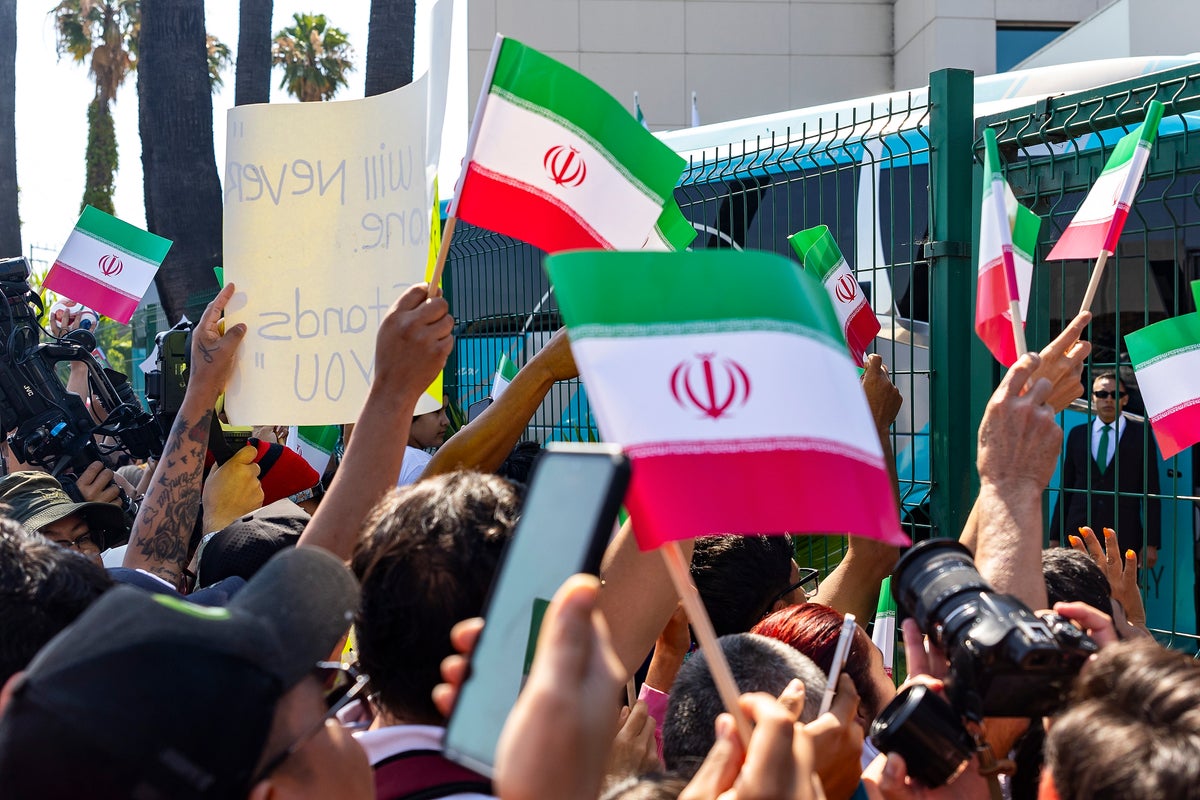
Several G7 leaders have faced Trump’s wrath for questioning his chosen war with Iran.
Others have clashed with him over tariffs. The leaders of Japan and Germany, in particular, have endured clumsy asides from Trump regarding dark moments in their countries’ histories.

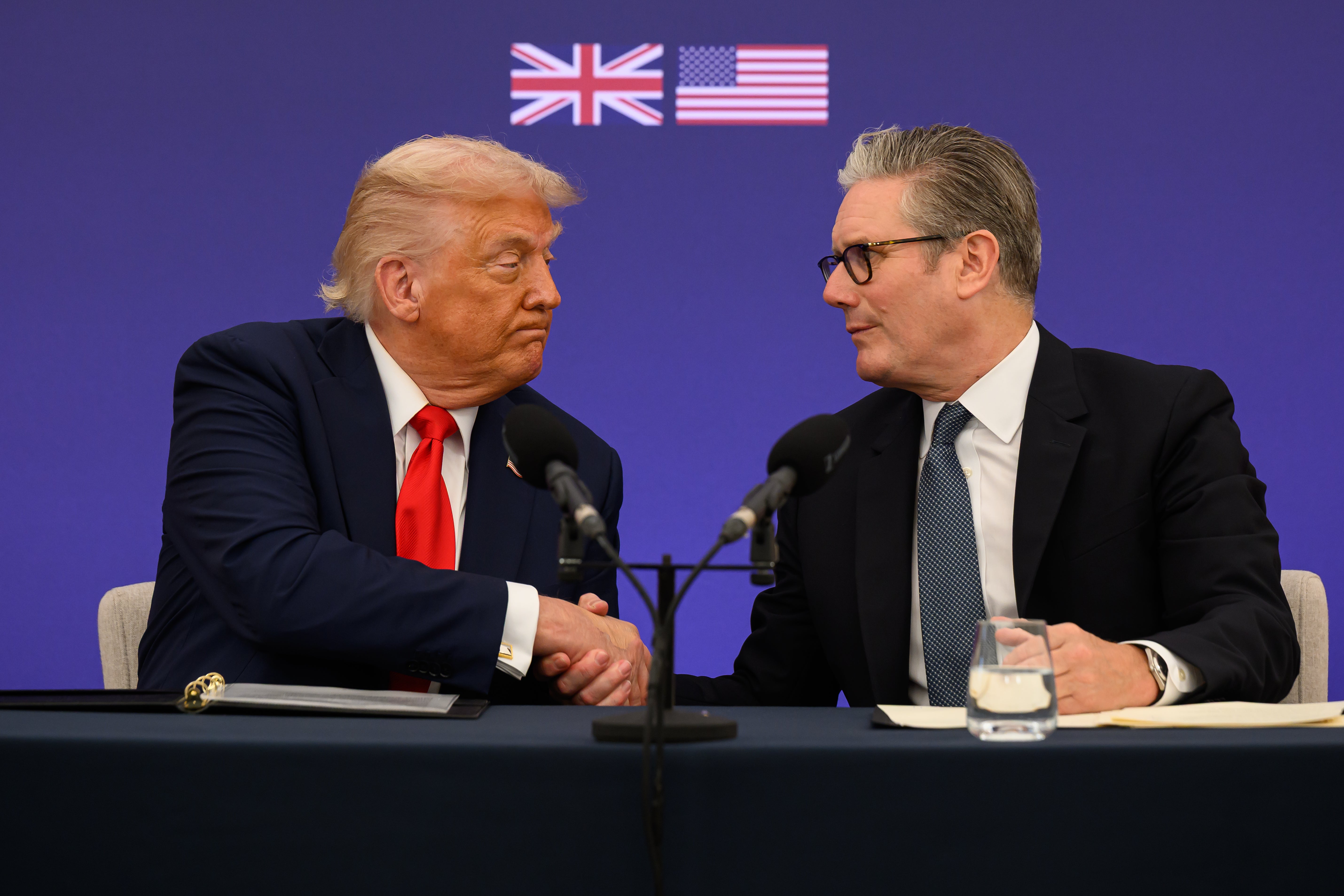
During three days of talks in the picturesque French Alps, the leaders are expected to discuss the newly forged agreement aimed at ending the Iran war, Chinese trade policy, and Russia’s ongoing war in Ukraine.
The summit also presents an opportunity for these leaders to reassess their relationships with Trump at a time when he appears more determined than ever to pursue a unilateral path on matters of global consequence.
The dynamics of the summit have been likened to a family holiday gathering where “there’s an uncle you don’t quite like,” according to Max Bergmann, an analyst at the Center for Strategic and International Studies.
“And no one wants to have a confrontation, even if things get quite passive-aggressive at times,” Bergmann added. “But, you know, there’s always the possibility that things might snap, and it might get rather dramatic.”
Below is a look at notable moments of public friction and uncomfortable exchanges between Trump and his fellow G7 leaders.
Starmer is no Churchill in Trump’s eyes
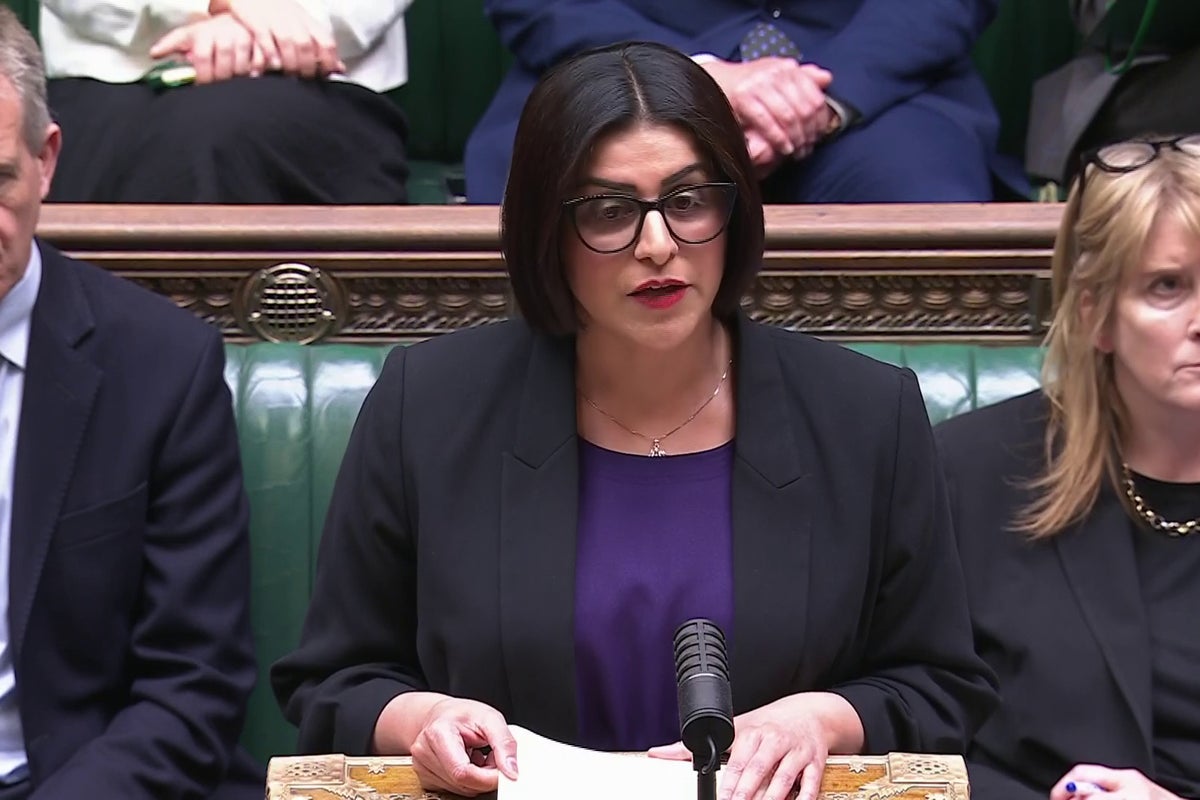
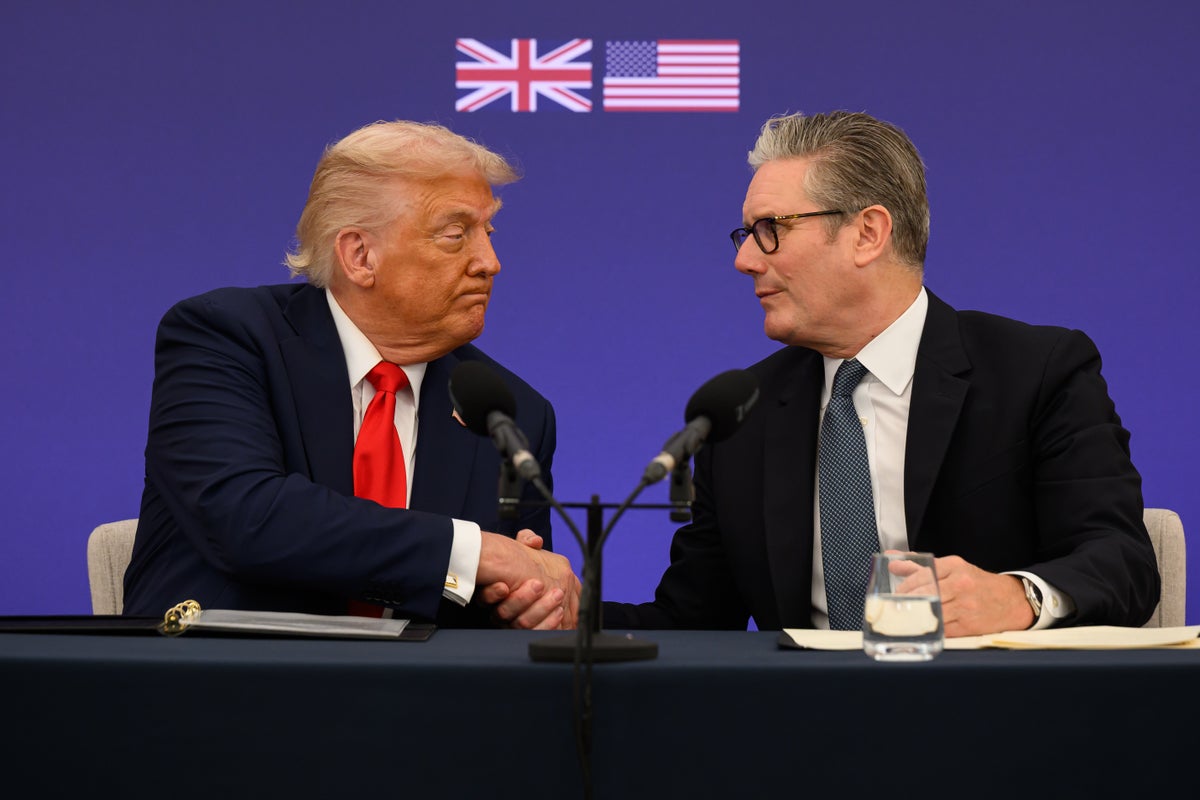
Trump’s criticism of British Prime Minister Keir Starmer has centered on the United Kingdom’s reluctance to assist U.S. military strikes on Iran, British immigration policies, and the country’s renewable energy strategies.
His most cutting jab came after the Labour Party leader initially declined to allow U.S. military jets to use a British base in the Indian Ocean for the bombardment of Iran.

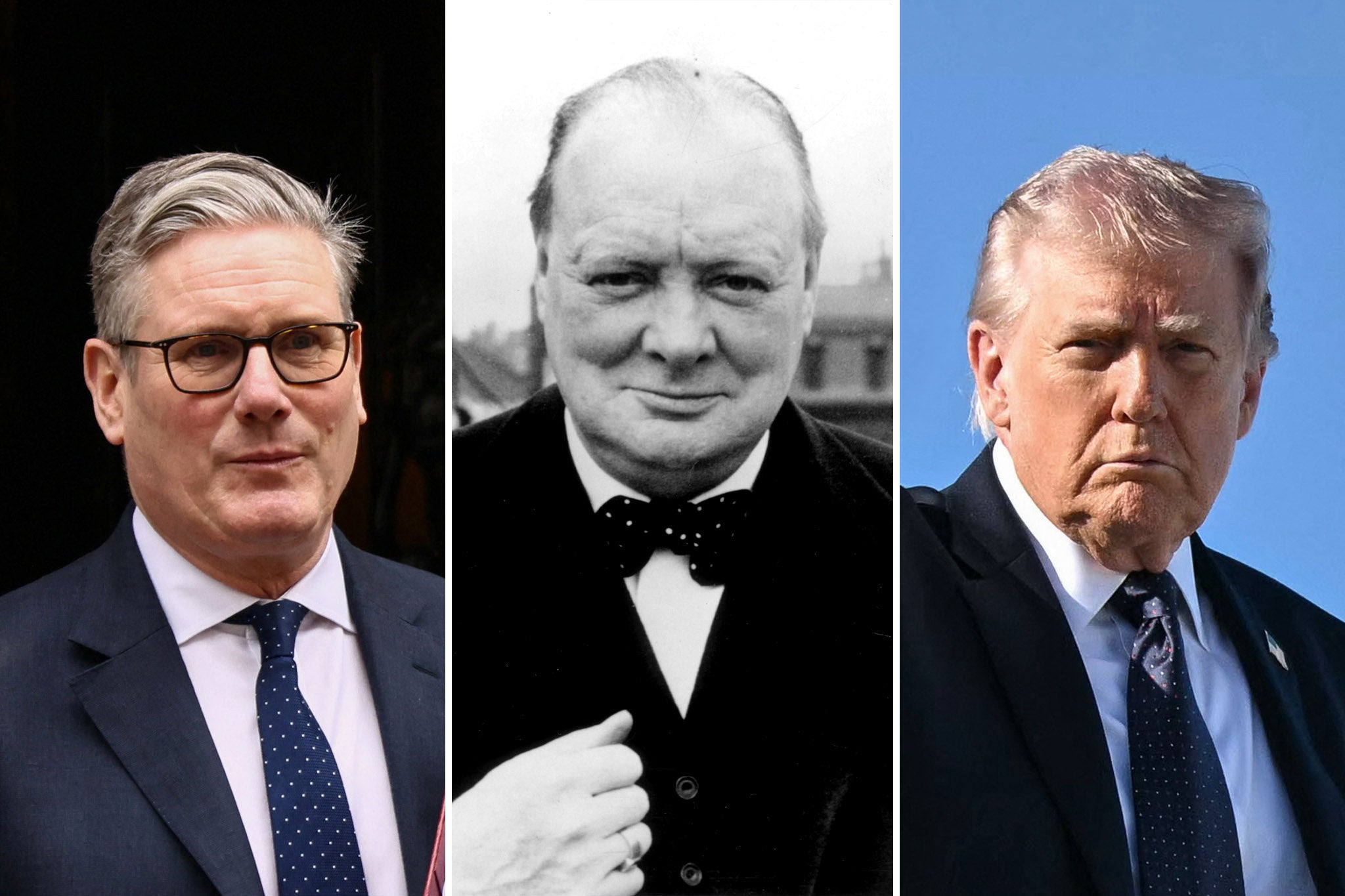
“This is not Winston Churchill that we’re dealing with,” Trump said of Starmer, unfavorably comparing him to Britain’s revered World War II-era prime minister.
In the early days of the Iran war, Trump tore into the prime minister after the U.K. placed the aircraft carrier HMS Prince of Wales on advanced readiness status for potential deployment to the Middle East.
“We don’t need people that join Wars after we’ve already won!” Trump posted on social media.
The prime minister Trump likes to call governor
Trump has frequently fumed about trade imbalances with Canada, often opining about annexing the country and making it the “51st state.”
He has also taken to referring to Prime Minister Mark Carney as “governor.”

-speaks-to-reporters-alongside-Canadian-Prime-Minister-Mark-Carney-in.jpeg)
His sharpest rhetoric toward the leader of America’s northern neighbor came after Carney, at the World Economic Forum in Davos, Switzerland, condemned coercion by great powers on smaller countries without explicitly naming Trump.
“Canada lives because of the United States,” Trump declared in his own remarks at Davos. “Remember that, Mark, the next time you make your statements.”
Carney has attempted to remain even-keeled in response to Trump’s jabs, telling reporters earlier this month that Trump was an “exceptionally active user of social media” and that he would not respond to every post.
Trump mocks Macron’s marriage and questions France’s reliability
During an Easter lunch at the White House in April, Trump criticized France and other NATO countries’ resistance to assisting the U.S.-Israel war against Iran.

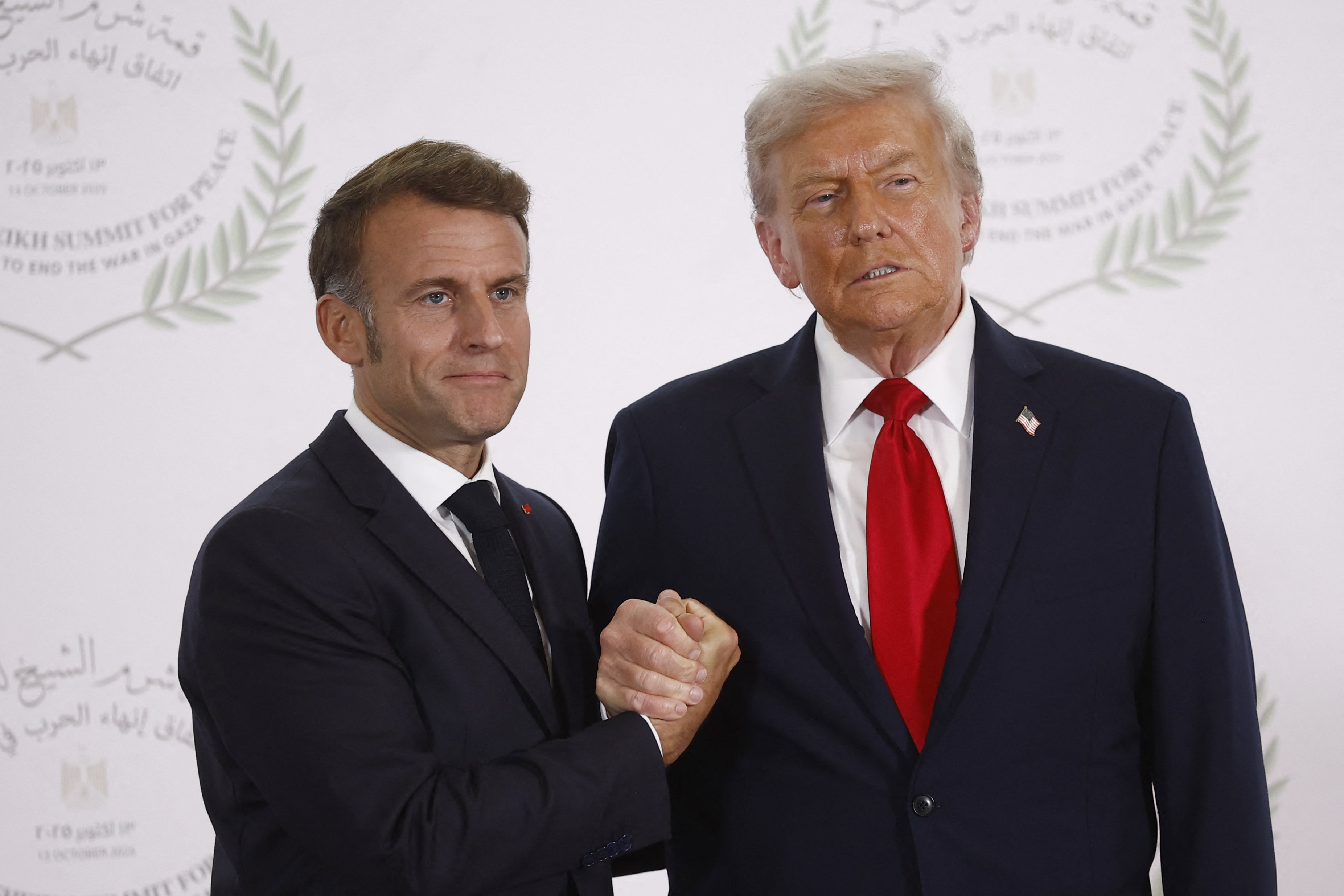
Amid the aside, Trump referenced viral footage from the previous year showing Macron’s wife, Brigitte, appearing to push the French president’s face away as they disembarked a plane during a visit to Vietnam.
Trump told the audience that Brigitte treats Macron “extremely badly” and claimed the French president was “still recovering from the right to the jaw.”
Macron later told reporters that the couple had simply been joking and described Trump’s comments as “neither elegant nor appropriate.”
Trump regularly regales audiences with his prowess as a dealmaker by recounting conversations he has had with Macron about trade irritants, mimicking Macron’s responses in an exaggerated accent. In Trump’s retelling, Macron always quickly capitulates.
The conservative premier Trump suggests lacks courage


Until recently, Italian Prime Minister Giorgia Meloni had been held in high regard by Trump.
In October, Trump was effusive in his praise of the conservative premier when world leaders gathered in Egypt for a summit to discuss post-war Gaza, calling her “a very successful, very successful politician” and “beautiful.”
However, Trump has since changed his tune as Italy declined to assist the United States in the war against Iran and after the premier chastised Trump for feuding with Pope Leo XIV about the conflict.
“Do people like her? I can’t believe it,” Trump said of Meloni to Milan newspaper Corriere della Sera. He added: “I thought she had courage. I was wrong.”
An awkward historical reference in the Oval Office

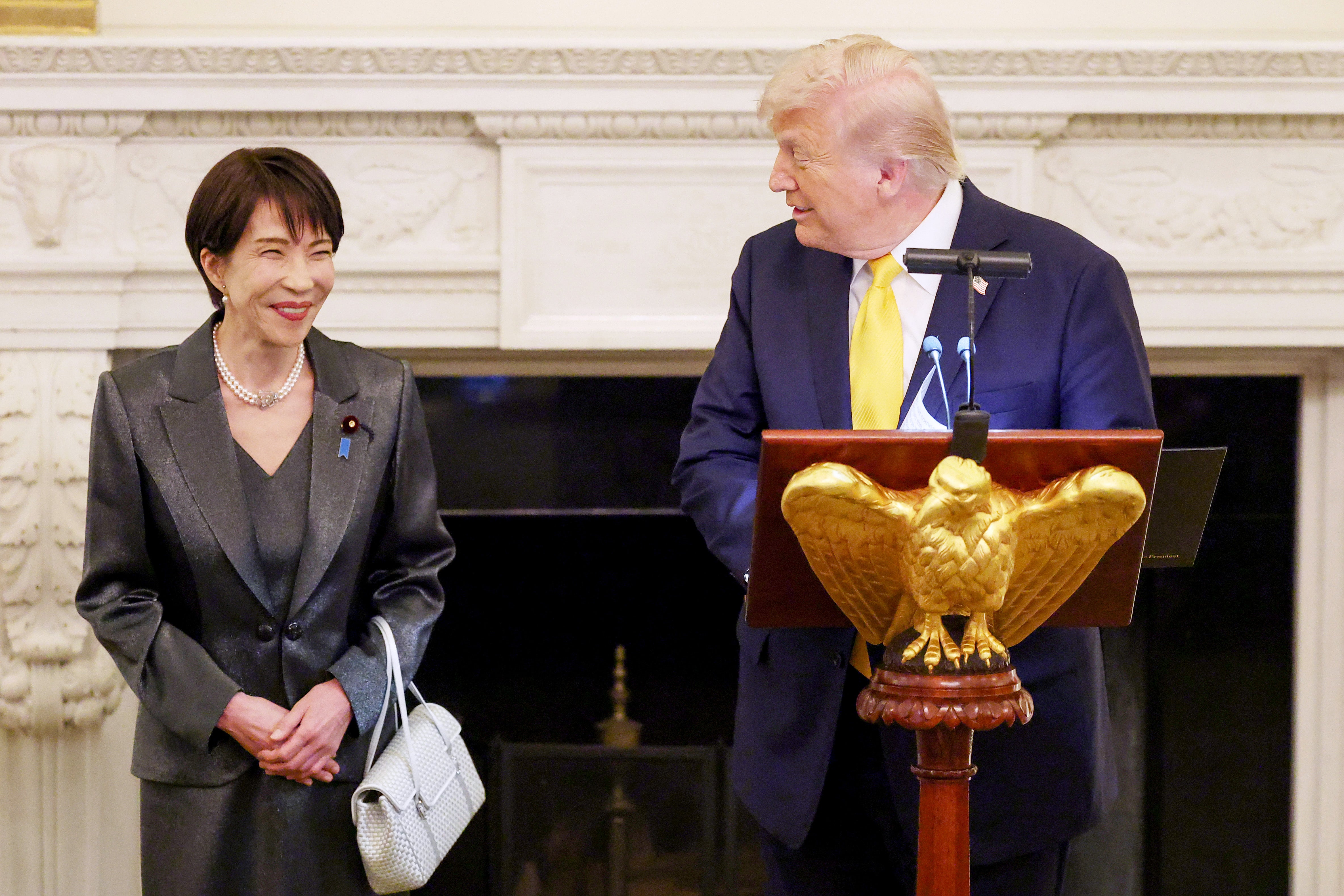
Trump has not offered any direct criticism of Japan’s Sanae Takaichi since she took office in October. However, some of his commentary during Takaichi’s first White House visit left the prime minister in an awkward position.
When asked by a Japanese reporter why he didn’t inform allies in Europe and Asia before the U.S. attacked Iran, Trump casually invoked Pearl Harbor to defend his decision.
“Who knows better about surprise than Japan?” Trump said with Takaichi by his side. “Why didn’t you tell me about Pearl Harbor, OK?”

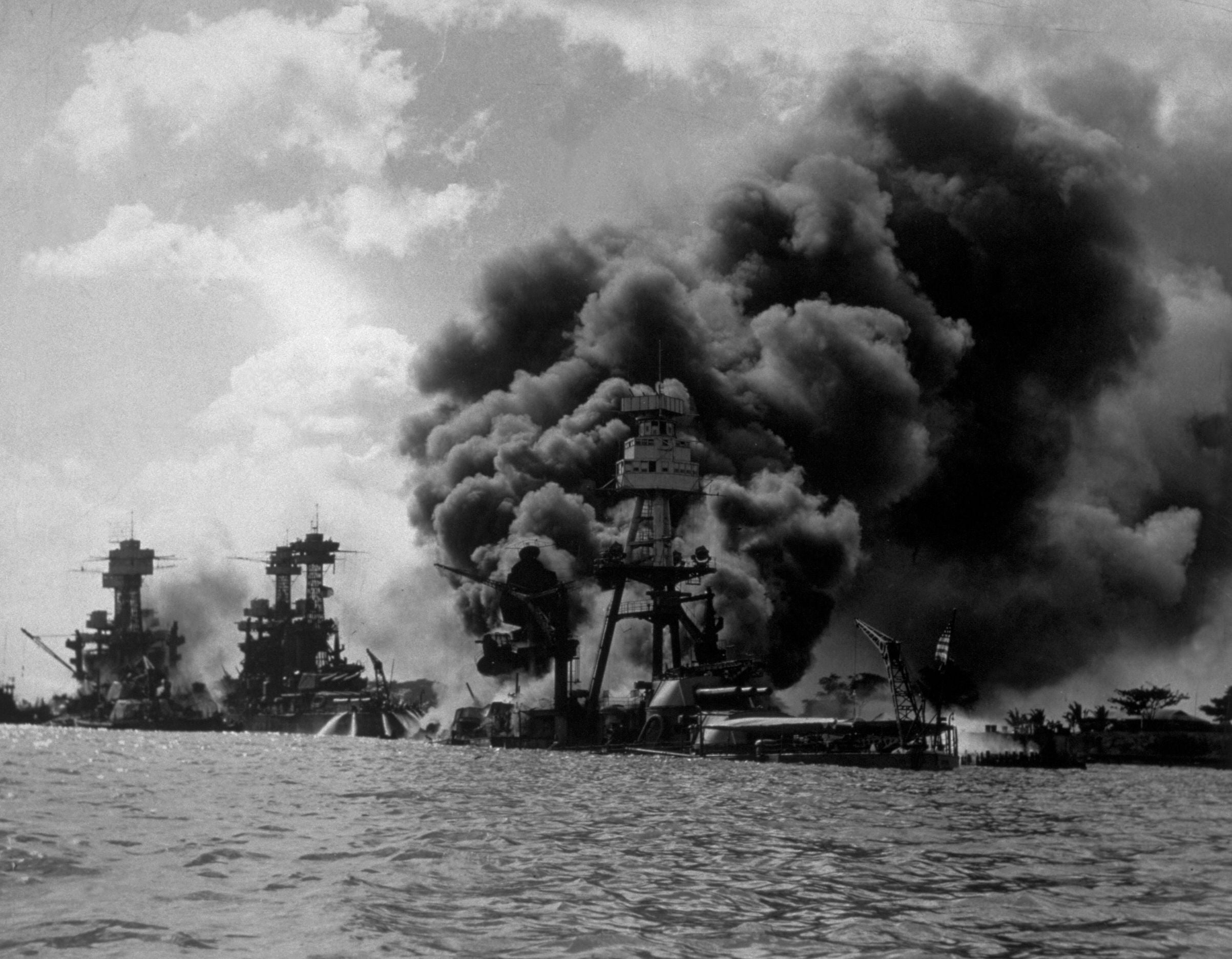
Trump’s remark surprised many in Japan, who had grown accustomed to American presidents avoiding harsh discussion of Japan’s surprise strike on the U.S. Pacific Fleet in Hawaii that drew the U.S. into World War II.
His predecessors have instead focused on deepening ties with Japan, which became an ally after the war.
Takaichi, a hard-line conservative, received a mix of praise and criticism at home for not reacting to Trump’s comments, letting them pass with a glance at her ministers seated nearby.
Chancellor’s Iran war criticism infuriated Trump

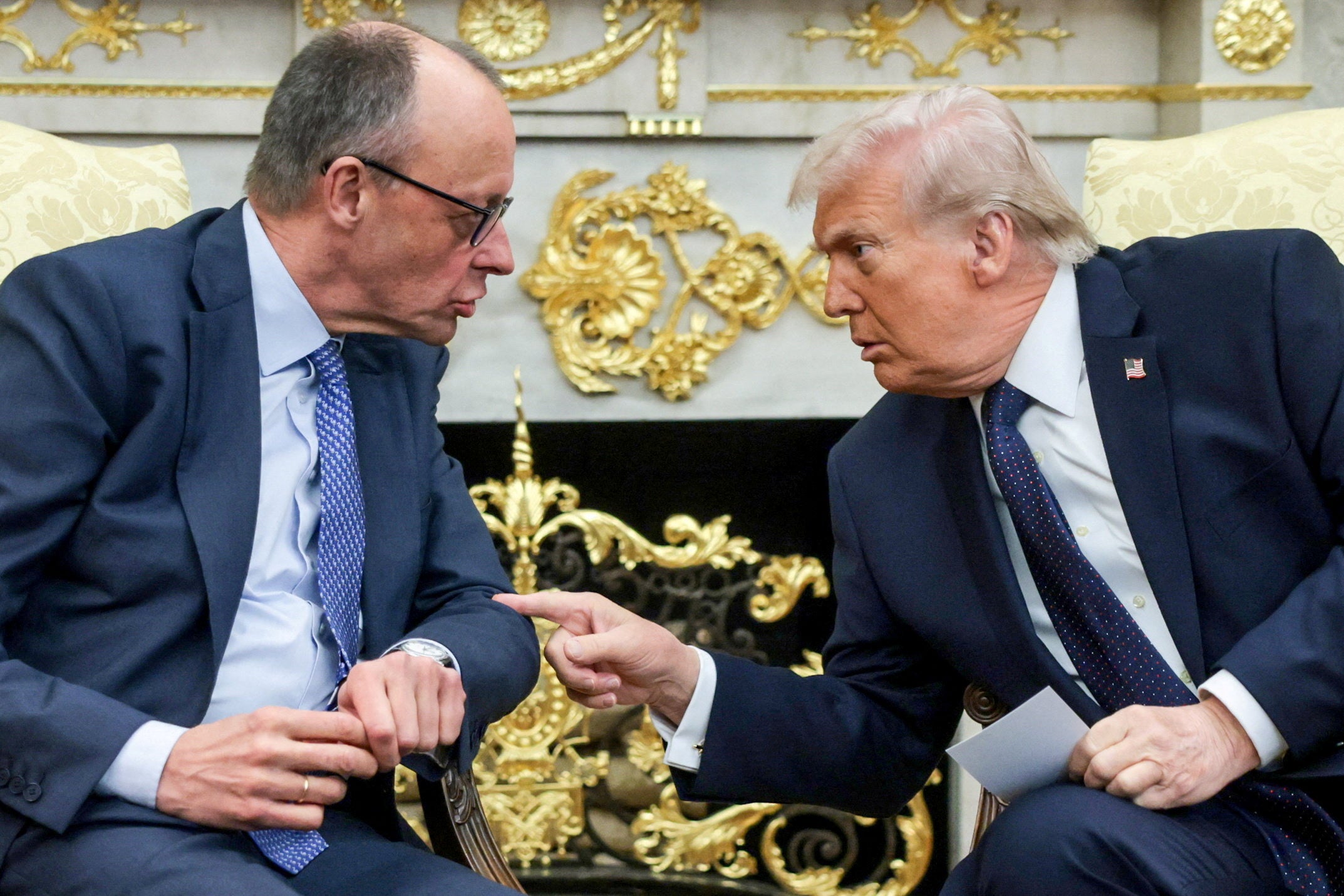
German Chancellor Friedrich Merz set off Trump in April when he posited the U.S. was “being humiliated” by Iran and criticized the U.S. for entering the war without any strategy, arguing that this also made it harder to end the conflict.
Trump hit back on social media the following day, stating Merz “should spend more time on ending the war with Russia/Ukraine” and “fixing his broken Country, especially Immigration and Energy.”
Days later, the Pentagon announced it would pull some 5,000 U.S. troops out of Germany, and Trump hinted he would look to cut the U.S. military presence “a lot further.”
Trump also had an awkward exchange with Merz when the chancellor visited the White House last year on the eve of the solemn anniversary of D-Day, the start of Allied operations that led to the liberation of Western Europe, the defeat of Nazi Germany, and the end of World War II.
Merz noted the anniversary while arguing that the U.S. was once again in a position to help end a conflict with enormous stakes for Europe — Russia’s war against Ukraine — when Trump interjected that D-Day was “not a pleasant day for you.”
The chancellor reminded Trump that the day also marked the beginning of “the liberation of my country from Nazi dictatorship.” Trump acknowledged that Merz had a point.