
National parks under Donald Trump’s administration have removed more than 50 exhibits from at least 37 sites after the president ordered officials to take down any signs that “inappropriately disparage Americans past or living,” according to court filings.
An incomplete inventory of installations that were removed from public view or thrown out entirely also includes signage that officials said is “unrelated to beauty, abundance and grandeur of the natural landscape.”
Last week, parks officials were ordered to come up with a comprehensive list of exhibits that were removed after a federal judge issued a preliminary injunction that blocked any further modifications to national parks and called for weekly progress reports. U.S. District Judge Angel Kelley in Massachusetts said the Trump administration is trying to “rewrite the Nation’s history with a white-out pen.”
“History cannot be faithfully told while excluding the experiences of communities whose contributions, struggles, and achievements form an important part of our Nation’s story,” Kelley wrote in her order.
“Under the guise of promoting American dignity, this Administration seeks to share a limited history by ordering the removal of all signs, displays, and interpretive exhibits at National Parks that do not align with its preferred narrative, thereby telling half-truths,” she added.
The Trump administration is appealing Kelley’s order.
A federal lawsuit accuses the National Park Service of “mounting a sustained campaign to erase history and undermine science” after the president issued an executive order on “restoring truth and sanity to American history” before the nation celebrates its 250th anniversary.
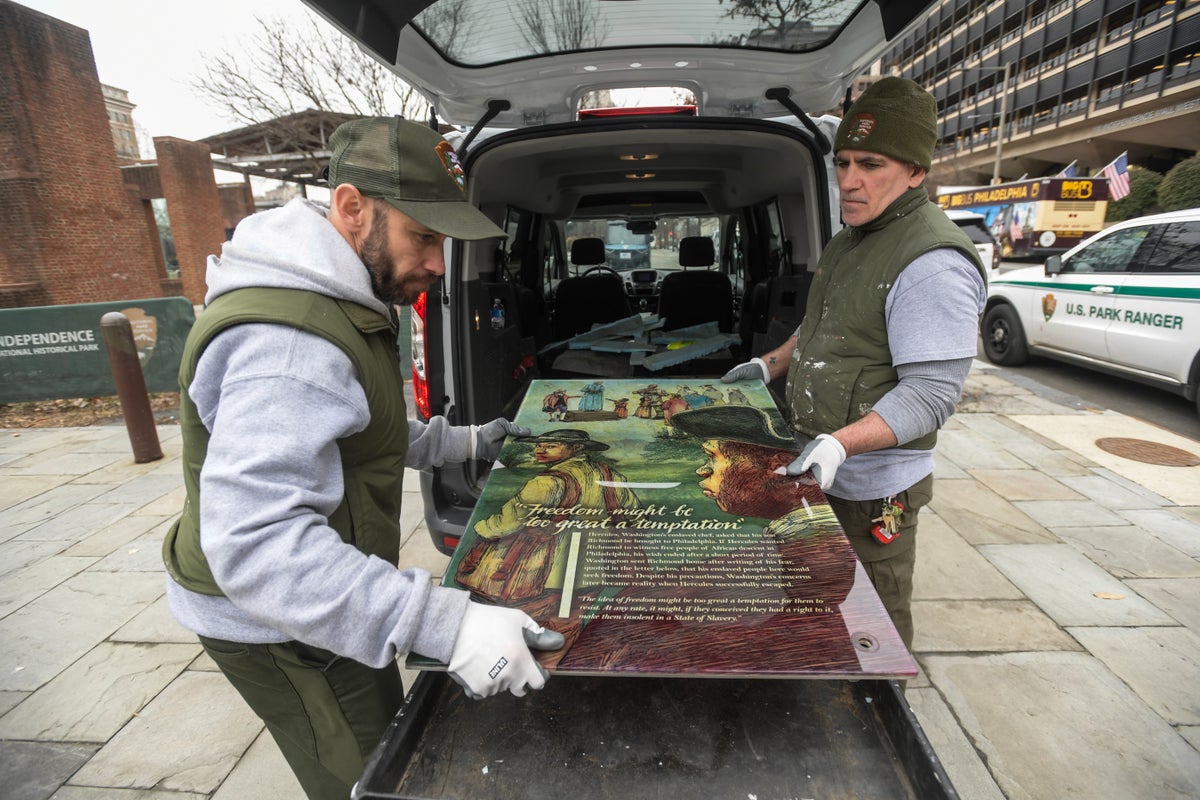
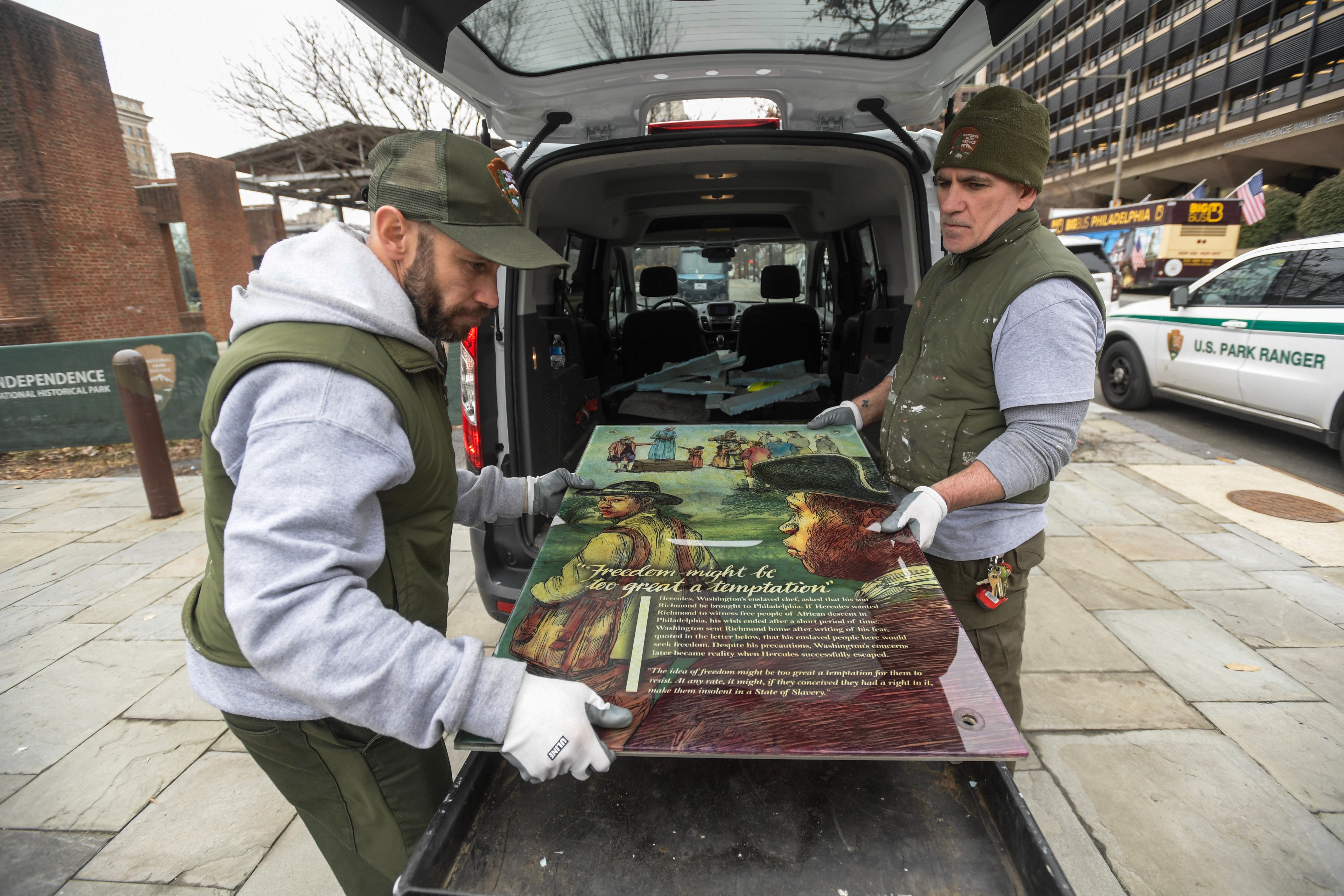
Last week’s ruling followed the administration’s sweeping efforts to sanitize or remove entirely from public view the nation’s history of enslavement, including at Philadelphia’s Independence National Historical Park, where officials took down an exhibit describing enslaved people owned by George Washington.
In February, a judge in a separate case compared the removal of those exhibits to George Orwell’s Ministry of Truth from 1984.
On Thursday, a federal appeals court overturned an order that commanded park officials to restore all mentions of slavery that were removed from the Philadelphia landmark.
An appeals court order reversing that decision is likely to complicate nationwide efforts to repair the damage done.
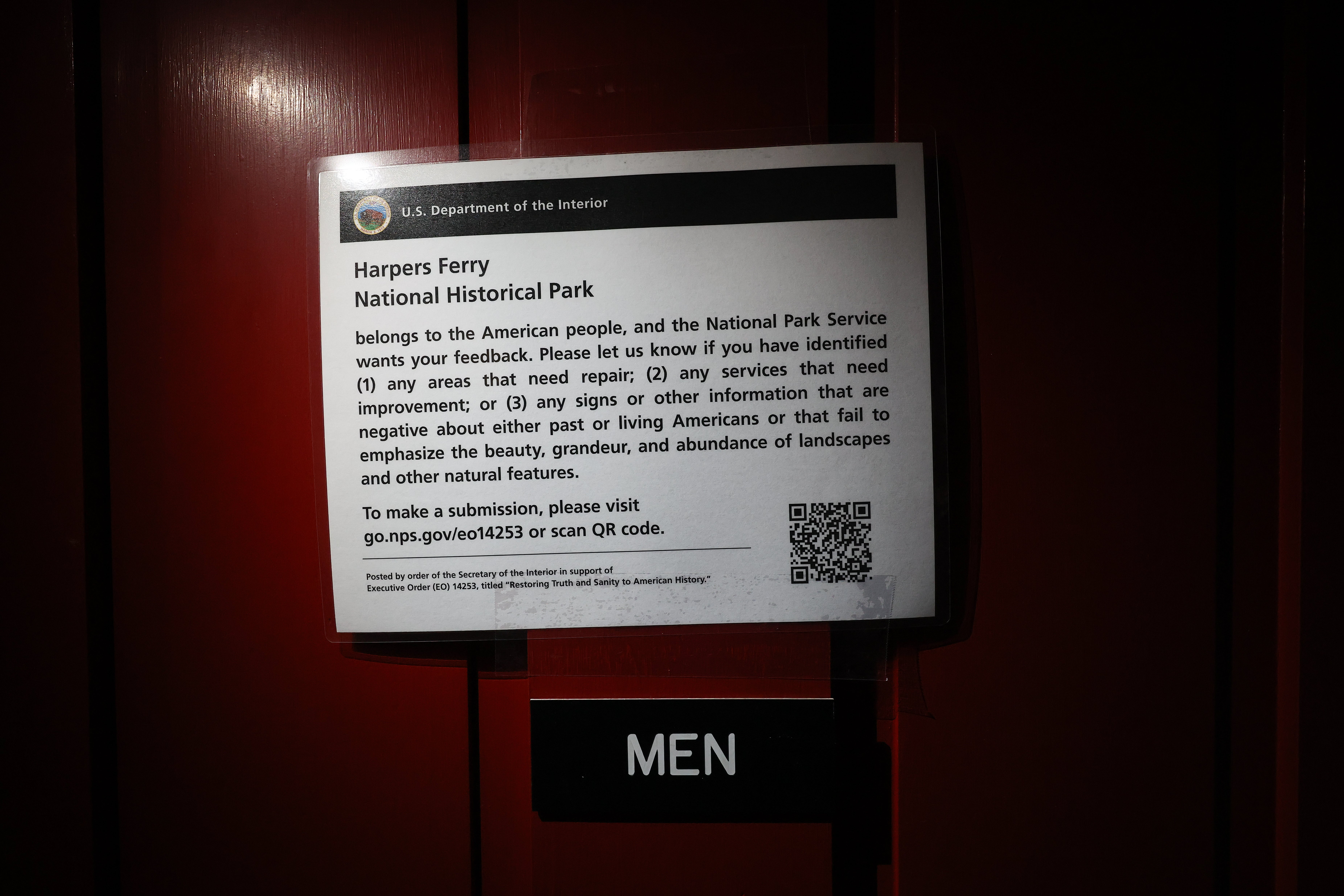
Trump’s executive order directed officials to correct what he called a “revisionist movement” that portrayed the country as “inherently racist, sexist, oppressive or otherwise irredeemably flawed.”
He directed park officials to review the nation’s museums and historical sites that depict “founding principles and historical milestones in a negative light.” As a result, several exhibits about the brutality of slavery and the civil rights movement were removed.
The president has also railed against the Smithsonian Institution for focusing on “how bad slavery was” instead of the “brightness” or “future” of America and threatened to pull federal funding from museums that “portray American and Western values as inherently harmful and oppressive.”
The administration later asked park visitors to report any signs or exhibits that they believe portray “negative” things about the U.S. The complaint lines were instead flooded with comments criticizing the administration.
Parks also took down signage recognizing Native American history, information about Blacks who served in the U.S. military during the Civil War, and films on U.S. labor history, among dozens of others.
Materials describing climate change were also removed from several parks because they did not reflect the “beauty, abundance and grandeur of the natural landscape.”
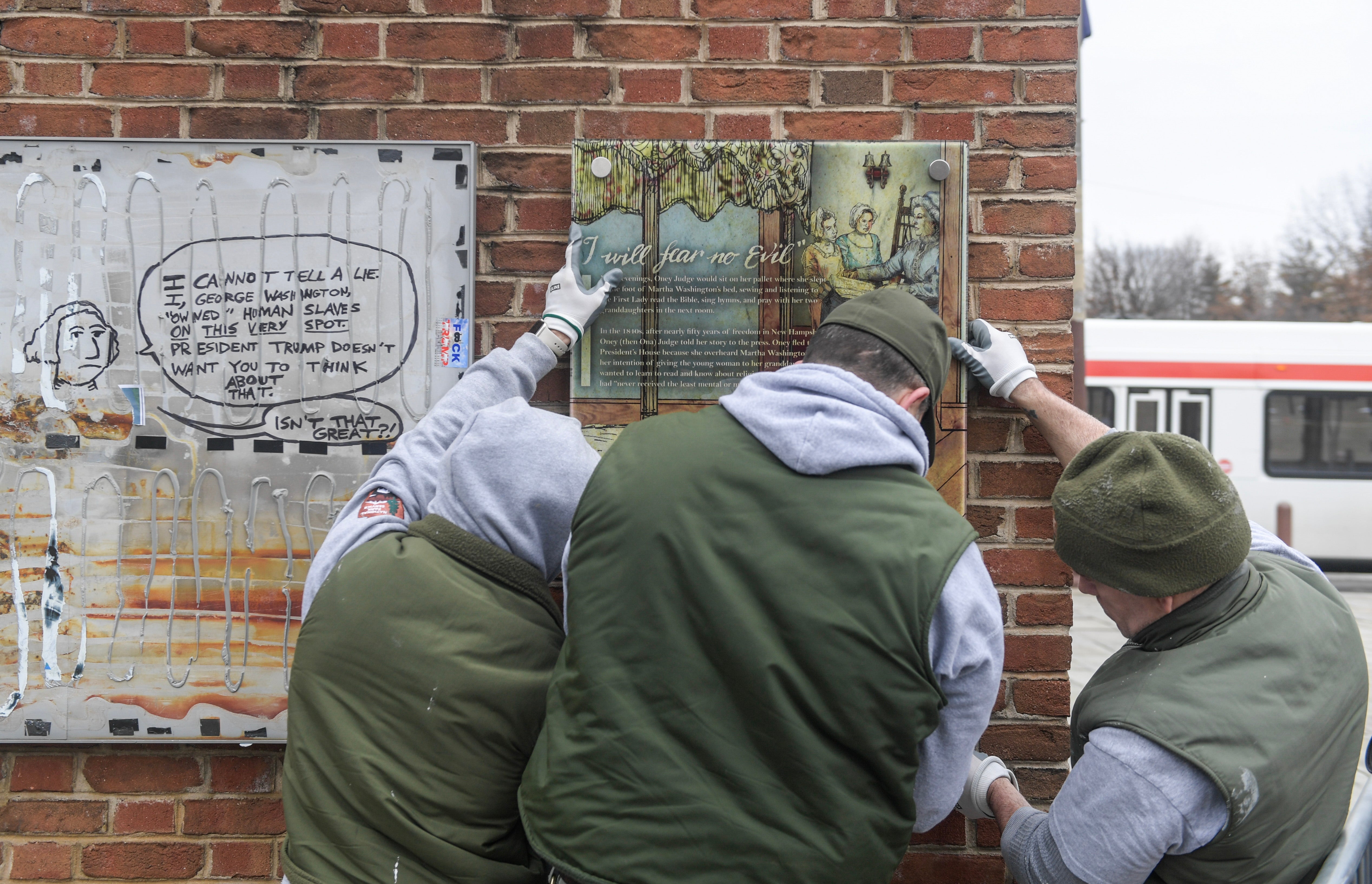
In court filings, lawyers for the Trump administration said restoring that signage “imposes a herculean and unmanageable task.”
The list is incomplete, and it may take “weeks or months” to begin re-installing the signs, according to the Department of Justice.
The Justice Department doesn’t anticipate finishing the work before July 4, meaning the Trump administration’s revisions are likely to stay in place while millions of visitors are traveling to national parks.
Another update is due by June 24.
“The review team has not yet had time to conduct the necessary inquiries to determine the status of all items that were determined to be in non-conformance, but whose status was not subsequently reported to the Washington office,” government lawyers wrote Wednesday.
Still, last week’s court ruling “will help protect national parks from the administration’s unprecedented campaign to erase history and science at these one-of-a-kind places,” according to Alan Spears, the National Parks Conservation Association’s senior director for cultural resources.
“National parks belong to the American people and censorship of any kind goes against the values these places represent,” he added. “Americans count on national parks to help us understand our full, rich history. Stories of triumph and tragedy alike deserve to be told out loud at parks.”