




Donald Trump’s administration capped off a streak of significant legal victories in his anti-immigrant campaign with a major loss in the government’s attempts to detain thousands of immigrants while they fight against their deportation from the country.
A panel of judges on a notorious conservative federal appeals court has ruled that people in Immigration and Customs Enforcement detention must be granted a bond hearing before a judge within 90 days of their arrest.
The ruling marks at least the fourth such federal court order striking down a chief component of the administration’s attempts to swiftly detain and deport tens of thousands of people from the country before they’ve had their day in court, which civil rights groups and immigration lawyers have called stark violations of due process rights.
“It is part of the historic majesty of this long-ago founding charter that it makes no exceptions in providing basic rights to those within our boundaries, including a right to be heard when personal liberty is taken,” wrote Judge Leslie Southwick, who was appointed by George W. Bush to the 5th Circuit Court of Appeals in Louisiana.
The 2-1 opinion was joined by Barack Obama appointee Judge James Graves. Judge Cory Wilson, a Trump appointee, dissented.

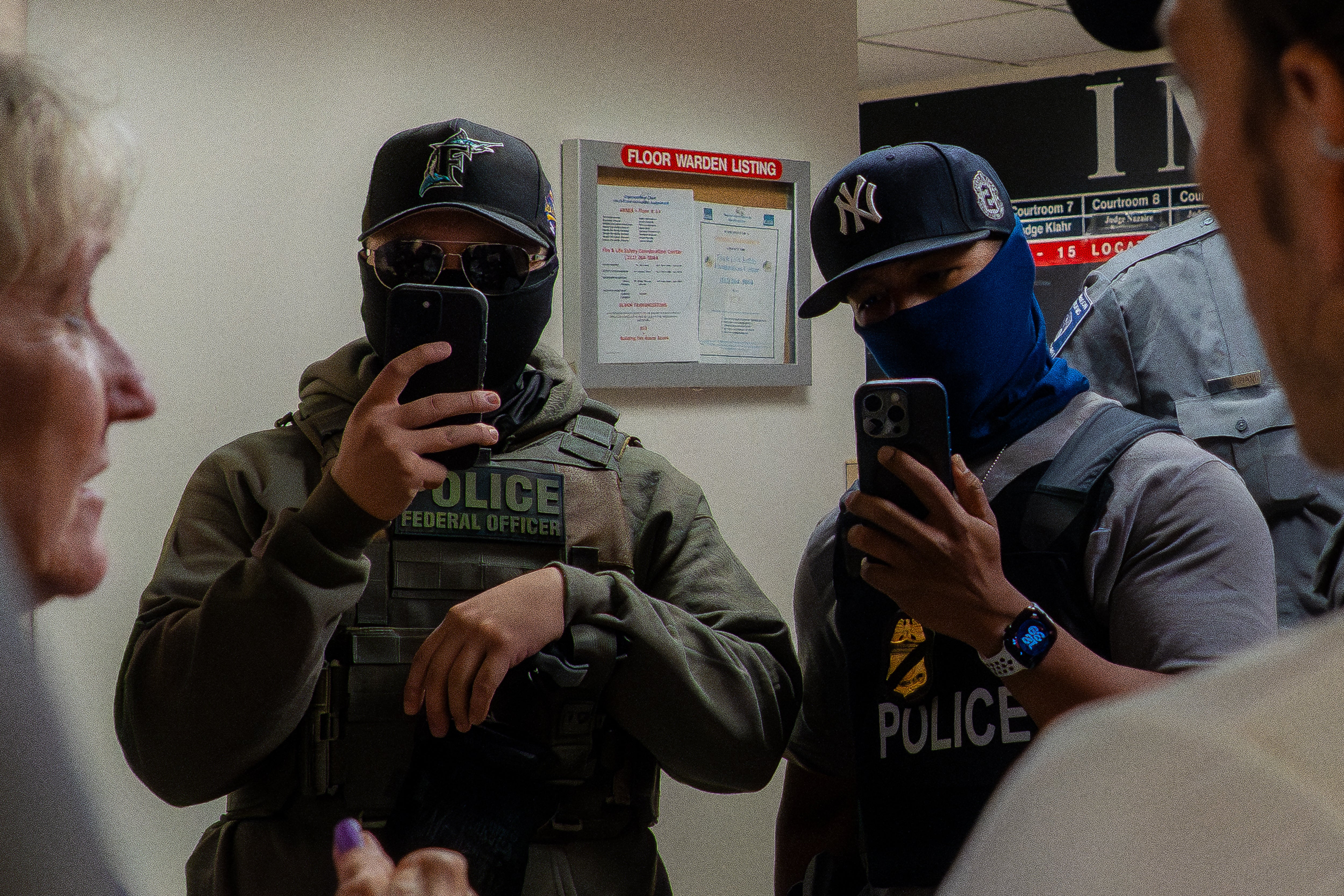
The Trump administration has waged a dramatic upheaval of the immigration court system over the last year as immigration authorities shifted focus from arresting people who illegally crossed the border and began uprooting thousands of immigrants who have lived inside the country for years, including immigrants with pending legal status still playing out through immigration courts.
By July, ICE had issued a sweeping policy of mandatory detention for immigrants arrested inside the U.S., keeping people in detention for weeks or months no matter how long they have lived in the country or whether they have a criminal record.
The administration’s attempt to compare a person who was arrested shortly after illegally crossing the border to an immigrant who has built a life in the country after arriving decades ago “is a complete fantasy,” Judge Southwick wrote.
That policy opened the floodgates to thousands of lawsuits from immigrants seeking their release over due process violations, cases that have overwhelmed federal courts and kicked off several legal battles to determine whether the practice is even constitutional.
Federal court judges have overwhelmingly rejected the administration’s policy of denying bond hearings, teeing up a likely Supreme Court battle in the coming months. The Trump administration asked the justices to take up the question next term.
The ruling in Louisiana’s 5th Circuit, however, will likely have far-reaching impacts across the region, particularly in Texas, where the Trump administration has moved thousands of detainees.
According to ProPublica, immigrants filed more habeas corpus petitions — nearly 47,000 — within the first 13 months of the second Trump administration than in the past three administrations combined. Nearly one quarter of those lawsuits were filed in Texas.
Federal judges have ruled in favor of immigrants’ due process rights in roughly 7,000 cases since last year’s policy change, according to Politico’s ongoing analysis.


In Thursday’s ruling, the judges underscored the fact that the vast majority of people held in ICE detention did not have criminal records and did not pose a threat to their communities, a primary reason for holding people behind bars before they’ve had a chance to appeal.
“Our only requirement is that a hearing must be held within 90 days of the commencement of detention and that at the hearing, the Government must articulate an individualized justification for further detention without bond,” Judge Southwick wrote.
Judge Graves argued that 90 days is still too long.
“There is much that could be said about the troubling conditions noncitizens are currently experiencing, in what amounts to an appalling lack of humanity shown to our fellow human beings,” Graves wrote.
Thursday’s ruling followed a series of Supreme Court decisions that granted the Trump administration permission to follow through with sweeping anti-immigration policies while dealing a lethal blow to the president’s attempt to unilaterally redefine citizenship.
Last week, the court’s conservative majority gave the government greater flexibility to target green card holders, allowed Homeland Security to revoke humanitarian protections for tens of thousands of immigrants, and gave the government permission to indefinitely block people seeking asylum from entering the country.
A majority of the court, however, blocked the president’s executive order seeking to block U.S.-born babies of certain immigrants from automatic citizenship.
The justices determined that the 14th Amendment affirms that children whose parents are “unlawfully or temporarily present” are indeed “subject to the jurisdiction” of the U.S. and therefore citizens at birth.