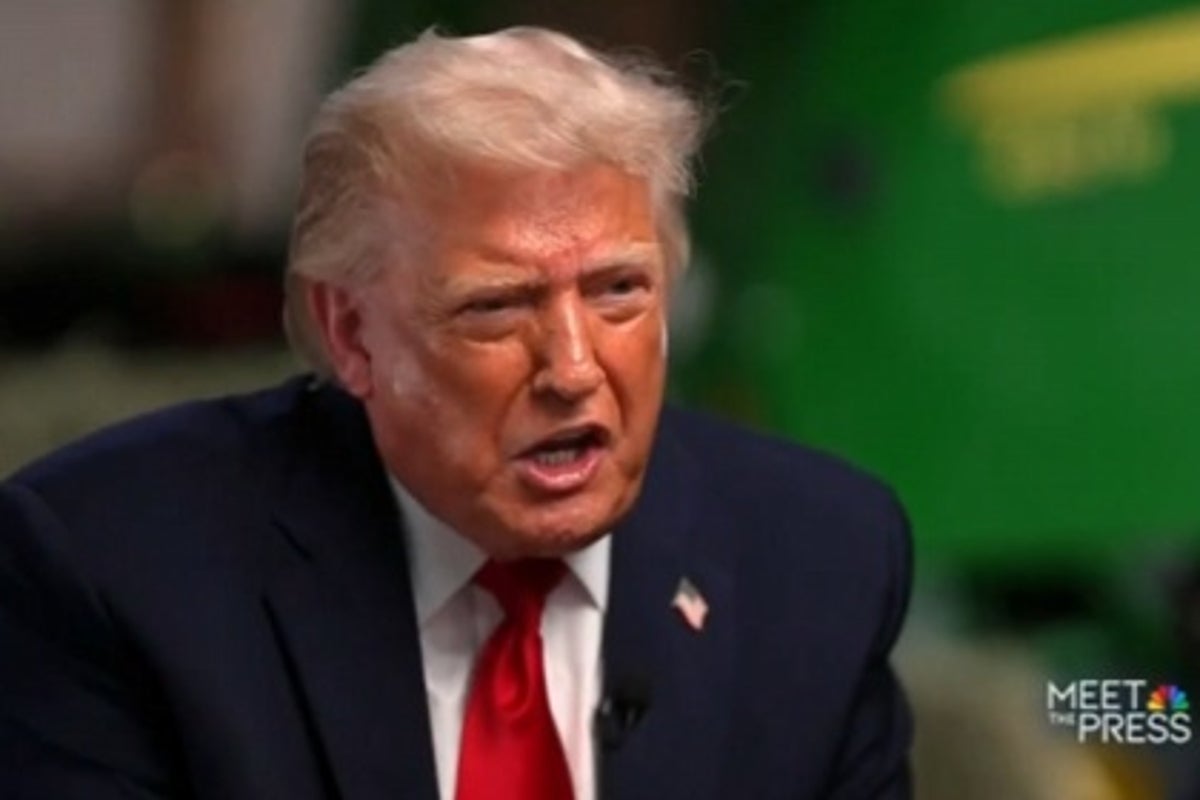
President Donald Trump denied that he has broken his campaign promises by entering a war with Iran and vowed that the conflict would not be “endless” during a contentious interview this weekend.
Trump told NBC’s Kristen Welker in a pre-taped interview on Meet the Press that the war with Iran would soon come to an end, repeating an assertion that he and members of his Cabinet have made for months as the war has stubbornly dragged on without an end in sight. In his latest remarks, the president characterized the holdup as a dispute over language surrounding Iran’s future ability to acquire or purchase nuclear materials.
The president claimed that he made a distinction during his campaign for president in 2024 between “wars” and “endless” conflicts, adding that it wasn’t worth building up America’s military to never use it.
“First of all, I didn’t guarantee no war. Why would I have built the strongest military in the world?” he asked.
“When you say I promised, I didn’t promise anything. I don’t like these endless wars. [But] this is not an endless war,” Trump told Welker.

He went on to compare the war in Iran to his military strike on Venezuela, which took place in January and led to the capture of ousted leader Nicolás Maduro by U.S. forces in a daring late-night raid. The president still sees similarities between that operation and the conflict against Iran, which is now more than three months old and continues without any sign of U.S. progress towards its objectives.
“We took over Venezuela in a matter of minutes. We destroyed the capability of Iran in a matter of days. Nobody’s ever seen anything like it,” Trump said before comparing it to what he saw as the alternative.
“Remember, you were in Vietnam 19 years because of stupid people,” he said. “You were in so many different countries. Every war, you were in for years. Look at Iraq. You were there for years.”
Trump’s 2024 presidential campaign launched as the war between Ukraine and Russia remained top of mind for the U.S. and the Israeli assault on Gaza was rapidly deflating President Joe Biden’s popularity within his own party. Much of Trump’s foreign policy platform centered around blaming the Biden administration for those two conflicts, which he argued were only allowed to happen and spiral out of control because of passive U.S. leadership.
But he did promise that he would not start wars, despite his claim in the NBC interview. In his 2024 victory speech, he told his supporters: “I’m not going to start a war, I’m going to stop wars.”
Trump also frequently claimed that the Ukraine invasion would not have happened on his watch. “The Ukrainian conflict should never have happened, and would not have happened if I were President,” he said in September 2022.

Trump spent much of 2025 openly campaigning for the Nobel Peace Prize as he sought to cultivate an image of a global peacemaker, which he has largely abandoned. He pushed for a new focus on Russia-Ukraine negotiations that failed to amount to anything and leaned on Israel Prime Minister Benjamin Netanyahu to drive the acceptance of a peace deal in Gaza.
But he also began a campaign of using military forces to strike small boats carrying suspected drug traffickers in the Caribbean, a year-long series of attacks against what were once considered civilian targets, resulting in the targeting and killing of dozens of people the administration labels as drug traffickers without trial.


On Meet the Press, the president also threatened to U.S. military force to directly seize and destroy Iran’s remaining nuclear materials if a deal was not met.
“The way you do it is, if we make a deal, if we make a deal now we’re friendly, we’ll all go together. It’ll be our equipment. We’ll take it out and destroy it, whether it’s onsite or whether we take it offsite,” Trump said of the nuclear material.
“Now, if we don’t make a deal, then we’re going to take them out militarily very harshly,” he said. “And we’ll wait till we do that before we go, in which case we’ll have safety either way.”
He concluded the interview by storming out after a back-and-forth with Welker over his false claims about the 2020 election.
The president’s comments come after a week of White House officials, including Trump, claiming that the president was within moments of ending the war in Iran and had a peace deal on his desk waiting on his approval that would do so.
That peace deal has not materialized, and on Sunday the president said he was looking for further assurances about Iran’s future purchasing abilities in the deal. He added, in an attempt to assure his hawkish critics, that he would not trigger sanctions relief or the unfreezing of Iranian funds in the U.S. financial system before Iran demonstrated compliance with the potential future agreement.
As he searches for a permanent end to the war in Iran that doesn’t involve the “endless” deployment of U.S. forces or a retreat from his objective of assuming U.S. control over the future of Iran’s nuclear program, the president is still attempting to sell the importance of his strikes against Iran with the American people.
During his interview with NBC, he clashed with Welker over whether he had a message for farmers and others whose industries have seen major economic disruptions take place as a result of the war.
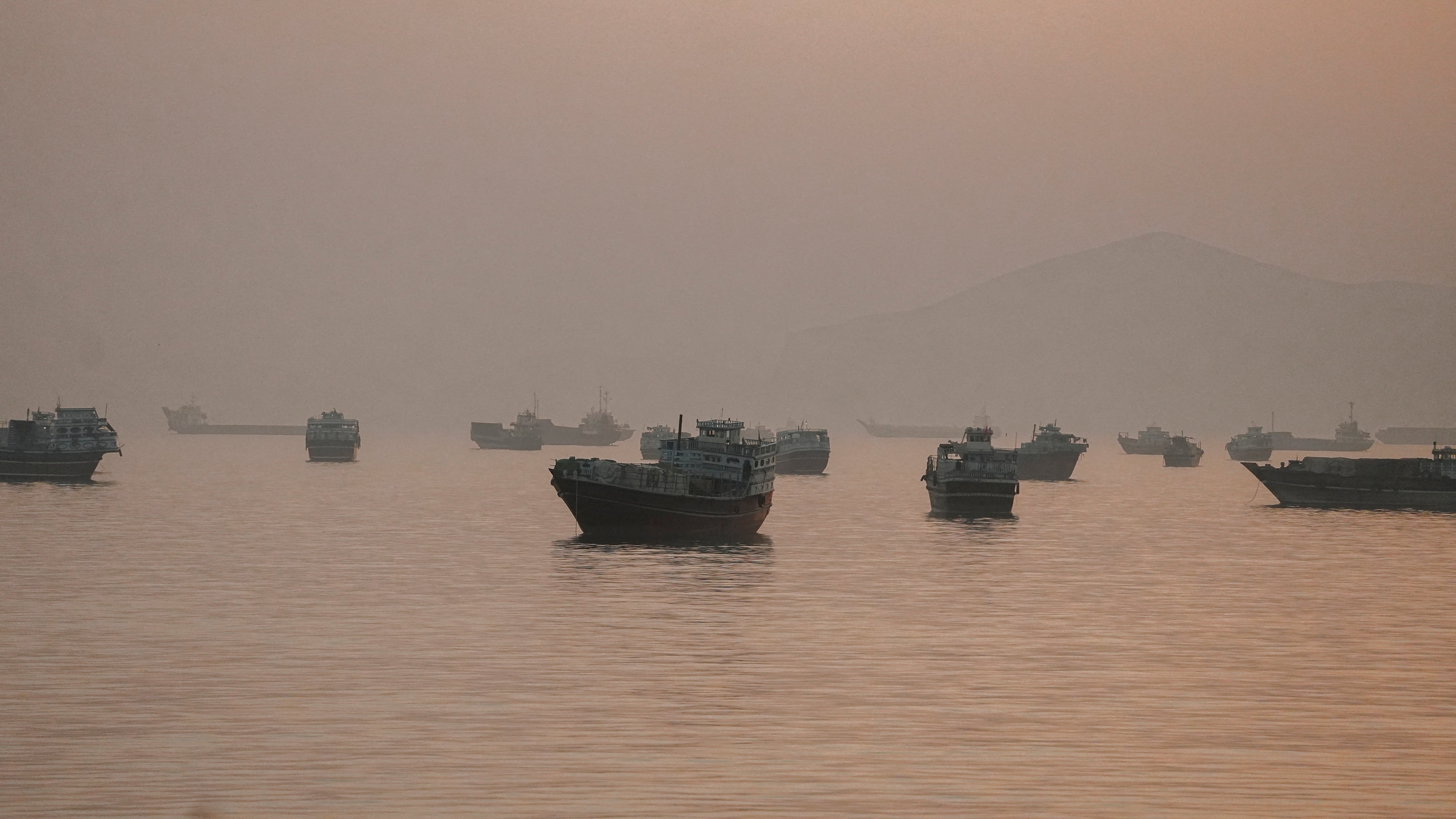
Complicating the issue for the White House is the Strait of Hormuz, the key waterway off Iran’s coast which the Revolutionary Guard Corps (IRGC) has shut down since the war began, causing major disruptions to global shipping traffic. The U.S. has proven unable to force Iran to open the Strait for months, while facing questions about why or whether the administration was apparently unprepared for it when the war began.
Gas prices in the U.S. shot up by more than a dollar per gallon after the war began in late February and are only beginning to fade from their peak prices as Americans head into the summer travel months. For farmers, prices for fertilizer and other goods remain elevated as the Strait remains closed.