


After three weeks of intense US attacks on Iran’s missile facilities, Donald Trump has boasted that Iran’s navy and military has been “obliterated”.
“We have already destroyed 100% of Iran’s Military capability,” Donald Trump declared on Truth Social earlier this week – despite failing to achieve his stated aim of instigating regime change and stopping Tehran’s nuclear programme.
The picture on the ground and the potential timeline of the war is more complex than Washington has portrayed, according to experts. Rather than a short, successful military operation, analysts suggest the conflict could drag on for weeks – or even months – if the US and Israel do not withdraw.
Though Iran’s missile production capacity has been significantly damaged, experts suggest that Tehran is far from obliteration as it continues to pound Israel and the Gulf states with drones and missiles.
A tally by geopolitical analyst Dmitri Alperovitch shows Iranian forces have steadily fired in the region of 30 missiles and 70 drones each day over the past fortnight, inflicting damage across the Middle East.
Trump did conede that it is “easy for Iran to send a drone or two, drop a mine, or deliver a close-range missile somewhere along, or in, this Waterway [Strait of Hormuz], no matter how badly defeated they are”.
On this, experts say, the US president is correct.
“I think that it’s probably safe to assume that [Iran] can continue it at least for weeks, maybe longer, at this rate of fire,” Mr Alperovitch tells The Independent.

.jpeg)
Figures on Iran’s missile stockpile are scarce, and it is unclear exactly how much damage has been inflicted by the US-Israeli bombardment. “There were estimates of a stockpile of about 3,000 before the conflict,” Mr Alperovitch says. “To continue firing at the rate of 30 or so missiles per day… it’s fair to say they likely have hundreds left to enable that.”
Iran has also made heavy use of its Shahed drones, which are relatively cheap and easy to produce as they do not require the same expertise and advanced facilities. Tehran will likely be able to continue production.
However, the number of drone attacks has “definitely degraded”, Mr Alperovitch says. His figures show that drone attacks have fallen by around 85 per cent.

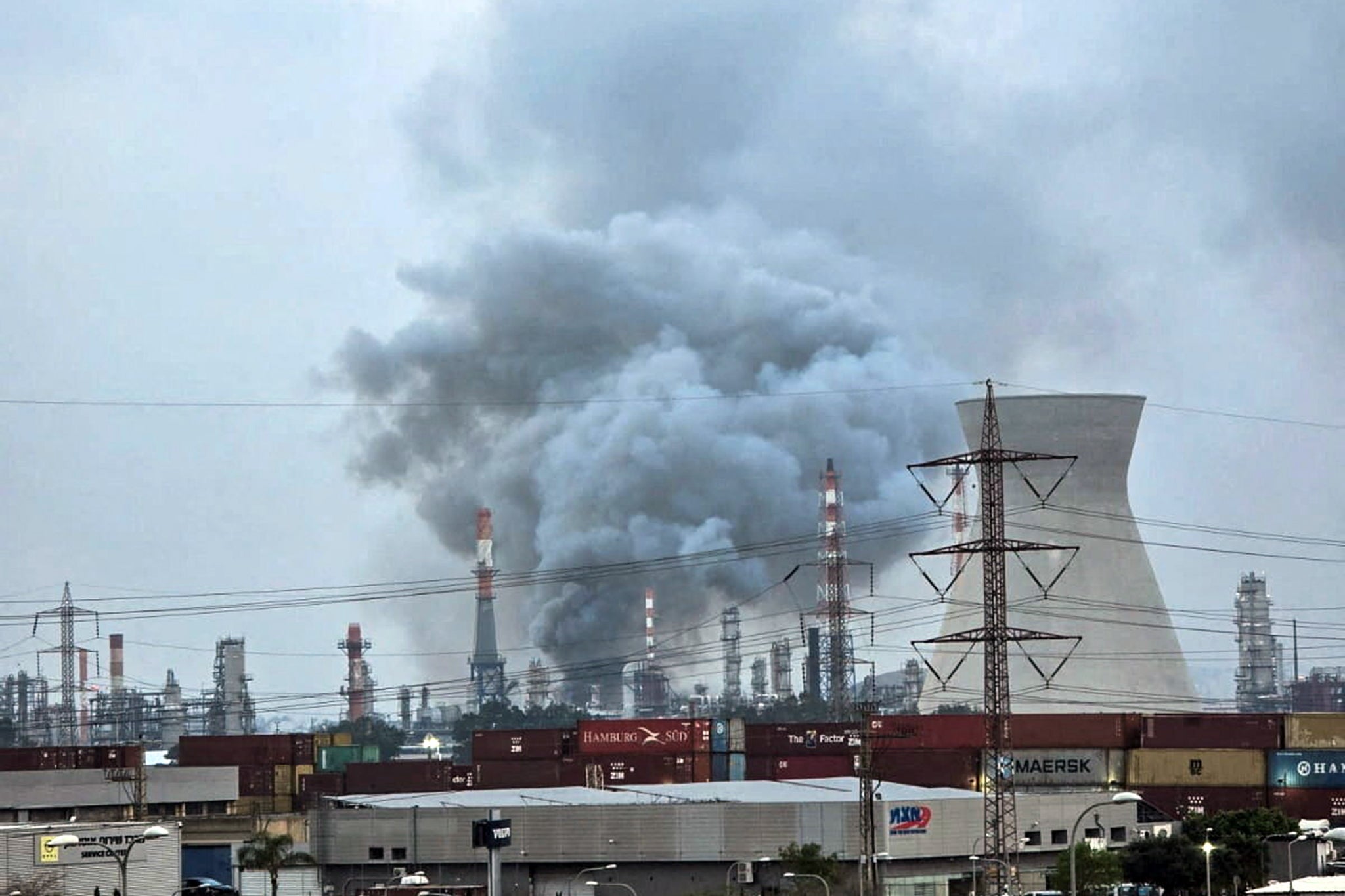
More than 15,000 targets have been struck by the Israeli military and US forces, some estimates show, with 50 Iranian officials killed. Israel says around two thirds of Iran’s missile launchers have been destroyed, while one western official said last week that as much as 80 per cent of Iran’s offensive capability had been destroyed, Bloomberg reported.
But Iranian missile attacks continue, and the military has fired more than 2,000 drones at the Gulf region so far, the Bulletin of Atomic Scientists report – with no sign such attacks will let up.
‘Iran views the war as a marathon’
Defence Secretary Pete Hegseth said in a Pentagon press conference on Thursday that there is no “definitive timeframe” for ending the war, stating that US attacks will only end when Trump decides to halt them.
Despite hailing victory in its stated war aimsof destroying missile production capabilities, the Pentagon does not appear to believe that Tehran is close to any form of surrender.
“From Iran’s perspective, this is being seen as a long war; a marathon where you might have times when there are more missiles, times when there are fewer missiles being launched,” says Dr Renad Mansour, a senior research fellow at Chatham House’s Middle East and North Africa Programme.
“Since the June war of last year, the Iranians have to some extent been preparing for this eventuality. They understood this was always going to be an asymmetrical war, where they could not compete with American and Israeli military and technology and intelligence, but there were certain cards that Iran could play.”
Tehran has been fighting the war on “different types of battlefields”, Dr Mansour says. Tehran wanted to get the US deeply entangled in the war it started by wreaking havoc on the global economy, to avoid a “Venezuela scenario in which the US can just leave and declare victory”.

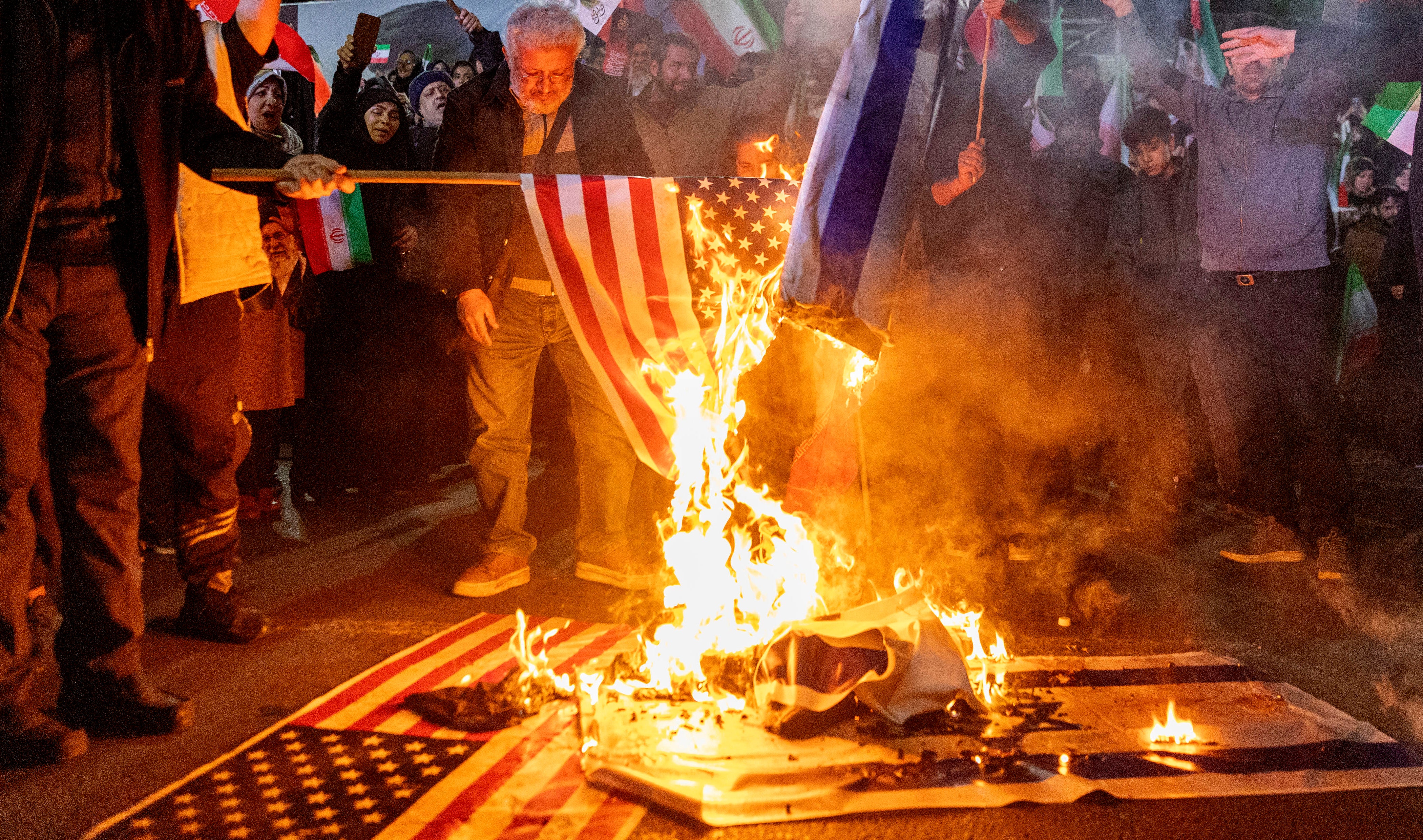
Iranian forces have blockaded the Strait of Hormuz, waging an effective war on the global economy in order to level the playing field in the absence of a military stockpile to match the Americans and Israelis.
“Tehran basically wanted to bring about chaos, to show what a bad idea this was by the US and Israel. But also, although it had improved relations with Dubai and the Gulf more generally, [it wanted] to basically say ‘enough is enough, we can get slapped once, twice, but now things are going to be different’.”
A war on two fronts
Iran, Mr Alperovitch says, is fighting in two separate wars. On one hand, the US military is almost exclusively targeting the ballistic missile programme and the Navy. On the other hand, Israel is fighting a war aimed at regime destabilisation, by assassinating Tehran’s top brass.
It has brought sharply into focus Iran’s strategy of ‘mosaic defence’, a decentralised form of wartime leadership which is designed to keep the system fighting even if senior leadership is taken out.
Rather than relying on a central authority, it is distributed across several geographic and organisational chains of command, with clear-cut successor ladders to allow units to continue operating.
“Assassinating military commanders may feel good, but there’ll always be a cadre of people to replace them,” Mr Alperovitch adds.
“These assassinations, I’m not certain they are actually accomplishing a whole lot in terms of degrading command control.”
Israel’s attack on Iran’s crucial South Pars gas field on Wednesday, which prompted an immediate Iranian retaliation against gas production facilities in Qatar, suggests that Tehran’s “command and control is not destroyed” because Iran can “retaliate and escalate… within hours”.
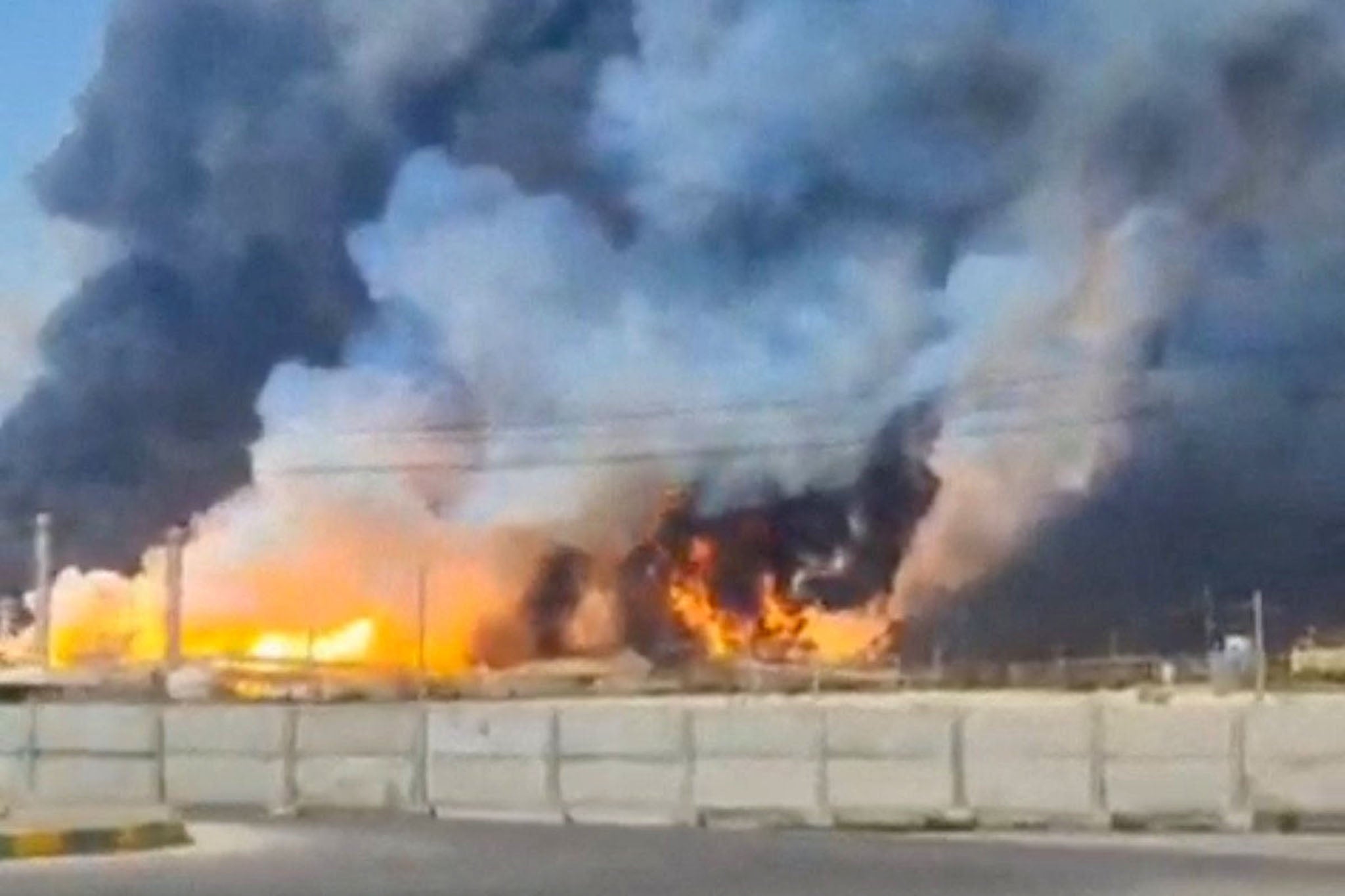
Mr Alperovitch does, however, say the US could “potentially declare victory” on its stated war aims of severely degrading the Iranian missile production capacity and its Navy.
For Dr Mansour, the idea of victory is a little more blurred.
“What does victory look like? What does a mission accomplished even look like? What you will have is a weakened regime that will continue to be a spoiler in the region. Yes, degraded, but these systems can reconstitute,” he says.
“So I think it’s hard to view it in terms of mission accomplished.”