

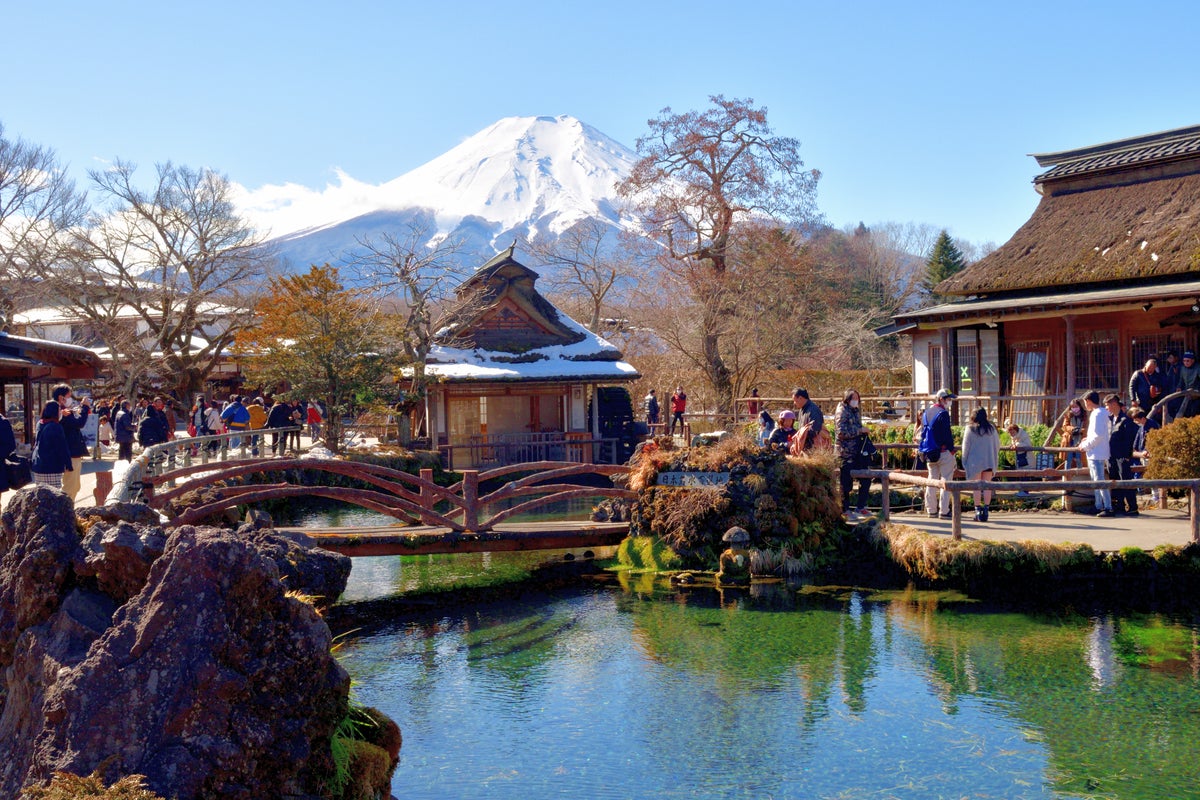
Concerns have been raised at a Mount Fuji Unesco World Heritage site over tourists tossing coins in crystal-clear ponds.
Tourists have been tossing coins into the famous ponds at the base of Mount Fuji, causing both residents and visitors to become worried about the water quality.
The eight ponds, found in the village of Oshino Hakkai, are known for their mineral-rich spring water fed by an underground reservoir created by Mount Fuji’s melted snow and often teeming with koi fish.
In recent years, the pond beds have become lined with coins that scuba divers and volunteers often have to collect out.
The ponds, part of the “Fujisan, sacred place and source of artistic inspiration” World Heritage site, are linked to the worship of the volcano, but this has no ties to tossing in coins for luck.
Practitioners of the Fuji-ko faith came to these ponds to bathe in order to purify their minds and bodies before climbing, while locals in the past would also take a dip in the Kagami pond, as they believed it had the spiritual ability to discern right from wrong in times of dispute.
Tossing coins into water is not a common tradition in Japan, and it is thought that the ritual has been brought by tourists.
There have been about 50,000 coins recovered to date from the ponds, according to The Straits Times, with the damage most evident at the Wakuike pond, known for clarity so remarkable that people can see the bottom four metres down.
Officials from the village have said that Oshino Hakkai does not have a tradition of coin tossing, and have tried to deter people from doing so by erecting a warning sign in Japanese, English, Chinese and Korean.
“It’s an endless cycle — as soon as we pick them up, more are thrown in,” the official said.
The village said it will set up an offertory box by the ponds to serve as an alternative location to deposit money, to deter the coin tossing.
While water quality tests have shown no abnormalities in the ponds or nearby rivers, locals are worried that the eroding coins will have a lasting impact on the environment in the future.
The issue has persisted for years, with an uptick in 2013 when the ponds were declared a Unesco World Heritage site, resulting in more tourists visiting.
The Independent has contacted the Yamanashi Prefecture Government, which oversees the Oshino Hakkai village, for comment.
Read more: Viral cherry blossom photo sparks overtourism crisis for Japanese town