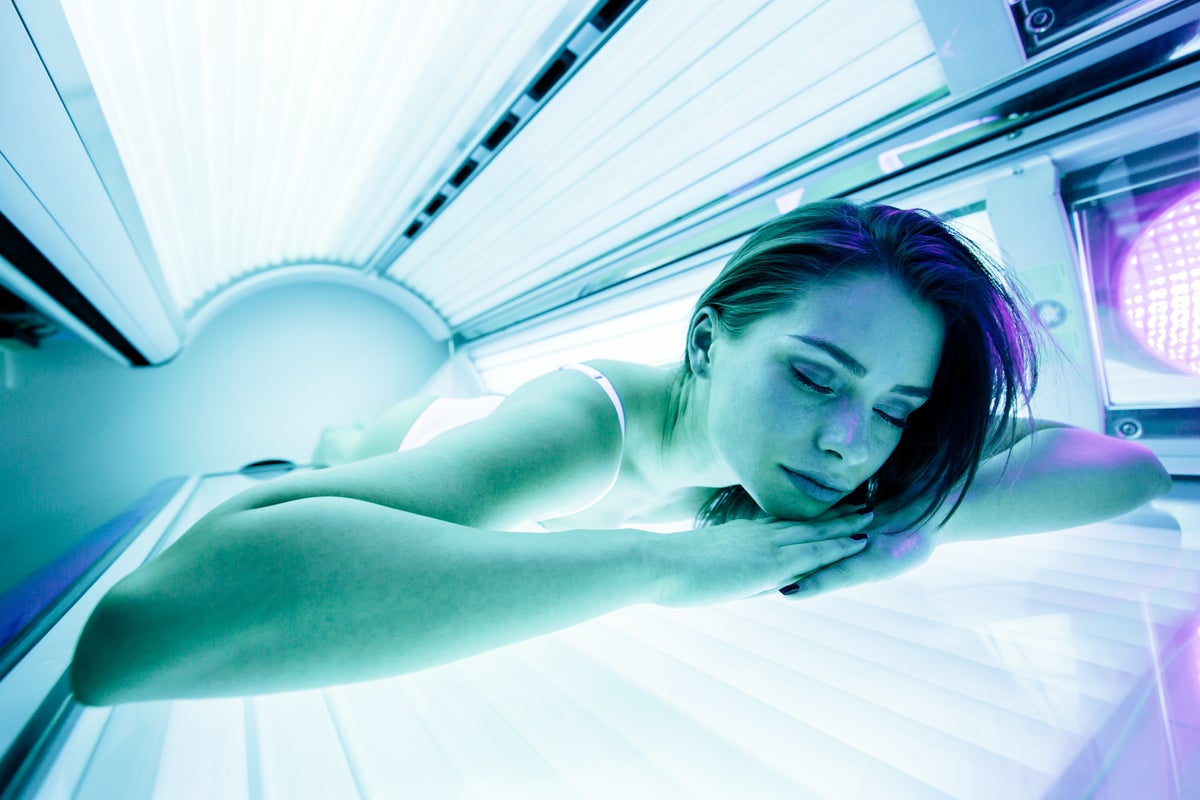
Government advisers are urging ministers to consider a “total ban” on commercial sunbeds, citing concerns over their increasing popularity among young people and operators making “false and unsubstantiated claims of health benefits”.
A new report from the Committee on Medical Aspects of Radiation in the Environment (Comare), which advises the government on the health effects of radiation, reveals that sunbed use has “not been much reduced, despite the introduction of laws to control use”. The committee also highlighted “suggestions that young people are increasingly using them.”
Sunbeds emit high-intensity ultraviolet (UV) radiation for tanning, a practice that Cancer Research UK unequivocally states has “no such thing as safe UV tanning,” warning that excessive UV exposure from either the sun or sunbeds causes skin cancer.
Leading medical professionals from the British Association of Dermatologists and the British Photodermatology Group have also called for a complete ban on commercial sunbeds.
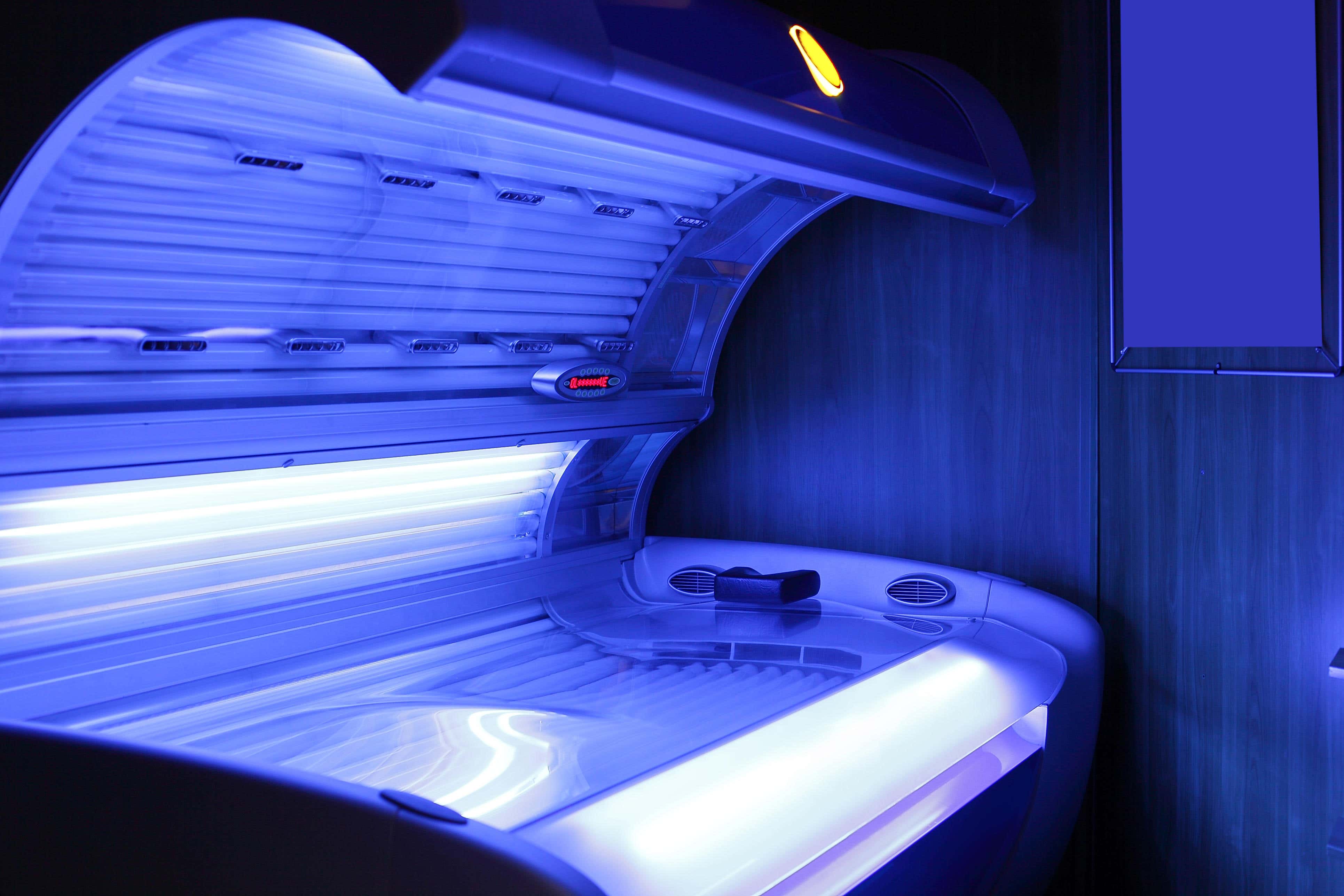
Despite legislation introduced in 2010 making it illegal for children to use sunbeds, Comare’s report indicates that “the numbers of commercial sunbed outlets in the UK do not appear to have declined appreciably since 2009, suggesting that use has also not been much reduced.” The authors further noted: “There are also indications of increasing use by young people.”
The report also criticised some operators, stating: “Some sunbed operators are making false and unsubstantiated claims of health benefits and this is reinforced by the prevalence of such misinformation on social media platforms.”
Comare recommends that the government should “consider whether it is appropriate to introduce a complete ban on the commercial use of sunbeds,” and revisit 2009 recommendations aimed at controlling sunbed use.
While acknowledging that a ban “should save lives and reduce costs of cancer treatment,” the authors also pointed to “wider policy considerations, for example in relation to the constraint on freedom of individual choice, which applies to a range of self-imposed risks.” Should a ban be pursued, it would necessitate “careful planning, with supporting public awareness campaigns and strong enforcement.”
A study cited in the report found that a ban on commercial sunbeds would be cost-effective, leading to fewer cases of skin cancer, a reduction in skin cancer deaths, and easing the burden on the NHS. Currently, Iran, Brazil, and Australia have implemented bans on commercial sunbeds, though private or home use remains permissible in these countries.
Dr Tamara Griffiths, president of the British Association of Dermatologists, welcomed Comare’s findings, stating: “There is now a consensus that sunbed regulation and enforcement in the UK are not strong enough.” She added: “Comare’s recommendations are sensible, practical steps that would strengthen protections for the public, and we welcome them.”
Dr Griffiths expressed particular encouragement that Comare “has explicitly recommended that the government needs to consider a total ban on the commercial use of sunbeds.” She affirmed: “The British Association of Dermatologists believes that the case for a ban is already strong.”

Highlighting the industry’s shortcomings, Dr Griffiths said: “Sunbed operators have demonstrated that they are not able to consistently meet existing requirements, including limits on the amount of UV radiation emitted by their machines and age restrictions.”
She also noted that “some operators have also made health claims about sunbed use that are not supported by the evidence. This is not true of every operator, but it is a persistent issue.”
Concluding her remarks, Dr Griffiths warned: “Stronger regulation will only protect the public if it is implemented, monitored, and enforced effectively. If the industry has struggled to meet existing standards consistently, the Government should be cautious about relying on tighter rules alone. A ban on commercial sunbeds remains the clearest and most effective way to reduce avoidable harm.”
The Department of Health and Social Care has been approached for comment.