

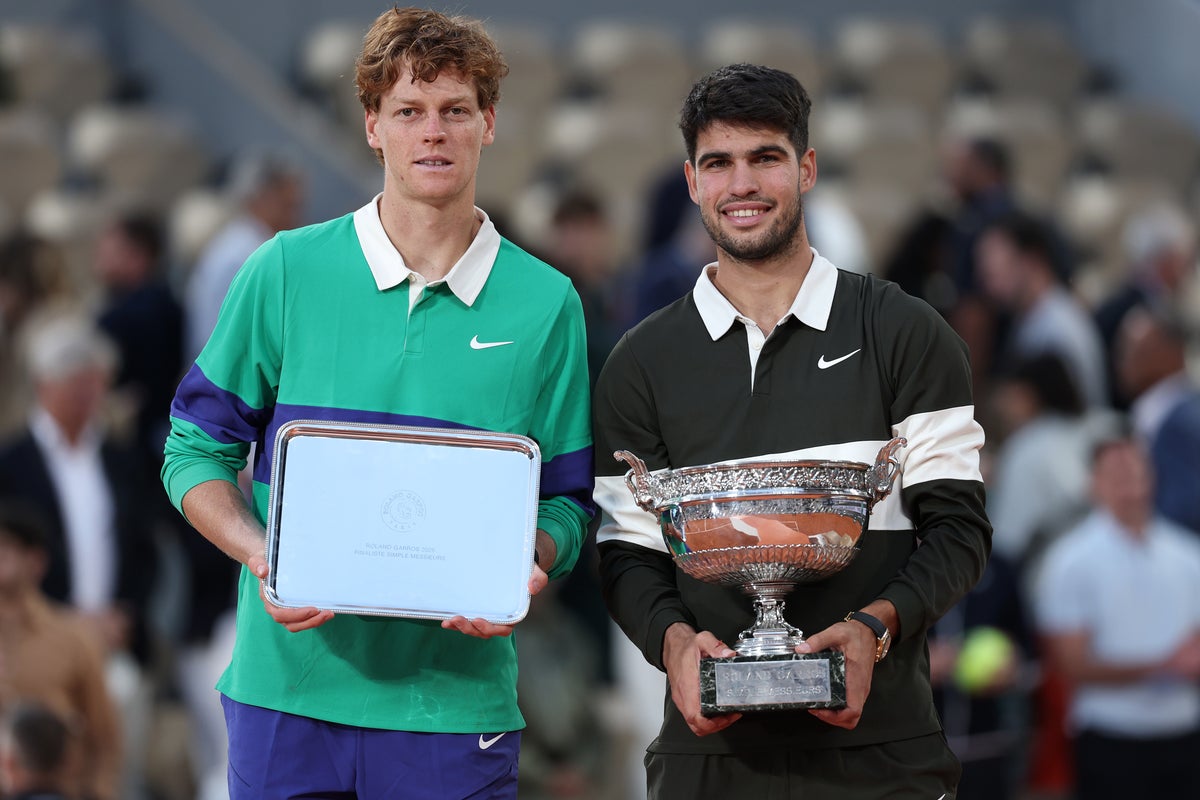
The world’s top tennis players have expressed their “deep and collective disappointment” at the prize money on offer at this year’s Roland Garros.
While French Open organisers have announced an increase of 9.5 per cent in total prize money for this year’s tournament, rising to an overall pot of €61.7m (£53.7m), several leading players from the men’s and women’s top 10 continue to be frustrated.
The group of star players, including Carlos Alcaraz, Jannik Sinner, Aryna Sabalenka and Coco Gauff, have long argued that they should receive a greater percentage of the revenues generated by the four grand slam tournaments and were similarly disappointment by the prize money at this year’s Australian Open.
According to the group, their share of the overall revenue generated by Roland Garros is projected to decline to 14.3 per cent this year. In recent years, the players have pushed for that figure to be closer to the 22 per cent received at mixed events on the ATP and WTA Tours with equal prize money, such as Indian Wells and this month’s Italian Open.
In response, the French Tennis Federation (FFT) said a decision had been made to focus prize money increases on “players who exit the tournament in the early rounds of the main draw and the qualifying stages”. Figures released by Roland Garros reveal an increase of around 11 per cent for the first three rounds of the main draw, compared to a 9.8 per cent increase for the singles champions.
A statement from the players said: “As Roland Garros looks to post record revenues, players are therefore receiving a declining share of the value they help create. More critically, the announcement does nothing to address the structural issues that players have consistently and reasonably raised over the past year. There has been no engagement on player welfare and no progress towards establishing a formal mechanism for player consultation within grand slam decision making.
“While other major international sports are modernising governance, aligning stakeholders, and building long-term value, the grand slams remain resistant to change. The absence of player consultation and the continued lack of investment in player welfare reflect a system that does not adequately represent the interests of those who are central to the sport’s success.
“The players who were signatories to the initial campaign remain united in their desire to see meaningful progress, both in terms of fair financial distribution and in how the sport is governed. They will continue to advocate for constructive dialogue and for reforms that ensure the long-term health and integrity of professional tennis.”
The players initially outlined their proposals in letters to the four grand slams in March last year, detailing their desire for the major tournament to start contributing to a player welfare fund, supporting pensions, healthcare and maternity leave, and for more consultation with tournaments around matters such as scheduling.
Last season, Sinner, Sabalenka and Gauff were among the players to meet with the grand slams at Roland Garros but there was further frustration last autumn when further discussions were delayed. Ben Shelton, the world No 6 and top-ranked American man, told The Independent that players are “at the bottom” when prize money as a percentage of revenue was compared to other sports.
The FFT said the increase of prize money at this year’s French Open “reflects a sustained commitment to increasing player compensation over time”.

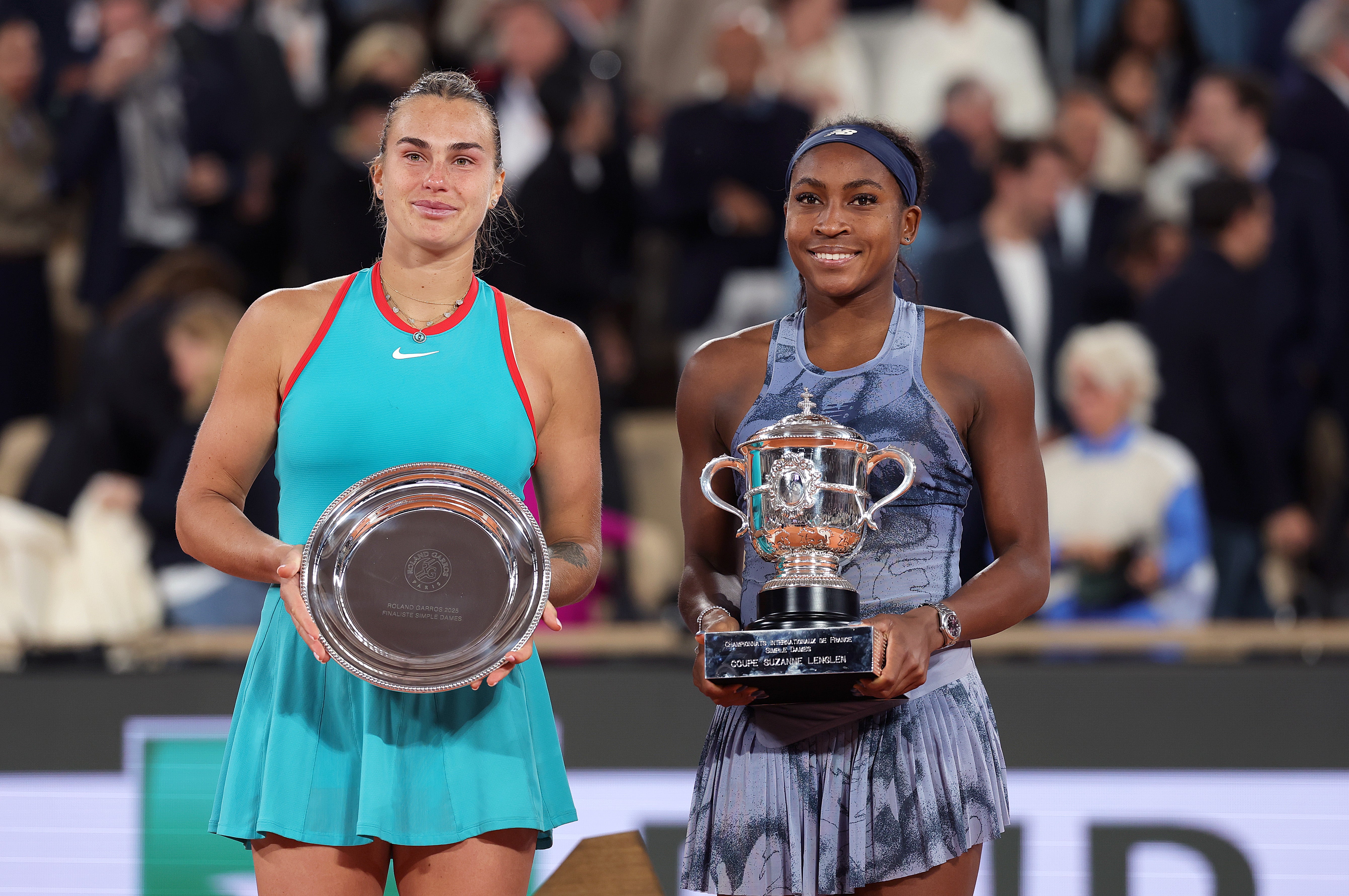
It added: “Beyond prize money, the Roland-Garros model is based on a specific economic framework. The FFT is a non-profit organization. All revenues generated by the tournament are reinvested into the Roland-Garros tournament, as well as the development of tennis in France and internationally.
“This includes direct support for the development of the sport at grassroot level, training and pathway programs, strong commitment to women’s tennis, inclusive tennis and wheelchair tennis, as well as significant contributions to international tennis development through the ITF.
“The FFT has also recently invested more than €400m in the Roland-Garros infrastructure, notably to significantly enhance player conditions and on-site services.
“Finally, the FFT remains fully committed to ongoing dialogue with all stakeholders in global tennis, including speaking directly with individual players. It will continue working to improve overall player conditions, in line with its responsibilities and its model.”