

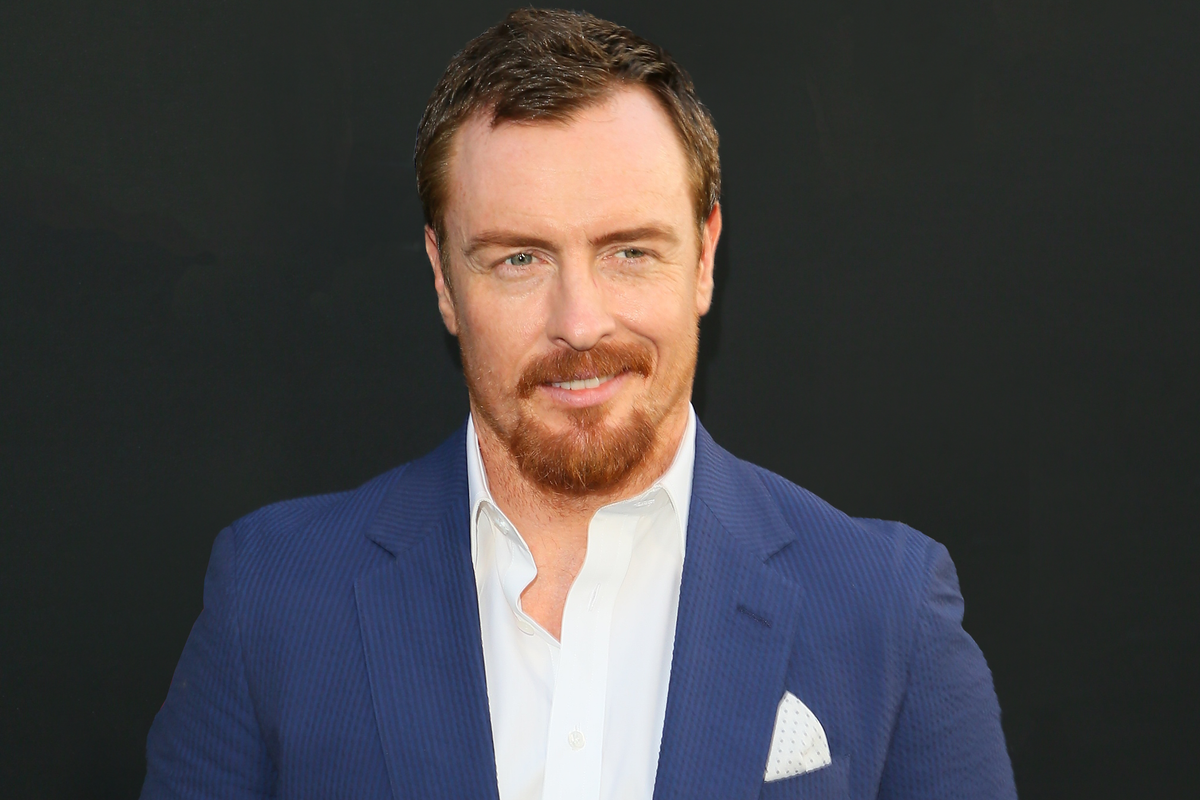
In the early Noughties, Toby Stephens was a leading man with the Royal Shakespeare Company. Then came his breakthrough screen role: a North Korean general transmogrified into a swashbuckling insomniac English billionaire with a union jack parachute. Maybe not the most likely choice for today’s aspiring thespians – and as Stephens admits, it felt eccentric at the time. Imagine casting a Bond villain like that now. “You’d never get away with that, would you?” he says of Die Another Day’s race-swap conceit.
The son of acting royalty Maggie Smith and Robert Stephens, he wasn’t even top of MGM’s list; that was Sean Penn. But eventually he landed the role of Gustav Graves, having initially been led into an oak-panelled room at EON’s Piccadilly offices and handed a page of dialogue. “Right,” he remembers asking. “Do you want me to do it in a Korean accent?” They did not.
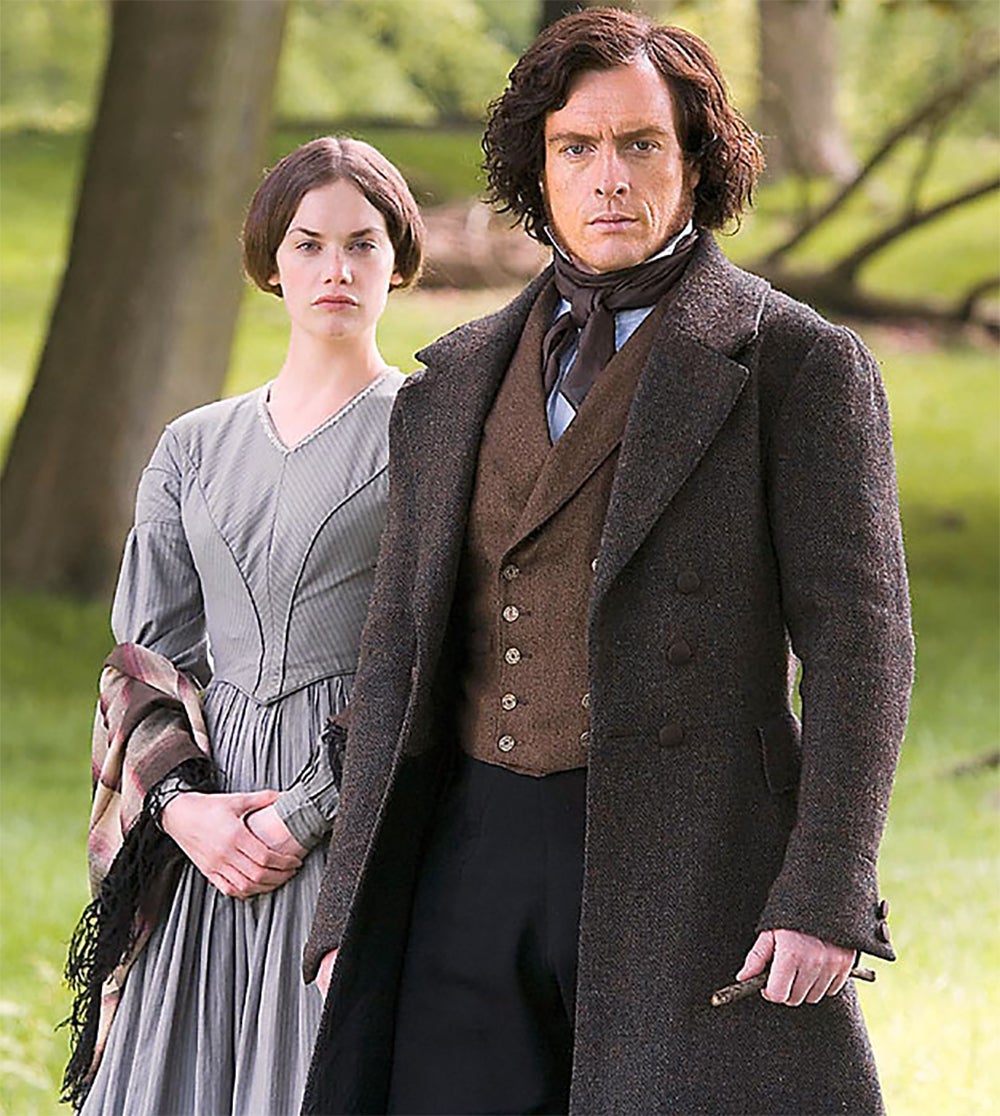
As happy as Stephens is to indulge my own fascination with Bond, we’re here to talk about a revival of Peter Shaffer’s classic 1973 play Equus, which he’s starring in at the Menier Chocolate Factory. Meeting me in the bar of a hotel in east London, where he’s deep in rehearsals, the 57-year-old is in a green army jacket; his hair is ginger-grey, his beard full, and his eyes – icy blue – unmistakeably his mother’s. A world away from the characters he’s often inhabited – whether laying on the sneer as Captain Flint in Starz’s pirate caper Black Sails or the smirk as Rochester in 2006’s Jane Eyre – he is open and likeable, warmth radiating from him in waves. Not a curled lip in sight. Then there’s his laugh: big and sonorous, the only one I’ve encountered that can unironically be described as a guffaw.
Anyway: Equus, the new production of which is directed by Lindsay Posner. Thrust back into the spotlight when Daniel Radcliffe starred in it in 2007, the play is about a disturbed stable boy whose pathological, erotic fixation with horses culminates in the blinding of six of them. It feels pretty timely: Adolescence and Richard Gadd’s Baby Reindeer have made television drama the forum for searching conversations about damaged young men, mental health, and what society does to both. Shaffer got there first.
“When I read it I was very surprised by how good it was,” Stephens says. “How, still, it’s quite shocking and disturbing.” Stephens plays Martin Dysart, the psychiatrist trying to make sense of what happened in that stable. “It’s like a thriller, a procedural, where Dysart is the detective,” he says. “But at the same time you realise he’s unravelling himself.” The question at its centre – whether curing someone of their passion, however dangerous, is worth the cost of extinguishing it – has no clean answer. If anything, it sends Dysart into freefall about his own life’s work. Stephens recognises the feeling. “I’m at a point in my career where I’m fundamentally questioning what I’m doing and what the purpose of it is.” He laughs. “Actors do that quite regularly.”

There are a lot of questions hovering over the theatre industry right now. Lesley Manville, currently starring in Les Liaisons Dangereuses at the National, caused a minor kerfuffle last month when she went on Radio 4 to call out audience members for filming during the final bows. “Don’t just stick your phone in our face,” she said. Does he have a view? “If you’ve got a phone in your hand, you can’t really clap,” says Stephens. But the thing that really gets him is the disconnect. “You’re living through this thing in a tangential way rather than a direct way. And yet we’ve all got mindfulness apps on our phones.” That guffaw again. “It’s kind of crazy, isn’t it?”
His wife, the New Zealand-born actor Anna-Louise Plowman, recently saw John Proctor Is the Villain, Kimberly Belflower’s vibrant hit that deconstructs The Crucible, and came back rhapsodising – not just about the play, but about the audience. “She said it was fantastic because it was packed with young people,” he recalls. It was an experience, he adds, that’s become quite rare – partly because of eye-watering ticket prices. On the topic of celebrity casting, where instead of employing a seasoned professional, a director will cast someone famous for the specific purpose of shifting seats – Cheryl in 2:22 A Ghost Story, anyone? – Stephens shrugs. “It’s pragmatic,” he says. “That’s just the West End.”

-credit-Manuel-Harlan.jpeg)
Stephens, who was born in London but raised in Canada then rural Sussex, speaks in a rich, plummy baritone that, for much of his career, has been both his calling card and his curse. In 2006, The Telegraph ran a piece about him headlined “The Perils of Being Posh on TV”, in which Stephens reflected on public schoolboys often being cast as clowns or villains: “To be taken seriously at the moment, you have to be working class or have a working-class accent; otherwise, you are seen as a caricature,” he said.
Does he feel those perils are still real? “I don’t really…” he trails off. “The irony for me is my parents both came from very much lower-middle-class, working-class families. My dad came from Bristol – his dad was a labourer; his mum was a charlady. My mum’s dad came from Newcastle, her mother from Glasgow.” Each generation was drilled to speak a certain way, and passed it down. “And then you’re trapped.” I remind him of something he told The Telegraph in 2015 – that he didn’t feel part of any class, particularly the aristocracy, and resented being stuck in “anachronistic aspic”. He smiles. “That sounds good,” he says. “I’ll claim that one.” Look, he adds, it is what it is. “I’m 57 now, I don’t give a s*** any more. Nobody is going to suddenly relook at Toby in a completely different way and think ‘We’re going to cast him.’ It doesn’t matter.”


That Stephens is more blasé these days may have something to do with his success in the US. While being a mainstay of British theatre – Ibsen, Pinter, Stoppard, Tennessee Williams, and more – he has also carved out a parallel career in major streaming series: Black Sails, Netflix’s Lost in Space, and Disney+’s Percy Jackson and the Olympians. In America, he says, nobody much cares about the cadence of your voice. “They let you be whoever you want – as long as you are good at it.”
Most recently, Stephens was all cockney vernacular, effing and blinding as wide-boy boxing promoter Frank Warren in Giant, Rowan Athale’s 2025 biopic of the Sheffield-born former world featherweight champion Prince Naseem Hamed and his trainer Brendan Ingle. The film saw Stephens reunited with the 007 he’d been pitted against, Pierce Brosnan. The two hadn’t really connected on Die Another Day – Brosnan “had a lot of stuff going on in his life” – but during filming for Giant, things were different. “I actually got to hang out with him a lot,” says Stephens. “I loved meeting and being with him again. We actually got on really well.”

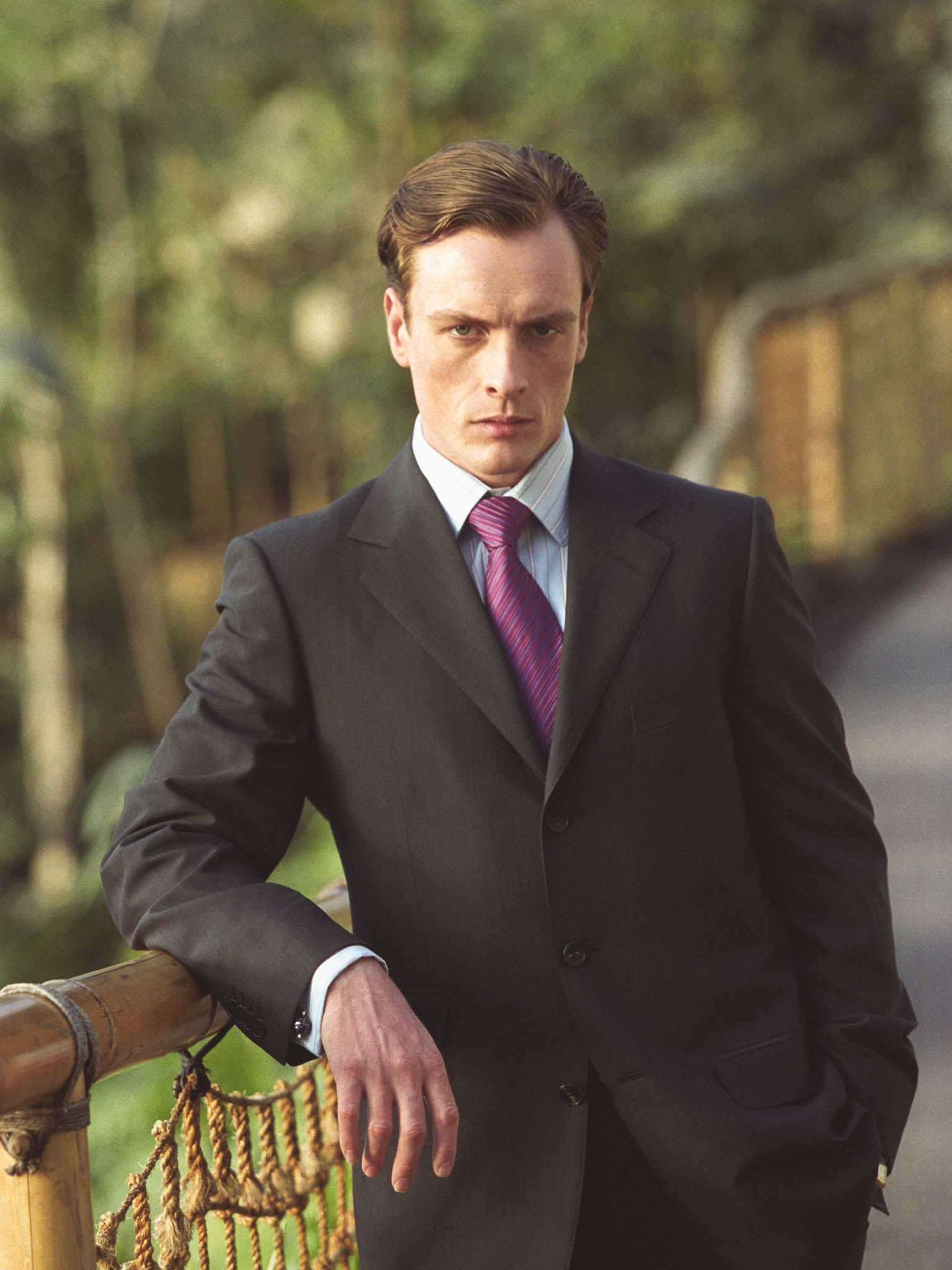
Die Another Day was of course Brosnan’s final outing as Bond – a film that also featured an invisible car slipping and sliding like clear jelly through a grand, palatial igloo, along with a space laser named Icarus, and a CGI 007 para-surfing on an iceberg tsunami. Oh, and there was Madonna, delivering an indelibly janky theme tune and briefly appearing as a leather-corseted fencing instructor who dispenses lines like “I see you handle your weapon well”. One day, she arrived late for shooting. Brosnan, irritated, started humming her shiny Eighties banger “Like a Virgin”. “She got quite annoyed with him,” Stephens recalls. “It was all an out-of-body experience.”
Stephens still can’t get over the national obsession with who will play Bond. “It’s baffling,” he says. “It’s sort of a crazy ritual we go through, isn’t it?” Who should succeed Daniel Craig, then? I mention the favourites: Callum Turner, Jacob Elordi and Harris Dickinson. He swerves the question. “Well, whoever gets it, the reaction will be ‘Oh my God, why?’ Remember when Daniel Craig got it and everybody was like, ‘Oh Jesus!’, and he was brilliant.”
Stephens is surprisingly relaxed when I ask about his famous parents. In the past, he’s been very reticent – “I’d avoid mentioning them in interviews,” he once admitted. “My mum understood, but it was hard for her not to be acknowledged by her son.” Today, though, he’s expansive. Dame Maggie Smith, prolific doyenne of stage and screen, died in 2024, aged 89, and the outpouring of love for this national treasure astonished him. “She never saw herself like that,” he says. “She just completely unified everybody.” He took his three now-teenage children, Eli, Tallulah and Kura, to see her final stage performance, as Goebbels’s secretary in A German Life, Christopher Hampton’s one-woman monologue, at the Bridge Theatre in 2019. “I really wanted them to have that experience,” he says, “because I knew this was going to be it.” Backstage afterwards, she opened the dressing room door. “Only you,” she told him, “would bring your children to this.”
Not that they needed any persuasion to come – they had grown up watching her in the Harry Potter films and Downton Abbey. Smith came to everything he did – to the RSC, where he played Hamlet and stripped off for Coriolanus. How did it feel, having her in the audience? “I wanted her respect and I wanted her approval,” he says. “Didn’t always get it. Sometimes I did, and sometimes she just didn’t like the production.” As the years went on, it was the people around him who got more nervous – she’d become something of a spectacle herself, the attention in any room gravitating towards her. “She was like, ‘Look, I’m here to support you.’”

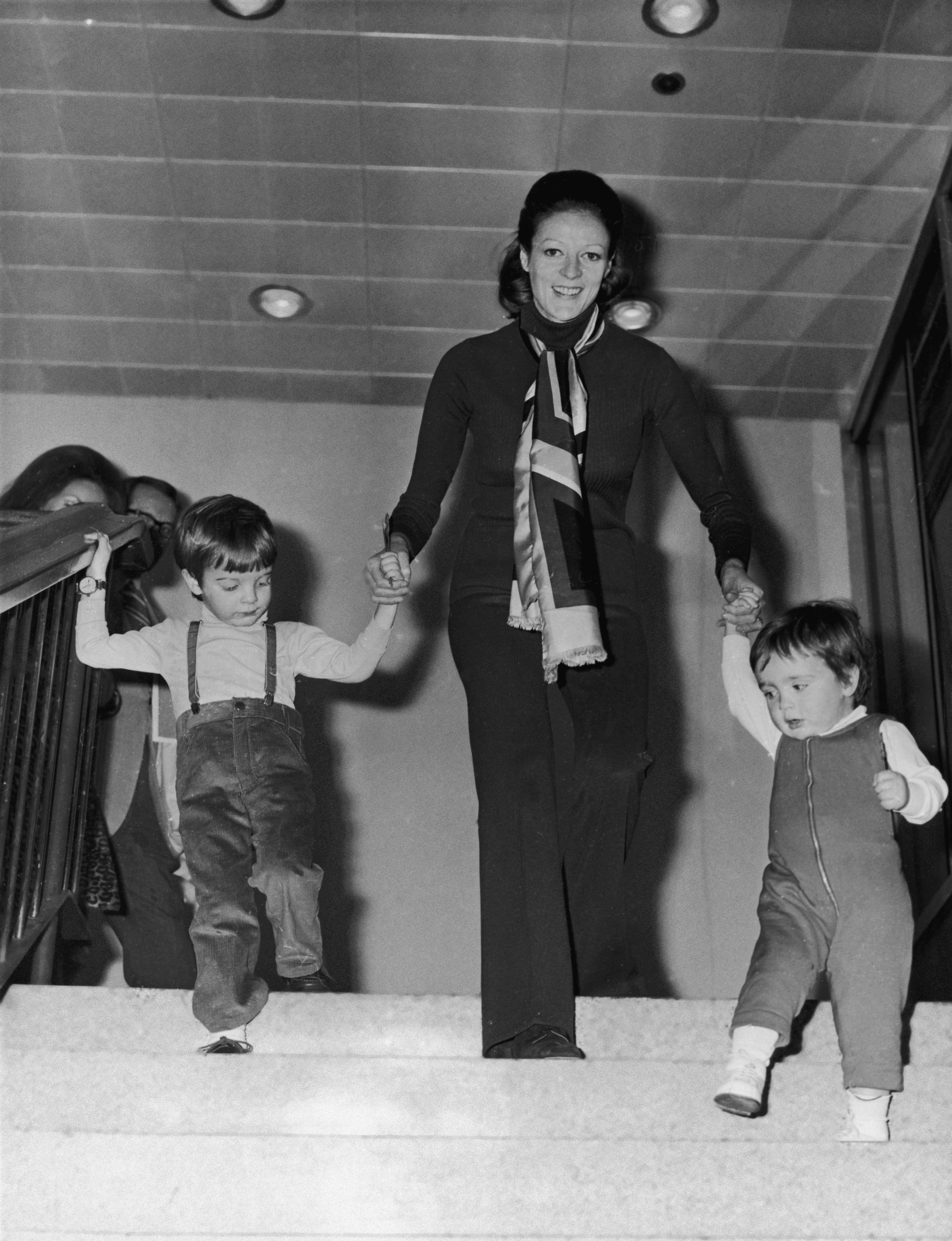
Although Smith wasn’t a conventional note-giver, he says, she was “pretty good at putting her finger on what was wrong. Whatever she said was always out of love of the craft.” His father was different: Robert Stephens would arrive backstage, armed with notes. “He’d give me very practical things that were actually very good,” Stephens says. “But I’d still bristle.”
Smith also had a charming ritual, he tells me. When she was in a play, she’d come home on Saturday nights, eat late, and talk through any problems with her latest performance. A laugh that hadn’t landed, say, or a moment that had slipped. “It was a never-ending puzzle,” he remembers. “You never achieve some sort of apotheosis like, ‘Oh, that’s my performance.’ It’s a struggle, constantly trying to get to a point where you are satisfied. And she never got there. Not once.”
In A German Life, Stephens watched her do something she had never done before: eschew every trick, every habit, and simply be. “She threw away a lot of the stuff that she normally did,” he says. “She was just sort of naked.” Gone was all the filigree work honed across a lifetime. “The truth is in simplicity,” he explains. “When you see somebody who comes on and just does it, it’s incredibly disarming.” He scratches his beard. “She was never not trying to get better. Neither was my father, in his way. That’s what they gave me.”
‘Equus’ is running at the Menier Chocolate Factory until 4 July, and then at Theatre Royal Bath from 14 to 25 July. Tickets can be bought here