




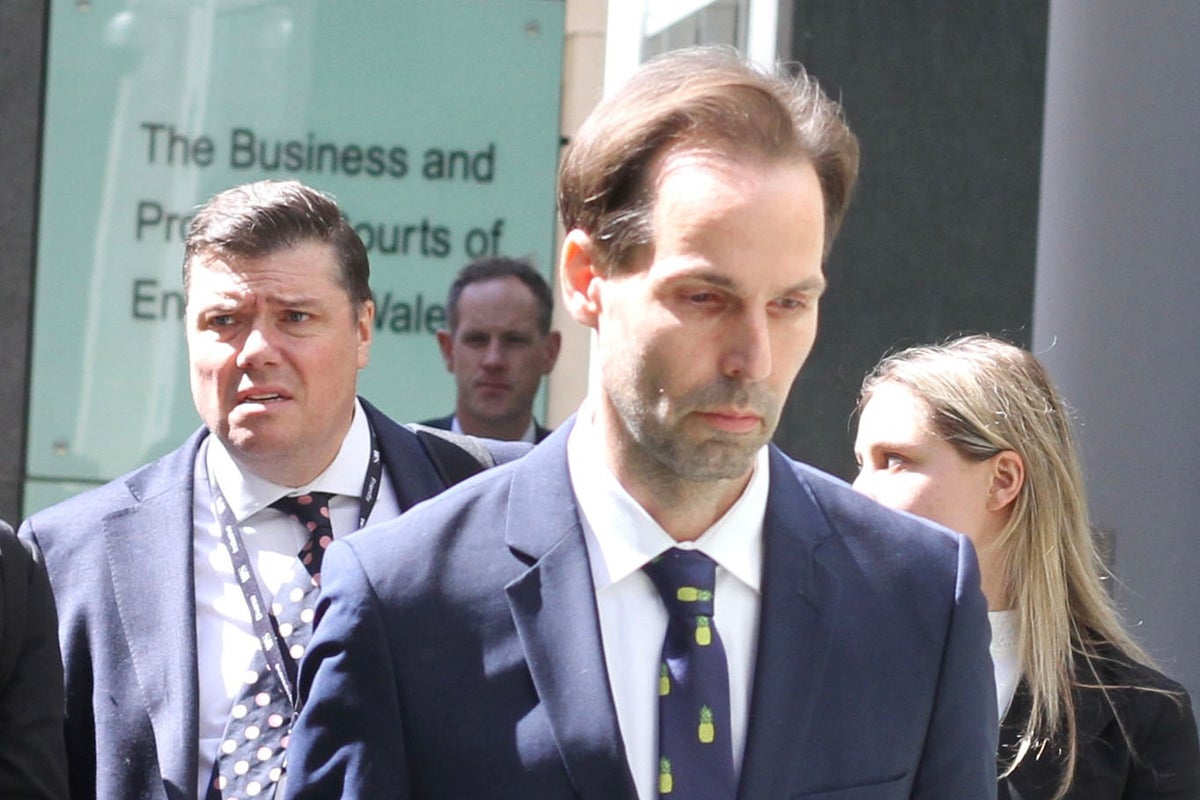
A man who claims his dog prevents him from working is embroiled in a legal battle over the £1m estate of his late partner, a prominent man-bag designer.
Tibor Matyas, described as the “romantic and business partner” of the late fashion guru Chris Liu, says he was financially “dependent” on the designer.
Now, facing unemployment and the costs associated with pet care, among other challenges, Mr Matyas is seeking “maintenance” payments from Mr Liu’s estate.
Mr Liu, a graduate of the London College of Fashion, initially gained recognition as a womenswear designer, selling his creations to high-end retailers like Harvey Nichols and reportedly counting celebrities such as Kylie Minogue and Sade among his clients, before specialising in luxury man-bags.
He passed away in 2017 at the age of 47, leaving behind an estate valued at over £1m. This substantial inheritance is now the subject of a dispute involving Mr Matyas, Mr Liu’s family in China, and the estate’s administrator.
Upon the designer’s death, Mr Matyas, 49, who collaborated with Mr Liu on the management and marketing of their “Chris and Tibor” label, inherited a jointly owned London apartment valued at £470,000.
He was also bequeathed a 25 per cent share of another London flat in the will, with the remaining portion designated for Mr Liu’s family in China.

Despite these provisions, Mr Matyas is now suing for “reasonable provision” from the estate, telling a judge that his ability to work is hindered by the responsibilities of caring for his dog.
Mr Matyas – who studied art management and marketing – and Mr Liu had both worked as design consultants for Burberry before setting up their man-bag label Chris and Tibor in 2005.
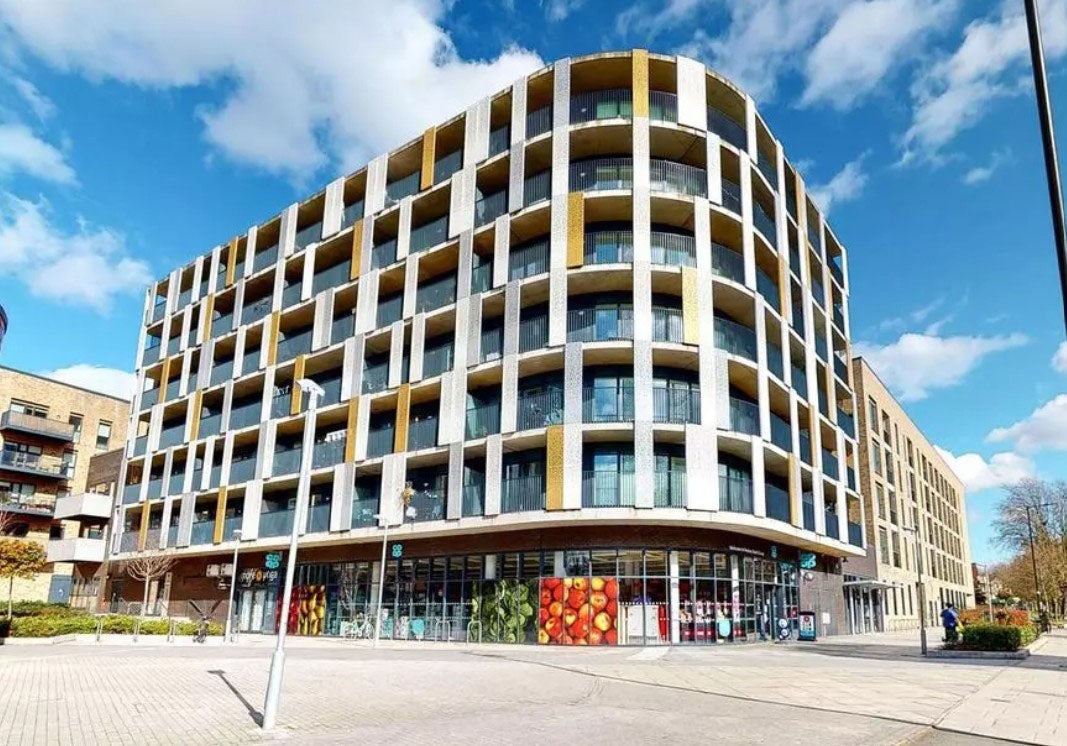
The High Court heard that on top of their fashion business, a property portfolio was purchased, with three flats acquired in Kinetica Apartments, Thornbury Close and Atkins Square, all in Dalston, east London.
Chris Huan Liu died from cancer, aged 47, in 2017, leaving behind an estate valued at over £1m.
The £470,000 flat in Thornbury Close automatically passed to Mr Matyas on Mr Liu’s death as it was in both their names, but the other two properties were held in his sole name and went into his estate.
In his 2015 will, he left almost everything to his parents and brother, apart from a quarter share of the £400,000 Atkins Square property, which went to Mr Matyas.
Mr Matyas and his partner’s brother were initially made joint executors of his estate, but were replaced by a professional executor after a seven-year battle erupted between Mr Matyas, his partner’s parents, De Heng Liu and Xuan Rong Yang, and his brother, Pu Liu.


Although the designer’s family have not travelled to the UK for the trial, they are defending his claim on grounds that most of the cash which fuelled the property purchases came from them, and Mr Matyas’ claim is also being opposed in court by the administrator of the estate, Peter Daniel.
Mr Matyas is seeking a judge’s ruling under the 1975 Inheritance Act for “reasonable financial provision” out of the estate, claiming he was “dependent” on his designer boyfriend for money and will struggle to meet day to day expenses without being handed more.
From the witness box, he told how he has struggled to get his career back on track after his partner’s death, despite previously taking on work as a chef to keep his head above water.
In his written evidence he said: “I was financially and emotionally dependent on Chris… I was maintained by him and financially dependent on him’.”
Questioning him about the extent of his “reasonable financial provision needs”, Deputy Judge Andrew Scott asked him: “you seem to be an intelligent, capable and together person now and it’s not entirely clear to me why you can’t find employment?”
“I am also alone and looking after my dog and I have to take out the dog,” he told him.
Aidan Briggs, for Mr Matyas, told the judge that his dog also adds to his financial needs, as he spends £3,800 annually on pet food, vets’ bills and kennelling.
Mr Matyas explained to the judge that with a successful career behind him, he is now trying hard to get back into working as an entrepreneur, which takes time to plan, adding that as well as having to care for his canine companion, at the age of almost 50 finding work is a struggle.
“The only employment I can find is low-end and would be full-time, which would take up all my time. There would be no exit from that circle, because I would be working for survival,“ he said.
The court heard that Mr Matyas also has significant debts, including legal bills from the fight, and wants his financial needs to be met from the estate through a regular income stream, rather than a one-off lump sum payment.
He is also bringing an alternative case that the properties should be shared equally between him and the estate on the basis of a “constructive trust” despite being in his partner’s sole name.
In his evidence, he insisted that he and Mr Liu always understood the properties were jointly owned, that they lived together “as though they were a married couple,” and insisted: “our joint income originated from the same source, neither Chris nor I had any independent business ventures”.
When it came to buying their flat in Kinetica Apartments, the funds came from their company, although “by a circuitous route”, said Mr Matyas, but he and Mr Liu ended up putting it in Mr Liu’s name alone to placate his family in China, as “he had never been open about his sexuality” and they believed Mr Matyas was simply his business partner.
“My name couldn’t be on the property due to pressure from Chris’ family,” said Mr Matyas.
“Chris asked me to allow the property [Kinetica] to be registered in his sole name so that his family would stop questioning him.
“He assured me that this wouldn’t change anything about our home; it would still belong to both of us, and we would continue to share everything as always.“
The same situation then applied when the couple acquired their flat in Atkins Square, claims Mr Matyas, with the funds coming from both of them but with only Mr Liu registered as an owner.
But Timothy Evans – barrister for the estate administrator Peter Daniel, who is now opposing Tibor’s claim – said the evidence showed that the property purchases were funded by Mr Liu’s family, claiming that the cash used to acquire the Kinetica flat “derived from payments made to the deceased from China”.
In relation to the reasonable provision claim, he said that to succeed Mr Matyas must “show on the balance of probabilities that he lived with the deceased as though they were a married couple for the whole of the period from 10 April 2015,” and “must show that the will failed in all the circumstances, looked at today, to make reasonable financial provision for him.
“The provision actually made for him was a quarter share in Atkins Square, but the circumstances also of course include the fact that he took the whole of Thornbury Close by survivorship on the deceased’s death.
“Consideration as to whether any, and if so what, award should be made to Mr Matyas needs to take account of the interests of the other beneficiaries,” he added.
While Mr Liu’s fortune was valued at around £1,061,368, much of that could now be consumed by the legal costs of the dispute and other expenses, the court heard.
The judge has now reserved his ruling in the case.

