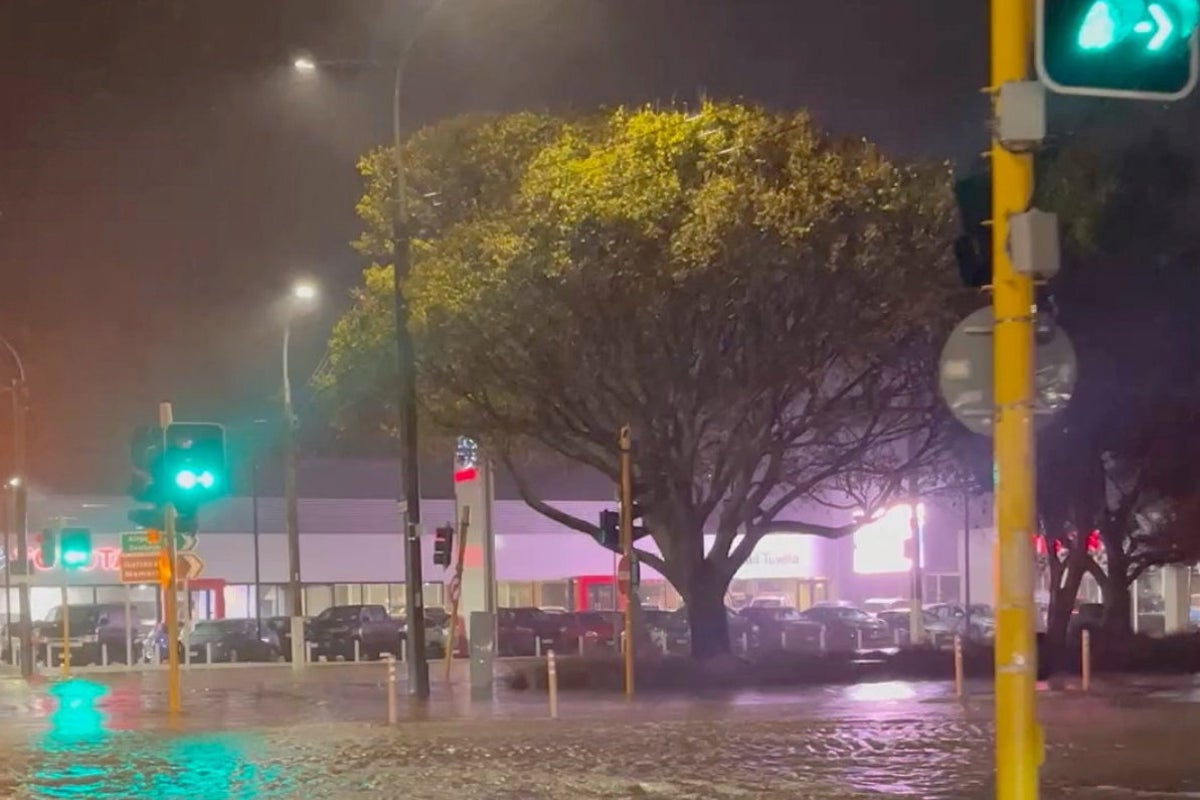
Wellington declared a state of emergency on Monday after torrential rainfall battered New Zealand’s capital city overnight.
Residents of low-lying areas were asked to evacuate as flash floods and landslides led to the closure of roads.
Wellington mayor Andrew Little said he had “never known anything like” the intense rainfall overnight. He said the city received 77mm of rain in less than an hour, the heaviest on record.
“You’ll be aware there has been serious downpour in Wellington, particularly in the southern suburbs overnight, very serious flooding in many places,” he said on social media. “A lot of that flooding was the stormwater system being overwhelmed.”
“So much of it is dissipating at the moment,” he added, “but there’s still surface flooding around places.”
The mayor urged the public to avoid unnecessary travel. “So this is a day to be really careful if you’re going out and about. If you can avoid travel, then please do so, but if you have to travel, then be very careful,” he said.
Emergency crews have already responded to over 150 weather-related callouts across the region, including flooding inside homes and landslides in suburbs like Newtown, Island Bay, and Kingston.
Fire and Emergency New Zealand has activated its regional coordination centre, ramping up the response.
“Floods and flash floods can happen quickly. If you see rising water, do not wait for official warnings,” deputy national commander Megan Stiffler said.
“Do not try to walk, play, swim, or drive in floodwater. Do not drive through floodwater. You are putting yourself at risk, and risking the lives of those who come to your rescue.”
Some areas of the city reportedly received rainfall of up to 22mm in a short burst, with residents describing the deluge as the worst ever.
“This is a serious weather event with ongoing and evolving risks,” Wellington Civil Defence Emergency Management Group joint committee chair Anita Baker said.
“The state of emergency gives responders the powers and coordination needed to keep people safe, support evacuations where required, and manage impacts across the region.”
A man went missing from the suburb of Karori, prompting a search in and around the flooded property where he was last found.
The heavy rain warning in Wellington and Wairarapa remains in place until Tuesday night, the local weather department said.
“Following the severe downpours over the last few days and the upcoming forecast rainfalls, there is an increased threat to life from dangerous river conditions, significant flooding and slips, with especially hazardous driving conditions,” meteorologist Katie Lyons said. “Some roads may become impassable, isolating communities.”
The agency also warned of dangerous seas along Wellington’s south coast.
“The intense rainfall over the past few days has caused what is known as pluvial flooding. Cities like Wellington tend to have a high proportion of impermeable surfaces where water can’t soak into the ground. Instead the water relies on stormwater systems to dissipate. But when the quantity of water is more than a stormwater system can handle, the excess water will follow overland paths to flow towards the sea,” Dr Emily Lane, chief scientist, Flooding, Extreme Weather and Space Hazards, Earth Sciences NZ, said.
“Unfortunately, short and relatively localised but very intense events like those we have seen over the past few days are the type of event expected to increase the most with climate change.”
Several schools in the region have been closed.
“We’ve had flooding, slips and evacuations. There’s another big weather system moving in this afternoon, so we need to just stay alert and be prepared,” the mayor said.
“I’m taking this very seriously, and so is our whole region.”