

Almost a third of people eligible for bowel screening in England do not complete their test, according to a charity.
Bowel Cancer UK said that while “great work” has been done to improve screening uptake, there is still room for improvement.
Bowel cancer screening was introduced in England in 2006.
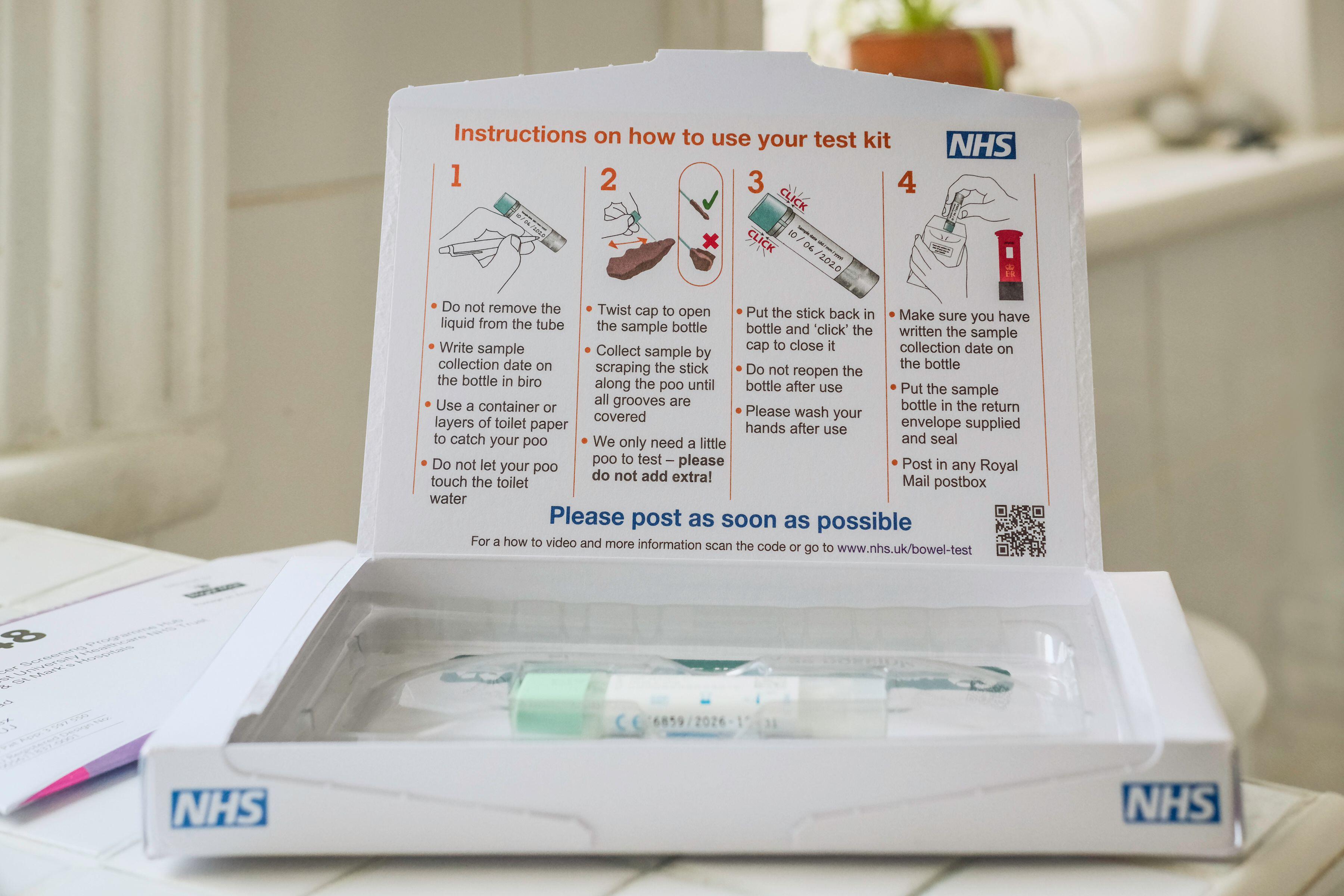
People aged 50 to 74 are sent a stool sample kit – known as the faecal immunochemical test (Fit) – which looks for blood in the stool.
The sample is collected at home the returned by post.

Bowel Cancer UK examined the latest screening data from NHS integrated care boards (ICBs) and found that the national uptake average for the programme in England was 71 per cent, meaning 29 per cent of people do not complete their tests.
NHS Devon ICB had the highest screening uptake at 76 per cent, while NHS North West London ICB has the lowest uptake at 56 per cent.
All the ICBs in greater London also fell below 71 per cent.
Genevieve Edwards, chief executive of Bowel Cancer UK, urged anyone who receives their bowel cancer screening test to complete it and return it as soon as possible.
She said: “While there’s been great work to date when it comes to people taking part in bowel cancer screening, these figures show that there’s still room to improve screening uptake even further.
“Bowel cancer is the UK’s fourth most common cancer, but screening is one of the best ways to spot the disease early or remove polyps that might develop into cancer.
“The earlier bowel cancer is found, the more treatable it’s likely to be, with more than nine in 10 people surviving the disease when diagnosed at the earliest stage.”
Bowel cancer is one of the most common forms of cancer in the UK – but many people do not know the signs or about the screening process.
Talking about bowel movements is still often viewed as a taboo for many people, but letting a doctor know about any unusual changes is crucial to spotting anything serious early.
Common signs include blood in the stool, changes in how your bowels are working, abdominal pain, unexplained weight loss and bloating can indicate something is wrong with your bowels.