This article first appeared on our partner site, Independent Arabia
After graduating with a degree in chemistry, Marwa envisioned a future of research labs and spotless white coats. Instead, she found herself displaced in a tent with no work, forced to resign herself to a different reality.
It was only when she noticed how shortages in soap and detergents were causing widespread skin diseases and itching among children in neighbouring tents that she realised it was time to put her skills to work.
Marwa imagined herself standing in a chemistry lab, placing silver nitrate into glass test tubes and preparing the simple saponification formula. She quickly rose to her feet and decided that the ground would be her laboratory, and that the discarded items people threw away would become her tools. Thus began her journey of searching for things others considered worthless.
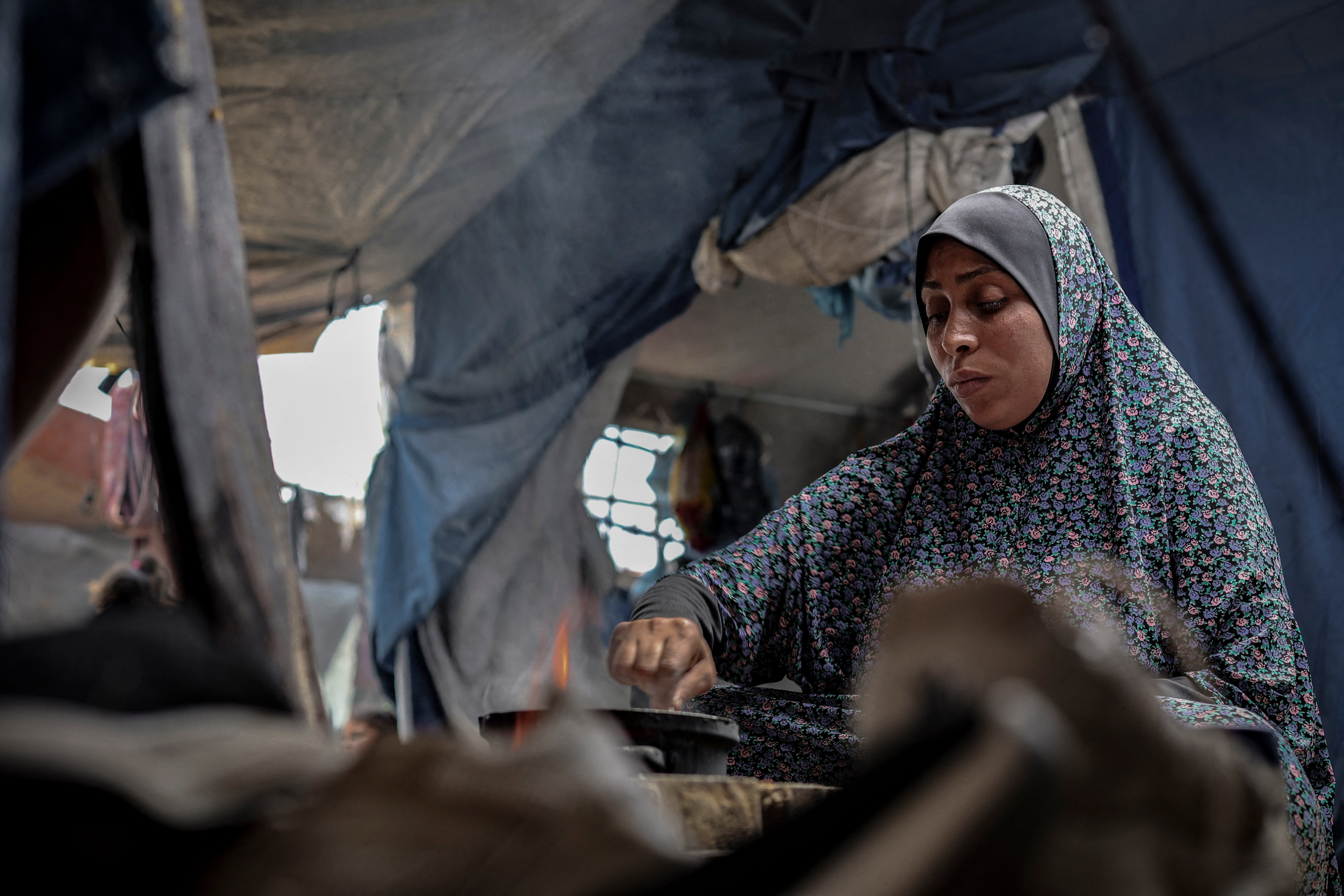
Carrying a plastic container, Marwa moved from tent to tent collecting leftover cooking oil that had been burnt, darkened and left with a pungent smell. She then went on an exhausting search through devastated markets for hidden quantities of sodium hydroxide – the “magic” substance capable of turning waste oil into cleansing soap.
Squatting in front of a large metal pot set over a low flame, Marwa mixed the ingredients with scientific precision. Using an old piece of cloth, she filtered the blackened oil of food residue before pouring it into the pot. She then carefully added caustic soda to water, as choking fumes rose into the air. Covering her face with a worn scarf, she kept her eyes fixed on the saponification process.
She poured the thick mixture into wooden moulds and waited days for it to harden beneath Gaza’s scorching sun, before cutting it with a rusted knife into equal-sized bars. Thanks to her soap, women were finally able to wash their children’s clothes properly, significantly reducing the spread of scabies and skin infections within the displacement camp.
The faint scent of cleanliness lingering on clothes washed with Marwa’s soap gave displaced families a temporary sense of dignity and humanity amid the devastation.
Marwa charges displaced families only very small amounts, just enough to buy more caustic soda, and at times she exchanges bars of soap for a piece of bread or a few dates.
“My university degree was not meant to hang on a wall that has been destroyed,” she tells Independent Arabia. “It was meant for this day – to prove that science can wash away our pain when aid fails us.”
What forced Marwa to launch her project were the harsh conditions she faced after losing her husband, who had supported their three children before being killed in the war. Suddenly becoming both the family’s sole breadwinner and final decision-maker, she was compelled to work to feed her children.
A female economy
Amal Kharisha, a researcher at the Palestinian Working Women Society for Development, told Independent Arabia: “Due to the killing, injury or arrest of a large number of men, or their loss of employment, more than 57,000 women have suddenly found themselves the sole and primary providers responsible for feeding their children and meeting their needs. This figure means that thousands of families now have no source of income other than what the woman produces or manages.
“Women in Gaza are not only fighting to secure daily sustenance, but are also required to act as a psychological safety net. They try to absorb their children’s fear and trauma and provide them with a sense of security inside the tent, while themselves living under the pressure of constantly thinking about how to secure the next meal.”
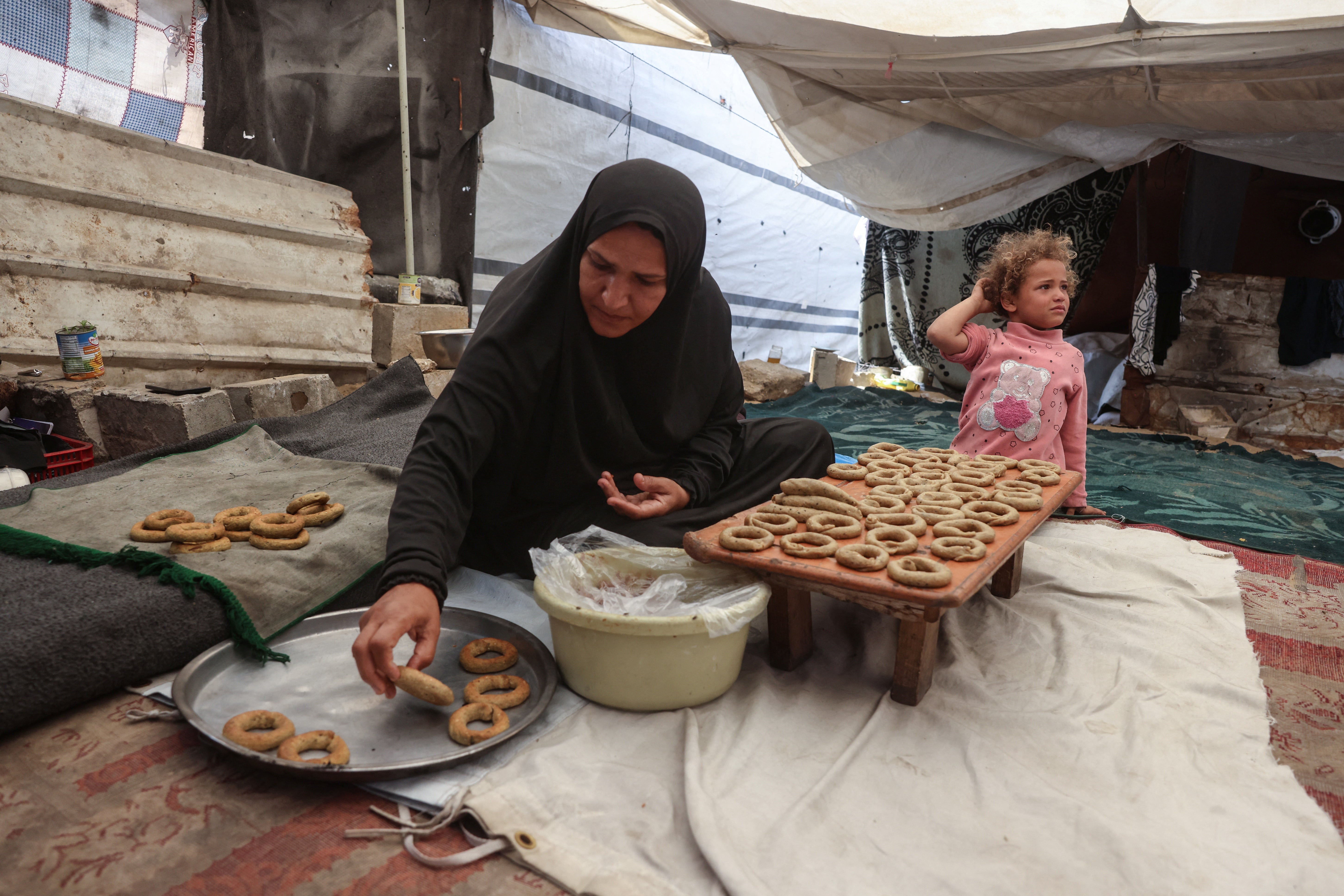
Kharisha stresses that, following the destruction of major factories and companies, women have been forced into alternative forms of work. Some bake and sell bread on a traditional griddle, others mend torn clothing for displaced families, while others produce cleaning products by hand.
These small-scale activities are what prevent a total social collapse, as they provide essential goods for the population while also generating very modest incomes that allow families to survive. In this way, women are no longer merely victims of the war; they have become the backbone preventing the collapse of what remains of Gaza’s economic and social life.
From bridal gowns to upcycled jackets
Huda once owned a bustling workshop filled with metres of silk and lace, where modern computer-operated sewing machines worked away as brides put in orders for wedding dresses. But during the war, she lost her business when the Israeli army bombed the residential block it was in.
The psychological impact was devastating for Huda, who began spending long hours sitting silently inside her tent. One harsh winter night, she heard a child crying in the neighbouring tent, shivering from the cold, while the aid clothes delivered to his family were far too large to protect him from the freezing temperatures. At that moment, a spark of sewing reignited in her mind, and she realised that her skills were not an adornment, but a medical and humanitarian necessity.
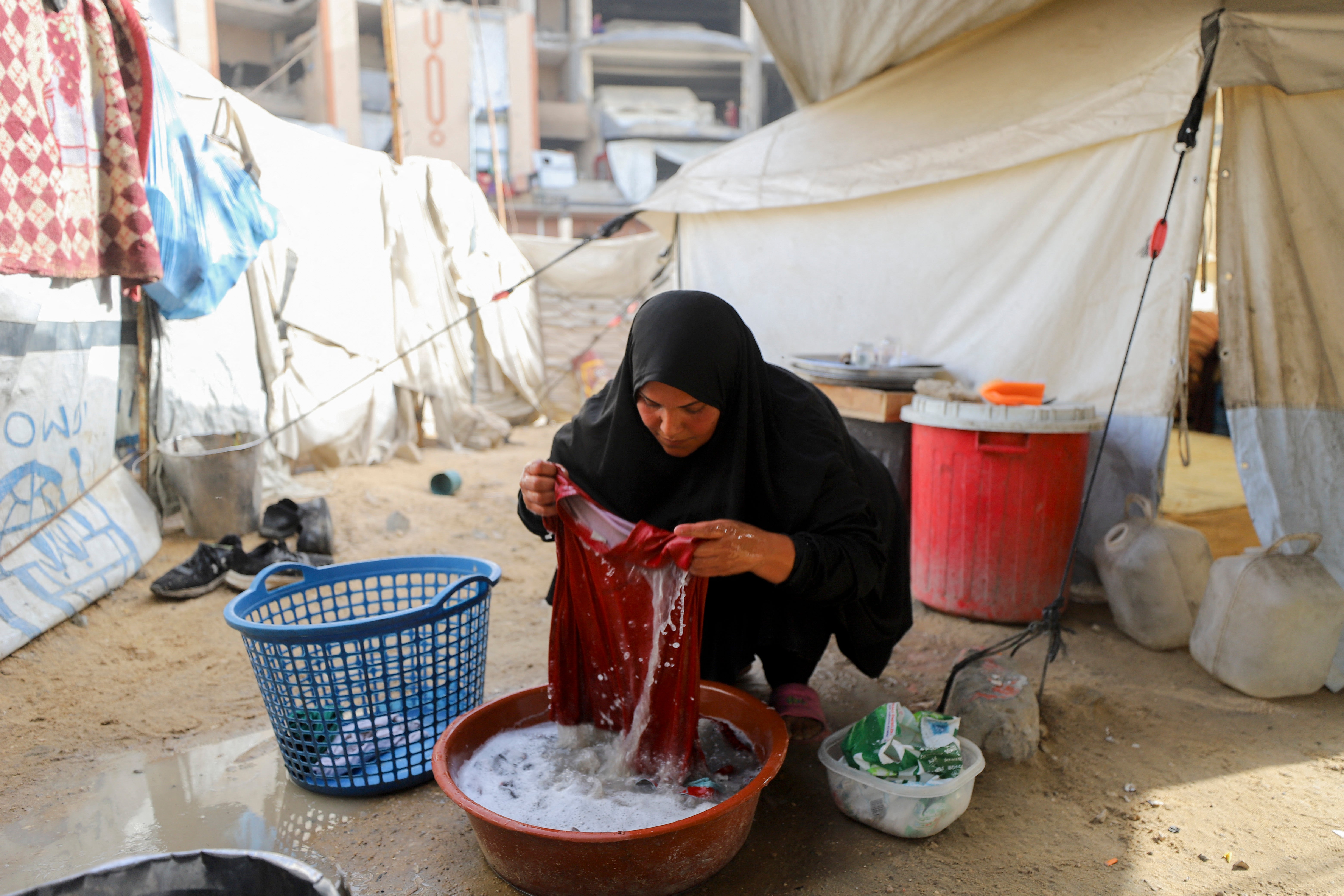
Risking her life, Huda returned to the ruins of her destroyed workshop and began searching through the rubble for an old manual sewing machine her mother had owned decades earlier. She dug through concrete and metal until she spotted its black iron handle, feeling as though she had found a heart still beating.
Inside her tent, Huda set up her sewing machine and began an ingenious project. She collected heavy, surplus or torn blankets and cut them with the precision of a professional tailor, transforming them into padded winter jackets for children. With no electricity available, she relied entirely on the strength of her arms to turn the wheel by hand.
Reversed equations
Sima Bahouth, executive director of UN Women, told Independent Arabia: “The war has turned economic balances upside down. Women who were once partners are now the sole breadwinners amid a complete absence of resources. The work of women in Gaza represents the highest form of civic resistance, as it is aimed at preventing families from collapsing into hunger.
“The war has destroyed infrastructure, but it has not broken the Gaza woman’s capacity for survival-driven innovation. They are turning ashes into opportunity and creating a parallel economy in one of the most difficult places on earth. The world should not view Gaza’s women solely as recipients of aid, but as leaders of a recovering local economy. Investing in women’s projects in the Strip is the surest investment in preventing a full-scale famine.”
Translated by Dalia Mohamed; Reviewed by Tooba Khokhar and Celine Assaf