

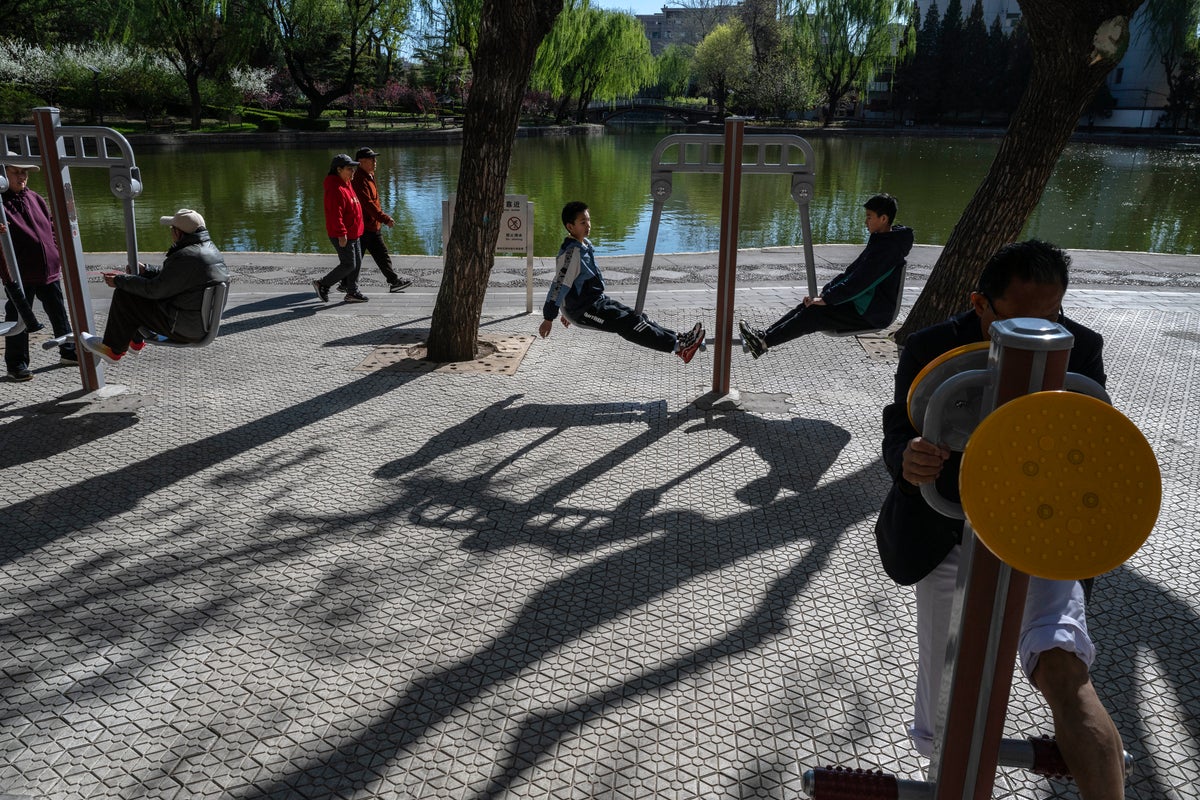
Mixing up your workout routine to include different forms of movement such as walking, strength training, or racquet sports may lead to longevity compared to repeating the same exercise, according to a new study.
A growing body of research suggests that how one exercises could matter just as much as how much they work out.
Now, a new study reveals that regularly engaging in a variety of physical activities is linked to a longer lifespan.
While staying active overall remains critical, the findings, published in the journal BMJ Medicine, point to a more nuanced picture of how physical activity supports longevity.
Researchers analysed data from two large long-term studies – the Nurses’ Health Study, which included 121,700 female participants, and the Health Professionals Follow-Up Study, involving 51,529 male participants.
Both these studies tracked physical activity repeatedly over more than 30 years and collected vast data from participants, including their personal characteristics, medical history, and lifestyle habits at enrolment, and updated this information every two years.
Participants reported activities such as walking, jogging, running, cycling, lap swimming, rowing, or callisthenics, and racquet sports like tennis and squash, starting from 1986.
Questionnaires also collected data about their weight training or resistance exercise routine, as well as lower intensity activities such as yoga and stretching, vigorous tasks like lawn mowing, moderate outdoor work such as gardening, and more strenuous labour like digging.
Researchers also meticulously collected personal daily life data about the participants, such as how many flights of stairs they climbed each day.
They calculated how much energy each activity used compared to rest using an estimate called the metabolic equivalent task (MET) score, which represents the metabolic rate for that specific activity divided by their resting metabolic rate.

Those with higher overall activity levels tended to have lower body mass index, healthier diets, moderate alcohol intake, stronger social connections, and more varied activity habits.
Higher total activity levels and most individual types of exercise were found to be linked to a lower risk of death from any cause; however, the benefits were not linear, researchers found.
After accounting for total activity, those with the greatest variety of physical activities had a nearly 20 per cent lower risk of death from all causes.
They also had a 13 to 41 per cent lower risk of death from cardiovascular disease, cancer, respiratory disease, and other causes, scientists found.
Researchers caution that this is an observational study and does not establish cause and effect.
However, overall, “these data support the notion that long-term engagement in multiple types of physical activity may help extend the lifespan”, they concluded.